
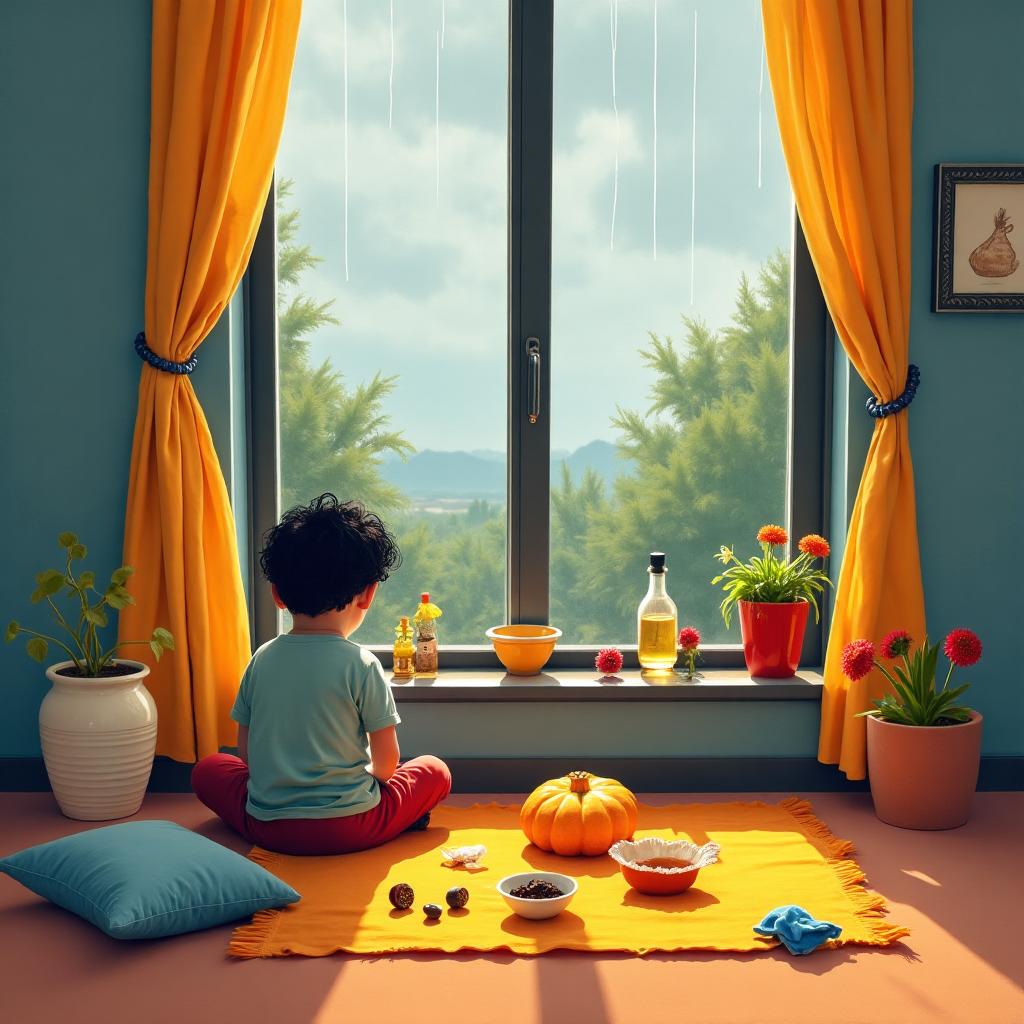

When the rain drums against the windows, we often look to entertain while staying sheltered. Olfactory games offer a playful and sensory break: they train the sense of smell, stimulate memory, and open the door to creativity. In just a few minutes, you can organize a gentle workshop without cluttering your living room with bulky materials. This article offers four ready-to-use ideas, accessible to all, to make every gray day an opportunity to have fun and smell differently.
🌧️ Four ready-to-play ideas: mystery boxes, a scented trail, a blending workshop, and an aromatic treasure hunt.
🧴 Minimal materials: opaque jars, spices, essential oils, small scented objects, all fit on a table.
⏲️ Short sessions (10–20 minutes) to maintain attention without hours of kitchen prep.
👃 Benefits: awakens the sense of smell, boosts olfactory memory, and promotes playful learning.
Why choose olfactory activities at home?
We often forget that the sense of smell communicates directly with brain areas linked to emotions and memories. Olfactory games are not limited to sniffing scents: they encourage concentration, awaken curiosity, and strengthen the bond between participants. On a rainy day, it’s an opportunity to change the atmosphere without moving. Moreover, few activities engage the sense of smell in such a playful and structured way, making it an original alternative to puzzles and drawings.
4 olfactory game ideas for wet days

1. Scented mystery boxes
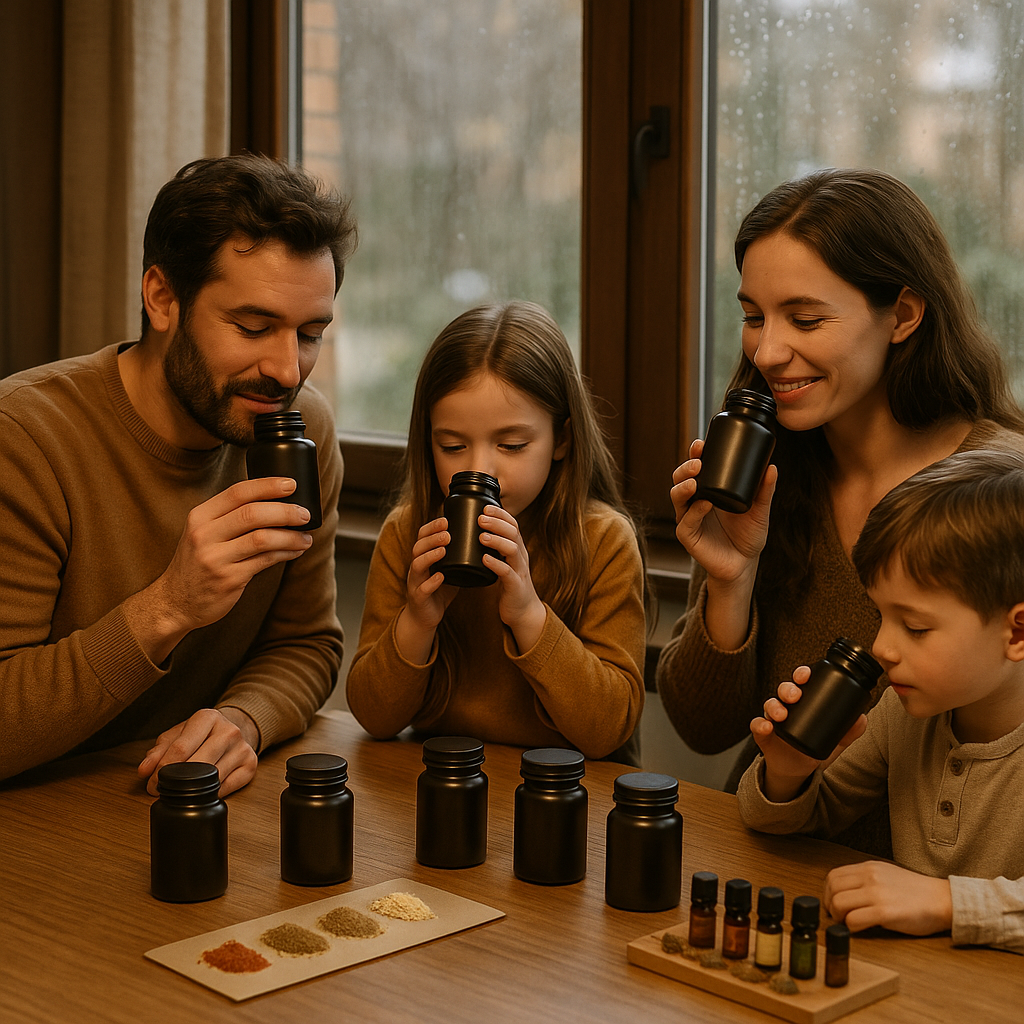
All you need are a few opaque boxes or beige cloth bags to hide scented samples. In one, slip a piece of vanilla; in another, dried orange zest; in a third, a square of chocolate. Players sniff blindly and have fun guessing the ingredient. This game emphasizes the subtlety of the sense of smell and can be made more complex by adding blends (spices + herbs, for example).
- Prepare at least six distinct scents.
- Number each box to facilitate checking.
- Vary according to the seasons: clove in winter, fresh herbs in spring.
2. The scented trail
Think of a small indoor path marked with scented markers. On a piece of furniture, arrange ten small spoons or dishes, each soaked with an essential oil or a strong infusion (peppermint, rosemary, roasted coffee, etc.). The challenge is to move from station to station, smell without mistakes, and note your score. You can time the test: the faster and more accurate you are, the higher you climb in the ranking.
3. The homemade blending workshop
Each participant becomes a “nose” and alchemist by composing their own elixir. Equip yourself with empty bottles (10–15 ml), essential oils (lavender, lemon, eucalyptus, cedarwood), and a dropper. The idea is to combine three notes (top, heart, base) to create a fragrance that reflects one’s desires. While experimenting, note the dosages and compare creations. This mini-laboratory develops olfactory sensitivity and creativity.
4. Aromatic Treasure Hunt
Turn the living room into a playground: hide ten to fifteen scented objects (extinguished incense sticks, tea bags, pieces of dried fruit) and hand out a list of olfactory clues. For example, “I smell fresh and green” for a basil leaf or “I remind you of breakfast” for a coffee capsule. Players explore, sniff, search, and check off each find. At the end, a small sweet treasure or a homemade certificate.
Quick Comparison of the Four Games
| Game | Duration | Materials | Difficulty |
|---|---|---|---|
| Mystery Boxes | 10–15 min | Opaque boxes, various ingredients | Easy |
| Odor Course | 15–20 min | Spoons, essential oils | Medium |
| Mixing Workshop | 20–30 min | Vials, droppers, oils | Advanced |
| Aromatic Hunt | 15–25 min | Scented objects, clues | Easy |
FAQ
How to adapt these games for toddlers?
Reduce the number of scents to three or four, use familiar objects (fruits, garden flowers), and limit the theoretical part. Focus on pure discovery: smelling and naming the scent.
Which ingredients to choose to vary the scents?
The market is full of possibilities: spices (cinnamon, cardamom), citrus (lemon zest), fresh aromatic herbs, coffee, green tea, or pepper. Don’t hesitate to recycle small kitchen leftovers.
How to clean the materials after olfactory sessions?
For vials and spoons, a simple rinse with household alcohol or soapy water is enough. Opaque jars can go in the dishwasher, provided they are thoroughly dried before the next use.
Can these games be integrated into an educational program?
Absolutely. Olfactory games lend themselves to language learning (naming scents), cultural history (spices from elsewhere), or chemistry (concepts of concentration and dilution). A playful support for all subjects.