


Switching your companion to BARF means rethinking their diet around raw and natural ingredients. This approach aims to replicate the ancestral diet of the dog, focusing on meat, meaty bones, offal, and a touch of vegetables. If the idea appeals to you but the rigor makes you hesitate, this guide offers a simple-to-follow one-week menu designed for beginners who want to provide the best nutrition for their pet.
🍽️ BARF diet: a raw diet combining meat, meaty bones, offal, and vegetables to approximate wild feeding.
📅 One-week schedule: a balance day by day with clear proportions – 70% protein, 10% bones, 10% offal, 10% vegetables.
🐶 Suitable for beginners: gradual transition, quantity monitoring, and advice on supplements, without hassle.
What is the BARF diet?
BARF, an acronym for “Biologically Appropriate Raw Food,” is based on the idea that the dog is originally a carnivore. Instead of processed kibble, it offers a selection of raw ingredients: fresh meats, chewable carcasses, nutrient-rich organs, and vegetables for fiber. Unlike kibble, BARF limits industrial additives, gluten, and excess carbohydrates.
This approach can be compared to a gardener returning to the soil: you take control of what you offer your dog, choose clear sources, and adjust the amounts according to their metabolism. In practice, this requires some organization: freezer, kitchen scale, and a good dose of curiosity to try recipes.
Advantages and precautions

- Smoother skin and shinier coat thanks to an optimal supply of omega-3 fatty acids and high-quality proteins.
- Better digestion: unnecessary fillers are eliminated, often reducing intestinal disorders and flatulence.
- Mental stimulation: chewing meaty bones exercises jaws and gums, while sensory awakening is enhanced by new flavors.
- Mineral balance: beware of calcium and phosphorus deficiencies or imbalances, especially without enough meaty bones.
- Hygiene and safety: handling raw meat requires sanitary rigor (disinfection, respecting the cold chain).
Simplified One-Week Menu
Days 1 to 3: Laying the Foundations
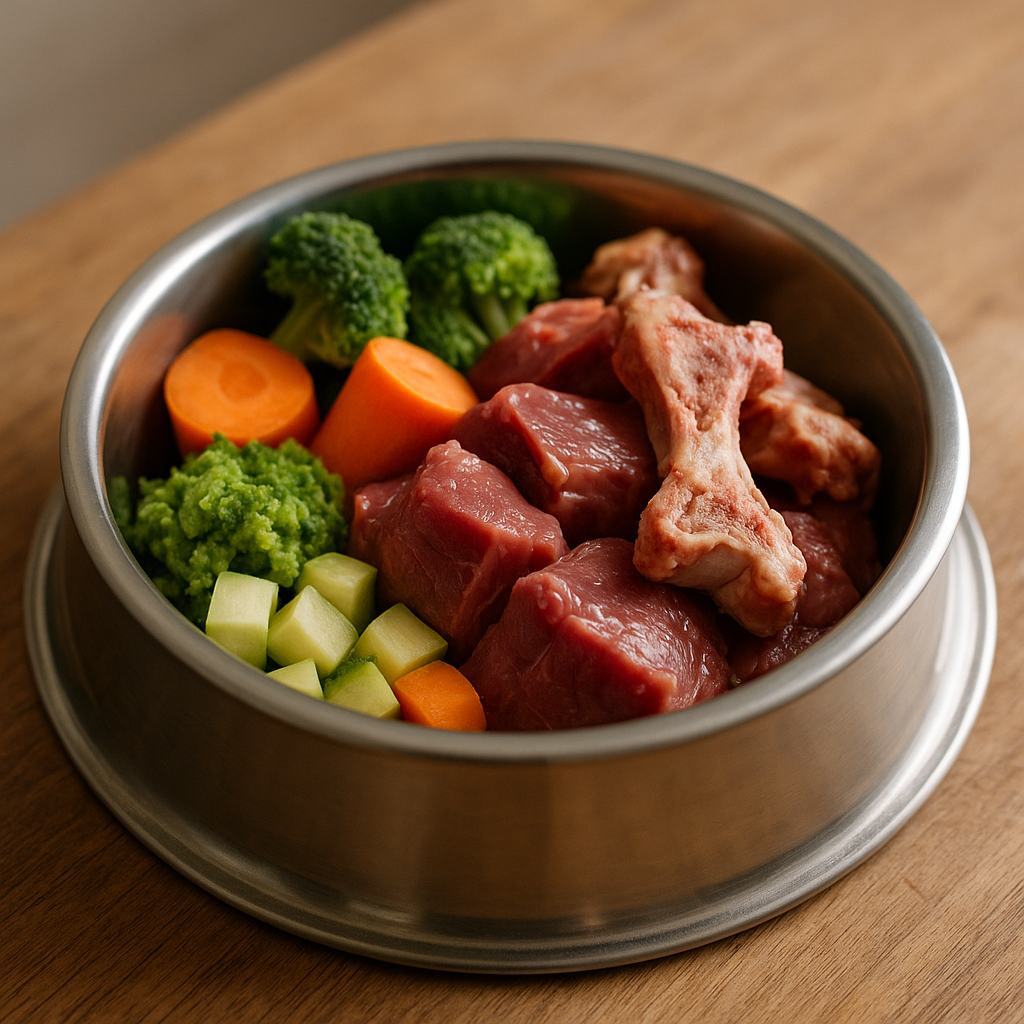
During the first three days, the goal is to gradually accustom the dog’s intestinal flora to raw meat. Maintain a fixed ratio: 70% protein (minced poultry or beef), 10% bones (meaty chicken bones), 10% offal (liver and heart), 10% vegetables (pureed zucchini, carrot). Adjust the total quantity according to your companion’s weight and activity level.
| Day | Protein | Bone | Offal | Vegetables |
|---|---|---|---|---|
| 1 | Minced chicken | Chicken carcass | Chicken liver | Carrot |
| 2 | Minced beef | Grillable bones | Beef heart | Zucchini |
| 3 | Minced chicken | Chicken carcass | Chicken liver | Spinach |
Days 4 to 7: Varying the Sources
Once the transition has started, it becomes essential to diversify proteins and vegetables to avoid sensitivities. Turn to fish (salmon or sardine), lamb, or duck. For vegetables, alternate pumpkin, green beans, and finely blended broccoli. You can also introduce a marine algae supplement to boost trace elements.
| Day | Protein | Bone | Offal | Vegetables |
|---|---|---|---|---|
| 4 | Fresh salmon | Meaty fish bones | Salmon liver | Pumpkin |
| 5 | Minced lamb | Lamb bones | Lamb heart | Green beans |
| 6 | Minced duck | Duck carcass | Duck liver | Broccoli |
| 7 | Minced beef | Grillable bones | Beef heart | Zucchini |
FAQ
How to Successfully Transition to BARF?
Start by replacing 10 to 20% of the usual ration with raw food, then gradually increase over 7 days. Observe digestion and adjust the pace if diarrhea appears.
Are Dietary Supplements Necessary?
Often yes: omega-3 (fish oil), vitamins D and E, probiotics. These supplements ensure a complete nutritional profile when vegetables or offal are insufficient.
Is BARF Suitable for All Ages?
Puppies and seniors should benefit from veterinary monitoring: their needs vary greatly in calcium and energy. For a healthy adult, the method remains accessible.
Is There a Risk of Deficiency?
An imbalance of calcium/phosphorus or a lack of micronutrients can occur without variation in offal and bones. Respect the ratios and include supplements if necessary.