

| Key Points | Details to Remember |
|---|---|
| 🐾 | Define the miniature dachshund as a miniature variety of the dachshund. |
| 📜 | Trace the German origin since the 16th century. |
| 🎨 | Illustrate the elongated silhouette and the short, long, or wire coat. |
| 🤏 | Measure its size (13–18 cm) and weight (4–5 kg). |
| 🏡 | Adapt its environment to the need for moderate exercise. |
| ❤️ | Understand its loyal, curious, and sometimes stubborn character. |

The miniature dachshund is often imagined as a small clumsy ball of fur, but in reality this miniature companion holds a rich history and a personality more complex than it appears. Between ancient origins, surprising morphology, and a strong temperament, this article explores in depth everything that makes the charm and specificities of this endearing breed.
Origins and History of the Miniature Dachshund
From German Hunters to Companion Dog
In the 16th century, in Germany, hunters were already selecting dogs with elongated bodies to track badgers in narrow burrows. One might think the main goal was compactness, but it was mainly about obtaining a silhouette capable of slipping through tunnels. Over time, this type of dog made its way into bourgeois homes, where it gained a reputation as a loyal and entertaining companion.
Evolution Towards the Miniature Variety
It was only in the 19th century that breeders sought to reduce the size of the standard dachshund, giving birth to the miniature dachshund. By selecting smaller litters, some breeders favored genes condensing growth, while ensuring to preserve hunting qualities. Becoming popular, this miniature model ultimately won the hearts of city dwellers, charmed by its easy-to-house size and energetic temperament.
Physical Characteristics

Morphology and Coat Variations
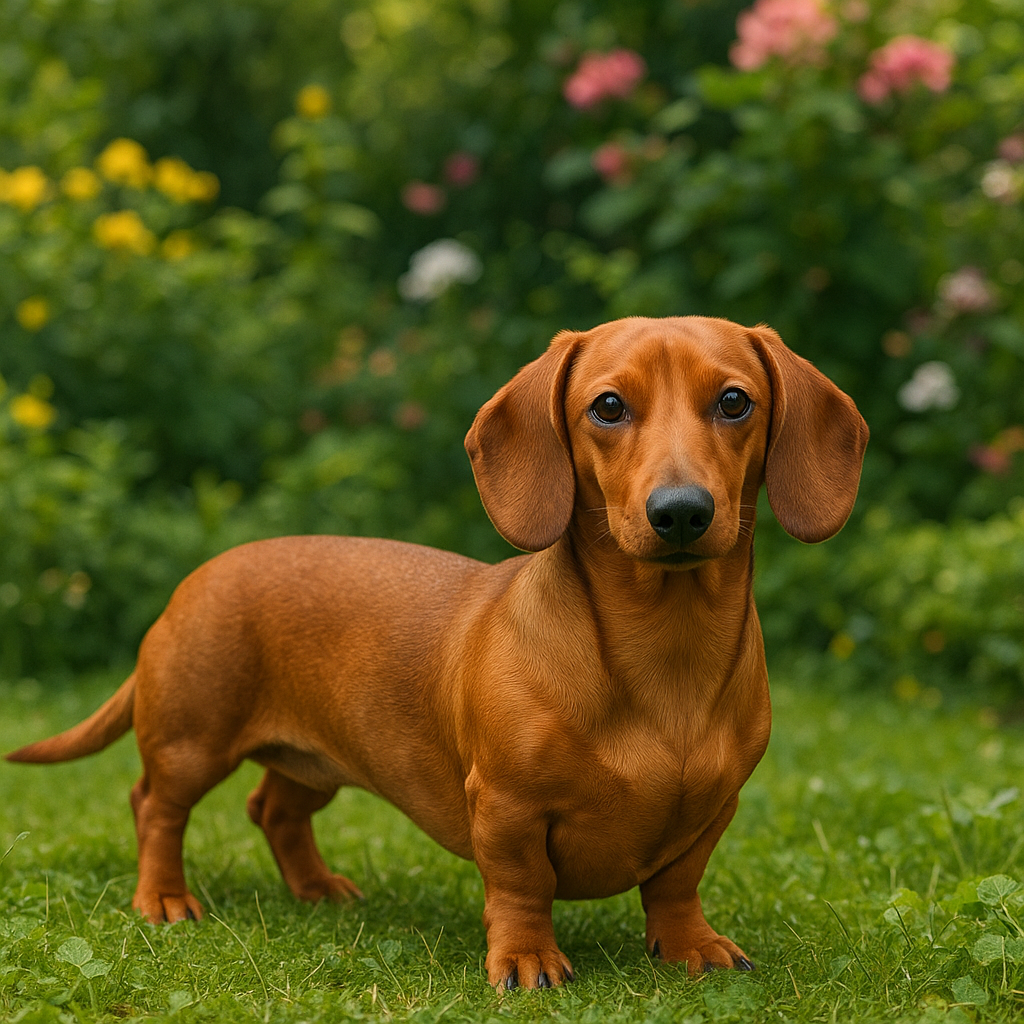
The miniature dachshund offers three distinct coats: short, long, and wire. The short coat, smooth and shiny, requires little maintenance; the long coat, silky with fringes on the ears and tail, needs regular grooming; finally, the wire coat, rough to the touch, requires manual “stripping” to remove dead hairs. Each variety presents a slightly different appearance, but all retain this elongated body with a well-developed rib cage and short legs.
Size, Weight, and Life Expectancy
To be qualified as miniature, the dachshund must measure between 13 and 18 cm at the withers and weigh from 4 to 5 kg. This compact build offers agility and liveliness, but also exposes it to vertebral fragilities. Nevertheless, well cared for, it can live from 12 to 16 years, sometimes longer if its diet and exercise are perfectly balanced.
Behavior and Temperament
Personality and Socialization
While the dachshund is often associated with a stubborn character, it is primarily its strong temperament that stands out. Fearless, it does not hesitate to alert as soon as it detects a suspicious movement. However, behind this proud appearance hides a very affectionate dog, who will become deeply attached to its owner or owners. Early socialization, especially with other dogs and children, limits dominance excesses and helps it control its enthusiasm.
Exercise and Mental Stimulation Needs
Do not be fooled by its small size: the miniature dachshund needs daily walks and games to channel its energy. Here are some suggestions:
- Varied walks to engage its natural scenting ability.
- Puzzle-type toys to stimulate its intellect.
- Short free runs in a closed space.
- Short training sessions based on positive reinforcement.
Grooming and Care
Grooming According to Coat Type
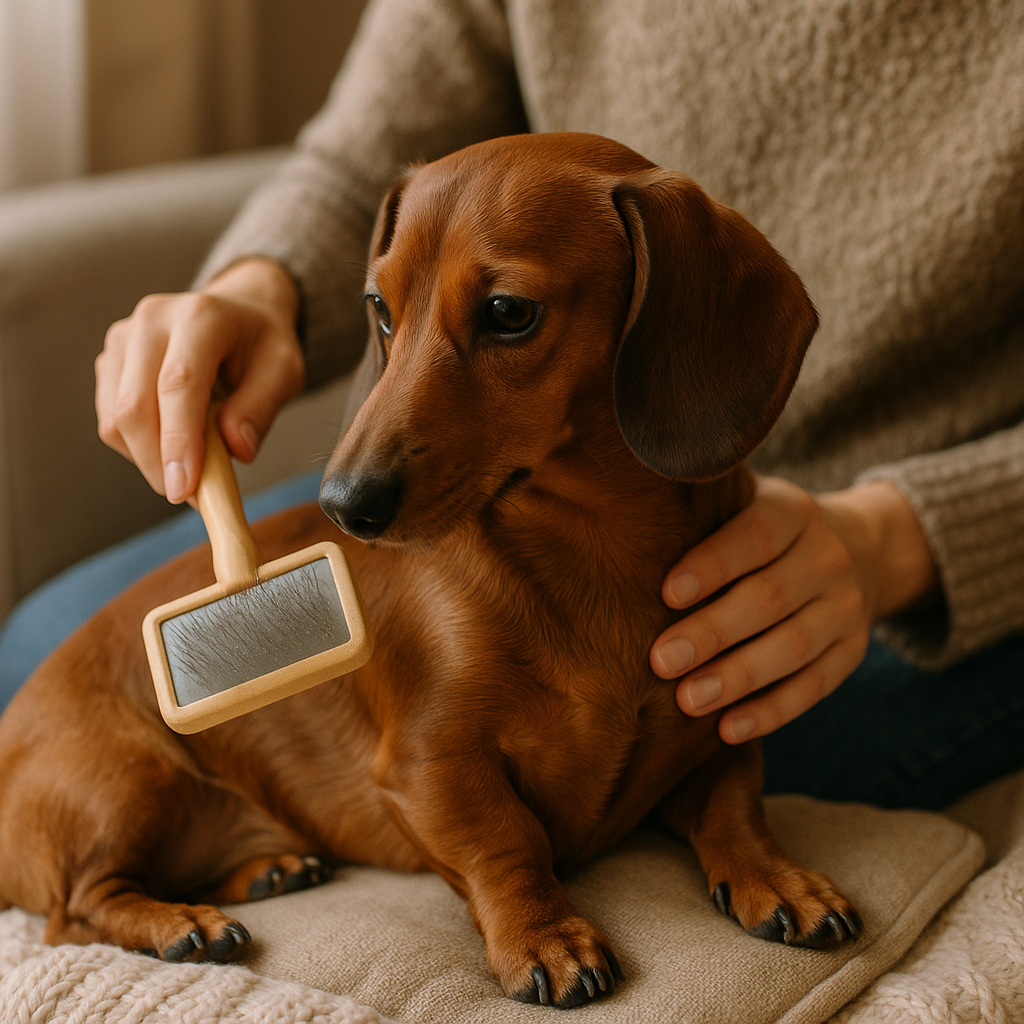
Grooming varies greatly depending on the coat: weekly brushing is sufficient for short hair, while long hair requires sessions two to three times a week to avoid tangles. As for the wire-haired coat, manual stripping every two months helps maintain the characteristic rough texture. For all types, regularly check the ears, which are prone to infections in dachshunds.
Feeding and Health
Fragile in the back, the miniature dachshund must benefit from a diet rich in essential nutrients but moderate in calories to avoid overweight. Special kibble for small breeds, reinforced with chondroprotectors, can help preserve the spine. Consult a veterinarian to adjust the ration according to activity and age. Vaccination, dental care, and parasite prevention complete regular health monitoring.
Adoption and Family Life
Choosing a Responsible Breeder
Adopting a miniature dachshund involves a breeder who performs health tests, notably for intervertebral disc disease. Also check the breeding conditions: a puppy raised in contact with its future environment will adapt more easily.
Integration into the Home
The dachshund easily adapts to an apartment, provided you devote time to it every day. Be sure to arrange a comfortable bed to limit its jumps, which are responsible for many back injuries. With a well-defined framework and regular playtime, it quickly becomes a stable and joyful companion.
FAQ
- What is the lifespan of a miniature dachshund?
- The miniature dachshund generally lives between 12 and 16 years, provided it receives proper care and diet.
- How to prevent back problems in the dachshund?
- Limiting jumps, providing a firm bed, and moderating exercise, along with controlled feeding, reduce the risk of spinal injuries.
- Is the miniature dachshund suitable for children?
- With early socialization and appropriate supervision, it can coexist very well with children, but its fragile back requires caution.
- Should the nails be trimmed often?
- Yes, monthly checks and trimming if necessary prevent deformities and paw pain.