

| Key Points | Details to Remember |
|---|---|
| 🐕 Born Predators | Terriers and Greyhounds are often too instinctive to coexist. |
| ⚖️ Individual Factors | Temperament and socialization play a role as important as the breed. |
| 🏠 Arrangement | Separate spaces and escape zones for your cat. |
| 🛠️ Practical Tips | Cat barriers, distractions, and adapted routines. |
| 📋 Checklist | Vaccinations, seriousness of socialization, and behavioral monitoring. |

When adopting a canine companion and a small feline under the same roof, we often dream of tender moments of complicity. However, things do not always go as in cartoons! I experienced this when welcoming Simba, my Maine Coon, and Max, a greyhound adopted from a local shelter. Their first meeting was… eventful. Between scared paw swipes and hasty departures, I had to adapt my home and routines so that each could find their place.

Why do certain dog breeds pose a problem for cats?
The heart of the problem is the predatory instinct. Some dogs have been bred for hunting and retain an irresistible desire to chase anything that moves, including the neighbor’s cat! Added to this is early socialization: a puppy that has not learned to coexist with small animals may develop fear or excessive aggression.
Breed-related factors
- Terriers (Jack Russell, Fox Terrier): overflowing energy and love of the hunt.
- Greyhounds (Greyhound, Whippet): sharp eyesight, instinctive pursuit.
- Dachshund: stubborn character and badger hunting scent.
- Teckel: persistence in tracking any small rodent… or cat!
- Huskies: loud barking and poorly channeled pack instinct.
Other variables not to neglect
Beyond the breed, always remember to check:
- Age: a young dog may be more playful than a senior, thus more rough.
- Background: a dog from a shelter may have traumas that affect its behavior.
- Socialization: a puppy accustomed early to cats is often calmer.
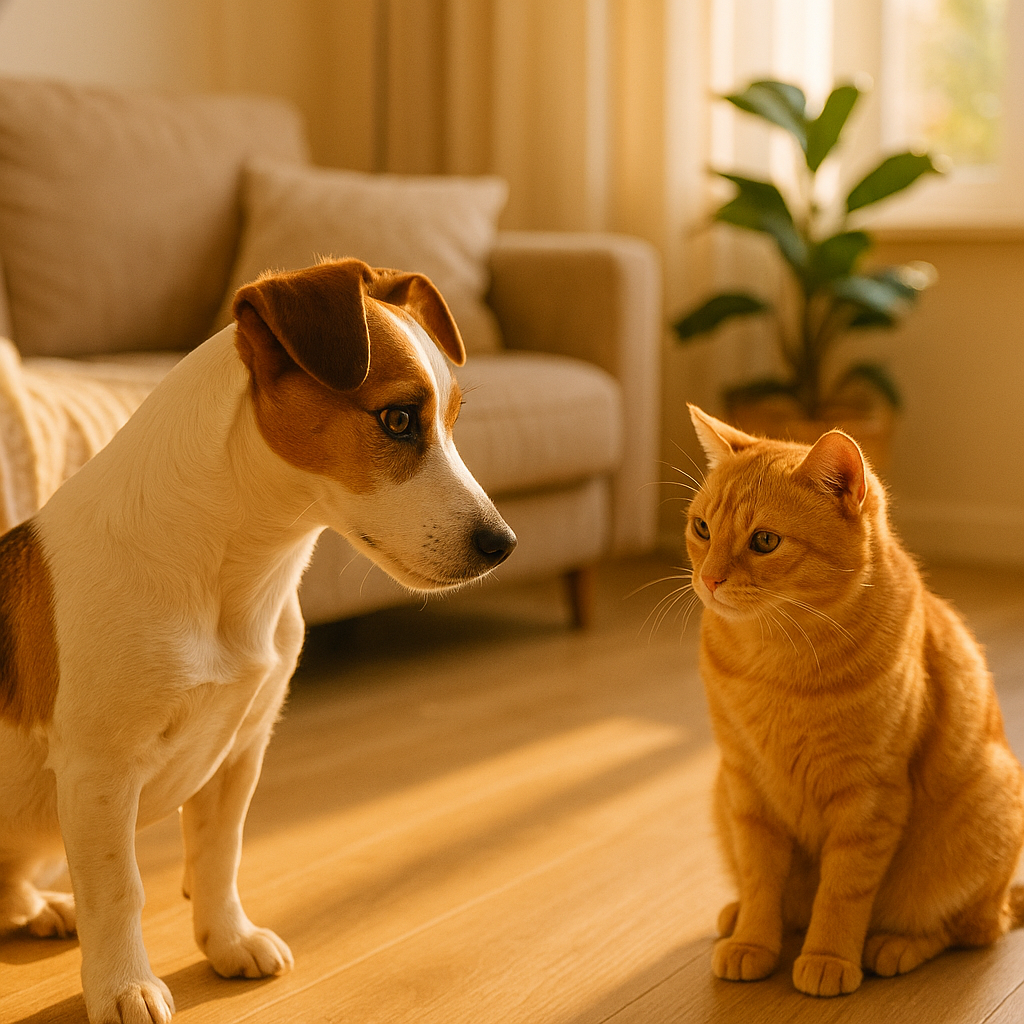
List of dog breeds to watch around cats
| Breed | Main Characteristic | Risk Level |
|---|---|---|
| Jack Russell Terrier | Very pronounced hunting instinct | High |
| Greyhound | Speed and focused vision | High |
| Dachshund | Tenacious tracker | Medium to high |
| Siberian Husky | Pack spirit, noisy | Medium |
| Fox Terrier | Playful aggressiveness | High |
| Whippet | Lightning-fast reaction to movement | High |
Tips to protect your cat daily
Several simple measures help preserve the balance of your home:
1. Create Cat-Only Areas
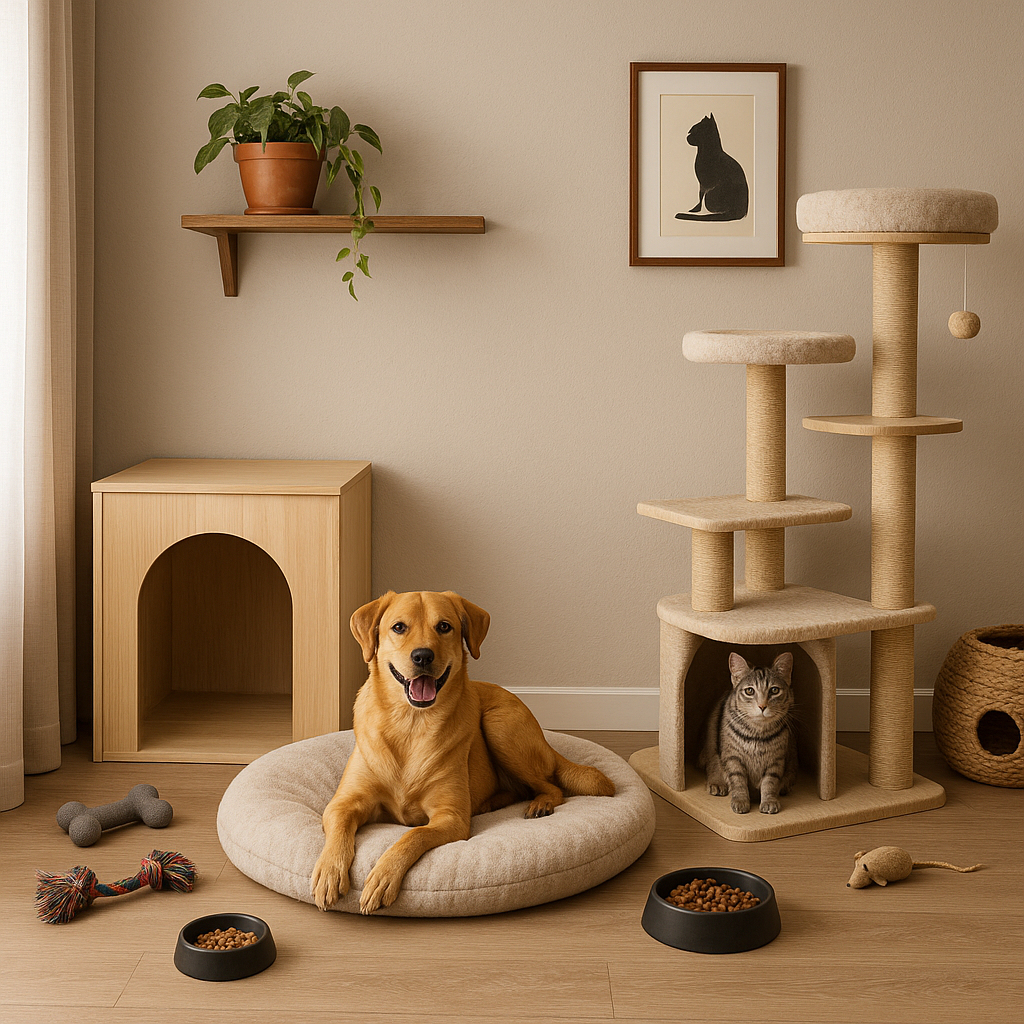
- Install a cat tree up high, out of the dog’s reach.
- Use removable barriers to limit access to sensitive rooms.
2. Offer Substitute Games
- Give the dog chew toys and food puzzles to channel its energy.
- Create separate playtimes for each to reduce frustration.
3. Eating and Resting Habits
- Feed both animals in separate spaces to avoid territorial conflicts.
- Provide comfortable beds placed away from each other.
4. Positive Reinforcement Training
Work with your dog on basic commands (« sit », « stay ») in the presence of the cat. Reward as soon as it ignores the feline. This reward-based method strengthens the positive association.
Frequently Asked Questions (FAQ)
Q: Are all greyhounds incompatible with cats?
A: Not necessarily. Many can coexist if socialized very young. The risk mainly depends on the individual.
Q: My cat is scared, what should I do?
A: Offer it hiding spots up high and comfort it. Consider a gradual approach to meetings under the supervision of a professional.
Q: Which other dogs are known to be calm with cats?
A: Golden Retrievers, French Bulldogs, or Labradors, if well trained, often show greater tolerance.