
Understanding your dog is not about asking it to speak, but learning to read what it expresses through its body, eyes, posture, or behaviors. Canine language is subtle, rich, and sometimes misinterpreted. Yet, it helps avoid many conflicts, meet its deep needs, and strengthen a balanced relationship. This guide offers you the keys to better observe, analyze, and respond intelligently to your companion’s behaviors. 🐕🦺
👀 Why observe canine behavior?
Observing your dog’s behavior is a bit like learning to decipher a silent language. What your companion cannot express with words, it communicates through its posture, movements, gaze, or ear position. A dog that looks away, yawns, or licks its lips is not having a boredom attack — it is often telling you that it feels uncomfortable or is trying to avoid a conflict. Understanding these subtleties means not only better responding to its need…
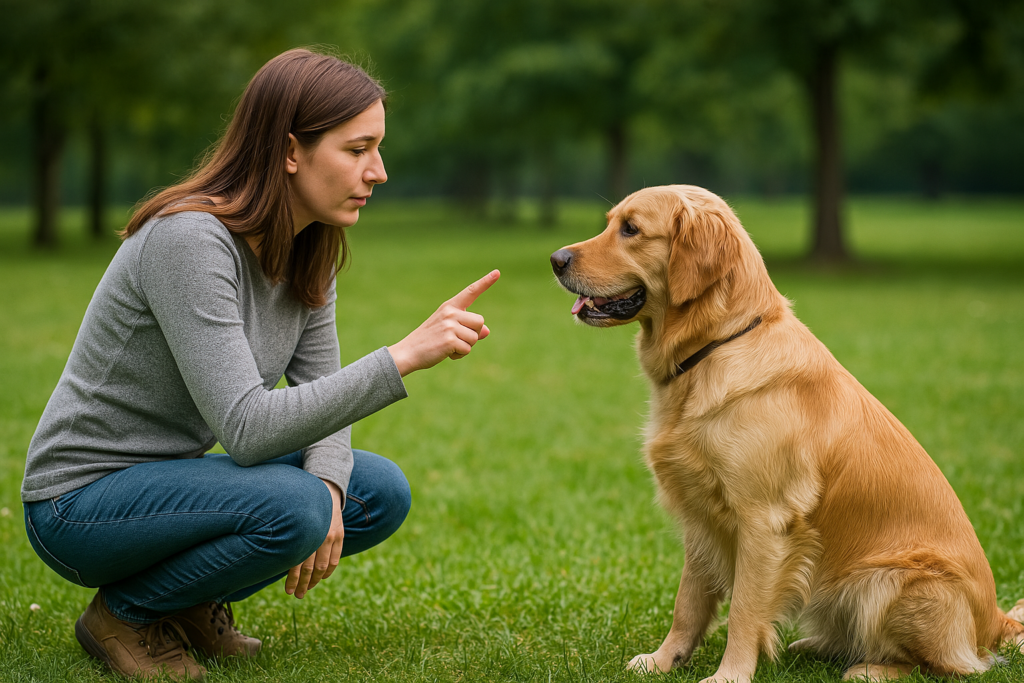
🤝 Calming signals: what your dog is trying to tell you

Dogs use signals called “calming signals” to communicate with each other — but also with us. They seek to defuse conflict, calm a situation, or express their discomfort. Among the most common: licking their lips, turning their head away, yawning, sitting down, scratching, or even slowing their movements. These behaviors are not random; they carry meaning. Misinterpreted, they can be ignored or even wrongly punished. Learning to recognize them can…
❗ Understanding “problematic” behaviors
A dog that barks too much, destroys cushions, jumps on guests, or growls is not a “bad” dog. These behaviors never come out of nowhere: they are often poorly channeled attempts at communication. Boredom, stress, loneliness, or lack of activity can lead to inappropriate responses. Rather than suppressing the symptom, one must look for the cause. Why is this dog destroying things? Is it too alone? Poorly stimulated? Afraid? Misunderstood? Observing the context, the fr…
🧩 Behavior and fundamental needs
Every behavior expresses a need. A dog running everywhere is not trying to “test you” — it may simply need to let off steam. A dog that chews on everything it finds may be anxious or lack occupation. A dog’s fundamental needs are often neglected: the need to move, to smell, to chew, to explore, to socialize… By meeting these needs appropriately, one directly influences behavior. In other words, a fulfilled dog is a calm dog. This is the …
⚠️ How to react to an aggressive, fearful, or excited dog?
Faced with a dog that seems aggressive, fearful, or overwhelmed with excitement, our instinct is often to raise our voice, pull on the leash, or react abruptly. Yet, these are the worst strategies. These behaviors are often the response of a dog in emotional distress. An aggressive dog is often afraid. An overexcited dog may be seeking an outlet or calming. It is always better to calmly defuse the situation, increase distance, or redirect attention to a compo…
👨🏫 When to call a trainer or behaviorist?
There is no shame in getting support. Some behaviors require an external, professional, and caring perspective. A positive dog trainer or a behaviorist can help you understand the origins of a behavior, implement suitable exercises, and restore clear communication between you and your companion. If your dog seems constantly stressed, becomes unpredictable, or adopts dangerous behavior, do not wait. The work av…
❓ FAQ
Why does my dog bark at passersby?
It may be a need to protect its territory, frustration, or lack of socialization. Gradual work on tolerance to movement, with calm rewarded, can help a lot.
My dog growls when we approach his bowl, what should I do?
This behavior may indicate resource guarding. You should not punish it, but gently work to restore his confidence. Gradual exercises help change this negative association.
Can an already established behavior be changed?
Yes, provided you are consistent, patient, and use kind methods. The help of a professional is valuable to avoid mistakes.
📋 Table of Calming Signals
| Signal | Interpretation |
|---|---|
| Yawning | The dog is trying to calm itself or others |
| Licking lips | Indicates stress or discomfort |
| Turning head away | Desire to defuse an interaction |
| Walking slowly | Attempt not to provoke the other dog or human |
| Sitting or lying down | Signal of de-escalation or calming |
🛑 Common Mistakes to Avoid
- Scolding a dog that growls: it removes the alert without removing the cause.
- Interpreting excitement as joy: an overwhelmed dog is not necessarily happy.
- Forcing a dog to face its fear: this reinforces its trauma.
- Ignoring a sudden change in behavior: often a sign of distress or pain.
🗣️ Testimonial
“I thought my dog was spoiled: he barked nonstop, listened to nothing, jumped on everyone. In reality, he was stressed and misunderstood. Thanks to a caring trainer, I learned to read his signals and offer him a reassuring environment. Today, he is calm, confident, and we have a true bond.” — Marion, 38 years old
🎯 In summary: the right reflexes
- 📌 Observe before reacting
- 📚 Learn about canine body language
- 🧠 Enrich the environment (play, scent, interactions)
- 🤝 Reward good behaviors instead of punishing
- 👥 Do not hesitate to consult a caring professional
🔚 Conclusion
Understanding your dog’s behavior means choosing to trust him. It means accepting that he expresses himself differently than we do, but just as clearly, as long as we take the time to listen. It also means offering him an environment where he can thrive without fear, knowing that he is understood and respected. By becoming more attentive to his signals, you will not only avoid conflicts but above all build a stronger, smoother, more beautiful relationship. And that, is all the good…