
| Key Points | Details to Remember |
|---|---|
| 🐶 Understanding the Character | Analyze the independence and energy of the Pembroke Corgi. |
| ✔️ Essential Patience | Adopt a pace suited to its motivation. |
| 🎁 Positive Reinforcement | Vary rewards and encouragements. |
| 🔄 Stable Routine | Structure daily schedules and activities. |
| 🤝 Targeted Socialization | Gradually expose to new environments. |
| 📅 Action Plan | Distribute the training over five concrete steps. |

Capricious as can be, the Pembroke Corgi charms while often defying the owner’s will. Between its mischievous look and sharp intelligence, this small Welsh herding dog experiences as many stubborn moments as adorable companionship. How to channel this overflowing energy, turn determination into effective learning, and build a harmonious relationship? This guide offers five major steps to tame your companion’s stubborn attitude, from understanding its temperament to the mental stimulation that will make it proud of its progress.
Understanding the Unique Character of the Pembroke Corgi
Originating from the Welsh plains, the Pembroke breed long guarded herds before conquering homes worldwide. This former role forged a temperament both alert and decidedly autonomous. A Corgi does not simply obey blindly; it thinks, weighs pros and cons. Like a shepherd anticipating the herd’s movements, your dog can evaluate a command, then negotiate the right moment to respond.
Origins and Shepherd Temperament
In its heritage as a livestock guardian, this vigorous dog developed a keen sense of initiative. Rather than following blindly, it prefers to analyze a situation. Thus, the slightest hesitation on your part often results in a renewed independence on its part. This herd logic translates into the home: a well-channeled Corgi can become the ideal partner for a persevering owner.
Sources of the Stubborn Attitude
“The Pembroke Corgi combines liveliness and thoughtfulness: it learns quickly but regularly questions routine.” – Dr. Jane Williams, canine behaviorist
This constant questioning is fueled by boundless curiosity. An environment that is too monotonous or a protocol that is too rigid risks breeding resistance and boredom. It is precisely in managing this potential stubbornness that the key ingredient of successful training appears: the adaptability of the owner.
Step 1: Establish a Strong Connection

The owner-dog bond is not a given; it is built step by step. With a Corgi, the key lies in the quality of non-verbal communication: your posture, your energy, your gaze contribute as much as your voice to creating a climate of trust. During a simple walk, sustained eye contact creates moments where information flows calmly and without constraint.
A simple exercise is to practice the “recall game” in a secure area. Briefly let go of your Corgi, then call him with a cheerful tone. When he comes back, stop all movement, warmly praise him, and immediately offer him a treat or a toy. This way, you teach him that coming back to you is a rewarding and reassuring experience.
The emotional investment will be returned to you. The more your dog senses your consistency and respect for his pace, the less resistance he will show. Take a few moments each day, outside of formal sessions, to cuddle, play, and speak in a soft voice. These interludes strengthen the feeling of complicity essential before tackling more structured exercises.
Step 2: Establish a Consistent Routine
Without harshness, a regular structure reassures a Corgi and channels his energy. Rather than chaining improvised activities, define specific time slots for work, walks, play, and rest. In practice, a visual calendar or a simple timetable stuck at the owner’s eye level is enough to synchronize habits.
When he knows what to expect, the dog reserves his attention for learning, rather than exhausting himself by scanning the environment. A typical sequence can start with five minutes of warm-up (stretching, soothing contact), followed by short repetitions of exercises, then a relaxation moment with a toy. This alternation preserves his motivation and avoids stress peaks.
Many owners notice that a well-paced day results in a noticeable decrease in the “stubbornness.” The Corgi then understands that obedience is not just a constraint, but a rhythmic dance where each beat has its value.
Step 3: Positive Reinforcement Techniques
Methods based on reward fully take advantage of the Pembroke’s natural greediness. Treats, petting, encouraging words go from simple pleasures to keys to success for him. Prefer miniature portions and vary textures to avoid the “overfull” effect.
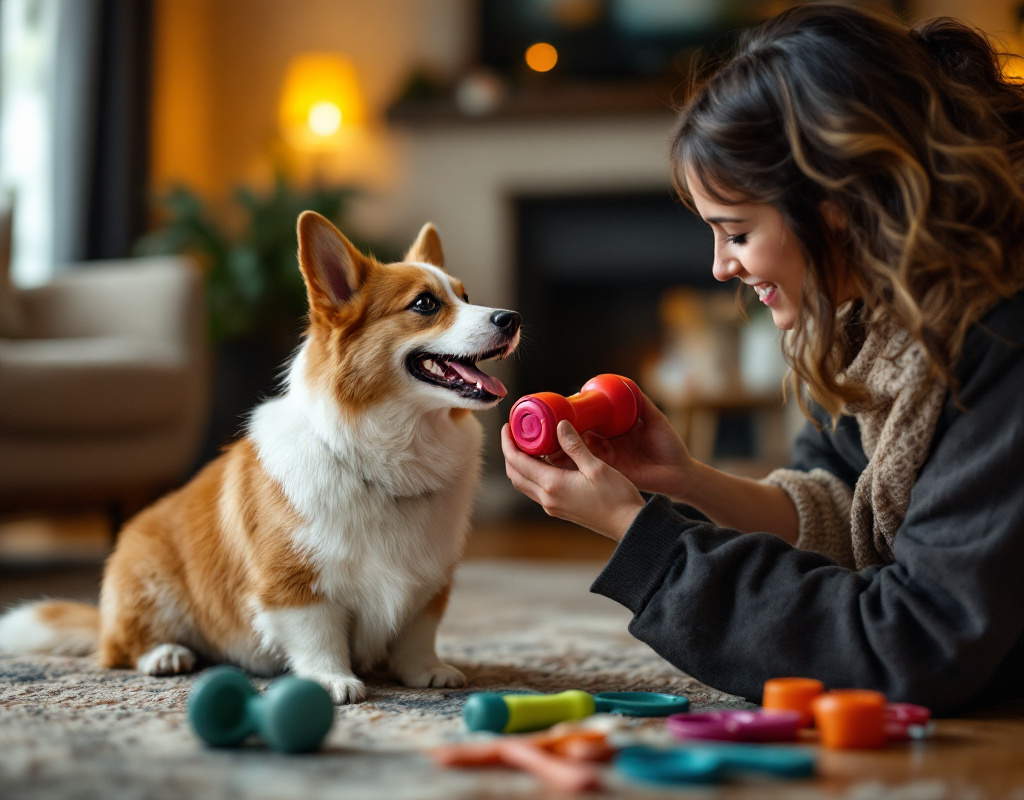
In addition to treats, a movable toy or a treasure hunt (hiding rewards in the room) stimulates his scent and reinforces the desire to cooperate. Every success deserves a sign of enthusiasm, even brief: a genuine smile, discreet applause, a knowing look often suffice to transform an isolated act of obedience into a lasting habit.
Step 4: Manage Moments of Blockage
All dogs – even the most zealous – experience phases of discouragement or extreme concentration in their oppositions. Faced with a sudden refusal, the challenge is not to force, but to create a therapeutic pause. Offer him five minutes of pressure-free rest, then resume the exercise in a playful form, never returning to the initial command too soon.
Some substitute activities, such as object search or a short playful agility course, will divert his energy and restore cooperation. The success of these mini-challenges boosts his morale and prepares him to reintegrate the exercises previously considered more “boring.”
Step 5: Socialization and Mental Stimulation
The Pembroke Corgi rarely goes beyond the caricature of a companion dog, but its well-being also involves discovering a rich and varied outside world. Offer it walks in different places (forest, seaside, urban trails), adjusting the pace to its enthusiasm for each environment.
Puzzle toys, canine puzzles, or scent games maintain mental agility. By breaking sessions into progressive challenges, the dog experiences each step as a victory, even eagerly demanding the next one. You then shift from the role of trainer to that of guide, accomplice in its little achievements.
Towards a Fulfilled Corgi
At the end of these five phases, the initial stubbornness often turns into a driver for regular learning. The proudly trained Pembroke Corgi becomes an attentive partner, capable of responding without excessive constraint. The secret lies in the co-construction of an educational process where every progress – even minimal – is highlighted.
Maintaining this dynamism requires regularly revisiting the routine, renewing the games, and perpetuating the emotional connection. Moreover, your own satisfaction in sharing these moments of complicity ultimately strengthens the duo’s balance. In short, training a stubborn Corgi rarely ends; it is part of a living relationship, always invited to evolve.
Frequently Asked Questions
At what age should the education of a Pembroke Corgi begin?
You can start as soon as it arrives at home, ideally between 8 and 10 weeks. By prioritizing early socialization and light exercises, you promote confidence without ever rushing its growth.
How long should an optimal session last?
Rather than long repetitions, it is better to chain 5 to 10 minutes of work, separated by breaks. The puppy’s brain assimilates more efficiently in these short concentration intervals.
What should I do if my Corgi ignores treats?
Some subjects prefer toys, petting, or simple verbal encouragement. Observing its preferences and diversifying rewards often proves more motivating than a standard treat.
How to maintain motivation in the long term?
Alternating exercises, presenting new challenges, and celebrating every small victory ensures constant interest. It is this notion of progression that sustains its enthusiasm and curiosity.