
Do you dream of peaceful walks where your dog stays by your side, without turning into an uncontrollable locomotive? It’s entirely possible, even if sometimes it feels like you’re dancing a messy tango with the leash. Here, we will debunk misconceptions, try out easy exercises to slip into your routine, and establish solid reflexes. Ready to take it one step at a time? 🐕🦺
Why does your dog pull on the leash?
A natural energy to channel
Most dogs are unaware of the role the leash plays: a simple invisible thread that connects them to you. For them, taking off at a gallop means exploration, discovery. This impulse can even be amplified in endurance breeds or young dogs full of vigor. Understanding this thirst for movement is already half the job to guide it effectively.
The motivations behind pulling
Sometimes the dog anticipates a reward – smells something tempting, encounters a fellow dog – and decides to rush forward believing the effort will be in vain. Occasionally, a poorly adjusted harness or collar causes discomfort: trying to escape then becomes a reflex. Identifying whether it’s distraction, discomfort, or simple zeal will allow you to adapt your approach.
Choosing the right equipment

Anti-pull harness or simple collar?
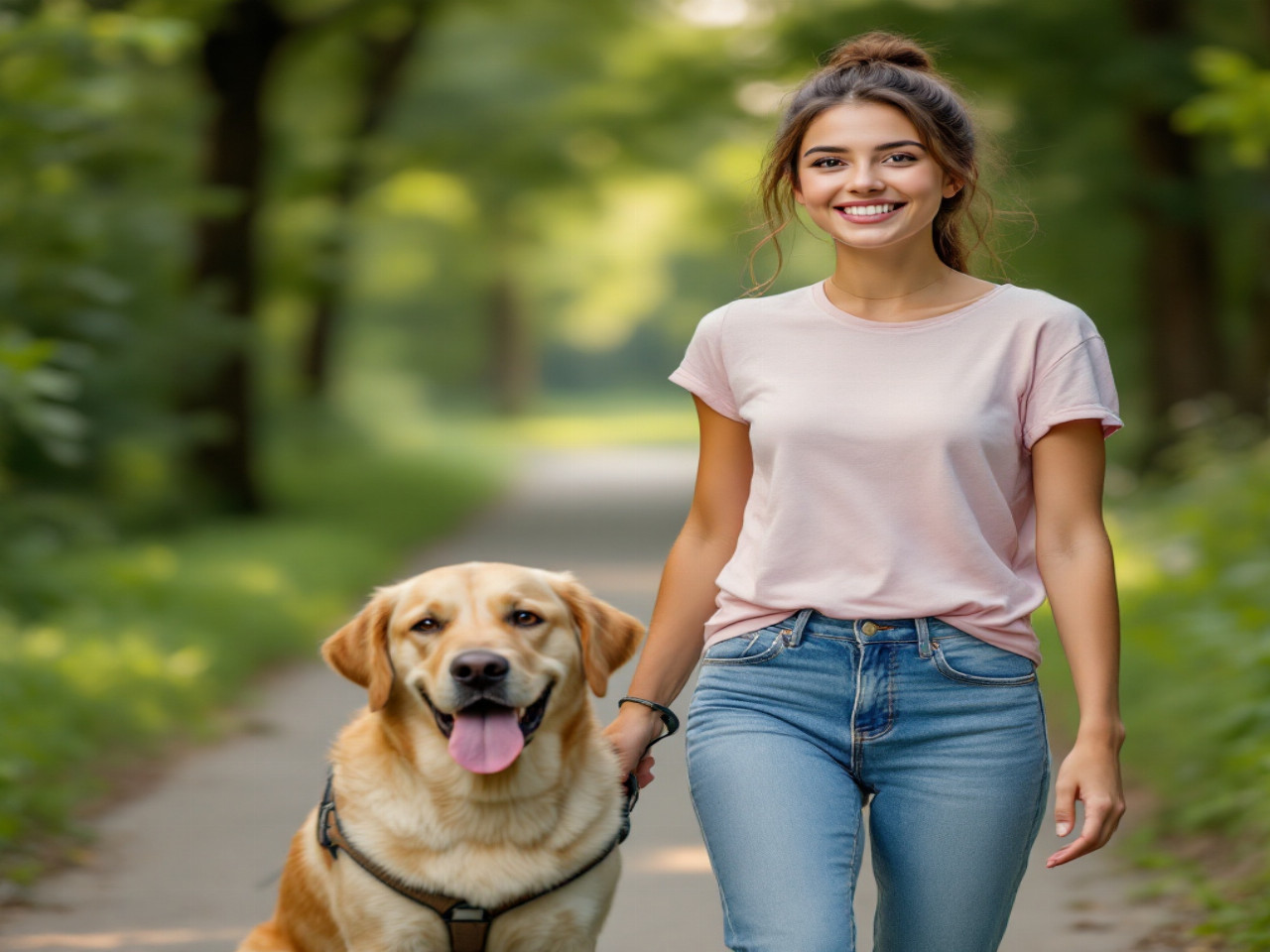
Let’s be honest: the anti-pull harness can be a game-changer, especially at the start. It distributes pressure and offers gentler control. Conversely, a collar that’s too tight risks causing neck tension or loss of attention. If you try a harness, make sure it fits perfectly and does not restrict breathing or shoulder movement.
Long line versus classic leash
For distance work, a 5 to 10 m long line allows the dog to get its bearings while letting you bring the dog back without harsh pulling. It’s mainly used during initial training, in a secure area. Then, the long line is gradually shortened until switching to a standard leash. The goal? To maintain a sense of freedom while controlling the space.
Key steps to teach walking on a leash
1. Establish a “stop” signal and the reward
Set up a verbally clear command: “Stop” or “Wait.” As soon as the dog stops pulling – even briefly – immediately praise with a treat or petting. This little stimulus-response game is inspired by the 4-week basic obedience program, which emphasizes the importance of positively reinforcing any approximation of the targeted behavior.
2. The 180° technique
When the dog lunges forward, pivot sharply and head off in the opposite direction, without pulling but communicating firmly. Soon, the dog will understand that pulling won’t gain ground. The first turns might be challenging, so build momentum: a good sense of humor will save your shoulders and keep your patience.
3. Use anchor points
On a route without stimuli, set up stopping points – a bench, a door, a post – and practice the “stop” signal. At each stop, do a quick “sit” recall to reinforce focus. This is a gentle transition between walking and pausing that embeds the idea of a shared rhythm, not a one-sided sprint.
Progressive 4-week program
| Week | Main Objective | Key Exercise |
|---|---|---|
| 1 | Introduction of the “stop” signal | Stop game + reward every 3 steps |
| 2 | Mastering the 180° technique | Route without distractions, reactive pivots |
| 3 | 5 m long line, distance control | Stop and recall at 3 m, 5 m, and 8 m |
| 4 | Switch to standard leash | Short urban route, intermittent reinforcement |
Organize Varied Sessions
Repetition alone can bore your companion. Alternate locations, times, and exercise intensity so that walking becomes a renewed pleasure rather than a fixed routine.
- Session 1: Quiet garden or park (10–15 min), “stop” signal and treats.
- Session 2: Residential street (15 min), pivots and changes of direction.
- Session 3: Semi-urban area (20 min), long leash + crowded passages.
- Session 4: Park with distractions (20 min), intermittent reinforcement, waiting games.
Managing Common Challenges
Olfactory or Visual Distractions
When the dog freezes to sniff or jumps toward a bird, avoid punishment. Stay patient, calmly call them back (“come,” accompanied by a gesture) and reward the return. You will find in the list of positive reinforcement methods to correct barking tips directly transferable: ignore the undesirable behavior and reward the opposite choice.
Frustration and Rising Stress
When a dog pulls harder and harder, it is often an expression of emotional imbalance. Gently end the session: a small basic obedience recall (“sit,” “lie down”), then a calm moment. You will avoid escalating tension and relearn to the dog that there are several ways to enjoy the walk.
Maintaining Achievements in the Long Term
The key is consistency. Even if your dog has learned the basics, continue to vary rewards – petting, vocal praise, surprise treats. Include a “fun” day where the leash is not used, to balance freedom and discipline. Thus, every outing will become a bonding appointment without tension.
FAQ – Your Frequently Asked Questions
- My dog does not respond to the “stop” signal, what should I do?
Return to the initial exercise in a very quiet space, reduce the distance, and massively reinforce the expected behavior with small, highly appetizing treats. - What is the ideal age to start these learnings?
You can start from 8–10 weeks, adapting the intensity: ultra-short sessions, lots of play and praise. - Should I always stand or sometimes crouch?
Crouching can give a less “authoritative” appearance, ideal for shy dogs. Adapt your posture to your companion’s personality. - How to react when another dog approaches running?
Give the stop signal and place yourself between your dog and the visitor. Offer a treat to redirect their attention to you.