
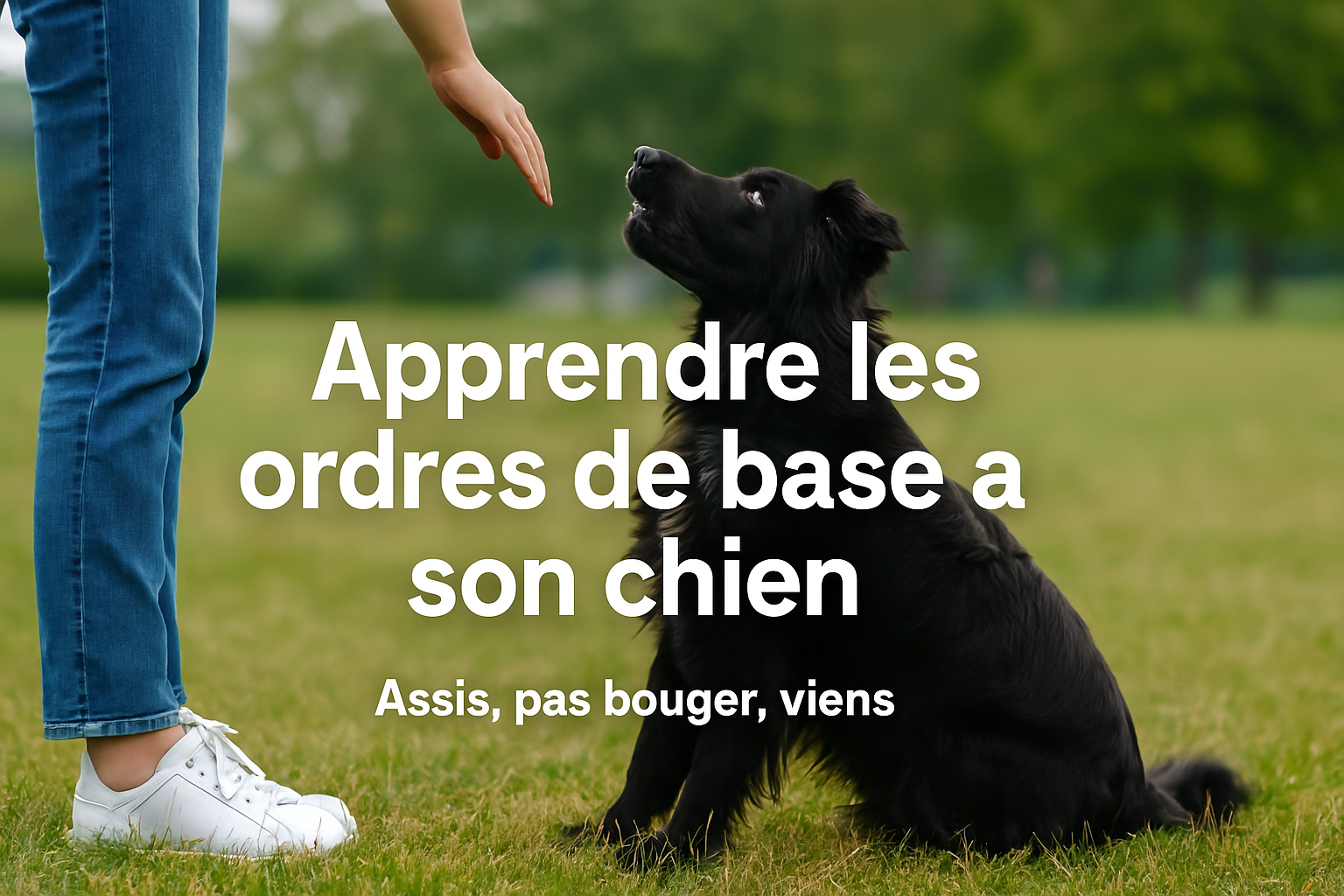

A dog that listens is a freer, calmer, and more pleasant dog to live with on a daily basis. No need to dream of a training competition to teach your dog a few simple commands. “Sit,” “Stay,” “Come here”: these basic commands enhance safety, bonding, and mutual trust. And the good news? You can teach them at home, without any equipment, using a gentle and effective method. 🦴🎓
🔍 Why teach basic commands?
A dog that responds to “sit” or “come” is not just obedient. It is freer. Free to walk off-leash in a park because its recall is reliable. Free to calmly welcome guests because it knows “stay.” Basic commands are pillars of coexistence: they prevent accidents, reduce stress… and strengthen the relationship. Teaching these commands is investing in clear communication with your dog, both daily and in more complex situations. It’s not just about discipline, but about making everyone’s life more peaceful by avoiding misunderstandings and promoting smooth interaction between dog and owner.
🎯 Positive method: the key to success

No more shouting, hitting, or choke collars. We now know that effective dog training is based on reward, repetition, and consistency. This is called the positive method. It relies on:
- Timing: reward the correct behavior immediately
- Clarity: one command = one action, always the same
- Patience: some dogs learn in 3 sessions, others in 10
- Positive reinforcement: treats, toys, petting, gentle voice
- Short sessions: 5 to 10 minutes are enough if regular
A motivated dog is a learning dog. And when it understands what is expected, it cooperates enthusiastically.
🐾 The “Sit” command: laying the foundations
“Sit” is often the first command taught because it is simple and useful in all circumstances. Here is how to proceed:
- Hold a treat in front of the dog’s nose
- Slowly raise it towards the back of its head (the movement encourages it to sit)
- As soon as the butt touches the ground: say “sit” and give the reward
- Repeat several times, then try without a visible treat (empty hand + reward afterward)
Little by little, you will be able to use “sit” to calm a moment of excitement or ask for attention before crossing the street, for example.
🧘 The “Stay” command: managing excitement
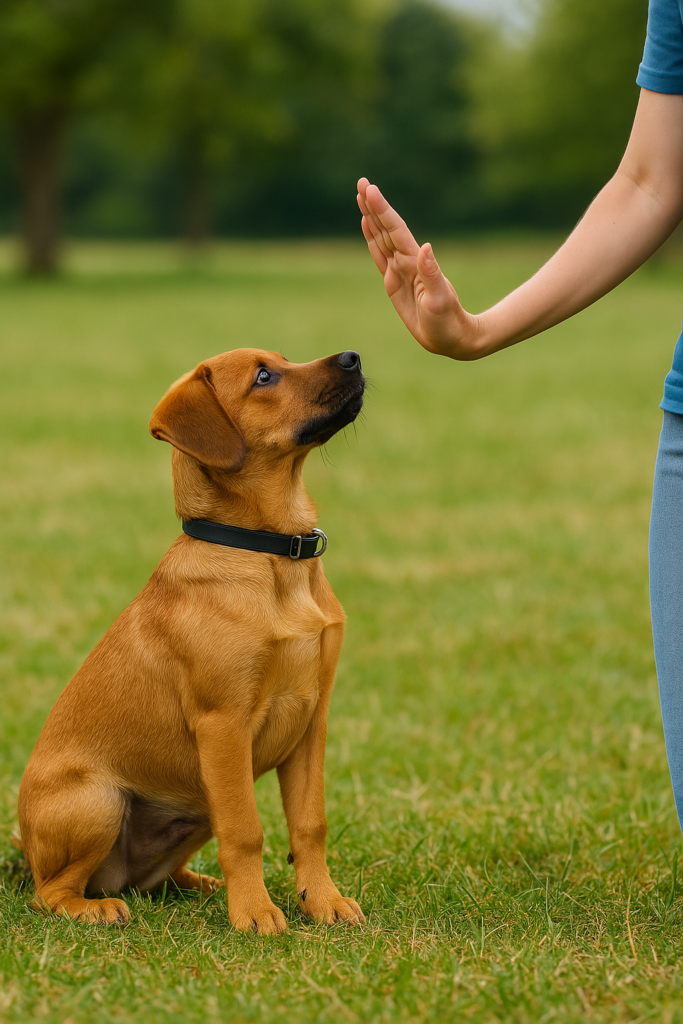
A dog that does not move on command is a dog you can leave safely while opening a door, attaching its leash, or crossing a pedestrian crossing. Here are the steps:
- Ask for “sit”
- Say “stay” while raising your hand
- Step back one step. If it does not move, return and reward
- Repeat while gradually increasing the distance and time
Never punish him if he moves: calmly reposition him. The goal is not to “hold firm,” but to understand the game and feel valued by succeeding.
📣 The “Come” command: a reliable recall
Recall is one of the most important commands… and the most difficult if taught poorly. The secret? Never call a dog to make him have a bad experience (punishment, end of play…). Here’s how to create a “fun recall”:
- Start in a quiet place, on a leash or in a secure freedom
- Crouch down, open your arms, say “come” in a cheerful voice
- As soon as he comes, reward immediately
- Vary locations, distances, distractions… while staying consistent
A good recall can save you many cold sweats. It should be a celebration every time he returns, not the end of fun.
❓ FAQ + Testimonial
At what age should you start?
From 8 weeks old! Puppies are very receptive. But it’s never too late: an adult dog learns just as well if you approach it gently.
What if he “doesn’t listen at all”?
You need to review your method. Is he motivated? Distracted? Tired? Hungry? Reduce distractions, shorten sessions, and go back to basics.
🗣️ Testimonial
“My dog used to pull everywhere and came back half the time… Since we worked on the “sit” and “come” commands positively, it’s like night and day. I can let him off-leash at the park without stress.” — Samira, 40 years old
🔚 Conclusion
Teaching basic commands to your dog is giving him a richer, safer, and more harmonious life. It also strengthens your daily bond. With a kind method, a bit of consistency, and lots of enthusiasm, your dog can learn much more than you imagine. 🎓🐶
📶 Commands and distractions: how to level up
Once your dog responds well to basic commands at home, it’s time to make things a bit more challenging. After all, the goal is not just for him to sit in the living room, but also at the park, in the city, or at the vet. Here’s how to do it:
- Change location: move from a quiet place to a slightly livelier one
- Add distance: stay at 2, then 5, then 10 meters when giving the command
- Add duration: in a “stay,” gradually increase the time
- Introduce distractions: toys on the ground, presence of another dog…
Do all this progressively, going back if necessary. The more complex the environment, the more motivating the reward must be!
🎯 Should you use a clicker? Advantages and limits
The clicker is a small device that emits a consistent “click.” It allows you to mark the desired behavior very precisely. For example: as soon as your dog touches his rear end to the ground, click + treat. This improves the clarity of learning.
✅ Advantages: perfect timing, very useful for tricks, little chance of confusion.
⚠️ Limitations : requires proper use (conditioning), somewhat bulky on a daily basis, sometimes unnecessary for simple commands if you have a good voice and timing.
In short: useful, but not essential for learning “sit” or “come.” For more advanced training, it’s an asset!