
| Key Points | Details to Remember |
|---|---|
| 📝 Definition | Understanding cleanliness in puppies |
| 🏠 Setup | Organize a dedicated space |
| ⏰ Regularity | Plan frequent breaks |
| 🔄 Repetition | Reinforce good behaviors immediately |
| 🚫 Mistakes | Detect and correct without punishment |
| 🎯 Goal | Confident and clean puppy |

From the moment your puppy arrives, establishing a consistent cleanliness routine promotes its well-being and makes life at home easier. By combining observation of its needs, organizing a suitable environment, and positive reinforcement, you will lay the foundations for harmonious training within a few weeks.
1. Understanding the puppy’s cleanliness reflex
From the age of two months, a puppy’s instinctive orientation is not to soil its own sleeping area. This tendency gradually strengthens, but it requires guidance so that your companion makes the connection between action and result.
1.1. Physiological development
The elimination organs of a puppy are not yet mature at two months. It may therefore have difficulty holding its needs for more than two hours. Being aware of this natural limit allows you to adjust “toilet” breaks and avoid accidents on the carpet or floor.
1.2. Common mistakes
- Waiting too long for the puppy to ask: it may no longer be able to hold its bladder.
- Catching it in the act and shouting: this associates panic with the chosen spot.
- Constantly changing the area: causes confusion and slows learning.
2. Preparing a suitable space

Before any training session, prepare a corner that will become the “cleanliness spot.” It should be a quiet place, easy to clean, and close to your presence to reassure the puppy.
2.1. Choice of surface
- Pads or newspapers: economical, easy to replace.
- Absorbent puppy pads: thicker, they limit leaks.
- Indoor synthetic grass: mimics the outdoors and simplifies the transition.
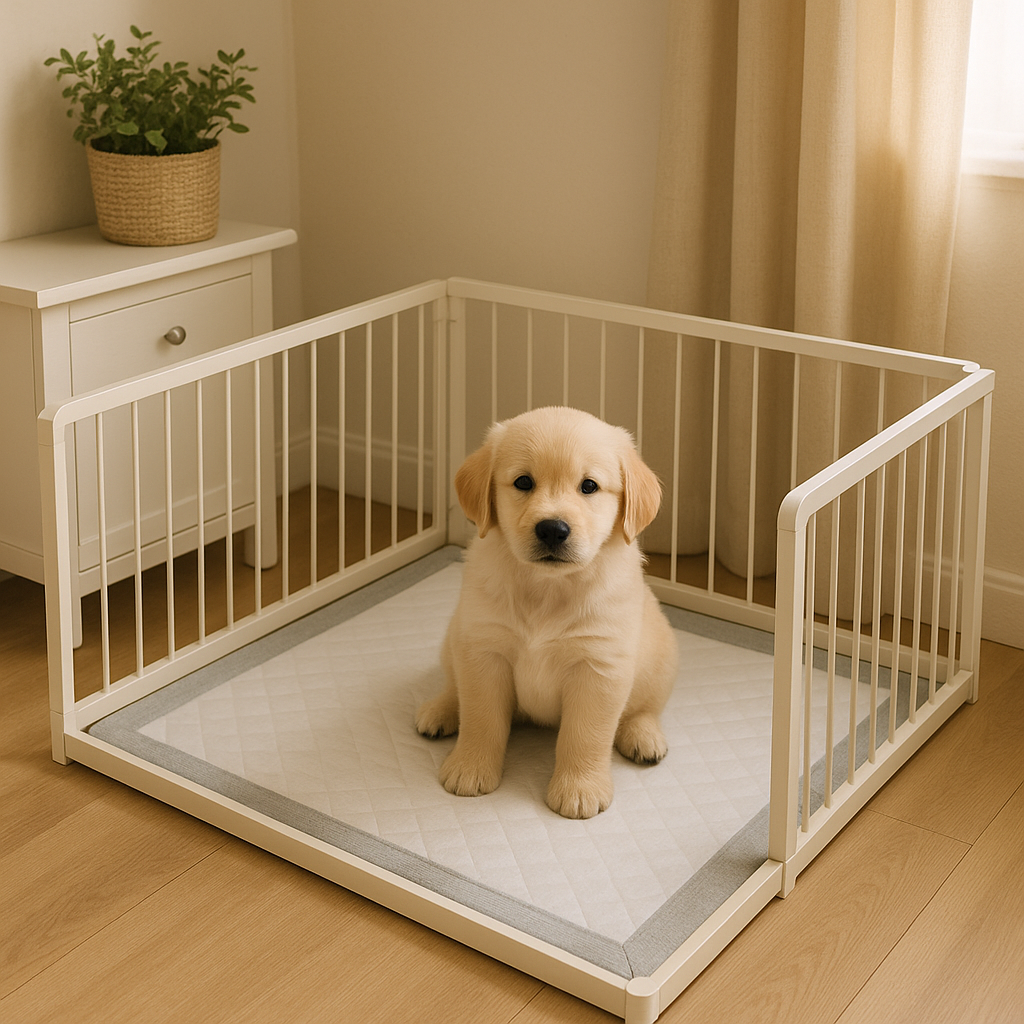
Make sure the surface is large enough for your puppy to feel free to move around.
2.2. Securing the practical area
Install a low barrier—or what is called an “invisible fence”—to restrict access to certain rooms. You can also draw inspiration from the invisible fence method to channel its movements while preserving its sense of exploration.
3. Establishing a strict routine
Regularity reassures the puppy: it anticipates moments of going out or indoor breaks and gradually understands the expected rhythm.
3.1. Frequency and key moments
- Upon waking: first systematic outing.
- After each meal or intense play: impose a calm period then offer the cleanliness spot.
- Before bedtime and after each nap: repeat systematically.
3.2. The Role of Positive Reinforcement
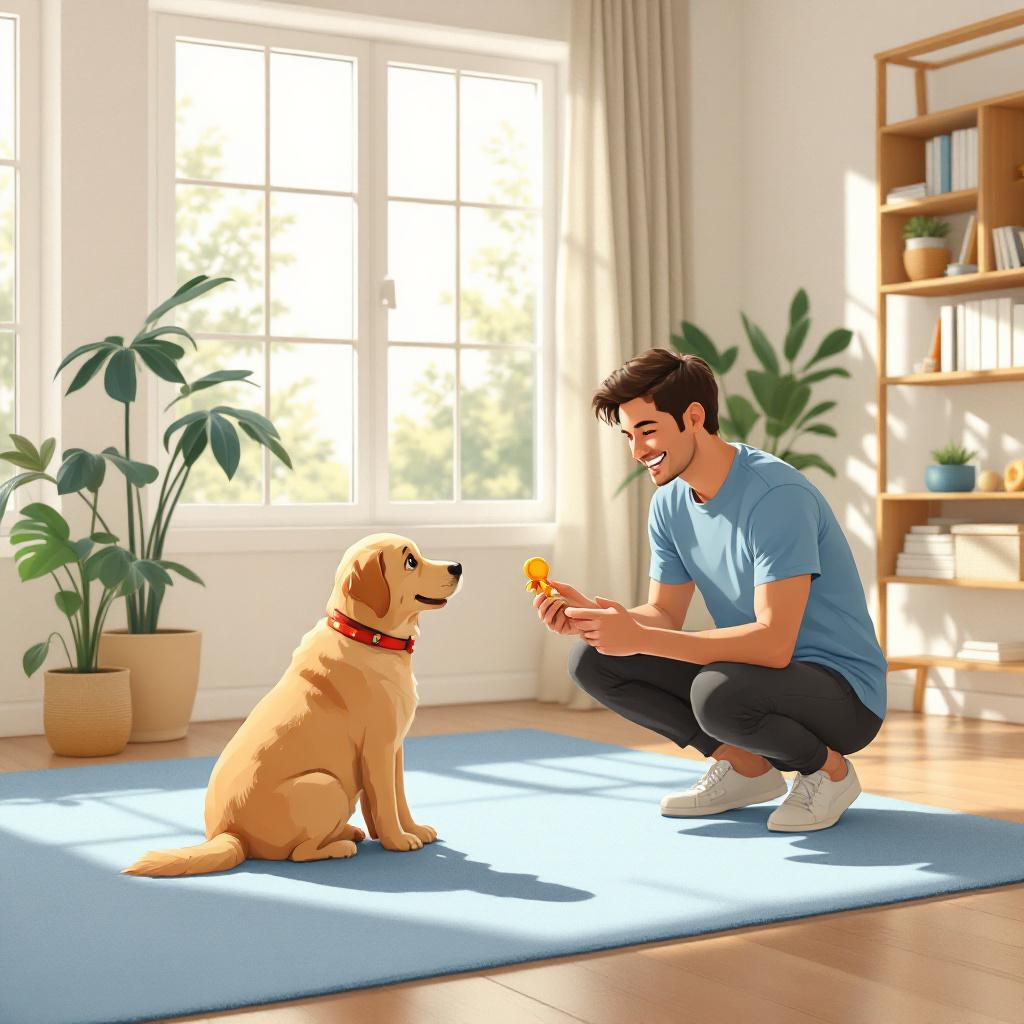
Offer a treat or praise as soon as your puppy eliminates in the right place. The association between reward and behavior prevents you from having to resort to punishment, which is often counterproductive.
4. Observing and Interpreting Signals
Each puppy adopts its little habits to express its needs. Learning to decode them helps you gain responsiveness and efficiency.
4.1. Precursor Signals
« Your puppy may sniff vigorously, circle around, or head towards the door for no apparent reason. »
- Sniffing the floor
- Freezing then squatting
- Looking towards the exit

4.2. Mistakes to Avoid
Do not take a “simple” turn on the spot lightly: these little gestures always come before an accident. It is better to act a little early than too late.
5. Managing Setbacks and Progressing
Despite all your attention, a puppy can sometimes make a mistake. The important thing is to correct calmly and persevere.
5.1. Cleaning Without Traces
Use an enzymatic product to eliminate all odors: this prevents your puppy from confusing the spot with a future clean area.
5.2. Adapting to Progress
Over the weeks, gradually remove indoor supports and encourage outings. For puppies more stressed outside, you can rely on your already established indoor potty training routine for puppies.
FAQ
At what age should potty training start?
You can start as early as 2 months, adjusting the frequency of outings to your puppy’s control capacity.
How long does it take for the puppy to be potty trained?
Most puppies show reliable cleanliness between 4 and 6 months, depending on your consistency and their learning pace.
Does the puppy need to go out at night?
At first, yes: their bladder muscles are still immature and they risk an accident after several hours of sleep.
Should I punish an accident?
No. Punishment creates anxiety and does not allow the puppy to associate its action with a specific place.
What to do in case of relapse?
Return to more frequent outings, reinforce positively, and check the cleanliness of the sleeping area.