
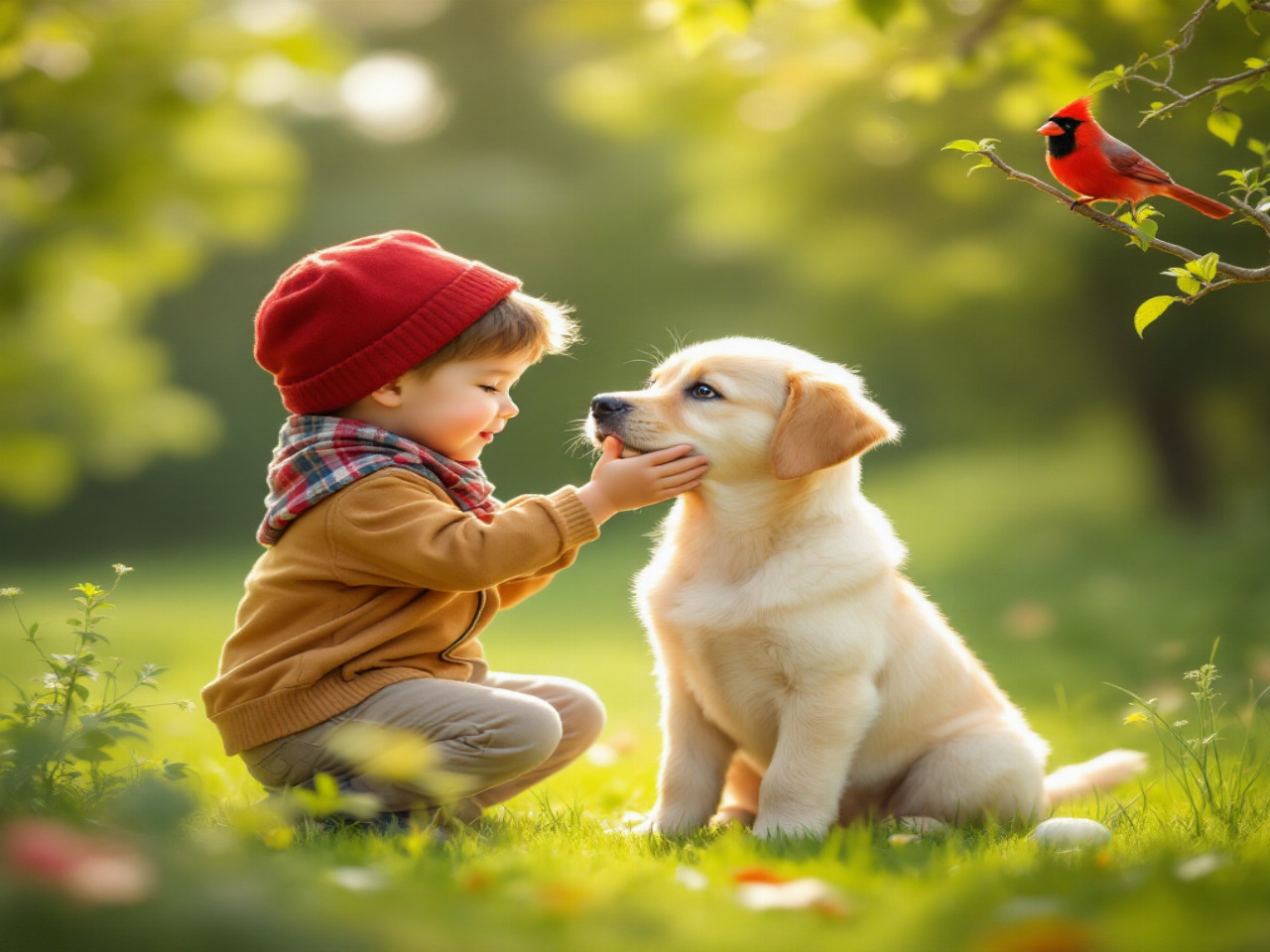

Welcoming a puppy means embarking on an exciting adventure where every moment counts. You may have already heard about “socialization,” a term that has become essential among dog enthusiasts. But what does it really mean, and why do these first weeks shape your companion’s future character? Between curiosity, learning, and little scares, discover here how to guide your puppy step by step so that it grows up calm, balanced, and ready to face the world without stress.
Understanding socialization: what is it?
Socialization is the puppy’s gradual taming of the world. Unlike formal training, it is based on varied, positive, and repeated experiences. The goal is not just to make it obedient, but above all confident: it must associate a new element (noise, person, object) with a pleasant emotion. If this step is missing, the dog risks developing fears, mistrust, or problematic behaviors in adulthood.
Why the window of opportunity is crucial
This period is often compared to a window which, surprise, eventually closes. For only a few weeks, the puppy absorbs like a sponge what it encounters. You might think it will have its whole life to catch up on missed learning… in reality, it’s not that simple. After a certain age, some fears become deeper, almost irreversible, and require long and delicate desensitization work.
The main stages of socialization

To structure it, five key phases are distinguished: prenatal, neonatal, transitional, primary socialization, and secondary socialization. Each plays a distinct role in the sensory, emotional, and behavioral development of the puppy.
1. Prenatal phase: the foundations before birth
Yes, socialization begins even before your little ball of fur sees the light of day. The mother’s environment influences her puppy: stress, soft music, or repeated human contacts will imprint the puppy in utero. Studies show that a calm environment promotes a more balanced, more curious temperament at birth.
2. Neonatal phase (0 to 2 weeks)
Everything happens through touch and smell. The puppy sleeps 90% of the day, waking to nurse or seek warmth. At this stage, impose minimal disturbances: reassuring and gentle contact, a few caresses, are enough to familiarize it with your presence without startling it.
3. Transitional period (2 to 3 weeks)
This is a sensory turning point: the eyes and ears open, it goes from stars in its eyes to first whimpers. Don’t hesitate to gradually introduce new sounds (radio, chime) at low volume, varied textures under its paws (carpet, rug, tile). The goal? Develop its confidence in its body and sensations.
4. Primary socialization (3 to 12 weeks)
Here, little puppy becomes an explorer. Human and canine interactions should be multiplied:
- Meetings with various types of people (ages, sizes, clothing);
- Different environments (garden, urban setting, forest);
- Exposure to new objects or surfaces (bicycles, strollers, doormats, stairs).
Each experience must remain positive: exploration and approach are rewarded, brusqueness is avoided. Intelligent letting go will allow your puppy to de-dramatize novelty.
5. Secondary socialization (3 to 6 months)
Physical and hormonal growth accelerates. The puppy tests limits and may show a fear peak (“fear period”). This is the time to reinforce previous learning, continuing to diversify situations and establishing simple exercise routines: leash walking, recall games, self-control on treats.
The stakes of successful socialization
Why is it really worth investing time and energy in these first weeks? Beyond the pleasure of seeing a fulfilled puppy, several concrete benefits emerge.
Preventing behavioral disorders
An unsocialized puppy is more likely to develop anxiety, aggression, or phobias. For example, faced with a bicycle, it may become fearful and reactive. It’s better to accustom it when very young, when speed and noise are less intimidating.
Prevention is always better than cure; desensitization is often long and requires a lot of patience.
Encouraging Learning
Curiosity goes hand in hand with open-mindedness. A dog accustomed to different contexts learns new commands more easily. At the SPA or during an obedience course, it will learn faster because it focuses not on the fear of the unknown, but on the reward offered.
Strengthening the Human-Dog Bond
Sharing moments of discovery is building a relationship of trust. Your puppy will know you are its reliable guide when it needs you. This complicity then translates into calm walks, stress-free play sessions, and harmonious coexistence.
Practical Tips for Top-Notch Socialization
How to concretely organize these exploration sessions? Here are some tips to make the most of each interaction.
- Appropriate pace: 5 to 10 minutes, 3 to 4 times a day, is a good balance between stimulation and rest.
- Emotion control: if the puppy freezes or shows signs of stress (nose licking, diverted gaze), step back and try again later.
- Positive association: offer a local treat as soon as it approaches a new object to create a pleasant experience.
- Variety: change location, texture, and company. A puppy curious about a city will be more adaptable on vacation.
Summary Table of Phases and Objectives
| Phase | Age | Main Objective | Example Activity |
|---|---|---|---|
| Neonatal | 0–2 weeks | Comfort and gentle contact | Hand carrying, light petting |
| Transition | 2–3 weeks | Sensory discovery | Varied floor, soft sounds |
| Primary socialization | 3–12 weeks | Meetings and exploration | Guided visits, calm dog parks |
| Secondary socialization | 3–6 months | Reinforcement and autonomy | Recall games, start of education at puppy school |
FAQ – Your Questions About Puppy Socialization
When to start socialization if I adopt a slightly older puppy?
Even after 12 weeks, you can always diversify experiences. Gradual progression remains key: favor calm meetings and increase difficulty only if the puppy remains comfortable.
How to manage a fearful puppy during first outings?
Respect its pace and never force it. You can find a quiet park or offer cuddles outdoors so it gets used to the environment before exploring.
Is it absolutely necessary to go through a puppy school?
It is not essential, but useful to meet other dogs and be guided by a professional. You can also organize supervised playdates yourself with responsible friends.
Can social networks replace real socialization?
Photos and videos are enjoyable, but nothing beats live experience. Real socialization is about touch, smell, and shared emotions.