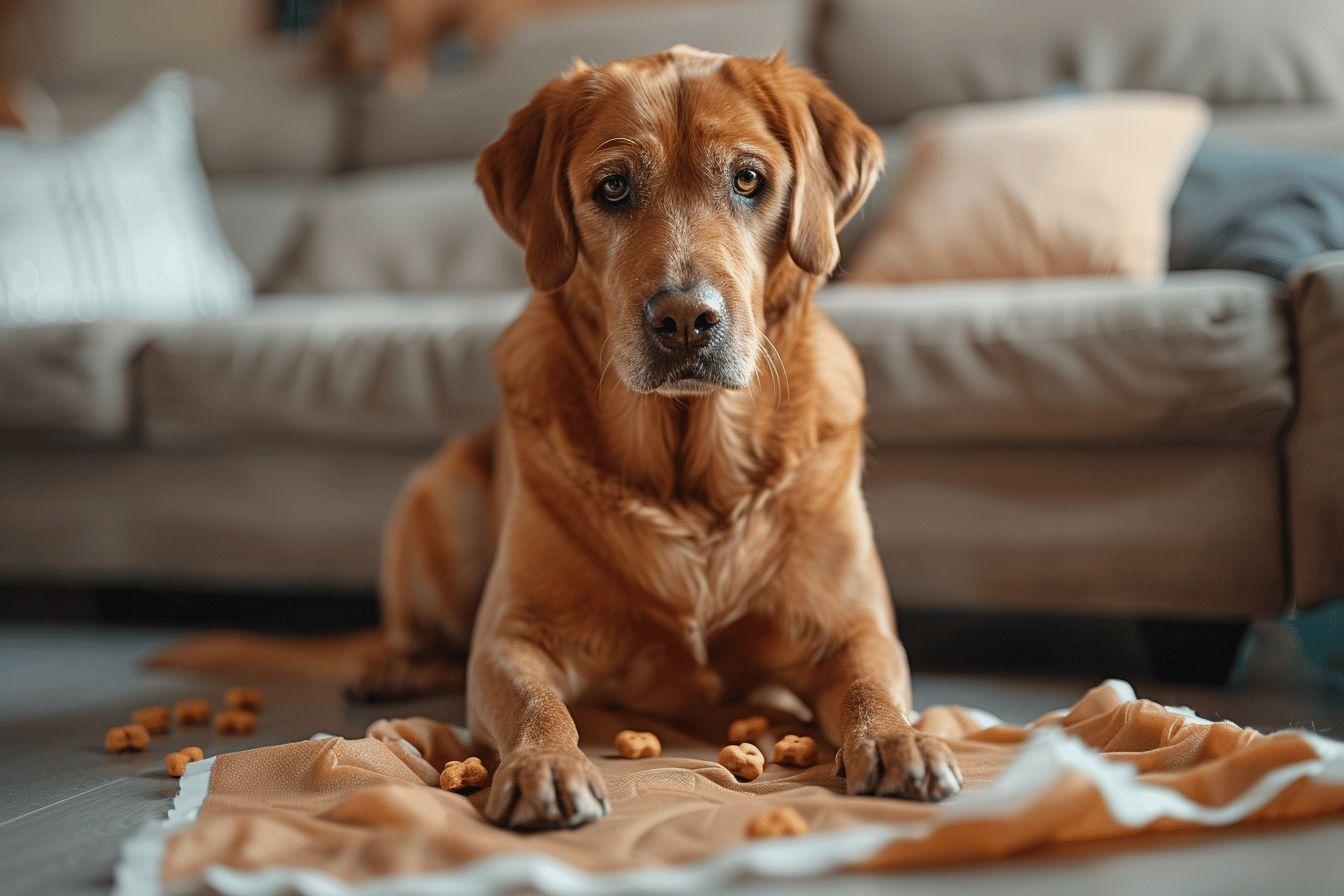

Teaching canine cleanliness requires methodology and consistency to effectively transform your companion’s behaviors.
- Patience and positive reinforcement are essential, while punishments prove counterproductive.
- A outing routine adapted to the dog’s age is the key to success.
- Learning to detect warning signals allows anticipating needs and avoiding accidents.
- Odor-neutralizing products are indispensable for effective cleaning of soiling.
- A specific outdoor spot paired with a verbal command greatly facilitates learning.
Teaching your dog cleanliness is a crucial step in its education. Whether you have a puppy or an adult dog, this fundamental skill requires patience, consistency, and method. According to a study conducted in 2024, 78% of owners consider acquiring cleanliness as the number one educational challenge with their pet. No panic! This guide offers you a step-by-step approach to transform your four-legged companion into a perfectly clean dog.
1. The fundamental principles for successful learning
To teach your dog cleanliness, it’s best to arm yourself with the right principles from the start. Patience and consistency are the essential pillars of this education. Joking aside, if you thought your pooch would understand everything in two days, you’ll need to revise your expectations!
Positive reinforcement remains the most effective method. Warmly praising your dog when it goes outside gradually anchors the right behavior. A pet, a few kind words, or a small treat work wonders.
Conversely, punishing your dog for an accident is totally counterproductive. Not only does it create anxiety, but your companion may associate the punishment with going in front of you, not with the inappropriate place.
2. Establishing an effective outing routine

The key to cleanliness lies in a well-thought-out outing schedule. The frequency of outings varies according to your animal’s age and size. Good to know: a puppy needs to go out much more often than an adult dog because its sphincters are not fully developed before 3-4 months.
Outing frequency according to age
| Dog’s age | Outing frequency |
|---|---|
| Puppy (up to 3 months) | Every 1-2 hours |
| Puppy (3-6 months) | Every 3-4 hours |
| Adult dog | At least 3-4 times a day |
It is always appreciated to create strategic moments for outings:
- Upon waking (immediately)
- About 15 minutes after each meal
- After a nap or intense play
- Before bedtime
To maximize chances of success, teach your dog basic commands so that it understands your expectations during outings.
3. Spotting warning signals
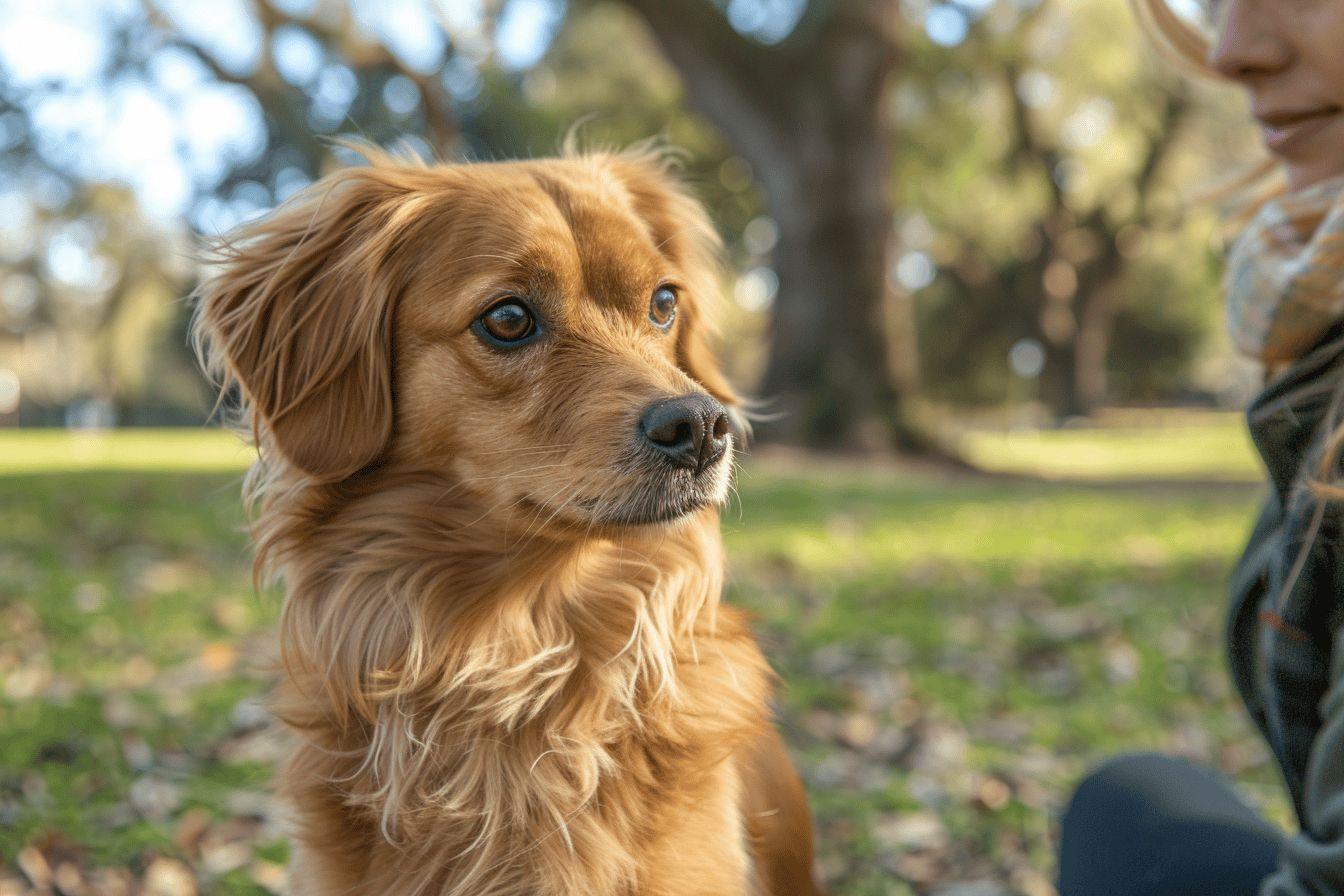
Your dog sends you signals when it needs to go out. Learning to detect these clues is a crucial step in acquiring cleanliness. A dog that suddenly becomes restless, sniffs the ground intensely, or circles is probably looking for a place to relieve itself.
Other behaviors such as settling near the door or staring at you fixedly are also revealing. The more attentive you become to these signals, the better you can anticipate your animal’s needs and avoid accidents.
What allows you to react quickly is to remain constantly attentive to changes in your dog’s behavior, especially after meals or play periods.
4. How to manage accidents effectively
Accidents are an integral part of the learning process. Your reaction to these situations greatly determines your dog’s progress. If you catch your companion relieving itself indoors, calmly interrupt it and immediately take it outside.
For cleaning, favor specific products that completely neutralize odors such as white vinegar mixed with water or baking soda. Avoid bleach which, contrary to popular belief, can encourage urine marking.
An important tip: always clean up messes when the dog is not present to avoid associating the attention received with inappropriate behavior. For puppies learning cleanliness, this rule is particularly important.
5. Learning differences between puppy and adult dog
Your dog’s age greatly influences the learning method to adopt. A puppy requires more patience and more frequent outings than an adult. It should be understood that until about 4 months old, a puppy does not perfectly control its sphincters.
For an adult dog that is not house-trained, learning may take longer because it is necessary to break down already established habits. Overall, the method remains similar but requires more consistency and gentle firmness.
It should be noted that some adult dogs can become unclean due to medical problems. In case of sudden changes in a previously clean dog, a visit to the veterinarian is necessary.
6. Mistakes to absolutely avoid
Some common practices seriously compromise house-training. Absolutely avoid putting your dog’s nose in its excrement – this outdated method creates anxiety and confusion.
Another frequent mistake: using absorbent mats or newspapers as a permanent solution. These accessories can create confusion about the appropriate place for elimination, thus prolonging the learning process.
Here are some examples of practices to ban:
- Punishing or scolding the dog for accidents
- Cleaning messes in its presence
- Leaving a puppy alone for too long
- Constantly changing the learning method
- Neglecting regular outings
If you encounter persistent difficulties with training, do not hesitate to work on other aspects of education such as recall, which will strengthen your relationship with your dog.
7. Tips that make a difference
To speed up learning, designate a specific outdoor spot for your dog’s needs. The persistent smell in this exact place will naturally stimulate the desire to return there to eliminate. As a bonus, you can associate a verbal command (like “pee” or “go”) while he is doing it.
For the night, especially with a puppy, provide a confined space such as a basket near your bed or a suitable transport crate. Dogs naturally avoid soiling their sleeping area, which encourages them to hold it until the next outing.
In other words, consistency in your approach and systematic positive reinforcement are your best allies for successful house-training of your faithful companion.