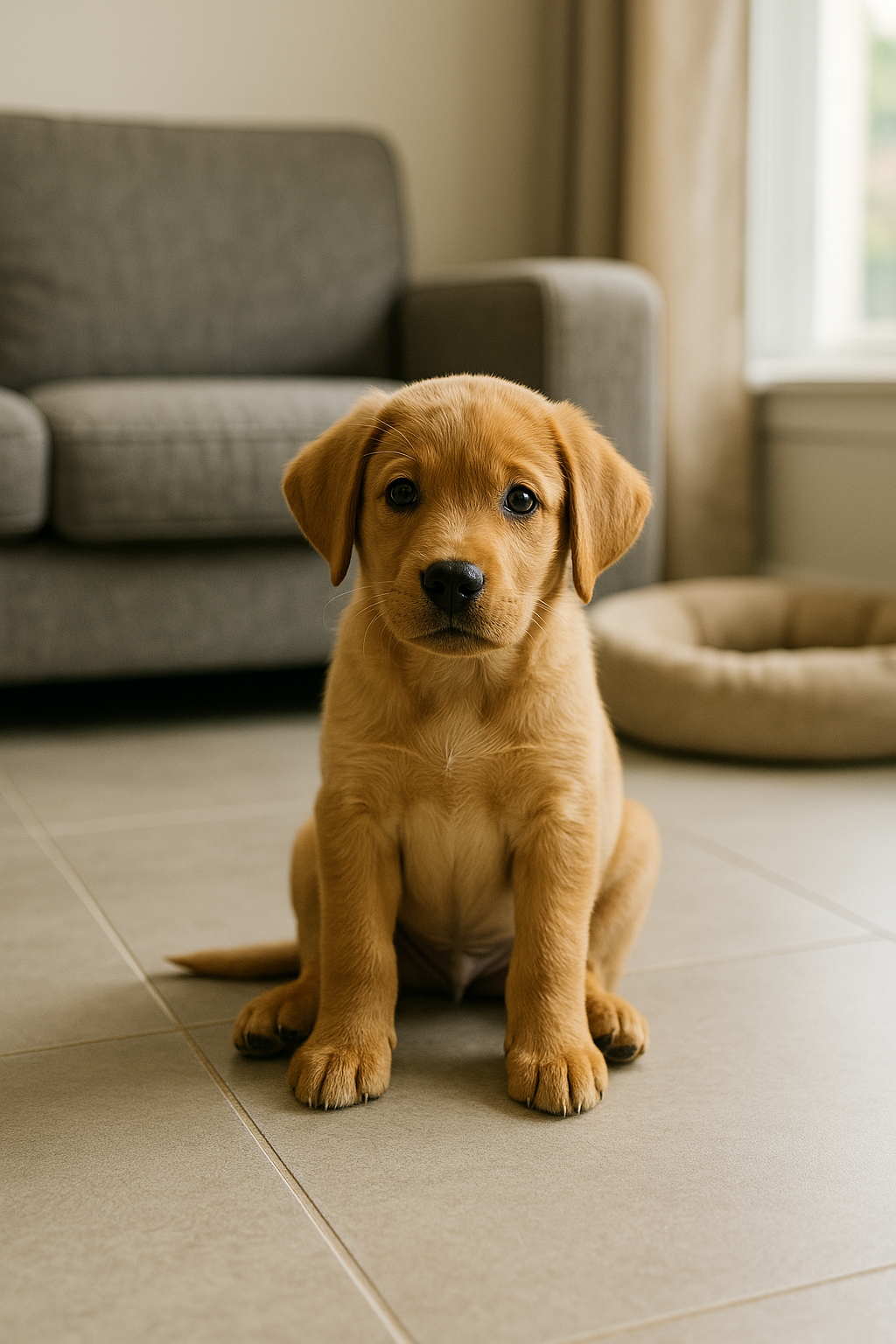

A little pee in the entrance, another under the table… And yet another while you had your back turned. Teaching a puppy to be clean is often one of the first big challenges for new owners. Good news: with the right reflexes, a bit of patience, and a well-thought-out routine, you can speed up the learning process impressively. Here is the method to turn your little urinator into a champion of peeing outside. 🚽🐶
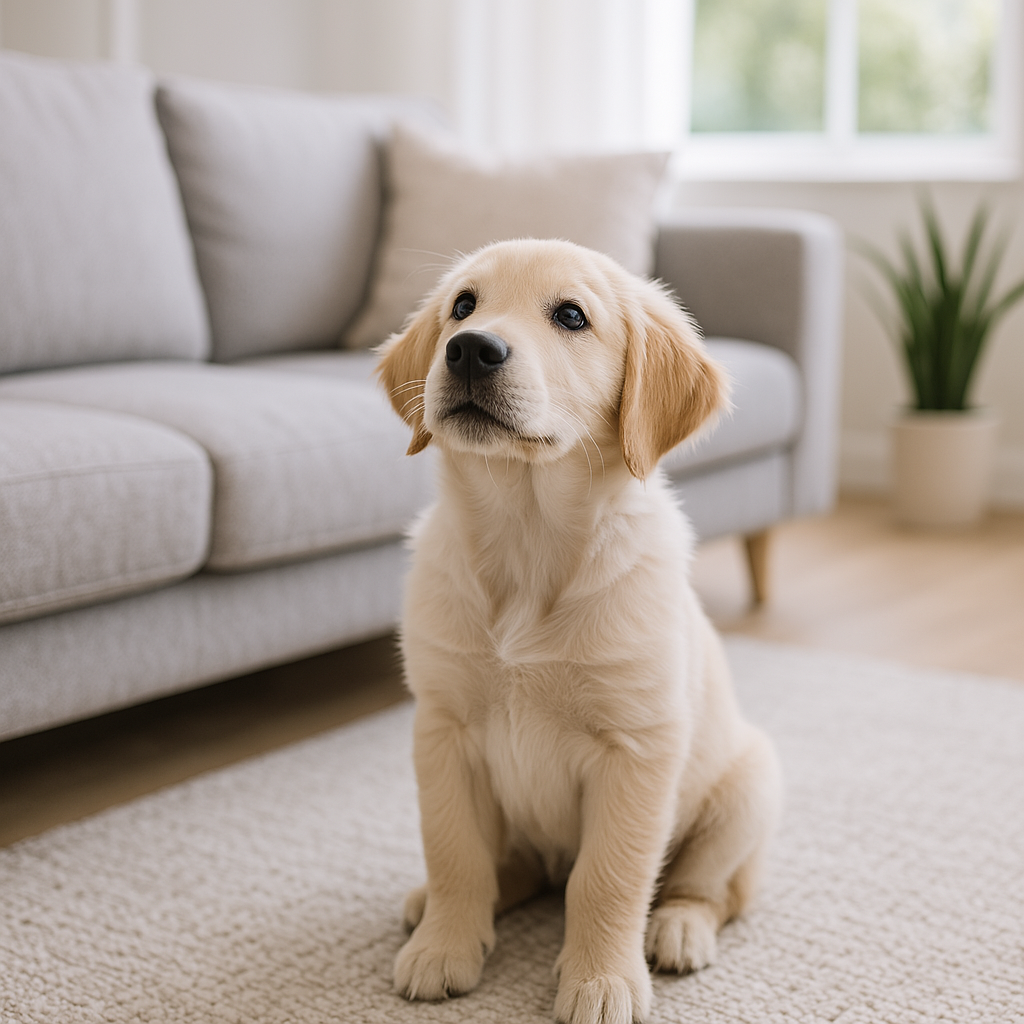
🧠 Understanding a puppy’s needs
A puppy is not a mini adult dog. Its digestive and urinary system is still immature. It cannot hold it for very long: on average, 1 hour per month of age. A 2-month-old puppy? It needs to eliminate every 2 hours. This includes:
- After every nap
- After every meal
- After a period of play or excitement
- Upon waking up in the morning
In addition to these “key moments,” there can be unpredictable urges. That’s why vigilance must be constant at the beginning. It’s not “on purpose.” It simply doesn’t have control yet. And that’s normal.
✅ Steps to teach cleanliness

- Very frequent outings: every 2 hours during the day, including very early and late. Even if “nothing happens,” you take them out.
- Immediate reward: as soon as they go outside, warmly praise + treat. Not 10 seconds later: during the action.
- Fixed area: choose a quiet spot, without too many distractions, so they associate this place with their needs.
- Ignore accidents: clean up without a word. Do not scold. This creates anxiety without educational effectiveness.
- Clear routine: meals at fixed times = predictable peeing. A puppy with a routine learns faster.
Some puppies are clean in 10 days. Others take 1 or 2 months. It’s the consistency and your responsiveness that make the difference.
🔍 Recognizing signs that they need to go
A puppy often gives signs before needing to go. By learning to spot them, you can anticipate and avoid an accident. Watch for:
- They circle around, sniff the floor insistently
- They move away to a corner or under a table
- They scratch or paw at a rug, a cushion, the floor
- They suddenly become restless after a calm period
As soon as you see one of these signals: head outside! Even if you’re not sure. You reinforce the right reflex in them.
💥 Handling accidents
Accidents will happen, even with the best routine in the world. Here’s how to react:
- Never scold them. They won’t understand, and it can create fear… and hidden peeing.
- Don’t clean up in front of them. It can amuse, stimulate, or frighten them.
- Use an enzymatic cleaner. Bleach attracts some dogs, a neutral product is more effective at removing odors.
- Ask yourself the right question: were you vigilant enough? Did you take him out at the right time? It’s not a failure, it’s an indicator.
❓ FAQ
My puppy is clean during the day, but not at night. Is that normal?
Yes, it’s often the last step. Reduce the amount of water in the evening (without depriving), take him out just before sleeping, and be patient.
What about training pads?
They can help in an apartment, but beware of confusion: he learns to go “inside.” If you use them, gradually remove them as soon as he masters it well.
🗣️ Testimonial
“At first, I felt like I was spending my days following my puppy with a mop. Then I noted his schedule, set up a real routine. In 3 weeks, he was 90% clean. Today, he even waits by the door.” — Léo, 33 years old
🔚 Conclusion
Cleanliness is a matter of observation, rigor, and encouragement. It’s not always linear; there will be setbacks. But with kindness and simple reflexes, your puppy will quickly understand what is expected of him. And every small progress is a big victory. 🐾💧
🏢 Puppy in an apartment: is it more difficult?
We often hear that potty training is more complicated in an apartment. That’s not entirely false, but it’s not inevitable either. In a house with a garden, you can take the puppy out very quickly, even at 5 a.m. In an apartment, you sometimes have to go through stairs or a hallway, which complicates responsiveness. The key? Anticipation. Prepare your shoes in advance, limit access areas at first, and be highly available during the first weeks. You p…
⚠️ Cleanliness and stress: beware of regressions
A puppy can regress temporarily: after a move, a change of routine, or a fright. This doesn’t mean he “forgets,” but that his balance is temporarily disturbed. Don’t panic. Go back to basics: more frequent outings, generous rewards, increased vigilance. And above all, stay calm. An isolated accident is not a relapse. It’s just a message: “I need security.”