| Key Points | Details to Remember |
|---|---|
| 🐶 Definition | Terrier originating from the Irish valleys of Glen of Imaal |
| 🛡 Origin | Bred to control vermin and hunt badgers |
| 💪 Morphology | Sturdy body, solid bone structure and developed musculature |
| ❤️ Temperament | Courageous, discreet at home and loyal to its family |
| 🧹 Maintenance | Grooming of the harsh coat necessary two to three times a year |
| 🐾 Activities | Mental stimulation and moderate daily exercise |

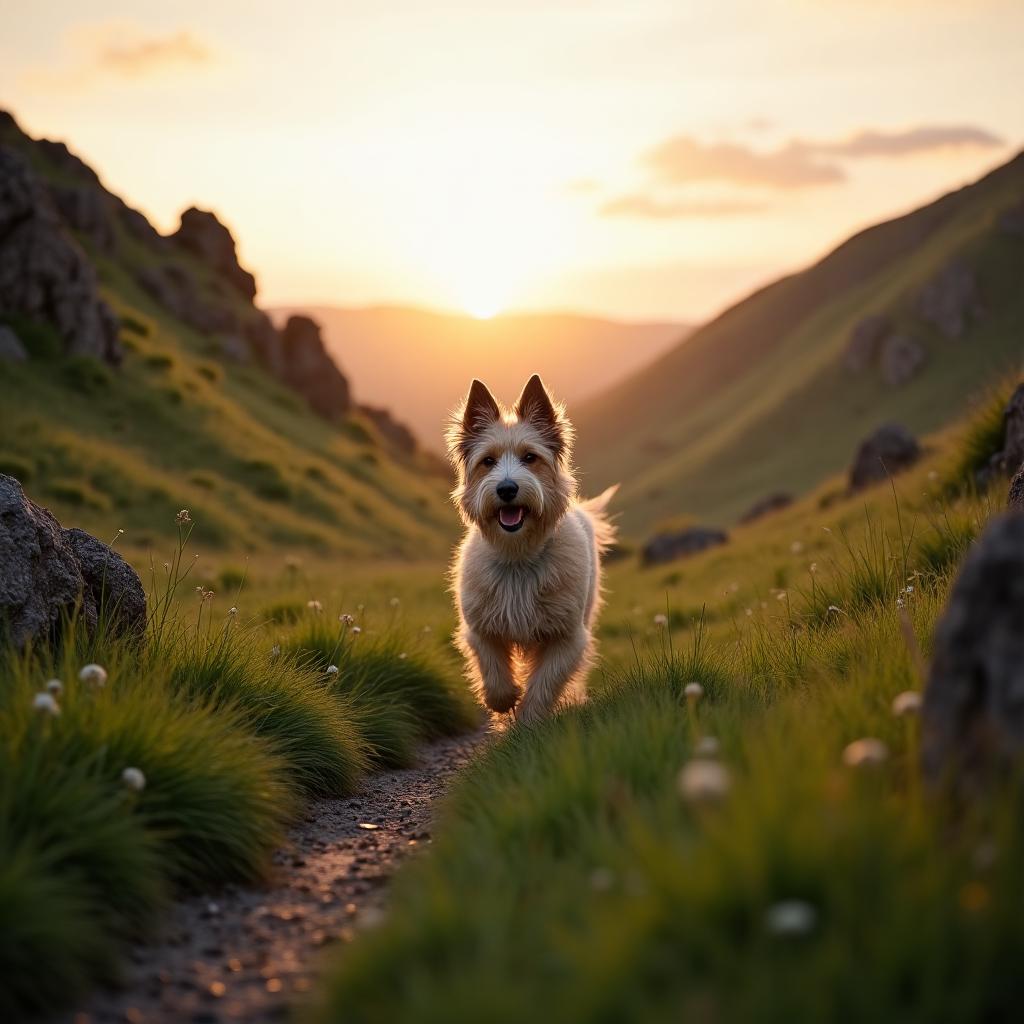
In a setting of Irish greenery, the Glen of Imaal Terrier stands out by its compact appearance and discreet gaze. Less common than its terrier cousins, it fascinates by its balanced character and adaptability. This article explores its past, physical qualities, needs, and how to share your days with this straightforward companion, both robust and reserved.
Origins and Evolution of the Glen of Imaal Terrier
Birth in the Irish Valleys
The Glen of Imaal Terrier finds its roots in the wild landscapes of County Wicklow, near the hamlet of Glen of Imaal. There, breeders and farmers shaped a dog capable of dislodging rodents and badgers in steep terrain. This breed is appreciated for its tenacity and ability to operate on difficult ground, a rare quality in a small dog, which earned it the nickname “athletic terrier.”
Recognition and Development of the Breed
Despite its long presence in Ireland, official recognition by the British Kennel Club only came in 1934, followed by the Irish Kennel Club in 1936. Numbers remained modest until after the war, when passionate households revived breeding. By the end of the 20th century, there was a gradual increase in births, notably thanks to dedicated clubs that ensured the preservation of genetic richness and original characteristics.
Physique and Breed Standards

General Appearance and Size
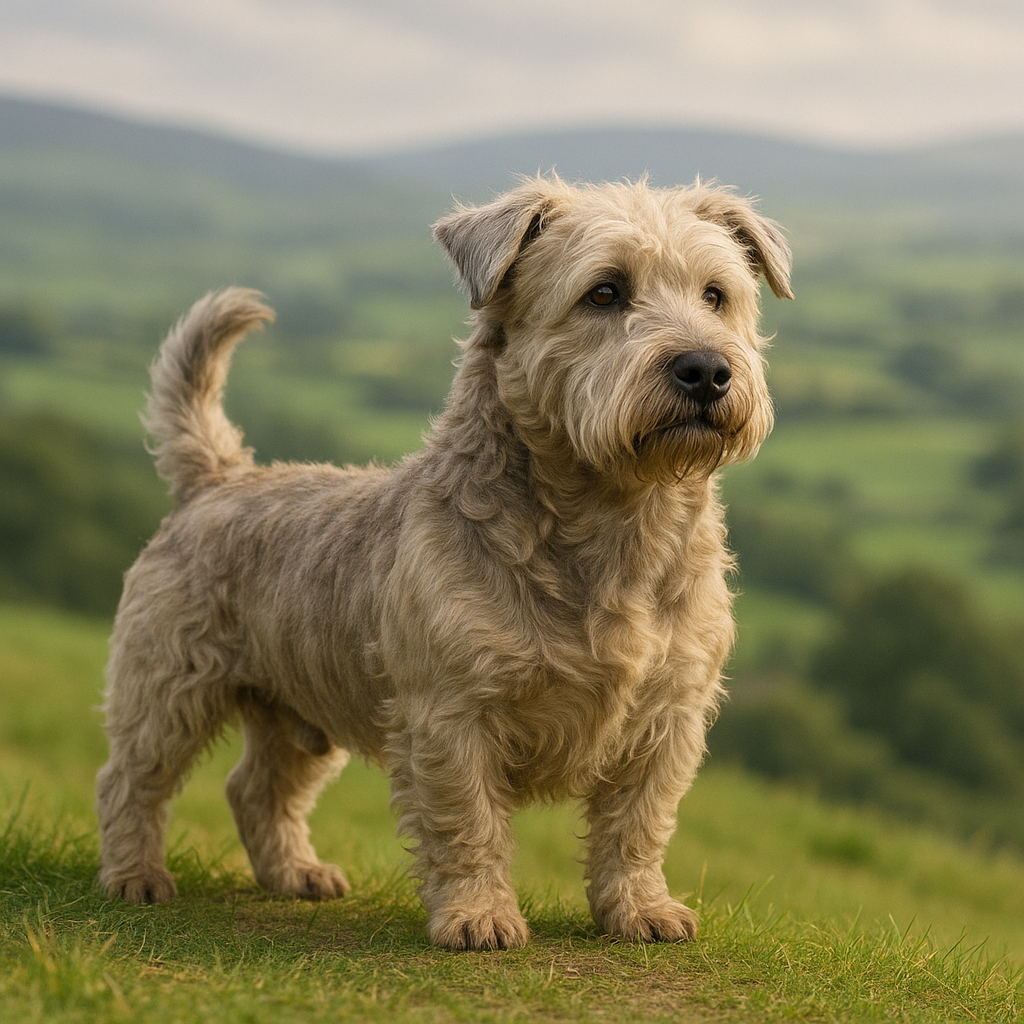
The Glen of Imaal Terrier displays a compact silhouette: a male generally reaches 36 cm at the withers weighing 15 to 18 kg, while the female is around 34 cm and 14 to 16 kg. This build gives it a low center of gravity, facilitating movement under bushes. Robust legs, a broad chest, and a powerful neck contribute to a decidedly solid posture, without any impression of heaviness.
Robustness and Physical Particularities
Its thick coat, made of a soft undercoat and a harsh topcoat, resists bad weather. Accepted colors range from blue-gray to brindle fawn, sometimes with tan shades on the chest and limbs. Dark almond-shaped eyes reflect the intelligence and constant alertness of this terrier. A tail naturally carried in a sickle shape, neither too long nor too short, completes the aesthetic balance.
Temperament and Behavior
Discreet but courageous character
At home, he quickly adapts to calm and is not very talkative. One might think he sleeps all the time, but as soon as the situation demands it, his courage works wonders. He faces without hesitation prey larger than himself, a legacy of his past as a nocturnal hunter. This balance between reserve and bravery makes him endearing: he does not impose his presence, but becomes a true pillar when needed.
Relationship with family and sociability
The Glen forms a strong bond with each member of the household, while being able to show independence. With children, he is gentle and patient, appreciating moderate play. Cohabitation with other dogs is possible, provided early socialization: he knows how to show firmness if a peer encroaches on his space, without being aggressive.
Training and activities
Adapted training principles
Forget overly rigid methods: this terrier responds better to a consistent and respectful approach. Learning through rewards, alternating treats and petting, bears fruit. It is better to favor short sessions to maintain his motivation. Faced with a sometimes independent character, positive reinforcement helps create a relationship based on trust rather than constraint.
Physical and mental stimulation
His energy remains moderate: thirty to forty minutes of active walking is enough, complemented by tracking or agility games. Object search, consisting of hiding a toy in a corner of the garden, awakens his scent and sense of initiative. A simple walk in the forest, where he can move freely under control, represents the ideal combo to maintain both his muscles and mind.
Care and health of the Glen of Imaal Terrier
Feeding and coat maintenance
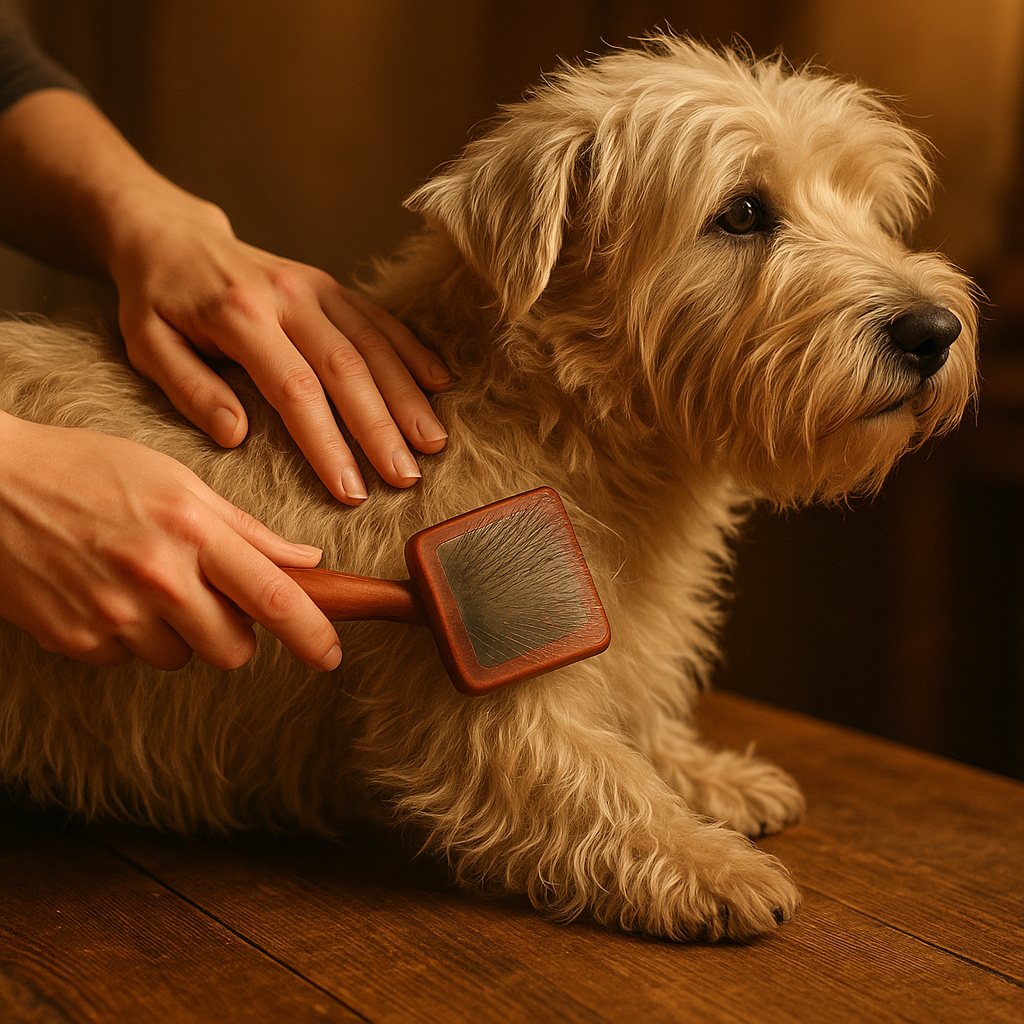
His muscular silhouette requires a quality protein intake, without excess calories. A balanced dosage, adjusted according to his activity level, helps prevent overweight. Grooming, for its part, is done two or three times a year: manual stripping is then practiced to remove dead hair. This guarantees the typical wiry appearance while stimulating the regrowth of a dense coat.
Predispositions and pathologies
- Possible hip dysplasia: veterinary check-up recommended around 18 months.
- Eye problems (cataract, progressive atrophy): annual ophthalmological follow-up.
- Sensitivity to anesthesia: inform the veterinarian of the breed before any procedure.
The Glen of Imaal Terrier in daily life
Adaptation to different environments
In urban settings, he adapts to an apartment if regular outings are arranged. His size remains compatible with a small space, provided his need to move is respected. In the countryside, he finds his favorite terrain, among hedges and rocks. Wherever a balance is cultivated between mental activity and a calm pace, he thrives fully.
Cost and practical advice
The annual budget ranges from 800 to 1200 €, including food, veterinary care, and specific grooming. The purchase of a puppy is between 1200 and 1800 €, depending on the lineage and reputation of the breeder. Before the final decision, encouraging a visit to the kennel or participation in a breed club helps to understand the temperament of the future companion.
FAQ
- What is the temperament of the Glen of Imaal Terrier? Rather reserved, courageous, and attentive to its family.
- How to maintain its coat? Manual stripping two to three times a year to preserve texture and good density.
- Does it get along with children? Yes, it shows patience, provided there is early socialization.
- How much daily exercise? 30 to 40 minutes of active walking or tracking games.
- What health precautions? Monitoring of hips and eyes, and caution with anesthesia.