| Key Points | Details to Remember |
|---|---|
| 🗿 | Origin dating back to ancient Egypt |
| 👑 | Cultural heritage passed down to Malta |
| 🐕 | Build slender and athletic |
| 👃 | Scenting keen, adapted for hunting |
| 🏃 | Energy lively, requires regular exercise |
| ❤️ | Companion loyal and affectionate |

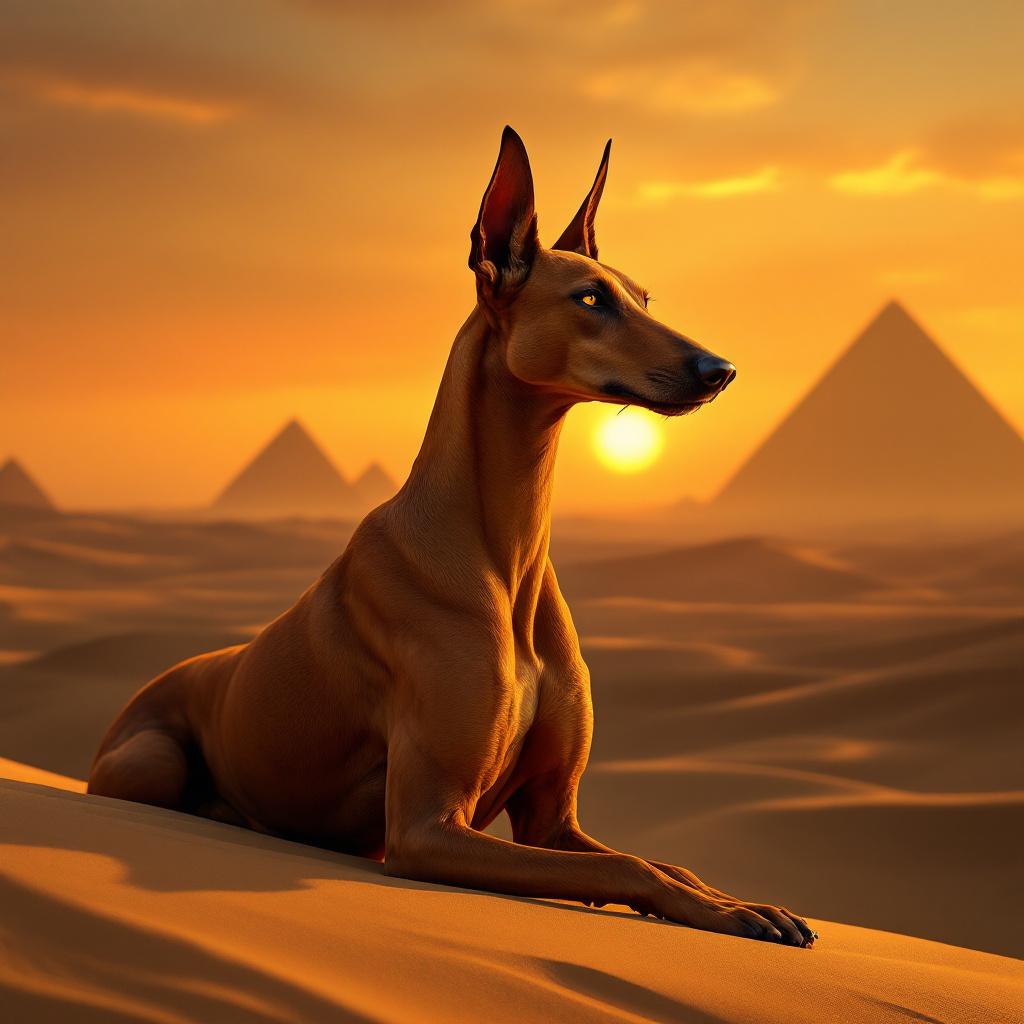
The Pharaoh Hound fascinates with its majestic appearance and lineage that traces back to the sands of ancient Egypt. Beyond simple elegance, this dog displays a remarkable nose, a legacy of its hunting duties. One can easily imagine its ancestors frolicking among the pyramids, but its history was mainly shaped on the island of Malta before conquering the rest of Europe. Today, it charms families and hunting dog enthusiasts alike with a temperament that is both gentle and dynamic. Between sociability, hunting instinct, and graceful silhouette, the Pharaoh Hound inspires both admiration and curiosity. Let’s dive together into the details of this breed imbued with mystery and refinement.
Origins and Historical Heritage
The journey of the Pharaoh Hound begins in Egyptian engravings and statuettes over 4,000 years old. The ancient Egyptians raised dogs with elongated muzzles and erect ears, companions for hunting and symbols of divinity. Although the direct genetic link remains debated, the striking resemblance earned the dog its evocative name. On the island of Malta, it is called Kelb tal-Fenek, “rabbit dog,” because it excels at tracking this game. There, its silhouette and amber color have been fixed over the centuries, until its arrival in England at the end of the 19th century.
The official recognition of the standard dates from 1963 by the Fédération Cynologique Internationale, but the first exports to the United Kingdom date back to the previous decade. Maltese breeders gradually refined the type: a muscular body without heaviness, a fine head, and a formidable (nose) olfactory sense. This stabilization allowed the Pharaoh Hound to establish itself in European competitions, where its aristocratic appearance remains unmatched.
Physical Appearance

At first glance, one notices the perfect line of its neck, extended by a deep chest and a slightly sloped croup. The limbs are fine but solid, ending in compact feet. The coat, short and tight, varies from light sand to dark fawn. Under the sun, the coat literally seems to light up, as if the dog carries the desert’s heat within it.
| Characteristic | FCI Standard |
|---|---|
| Height at withers | 53–63 cm |
| Weight | 16–20 kg |
| Color | Sand to fawn (reddish possible) |
| Ears | Erect, mobile, well set |
| Eyes | Amber, lively expression |
| Tail | Long, carried low at rest |

The uniform colors without excessive white markings reflect the purity of the type. In some individuals, a white trim on the muzzle or chest may appear, but the preference is for homogeneous coats, evoking the desert. The musculature, visible under the skin, confirms a balance between strength and lightness.
Character and Behavior
Sociality and Family Temperament
Within the family, the Pharaoh Hound reveals itself to be tender and playful. Its curious temperament encourages it to participate in every activity, from the morning hike to a simple moment of relaxation on the couch. It forms strong bonds with its owners and generally gets along well with children, provided its need to recover after exertion is respected.
Hunting Instincts and Specific Needs
Despite its affectionate behavior, it is above all a hunting dog. The chase instinct runs through every part of its DNA: a rabbit or a squirrel spotted in the distance triggers intense focus. Without a secure environment or a reliable recall, the risk of escape increases. To channel this energy, walks in enclosed areas or sessions of lure coursing are favored, satisfying its natural impulse.
Health and Care
The average lifespan of the Pharaoh Hound ranges between 12 and 14 years. Relatively hardy, it does not show major predispositions to hereditary diseases, but some individuals may experience
- hip dysplasia,
- patellar luxation,
- skin sensitivities due to insect bites.
The short coat limits maintenance: a weekly brushing is enough to remove dead hair and impurities. However, prolonged exposure to cold requires an appropriate coat, especially during winter outings.
Daily Life and Recommended Activities
To thrive, this dog requires at least one hour of sustained exercise per day. Canine sports are perfectly suitable, whether agility, obedience, or tracking. The idea is not only to engage its legs but also its intellect. Treat-finding games, scent trails, and positive reinforcement sessions can establish a true partnership.

- Walks in varied terrain to diversify stimuli
- Lure coursing to release its tracking instinct
- Intelligence games to prevent boredom
- Socialization sessions with other dogs
In a house with a garden, it uses the space to let off steam, but it also requires the presence of its human. Abandon the idea of an isolated outdoor dog: it would quickly suffer from loneliness.
FAQ
What is the origin of the Pharaoh Hound?
Its shape recalls dogs from ancient Egypt, but the standard was mainly established on the island of Malta, where it hunted rabbits as early as the Middle Ages.
How to maintain its coat?
Brushing once a week preserves the coat’s shine and cleanliness. A few wipes or an occasional bath suffice in case of dirt.
Is it suitable for apartment living?
Possible if you compensate with daily sporty outings and access to an enclosed space to let loose its energy.
How to stimulate its intelligence?
Agility, tracking, or thinking games that combine scent and reward are excellent mental exercises.
What is its life expectancy?
Between 12 and 14 years, provided joint health is monitored and its activity needs are respected.