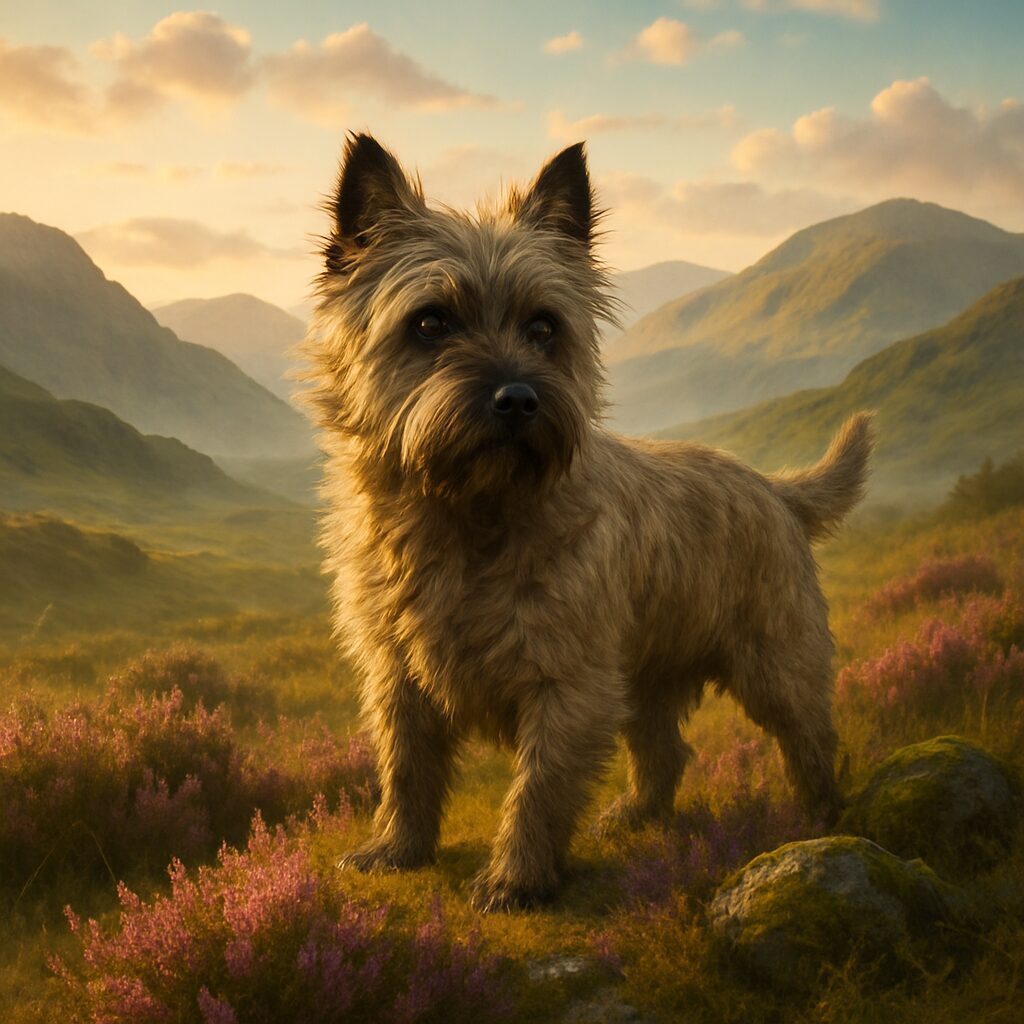
| Key Points | Details to Remember |
|---|---|
| 🐶 Definition | Small sturdy terrier originating from Scotland |
| 🏔️ Origin | Highlands: wild and rocky lands |
| 💡 Temperament | Curious, brave and full of energy |
| ⚙️ Needs | Regular exercise and mental stimulation |
| 🎓 Training | Clear and firm to channel its instinct |
| ❤️ Health | General robustness with some genetic predispositions |

The Cairn Terrier embodies the image of a resourceful little dog, shaped by the steep hills and misty moors of Scotland’s west coast. Often nicknamed the “intrepid forager,” it navigates burrows and thickets with disarming confidence. One might think such a small build would struggle to face a harsh environment, but in truth, its short legs are made for digging, hunting pests, and accompanying shepherds across peat bogs and rocks. More than just a companion, this dog claims a personality that is both mischievous and loyal, capable of forming a deep bond with those around it while maintaining its independent character. In this article, we explore its origins, its extraordinary personality, the care it requires, and the keys to living peacefully with this little adventurer.
Origins and History of the Highlands
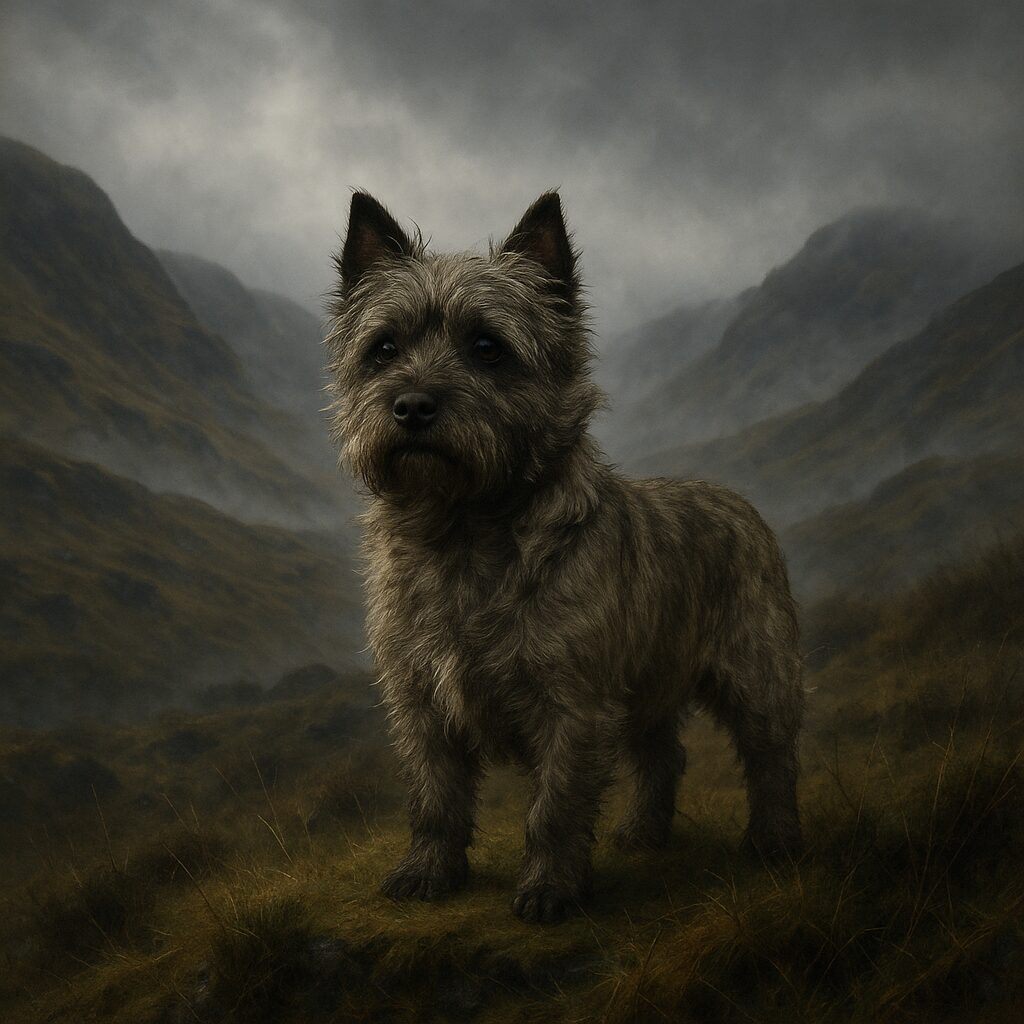
In the 18th century, in the steep valleys where sheep and cattle were transhumed, a line of small terriers was born. Their main mission was to flush out foxes, weasels, and rats from burrows, hence their generic name of terrier. Among these dogs, those best adapted to rocky terrain and constant humidity were quickly grouped under the name Cairn Terrier. By delving into their history from local folklore, we discover that they accompanied farmers in the wind-swept moors, offering their small size as an asset to access underground galleries.
Emergence in the Scottish Hills
In the Highlands, nature rules: steep rocks, impenetrable heather, and almost daily drizzle. The Cairn Terrier, with its sturdy silhouette and dense fur, has perfectly acclimated to these conditions. Its ancestor was handpicked for its tenacity, sense of smell, and ability to dig quickly. Each new litter was evaluated for the quality of its coat, bone robustness, and liveliness of spirit. Legends say that a small vitrified wall was enough to witness the determination of these dogs, capable of slipping through cracks to reach their prey.
Role of the Cairn in Local Traditions
Beyond its hunting talents, the Cairn Terrier was a symbol of pride for farmers. It appears in old paintings and engravings, alongside sheep and ladies in traditional costume. It also watched over the house, preventing intrusions by rodents and even venomous snakes. At clan gatherings, it often accompanied children, unwittingly teaching them curiosity by exploring every nook. Today, these anecdotes fuel the appeal of the breed, reconstructing a past where the dog played a central role in the daily survival of Highland inhabitants.
Character and Explorer Temperament

The term “snoop” should not be taken lightly: indeed, the Cairn Terrier possesses an almost stubborn curiosity. Inside or outside, it will sniff, try to open a drawer, or divert your walk to follow a scented trail. This trait, far from being annoying, proves valuable when it comes to guarding the house. However, it is best to anticipate its escapades, as a simple hole in a hedge can become its gateway to adventure.
- Courage: it does not hesitate to confront a terrier three times its size.
- Independent spirit: it likes to decide its own quest, especially during walks.
- Loyalty: once it adopts you, it follows you with unwavering fidelity.
- Sociality: its temperament, although assertive, generally remains friendly with children and other animals.
Interaction with Humans and Other Animals
Faced with strangers, this little dog can be reserved, even grumpy if its territory is encroached upon. Early socialization will help balance this natural trait. When living with another dog, it may adopt a pack leader posture, seeking to impose its rules — a firm, calm, and consistent reminder is then essential. On the other hand, its modest size makes it a perfect playmate for a child, as long as sudden outbursts are supervised and the youngster is taught not to pull its fur.
Care, Education, and Activities
Training and Socialization
Training a Cairn Terrier must be both firm and playful. Short sessions punctuated with games and healthy treats are preferred. Its visual memory is remarkable: it learns quickly when each exercise is part of a ritual, for example a keyword to sit or a precise hand gesture. To prevent it from becoming too stubborn, rewards (treats, petting, short breaks) should be varied and training environments multiplied — gardens, parks, quiet alleys — to accustom its nose to different contexts.
Exercise and Mental Stimulation
Beyond a simple walk, the Cairn Terrier needs challenges suited to its inquisitive mind. Tracking games, toys to fill with kibble, or even small agility courses set up in the garden help it channel its energy. Also consider offering it search sessions: hide treats under various containers and let it dig, sniff, and find the reward. These activities stimulate its intellect and limit destructive behaviors linked to boredom.
Health and Longevity
Generally robust, the Cairn Terrier can live 12 to 15 years in excellent conditions. However, its small size exposes it to some conditions: patellar luxation, eye disorders such as cataracts, or dermatological problems due to its thick coat. An annual visit to the veterinarian, supplemented by a blood test every two years after seven years old, is enough to detect abnormalities before they worsen.
Prevention and Veterinary Visits
Particular attention to the quality of its diet, balanced in proteins and vitamins, helps preserve its coat and joint system. Keep in mind that obesity puts strain on its joints, especially as it ages. At the slightest limp or loss of appetite, a check-up is necessary. Also remember to regularly check its teeth and maintain its ears to avoid otitis, which is common in dogs with thick hair around the ear canal.
The Cairn Terrier in Daily Life
Whether in an apartment or a house, this dog adapts provided its activity and stimulation needs are met. It appreciates a cozy corner with an elevated bed and some toys available. Households consisting of an active person or a family will find in it a companion always ready for a hike or a ball game. Just be sure to secure access to the outside: a low gate will not hold it back for long.
Frequently Asked Questions
At what age does a Cairn Terrier generally reach maturity?
A Cairn Terrier is considered to reach full physical and mental maturity around two years old. Before this age, it remains playful and mischievous and requires consistent training to channel its energy.
Is the Cairn Terrier suitable for young children?
Yes, provided there is mutual learning. The child must learn to respect their dog, without pulling its hair, and the Terrier must benefit from gradual socialization to accept the sometimes rough gestures of toddlers.
Should the Cairn Terrier be brushed every day?
Brushing two to three times a week is enough to avoid tangles and limit shedding. During shedding periods, daily brushing with a slicker brush will be beneficial to maintain the cleanliness of its skin and coat.