
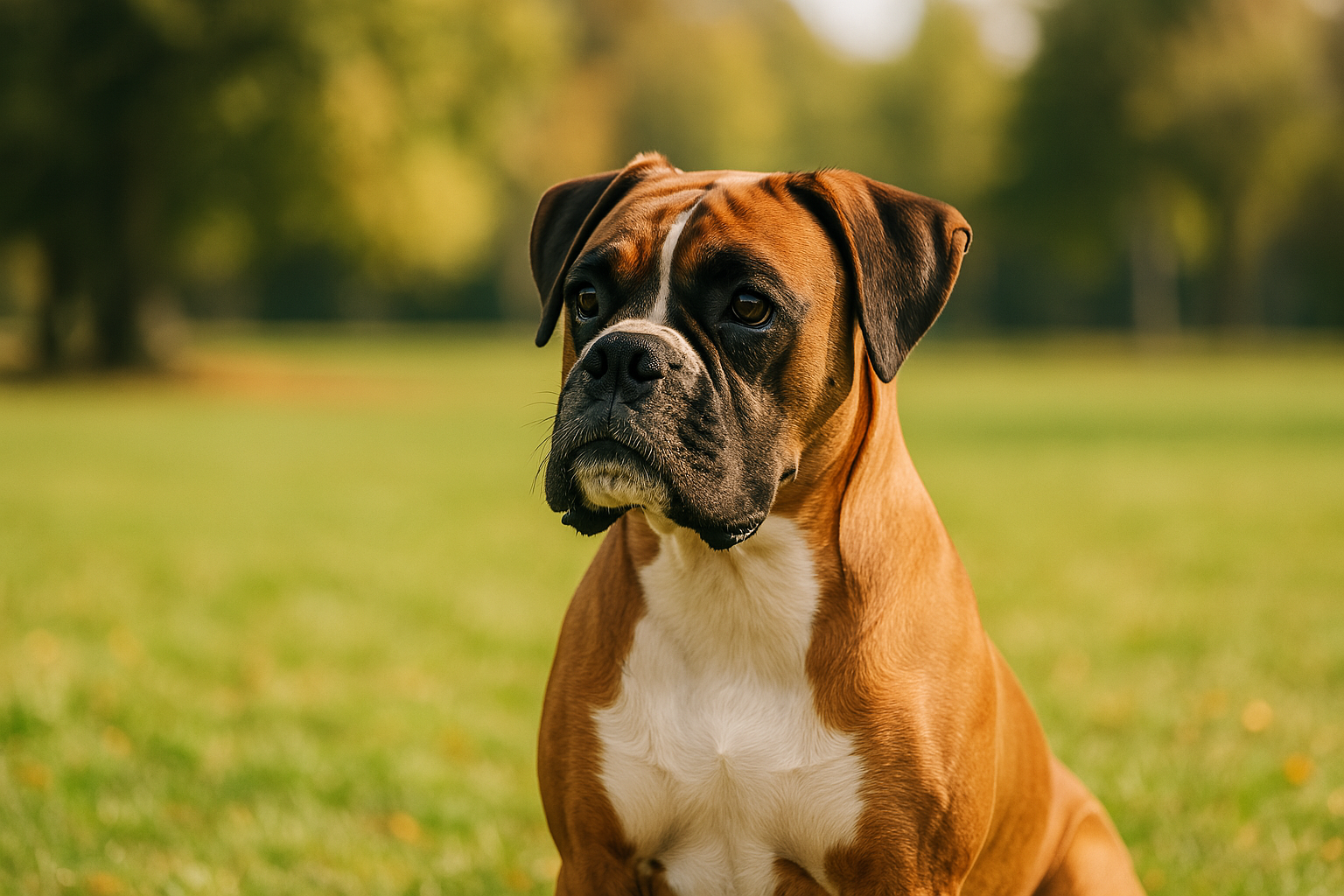

The Boxer is a bit like the friendly athlete of the neighborhood: all muscle, always ready to have fun, but also incredibly attached to his family. With his short muzzle, powerful jaw, and mischievous look, he exudes overflowing energy. In this article, we tell you everything you need to know to live in harmony with this playful and protective companion!
General Presentation
Originating from Germany, the Boxer is a medium to large-sized dog (about 53 to 63 cm at the withers) weighing between 25 and 35 kg. His short coat can be fawn or brindle, sometimes with white markings. He is characterized by his square head, short muzzle (brachycephalic), and slightly protruding lower jaw.
Originally known as a defense and guard dog, he has retained a protective temperament while being very sociable. His life expectancy ranges between 8 and 10 years, although some Boxers live longer with good care and appropriate veterinary follow-up.
Character and Behavior

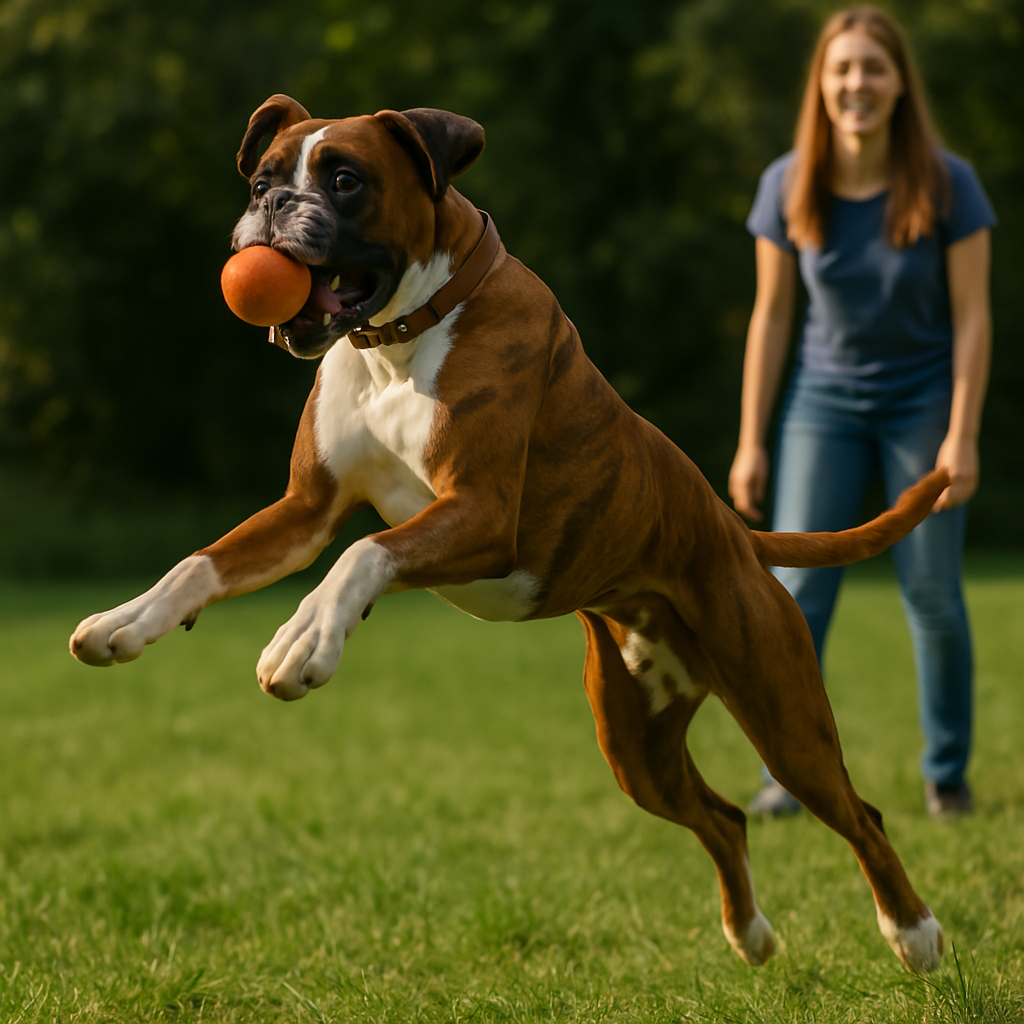
The Boxer is known for his playful nature, enthusiasm, and loyalty to his home. He loves interacting with children (under supervision, as he can be a bit rough when playing), and often shows his affection very demonstratively: licking, jumping, play invitations, etc.
He can also be a good guardian, deterring strangers with his imposing appearance and natural bravery. However, he is rarely an aggressive dog without reason, provided he is well socialized and trained from a young age.
Did you know? The name “Boxer” comes from his tendency to “box” with his front paws when playing or defending himself, somewhat like a boxer in a ring.
Physical and Mental Needs
Athletic and enduring, the Boxer requires a minimum of exercise to channel his energy:
- Brisk walks (30 minutes to 1 hour), preferably several times a day
- Games and training (ball throwing, obedience exercises, etc.)
- Socialization: meetings with other dogs, various environments
- Mental stimulation: tricks, agility, rhythmic obedience, etc.
A sedentary Boxer risks developing boredom, weight gain, and sometimes destructive behaviors. He loves spending time with his owners and being part of family activities.
Health & Genetic Predispositions
The Boxer, like many brachycephalic dogs, can encounter certain specific health problems:
| Problem | Symptoms | Prevention |
|---|---|---|
| Difficulty breathing (brachycephalic syndrome) | Snoring, rapid shortness of breath, heat intolerance | Avoid intense efforts in high heat |
| Cardiomyopathy | Fatigue, shortness of breath, fainting | Regular cardiac check-ups |
| Tumors (e.g., mastocytoma) | Lumps on the skin, lesions | Veterinary monitoring, early screening |
Weight control and regular veterinary visits are essential to quickly detect any issues. Moreover, due to his sensitivity to heat, exercise should be avoided in high temperatures.
Recommended Diet
The Boxer burns a lot of energy but remains greedy. So it is necessary to find the right balance:
- Quality kibble for “medium or large breed,” rich in proteins
- Divide into 2 meals to limit the risk of stomach torsion
- Monitor weight gain (risk of overweight if not enough exercise)
- Limit extras that are too fatty or too sugary
An overweight Boxer will have more respiratory difficulties and joint risks, so it is better to prevent than to cure.
Coat maintenance / grooming
The Boxer’s short coat is very easy to maintain:
- Weekly brushing with a rubber glove to remove dead hair
- Bath every 2-3 months (or as needed) with a mild shampoo
- Regular ear checks, especially if he is often outside
- Check the nails, sometimes needing trimming if they do not wear down enough
He sheds little hair outside of shedding periods, but regular brushing is enough to keep his coat shiny and his skin healthy.
Favorite activities
- Ball games: he loves chasing after a ball or frisbee
- Canicross or jogging: a great partner if you like running
- Agility (intermediate level): he can excel, although heat sometimes limits him
- Obedience: an important foundation to channel his energy
Ideal for what type of owner?
The Boxer suits dynamic people ready to devote time and attention to him. He thrives in a family where he can participate in all activities, receive affection and stimulation.
He is not made to be left alone for hours or to live outside all year round (due to his short muzzle and sensitivity to cold/heat). If you are looking for a joyful, playful, and protective companion, the Boxer could charm you.
Recommended products
To pamper your Boxer:
- “Large breed” kibble: to support his musculature
- Harness or wide collar: avoid compressing his neck too much, especially in hot weather
- Durable toys: balls, ropes, as he can have a powerful jaw
- Soft pin brush: a grooming glove can do the job
Note: also consider a cooling mat for summer, since he can quickly suffer from heat.
FAQ & Anecdotes
Is the Boxer a good guard dog?
Yes, he often deters by his stature and barking if he senses a threat. However, he is not aggressive without reason, preferring contact and play.
Can he live in an apartment?
Possible, provided you take him out enough and give him exercise. He is an active dog who likes to move, so it’s better to have a fairly busy schedule of walks and games.
Historical Anecdote
The Boxer was one of the first breeds used as a military and police dog in Germany (early 20th century), before being appreciated as a family and guard dog.
In short, the Boxer is a powerful, affectionate, and energetic dog who loves to play and protect his own. With kind training, exercise, and moments of tenderness, you will enjoy a loyal and joyful companion, always ready to share your adventures. Are you ready to welcome this big “sporty child” into your home? 🏆