| Key Points | Details to Remember |
|---|---|
| 🐾 Definition | Swiss working dog with a tricolor coat, often called a « teddy bear » for its appearance. |
| 🏔️ Origins | Bred in the Alps for drafting, guarding, and transport. |
| 🎨 Appearance | Tricolor coat black, rust, and white, strong bone structure, rustic look. |
| ❤️ Character | Affectionate, calm with family, vigilant without aggression. |
| 🛠️ Care | Regular grooming, moderate to sustained exercise needs, health attention (hips, heart). |
| 🔎 Choice | Favor responsible breeding and health testing before purchase. |

The Bernese Mountain Dog, often perceived as a large tricolor teddy bear, combines a robust silhouette, natural gentleness, and a history linked to the Swiss mountains. This dog impresses as much by its physical presence as by its ability to create deep bonds with its family. Here, you will find a complete portrait: origins, appearance, temperament, daily care, and points to check before adoption. The idea is not only to flatter the dog’s aesthetics but to convey what it requires daily to be happy and healthy.
Origins and History
The Bernese Mountain Dog originates from the Alpine farming tradition, where each dog had to be versatile: pulling carts, guarding livestock, alerting, and providing companionship. Its robust silhouette and dense coat are explained by these tasks at altitude and the harsh climate of the Swiss valleys. It is not a breed created for show beauty; its standard comes from functional selection. Tracing back historically, one discovers local dogs crossed with heavier draft breeds, then standardized in the 19th century when attention to typical silhouettes increased.
Appearance and Standard
Tricolor Coat and Physical Characteristics
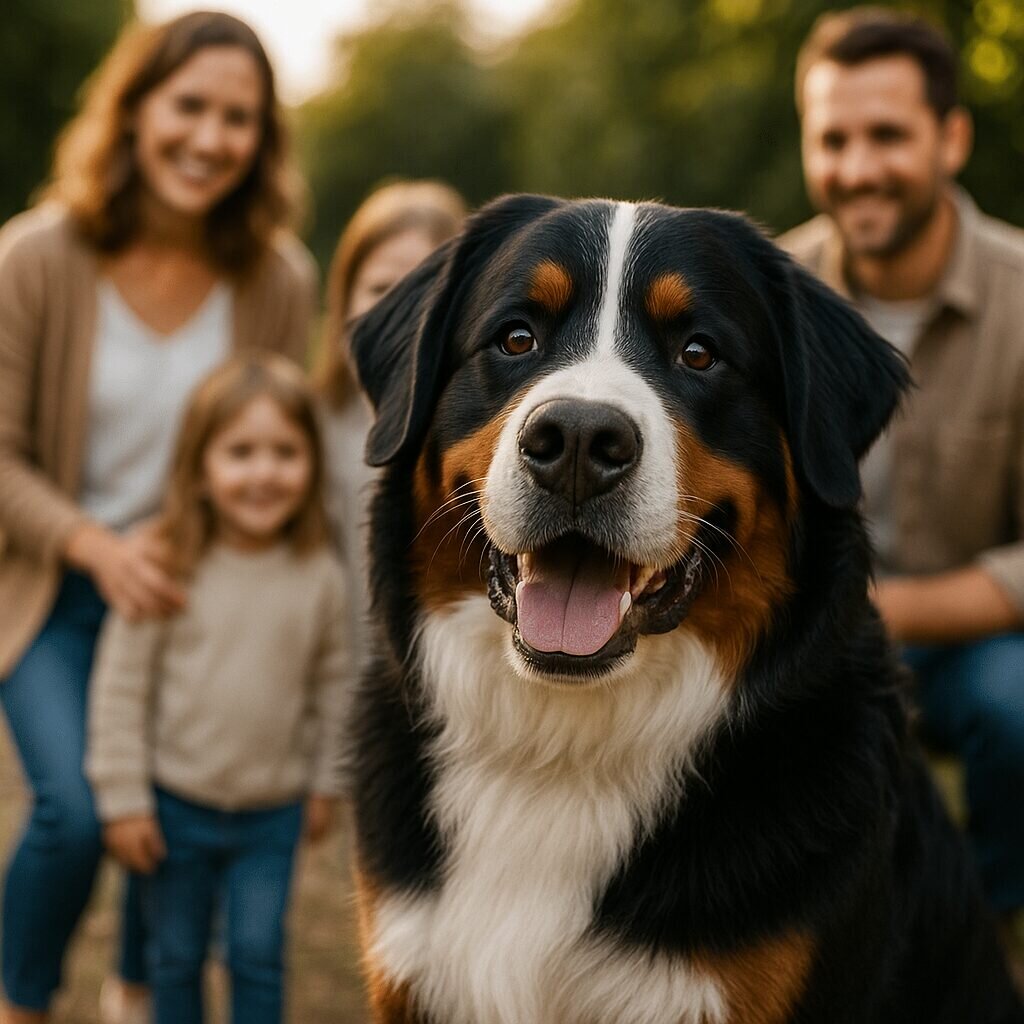
The most striking visual trait of the Bernese Mountain Dog is its coat: black base, rust markings above the eyes, on the cheeks, on the legs, and white patches on the chest and nose. This combination gives the much-appreciated « tricolor » effect. The skull is flat, the expression gentle but lively. The limbs are powerful; the bone structure supports a medium to large build. Differences between males and females are noticeable by mass and breadth: the male is more stocky, the female often retains more finesse.
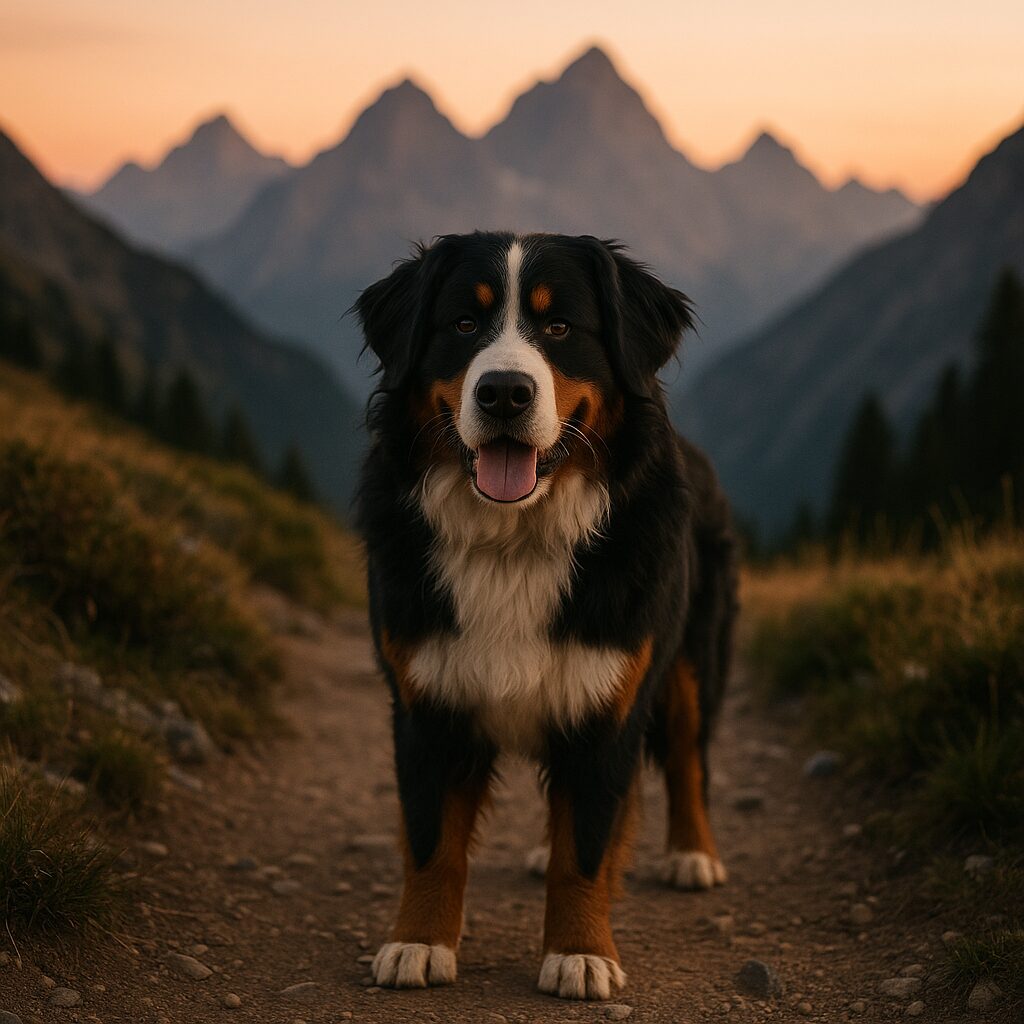
The coat is medium to long, dense, and slightly wavy or straight. This coat provides insulation and waterproofing, but requires regular maintenance. The Bernese Mountain Dog’s gait reveals its strength: supple, ample, and without stiffness, adapted to draft work and hiking. Deviations too marked from the standard (bone defects, loss of pigmentation) are signals to take seriously in breeding stock.
Character and Behavior
Many expect a clown dog: in reality, the Bernese combines traits of extreme gentleness and a certain reserve. With his family, he can be very tender, often seeking proximity and participation in household activities. He is not a hyperactive dog; his vitality is moderate but steady. Sociability is generally good, provided he has benefited from early and varied socialization.
With the Family
At home, the Bernese Mountain Dog enjoys human presence. He tolerates children well and can live indoors provided he has daily outings. Caution: his large size can make rough play problematic for very young children. The key is education and adapted instructions from a young age to manage enthusiasm.
With Other Animals
His sociability towards peers and other animals is often good, especially if habituation starts early. He is not a hunting dog by nature; the prey drive is generally moderate. However, each individual is unique: gradual exposure and careful reading of canine body language are essential to avoid tensions during first meetings.
Care and Health
Care goes hand in hand with foresight: the coat requires regular brushing, and monitoring of joints and heart must be systematic. The Bernese Mountain Dog has hereditary predispositions to certain conditions: hip dysplasia, degenerative myelopathy, and heart problems such as cardiomyopathy. Proactive veterinary follow-up reduces risks and allows early intervention.
Nutrition
Dietary needs evolve with age and activity. Giant puppies require controlled growth: overfeeding or an unbalanced calcium intake can promote bone problems. For adults, aim for quality food, rich in adapted proteins, with calorie control to avoid overweight, as excess weight strains the hips and heart.
Exercise and Mental Stimulation
The Bernese Mountain Dog appreciates daily walks, hikes, and light work. He does not need extreme activities but requires regular exercise to stay balanced. Contact games, obedience courses, or tasks to accomplish (carrying objects, scent tracking) stimulate his intelligence and prevent boredom.
Grooming
Weekly brushing becomes daily during shedding periods. Bathing is not frequent, except when necessary: the coat of a Bernese Mountain Dog tolerates occasional cleaning well. Regularly check ears and nails, and take care of the paw pads after winter walks or on abrasive terrain.
Education and Socialization
The Bernese is intelligent but sometimes stubborn; education must be firm without being harsh. Reward-based methods work well: consistency, patience, and repetition. Early socialization, between 2 and 14 weeks, is crucial: exposing the puppy to various environments, noises, people, and animals shapes his confidence and limits anxious behaviors.
- Start basic obedience as soon as the puppy returns home: sit, come, lie down, recall.
- Introduce positive experiences (car, vet, urban crowds).
- Structure the relationship with simple rules and predictable playtimes.
Choosing a Puppy or an Adult Dog
Deciding between a puppy and an adult depends on your time, experience, and expectations. The puppy offers the possibility of training from A to Z but requires availability and supervision. The adult may already be socialized and trained, ideal for a busy household. In all cases, favor breeders who conduct health tests and raise dogs in a family environment rather than intensive production facilities.
| Characteristic | Average Detail |
|---|---|
| Size | Female 58–66 cm, male 64–70 cm |
| Weight | Female 35–48 kg, male 40–55 kg |
| Life Expectancy | 7–10 years, variable depending on genetics and care |
| Activity Level | Moderate to high; enjoys hiking |
Cost and Annual Budget
The purchase price varies according to the breeder’s reputation, lineage, and health tests already performed. Beyond the purchase, plan for veterinary expenses (vaccinations, sterilization, orthopedic checks), food adapted to a large dog, accessories (kennel, bed, harness), and health insurance if you choose it. Expenses related to potential hereditary diseases can be significant: a financial reserve or good insurance are sensible precautions.
Practical Advice Before Adoption
- Ask to see the parents and health certificates (hip x-rays, cardiac tests).
- Meet the breeder, observe the puppies’ living environment: cleanliness, socialization, stimulation.
- Prepare your home: a sufficiently large space, secure outdoor access.
- Plan the logistics of walks and vacations: the Bernese likes to follow but tolerates prolonged isolation less well.
FAQ
Does the Bernese Mountain Dog get along with children?
Yes, it is known for its patience and family attachment. However, its size requires vigilance during play with very young children: teaching both to respect limits prevents unintentional accidents.
Does this dog need a large garden?
A garden is an asset, but it is not essential if the dog benefits from regular and stimulating outings. The quality of walks and interactions is more important than simply having an enclosed space.
What is the life expectancy of a Bernese Mountain Dog?
Generally 7 to 10 years. Some lineages live longer; genetics, diet, and veterinary care strongly influence this duration.
Is brushing demanding?
Weekly brushing is sufficient most of the year, but it becomes daily during shedding. It is also a privileged moment to check the skin, knots, and parasites.
Is it suitable for a beginner in dog breeding?
A motivated beginner willing to learn can very well train a Bernese. However, one must accept the dog’s size, socialization needs, and potential health costs. Patience and consistency are essential.
Which canine sports are suitable?
Obedience, treibball, hiking, and light pulling activities are well suited. Too intense sports with repeated impacts (excessive jumping) should be moderated, especially for growing young dogs.