| Key Points | Details to Remember |
|---|---|
| 🐶 Definition | Compact dog with a terrier temperament, born to hunt and protect. |
| 🧠 Character | Independent and vigilant, but affectionate with its family. |
| ✂️ Maintenance | Brush regularly and perform occasional plucking to keep the coat neat. |
| 🏃 Activity | Moderate daily exercise: active walks and stimulating games. |
| 🩺 Health | Monitor joints, eyes, and teeth; regular veterinary check-ups. |
| 🎓 Training | Positive and consistent: rewards and clear boundaries are essential. |

The Australian Terrier often surprises: small size but big dog temperament. Originally designed to hunt rodents and protect the farm, it has retained this mix of boldness and affection that makes it both an excellent family companion and a tireless mini-guardian. This article explores in depth its character, practical needs, and how to train it without sacrificing its terrier nature.
Origins and silhouette: the brief history of a small hunter
Born in Australia in the 19th century from crosses of British terriers, the Australian Terrier owes its robust profile to a selection focused on versatility: pest hunting, property protection, and adaptation to a harsh climate. It displays a solid bone structure and a compact chest that betray its working past. Visually, one notices a harsh coat on top and a softer undercoat: a combination that protects against bad weather and facilitates maintenance if a few simple rules are followed.
Appearance and sizes
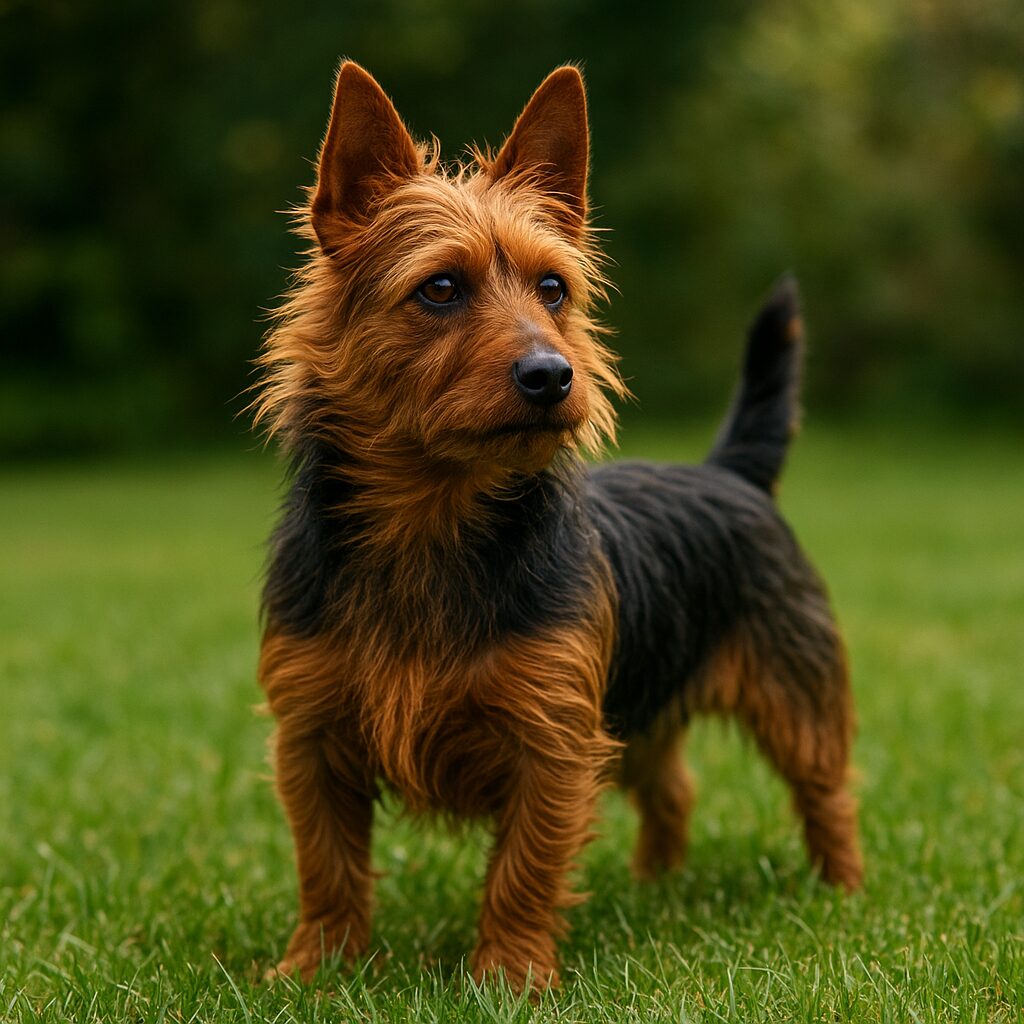
The height generally varies between 23 and 28 cm at the withers, weight often between 6 and 8 kg, depending on sex and morphology. Typical colors range from blue-gray to solid tan, sometimes sandy. The muzzle is pointed, the gaze alert; the tail is often erect to emphasize its vigilant expression. It is not a fragile dog: its compact build gives it durability for regular activities.
Character: courage, curiosity, and measured affection

One might think that a small dog is automatically docile and calm. The Australian Terrier rejects this idea: it is lively, determined, and sometimes stubborn. It seeks responsibilities within the home — it often perceives itself as the protector of the house — and it is naturally wary of strangers. With its family, it can be extremely affectionate, knowing how to be gentle with children if they respect its boundaries.
Compatibility with family life
It tolerates apartment living provided it has regular outings and mental stimulation. With calm and respectful children, it proves playful; however, it will not appreciate rough handling. With other animals, it can coexist, but its hunting instinct requires early and continuous socialization.
Activity and stimulation: how to channel the terrier’s energy
The Australian Terrier does not require hours of jogging, but it demands lively outings and structured games. Brisk walks, recall sessions, tracking or scent games are ideal to channel its curiosity. Without stimulation, it risks boredom and adopting undesirable behaviors — barking, digging, or minor destruction.
- 30 to 60 minutes of activity per day is enough for most individuals.
- Introduce varied games: fetch, object searches, amateur agility courses.
- Mental stimulation counts as much as physical exercise: food puzzles and new learning engage the brain.
Care and grooming: practice without excess
The harsh coat of the Australian Terrier requires a regular but simple routine. Weekly brushing is often enough to remove dead hair and maintain cleanliness; this can be supplemented by manual plucking a few times a year to preserve the coat texture, especially if aiming for show presentation. Baths should remain occasional: too frequent, they weaken the natural oils of the coat.
Hygiene routine
Regularly check the ears and clean them as needed, monitor the teeth and trim the nails according to wear. The eyes should remain clear; an accumulation of secretions or redness requires veterinary advice. Finally, adapt the diet to age and activity level: an appropriate intake of proteins and fatty acids helps the coat and musculature.

Health: vulnerabilities to know, no unnecessary alarms
Overall, this is a robust breed, but as with any dog, some predispositions deserve attention. Orthopedic problems remain rare if the dog receives a balanced diet and appropriate exercise. Some lines may present ocular or dermatological conditions. Prevention involves regular check-ups, up-to-date vaccination, and reasonable selection by the breeder.
| Potential problem | Prevention and monitoring |
|---|---|
| Ocular conditions | Annual examination by a veterinary ophthalmologist if there is a family history. |
| Dermatitis | Targeted hygiene and adapted diet, rapid diagnosis in case of irritation. |
| Obesity | Control portions and maintain activity to avoid overweight. |
Training: firm fairness and relevant rewards
The key to obtaining a balanced companion lies in two words: consistency and respect. An Australian Terrier responds well to positive methods, provided the rules are clear. It does not appreciate injustice or inconsistency. Learning recall, basic commands (sit, lie down, stay) and territorial limits must be reinforced with rewards, small treats, and targeted praise.
Practical training tips
- Start socialization early: gradual exposure to noises, people, and other animals.
- Avoid physical punishments; they reinforce independence and defiance.
- Work on self-control with progressively longer exercises (waiting before grabbing a treat).
Choosing your puppy or adult dog: criteria to prioritize
If you plan to adopt, prioritize a serious breeder who provides health follow-up and information on the parents’ temperament. Observe the environment: a well-socialized puppy will be curious without being overexcited. For an adult dog, assess adaptability to your lifestyle: a terrier with little exercise may be unruly, while a dog already adjusted to the activity level you can offer will integrate faster.
Quick Comparisons: Australian Terrier vs Other Small Terriers
Compared to breeds like the Jack Russell or the Cairn Terrier, the Australian Terrier stands out with a slightly less extreme temperament: it remains very alert but can be calmer in daily life. Its size also gives it an advantage in homes where space is limited, without sacrificing its protective ability.
FAQ — Frequently Asked Questions
How long does an Australian Terrier live?
Generally, the lifespan ranges between 12 and 15 years, sometimes longer with proper care.Is it good with children?
Yes, if socialized early; however, it prefers children who respect its space and resting times.Does it need frequent grooming?
Regular maintenance is sufficient: weekly brushing and occasional plucking to maintain the coat’s texture.Is it noisy?
It may bark to signal an intruder or out of boredom; training and stimulation reduce this behavior.Is it suitable for beginners?
Yes, provided one learns to manage its independence and hunting instinct consistently.
Practical Summary: What to Remember
The Australian Terrier combines vigilance, a strong character, and measured affection. It thrives with a consistent owner who provides exercise, mental stimulation, and minimal grooming. Ideal for those seeking a small dog that protects and fully embraces its place in the family, without demanding hours of daily physical effort.
Resources and Checklist Before Adoption
- Visit the breeder and meet the litter and parents.
- Request health certificates and tests performed.
- Prepare a quiet corner, an exercise program, and a training plan.
- Schedule a first visit to the veterinarian after adoption.