

| Key Points | Details to Remember |
|---|---|
| 🐶 Definition | Small hunting dog with an elegant appearance and a gentle character. |
| 🎨 Appearance | Silky coat, compact silhouette, and long ears. |
| 💖 Temperament | Sociable, playful, attentive, and very affectionate. |
| 🍽️ Nutritional needs | Balanced diet rich in quality proteins. |
| 🏋️ Exercise | Moderate activity: daily walks and playtime. |
| 🛁 Grooming | Frequent brushing and ear care to prevent infections. |
| 🩺 Health | Veterinary monitoring of eyes and hips. |

With its refined appearance and large velvet eyes, the American Cocker Spaniel immediately captures attention. This little ball of fur, with irresistible charm, combines the elegance of a show dog with the liveliness of a family companion. Between hunting memories and dog shows, its reputation has continuously grown thanks to its endearing character and unique beauty. Today, we explore every facet of this breed, from its historical origins to daily care, including its physical and behavioral characteristics.
Origins and history of the breed
The ancestor of the American Cocker Spaniel dates back to 19th century England, where compact spaniels were used to flush out woodcock (from which its name derives). Quickly appreciated for its small size and fine nose, it stands out from larger spaniels by its ability to move through thick underbrush. At the beginning of the 20th century, American breeders selected smaller and rounder individuals, favoring a show look. Thus was born a more refined dog, with abundant coat and particularly silky ears.
In the United States, the American Kennel Club (AKC) officially recognized the breed in 1946. It quickly conquered the dog show podiums, charming with its graceful head carriage and light gait. Meanwhile, the “field spaniel,” oriented towards hunting, retained a different build and less abundant coat, while the American Cocker entered homes as a gentle and sociable pet.
Physical characteristics

Expressive eyes
The eyes of the American Cocker Spaniel are often described as velvet orbs: wide, round, and well spaced. This shape gives them a soft, almost melancholic expression. Behind this tender gaze lies a remarkable sensitivity: the Cocker is particularly receptive to the emotions of those around it. Keeping these eyes clear and clean is essential as they can be subject to discharge or slight irritation, especially if the environment is dusty.

Unlike some breeds known for a more evasive gaze, the Cocker often looks straight into the eyes, as if to silently communicate. This trait has contributed to its success with families: a simple look is enough to feel the almost “human” connection that is established.
Silky ears
The long ears of the American Cocker Spaniel are covered with abundant, soft-to-the-touch hair. They require daily attention: gentle brushing to avoid tangles and regular inspections to prevent any risk of infection. The ears naturally hang down, creating a microclimate conducive to bacteria if air circulation is poor.
More than just an aesthetic asset, these ears play a role in canine communication. When relaxed, the Cocker lets its ears hang; when alert, it can slightly raise their bases, thus inventing a subtle language to which its peers are sensitive.
Temperament and behavior
Socialization
One might think that all hunting dogs are reserved, but the American Cocker Spaniel displays an open and friendly temperament. It bonds quickly with children, loves participating in group games, and can live peacefully with other animals when properly socialized. In reality, its adaptability is one of its greatest strengths: whether you live in an apartment or a house, it adjusts as long as it receives regular attention and activity.
Training and intelligence
Despite its delicate appearance, the Cocker has a sharp and sometimes mischievous mind. It enjoys learning and shows enthusiasm during training sessions. The use of positive reinforcement (treats, petting) proves particularly effective. However, firmness without harshness is necessary to manage its energy: a dog that clearly understands what is expected will develop balanced behavior more easily than one subjected to confusing commands.
Specific needs
Physical activity
A regular daily routine is essential. Ideally, two walks of at least 30 minutes each, supplemented by fetch games or sessions searching for hidden objects, which also stimulate the mind. A true athlete with short strides, the Cocker can thrive in many activities: agility, obedience-rhythm, or simply a game of frisbee in the park.
Diet
The compact build of this breed requires a diet rich in high-quality proteins. Needs vary according to age:
| Age | Proteins (%) | Fats (%) |
|---|---|---|
| Puppy (2–12 months) | 22–26 | 12–15 |
| Adult (1–7 years) | 18–22 | 10–12 |
| Senior (> 7 years) | 16–20 | 8–10 |
Some healthy treats, like apple cubes or small pieces of cooked chicken, strengthen the bond without overloading the calorie intake. Always prefer food adapted to the size of its kibble and avoid gluten or artificial additives that can cause intolerances.
Grooming
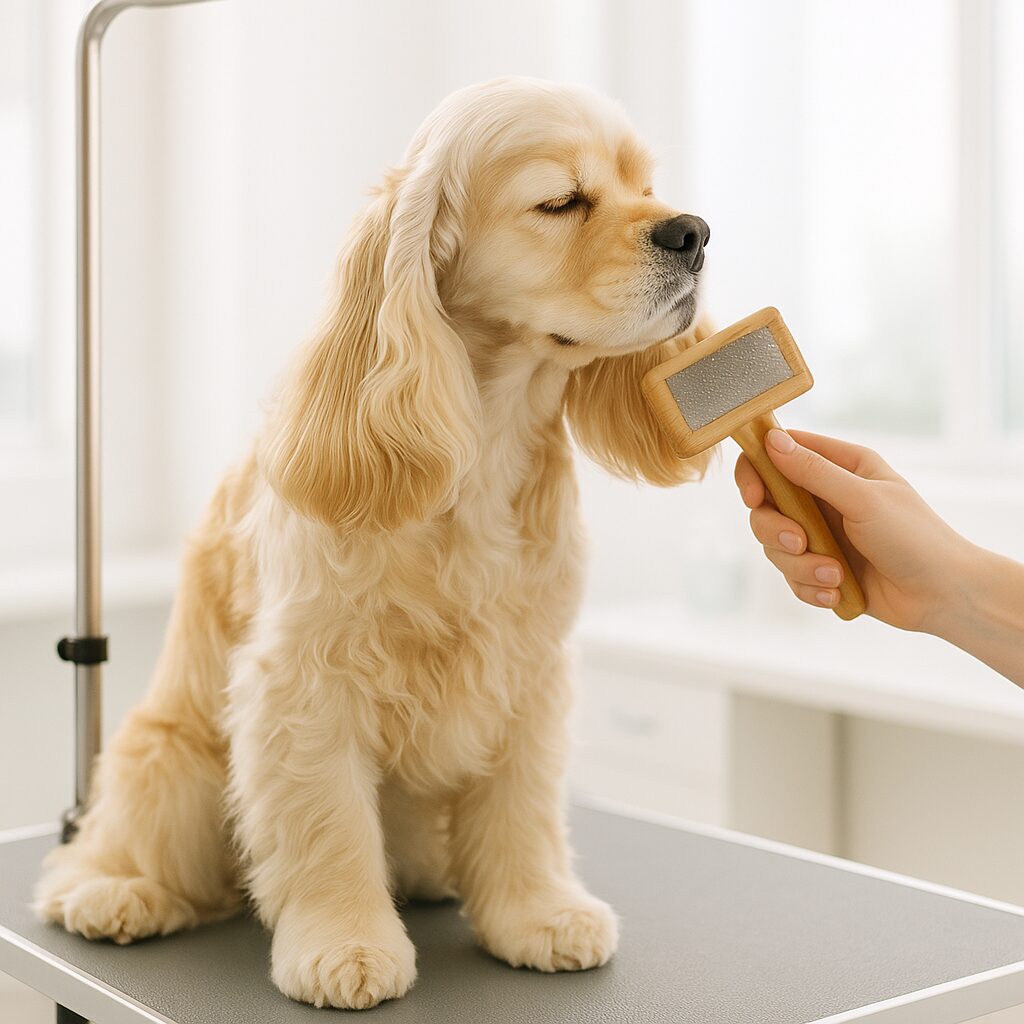
To preserve the beauty of the coat, thorough brushing two to three times a week is recommended, focusing on areas where the hair tangles (waist, under the ears). A bath every 6 to 8 weeks, with a gentle canine pH shampoo, prevents skin dryness. As for the ears, weekly inspection combined with cleaning using a suitable ear lotion significantly reduces the risk of secondary infections.
Health and Life Expectancy
The average life expectancy of the American Cocker Spaniel ranges between 12 and 15 years. Like many breeds, it has hereditary predispositions: hip dysplasia, cataracts, or chronic otitis. Regular screening (hip X-rays, ophthalmological examination) allows early detection of these conditions and better management. Careful lifestyle hygiene and diligent veterinary follow-up are the best assets to help your companion age peacefully.
Choosing Your American Cocker Spaniel
Before adopting, make sure you have the necessary time to meet its exercise and grooming needs. Meet several breeders or associations, observe the parents if possible, ask questions about the lineage, health tests, and puppy socialization. By making this choice with full knowledge, you offer your future companion an optimal environment to thrive.
FAQ
- What is the adult size of an American Cocker Spaniel?
It generally measures between 36 and 38 cm at the withers and weighs 12 to 15 kg. - At what age does grooming start?
From the third month, you can get the puppy used to brushing and ear inspection so that it remains calm later on. - Can it be left alone for several hours?
It tolerates a short absence (3–4 hours) if its day remains structured with activities and regular presence. - How to prevent ear infections?
By properly drying the ear after each bath and checking that the ear canal remains clean and ventilated. - Is the Cocker suitable for an apartment?
Yes, provided you take it outside daily to exercise and stimulate its intelligence.