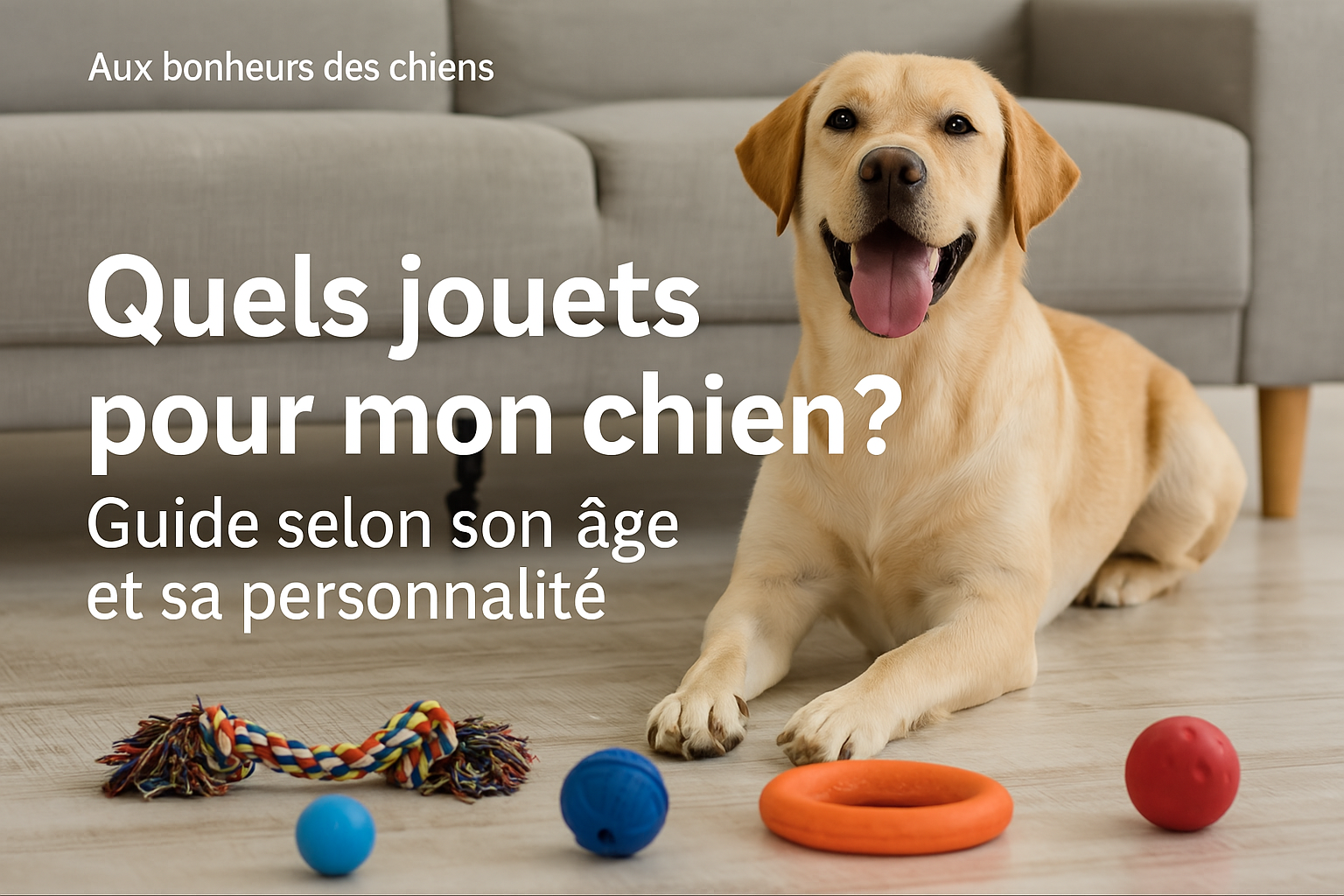
A happy dog is a dog that plays! But not all toys are equal. Some only last 5 minutes. Others don’t stimulate enough. And sometimes, we choose a cute toy… but one that is unsuitable for their size or temperament. Choosing a good toy is more than a whim: it’s a real tool for your companion’s balance, education, mental and physical exercise. In this guide, we review the best types of toys according to age, needs, and behavioral profile.
🎯 Why give toys to your dog?
A toy is not just a “plus.” It’s a necessity. For a dog, playing means:
- Expressing instincts (chewing, hunting, digging, pulling…)
- Burning off physical energy
- Stimulating the brain (solving, understanding, anticipating)
- Reducing boredom, thus destructive behaviors
- Strengthening the bond with their human (shared play)
A dog without a suitable toy might make one… out of your shoes or furniture. Better help them choose wisely!
🔍 Types of toys and their functions
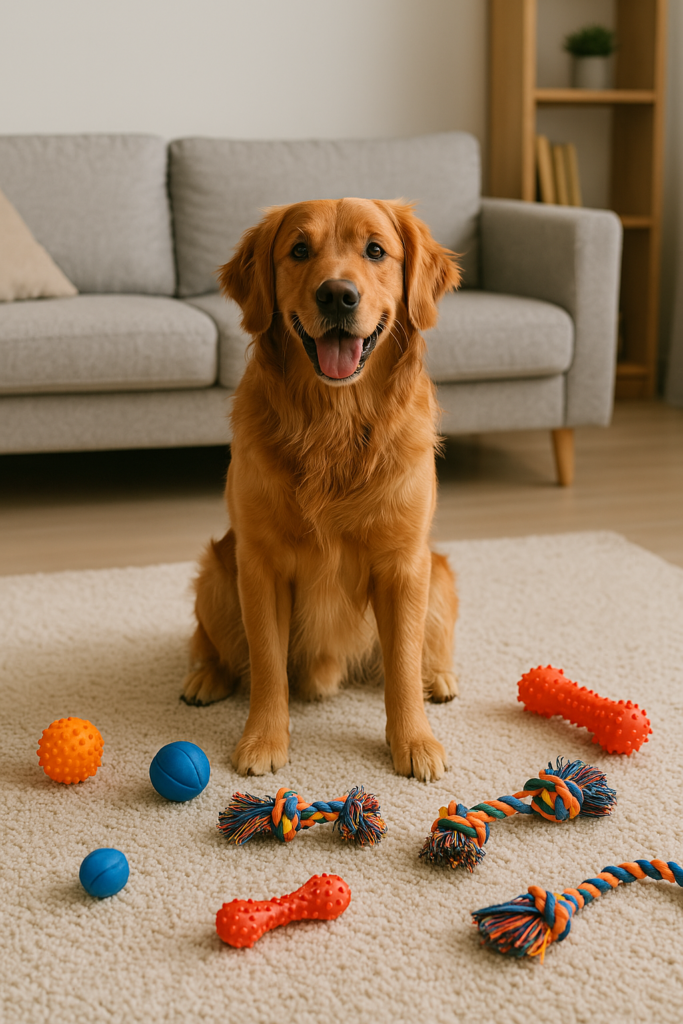
- Chew toys (rubber bones, deer antlers): soothe, strengthen the jaw, help with teething
- Throw toys (balls, frisbees, sturdy sticks): channel energy, strengthen the owner-dog relationship
- Occupational toys (snuffle mats, filled Kongs, ropes): fight boredom, keep occupied during absences
- Interactive / smart toys (puzzles, kibble dispensers): mentally tiring, ideal for rainy days
- Plush toys: comforting for some dogs, especially puppies and anxious ones
Varying types helps meet several needs and avoid boredom.
🧬 Choosing according to age and personality
🐾 According to age
- Puppy (2-6 months): soft toys for sensitive teeth, safe plush toys, teething rings
- Adolescent (6-18 months): strong chewing needs, essential durability, start of interactive games
- Adult (1 year +): essential variety, mix of physical activity and mental stimulation
- Senior (7 years +): soft toys, easy dispensers, soothing lick mats
🐶 According to profile
- Destroyer: ultra-durable toys (knotted ropes, extreme Kongs, non-hollow toys)
- Anxious: comforting plush toys, lick mats, scented toys
- Hyperactive: interactive balls, soft frisbees, search-based games
- Solitary player: kibble dispensers, Kongs, intelligence puzzles
📊 Summary Table
| Age / Profile | Recommended Toys | Purpose |
|---|---|---|
| Puppy | Rings, soft plush toys | Teething, safety |
| Active adult | Balls, frisbees, kongs | Energy, learning |
| Senior | Soft toys, mats | Soothing, comfort |
| Destroyer | Durable toys, rope | Intense chewing |
| Anxious | Plush toys, snuffle mats | Emotional security |
| Solitary player | Puzzles, dispensers | Autonomy, thinking |
⚠️ Common Mistakes to Avoid
- Giving a toy that is too small (risk of ingestion)
- Never renewing toys (guaranteed boredom)
- Leaving all toys available at once (loss of interest)
- Choosing a toy unsuitable for the dog’s jaw or energy level
❓ FAQ
How many toys should a dog have?
Between 5 and 8, alternating. Better to have 3 relevant toys than 10 unsuitable ones.
How can I tell if a toy pleases him?
If he ignores it, it means it doesn’t stimulate him enough. Try different shapes, textures, sounds. The favorite toy is often recognized by immediate enthusiasm.
🗣️ Testimonial
“My dog was destroying everything. We tried ropes, olive wood, hollow balls… and found what suited him. Since then, he plays every day — and my sofa is saved!” — Clara, 28 years old
🔚 Conclusion
Choosing a good toy for your dog is not a whim. It’s about understanding their needs, helping them thrive, and creating moments of bonding. Vary, test, observe. And above all: play with them! 🎾🐕
🚫 Which toys should be absolutely avoided?
Some toys, even sold in pet stores, can be dangerous for your dog:
- Toys that are too small: risk of ingestion and choking
- Foam toys or plush toys with loose stuffing: if the dog tears them, it can swallow the filling
- Hard plastic toys not designed for dogs: break into sharp pieces
- Standard tennis balls: abrasive to teeth in the long term
Always prefer toys certified for dogs, with supervision at first. A durable toy does not mean indestructible — it must be checked regularly.
🕓 Should you play every day?
Yes, ideally. Even 10 minutes of daily play strengthen the bond and ease tensions. Regular interaction with their human is a fundamental need for the dog. Play does not replace walks, but complements them. It stimulates different parts of the brain, promotes relaxation, and can even prevent certain behavioral problems. In short: the toy is prevention in action. 🎉