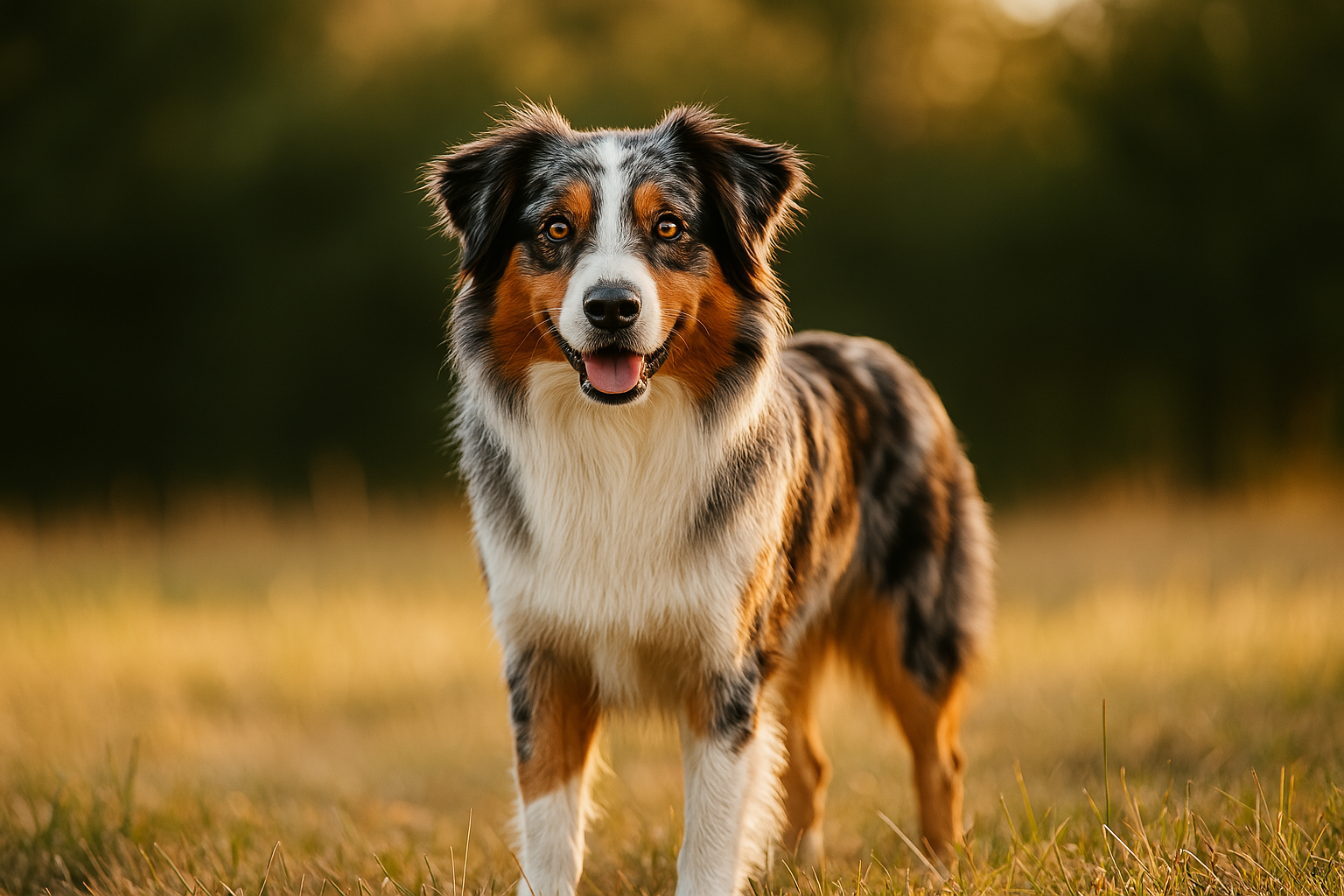

The Australian Shepherd, also called “Aussie” by breed enthusiasts, is a working dog known for its liveliness, intelligence, and great loyalty to its owners. Despite its name, it actually originates from the United States, where it was used to herd sheep. In the following lines, we tell you everything about this companion with often piercing eyes (thanks to heterochromia!) and an unmatched temperament.
General Presentation
The Australian Shepherd is a medium-sized dog (about 46 to 58 cm at the withers), with a medium-length coat often tricolor or merle (blue merle, red merle, etc.). Its weight varies between 18 and 30 kg on average, depending on sex and lineage. It is appreciated for its athletic silhouette, built for effort.
It is often recognized by its beautiful eyes (blue, brown, sometimes heterochromatic), but also by its sometimes docked or naturally short tail. Its life expectancy is around 12 to 15 years if its physical and mental needs are met.
Character and Behavior
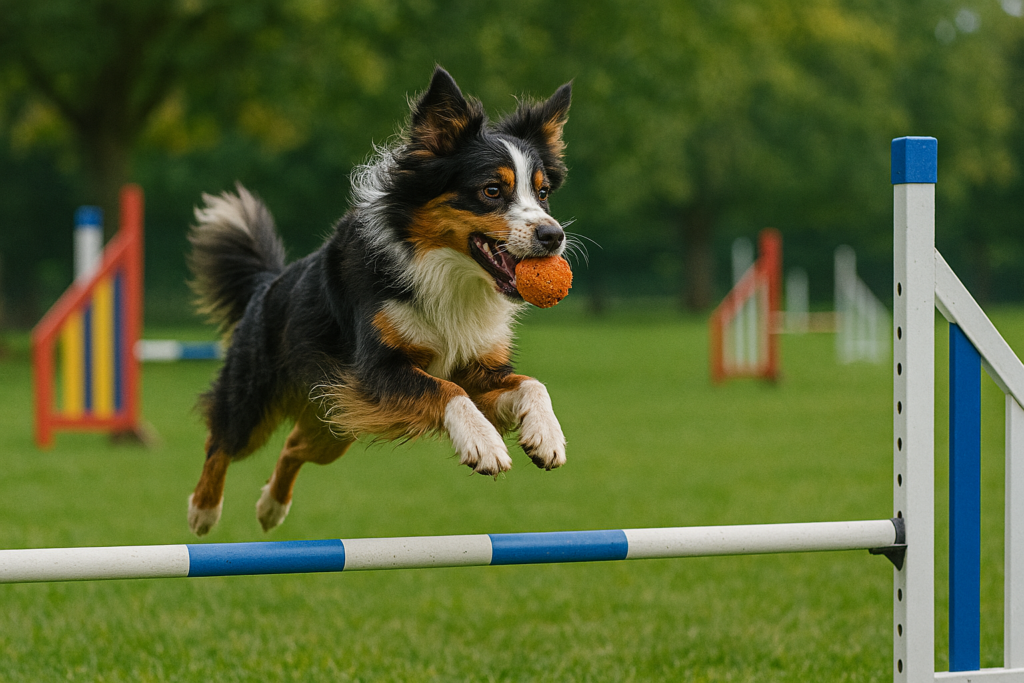
The Australian Shepherd is above all a working dog, selected for its responsiveness, intelligence, and willingness to please. The result: it learns very quickly but also requires constant education and stimulation. Without occupation, it risks getting bored and adopting unpleasant behaviors (destruction, barking, etc.).
Very close to its family, it can be somewhat reserved with strangers, especially if socialization has not been well conducted. On the other hand, as long as its needs are respected, it proves to be a playful, affectionate companion with unwavering loyalty.
Did you know? Despite its name, the Australian Shepherd was largely developed in the United States among ranchers, who appreciated its agility and great adaptability to herding tasks.
Physical and Mental Needs
If there is one thing to remember, it is that the Aussie is not a “couch dog”! It needs to expend energy, both physically and mentally:
- Long daily walks (at least 45 minutes to 1 hour)
- Sports activities: agility, canicross, obedience, herding, etc.
- Mental enrichment: search games, training new tricks
- Social interactions: it likes to be at the heart of family life
In other words, it is better to have time and energy to devote to it. Otherwise, it can become hyperactive or stressed.
Health & Genetic Predispositions
Overall robust, the Australian Shepherd can nevertheless be prone to certain conditions:
| Problem | Symptoms | Prevention |
|---|---|---|
| Hip dysplasia | Limping, difficulty getting up | Serious breeding, weight control, adapted exercises |
| Eye diseases (cataract, PRA) | Blurred vision, vision loss | Genetic testing, ophthalmological monitoring |
| Drug sensitivity (MDR1) | Abnormal reaction to certain medications | MDR1 test before certain treatments, vigilance at the vet |
Regular veterinary monitoring, selecting a reputable breeder, and genetic testing (especially for the MDR1 gene) are essential to reduce these risks.
Recommended Diet
The Aussie being very active, it needs a diet rich in quality nutrients to maintain its condition:
- Premium kibble formulated for active or sporting dogs
- Adjust the quantity to its actual activity level (less exercise = smaller portions)
- Divide into 2 daily meals to avoid the risk of stomach torsion
- Ensure constant access to fresh water
If you prefer homemade or BARF feeding, make sure to balance rations and vitamin intake well. In case of doubt, a visit to the vet or a canine nutritionist is recommended.
Coat Care / Grooming
The Australian Shepherd has a dense undercoat and a medium-length topcoat. During shedding periods (spring and autumn), it can lose a lot of hair:
- Brushing 2 to 3 times a week (or daily during heavy shedding)
- Occasional baths (every 2-3 months) or when very dirty
- Careful detangling, especially behind the ears and on the hindquarters
Regular grooming will prevent you from finding tufts of hair all over the house. It’s also an opportunity to check the condition of its skin, ears, and paw pads.
Favorite Activities
- Agility: Obstacle courses, slalom, jumps… it excels in this area
- Canicross: Running with its owner, perfect for burning off excess energy
- Herding or obedience with rhythm: It loves putting its herding instinct into practice
- Intelligence games: canine puzzles, object search, learning tricks
Ideal for What Type of Owner?
The Australian Shepherd is better suited to an active person (or family), who loves outdoor life, is ready to offer time, education, and lots of stimulation. If you have a garden, that’s a plus, but not a requirement as long as you multiply outings and activities.
If you are looking for a calm dog that sleeps quietly all day, the Aussie is not the best option. It needs to move, learn, and share as many moments as possible with its social group. In return, it will give you overflowing affection and contagious enthusiasm.
Recommended Products
To keep your Australian Shepherd in top shape:
- Premium sport/active kibble: to support its energy expenditure
- Working harness: ideal for agility, canicross, or tracking
- Intelligence toys: puzzles, treat-dispensing balls, etc.
- Brush/detangler: a must to manage shedding and maintain a flawless coat
Joking aside: stock up on durable toys, because this athlete quickly puts to the test everything it can chew on!
FAQ & Anecdotes
Can the Australian Shepherd live in an apartment?
Yes, provided that long walks and daily mental stimulation are ensured. A large indoor space is not essential as long as it can expend energy outside, but it should not be left inactive.
Is it a good guard dog?
It can be wary of strangers, but that does not necessarily make it a pure guard dog. It can alert and bark, but that is not its primary role (unlike a Malinois or a Rottweiler).
Funny anecdote
Many Australian Shepherds have a naturally “docked” tail, a genetic trait that originally prevented injuries during herding work. This explains their small, almost invisible tail in some individuals!
In summary, the Australian Shepherd is a fascinating dog for those who can meet its sporting and intellectual needs. Affectionate, playful, and remarkably intelligent, it requires appropriate presence and training. If you are ready to commit, you will discover a companion as loyal as it is dynamic, ready to follow you on all your adventures! 🐾