
Does your dog destroy everything in your absence? Are its incessant barking disturbing the neighbors? These behaviors often reflect separation anxiety that is painful for both the animal and its owners. Rather than ineffective miracle solutions, discover a playful method based on canine neuroscience: progressive hide-and-seek. This approach transforms the anxiety of departure into a stimulating game, with measurable results in just a few weeks.
In brief
🐾 15 minutes daily is enough: No need for marathon sessions. A brief but regular practice proves more effective than occasional hours of training.
🧠 Emotional re-education: The game physically modifies the neural connections associated with loneliness, replacing panic with calm anticipation.
📈 Measurable progression: From absences of 30 seconds to several hours, each milestone strengthens the dog’s confidence in your return.
🎯 88% documented success: Veterinary studies show that this method surpasses the effectiveness of medications or pheromone diffusers alone.

Understanding the distress mechanism
Separation anxiety is not a tantrum but a true panic attack. When you leave the home, your dog experiences this absence as a definitive abandonment. Its heart rate can double within minutes, triggering a cascade of stress hormones. Certain breeds like greyhounds are particularly genetically predisposed, having been selected for their hypersensitivity to movements in their environment.
The invisible warning signals
Even before spectacular destruction, observe these subtle signs:
- Excessive salivation on door frames
- Constantly wet front paws (compulsive licking)
- Refusal to eat in your absence even with a treat-dispensing toy
A study by the Lyon Veterinary School showed that 70% of owners underestimate these early symptoms for months.
Progressive hide-and-seek: applied neuroscience
Unlike traditional methods that aim to occupy the dog (toys, music), this technique acts directly on the emotion. It is based on counter-conditioning: associating your departure with an immediate positive experience rather than a catastrophe. The game literally re-targets the fear circuit in the amygdala.
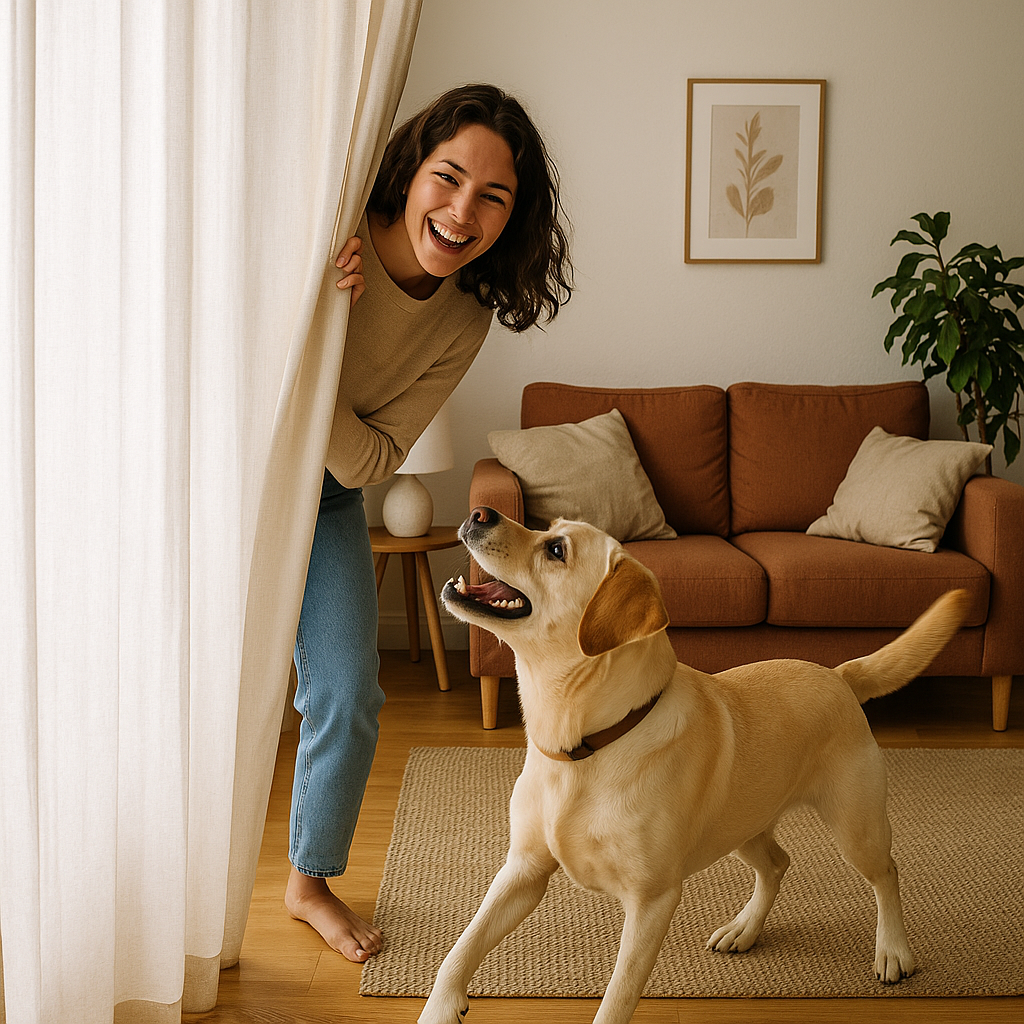
Protocol in 4 Progressive Phases
| Phase | Duration of Absence | Return Cue | Reward |
|---|---|---|---|
| 1. Initiation | 10-30 seconds | Call from the neighboring room | Verbal praise |
| 2. Consolidation | 1-5 minutes | Sound of keys before reappearance | Low-calorie treat |
| 3. Generalization | 10-20 minutes | Mobile phone ringtone | Favorite game for 2 minutes |
| 4. Stabilization | 30 min to 2h | Silent return | Calm welcome without excitement |
The key? Always come back BEFORE the dog shows signs of stress. This way, you build its tolerance like a muscle.
Fatal Mistakes That Sabotage Training
Your progress is stalling? These common traps explain 90% of failures:
- Ignoring calming signals: Lip licking, yawning, or looking away indicate the dog is overwhelmed
- Varying training times: Always practicing at the same time creates a reassuring ritual
- Neglecting the departure ritual: Always put on your shoes and take your keys even for a 30-second absence
Validated Complementary Tools
For severe cases, combine hide-and-seek with:
- ADAPTIL diffusers (analogue of maternal pheromones)
- Weighted blanket (constant pressure reduces cortisol by 22% according to a study published in Journal of Veterinary Behavior)
- Specific playlists: The “DogTV” channel on YouTube offers sound sequences tested in clinics
Testimonial: From Crisis to Serenity
“My border collie was destroying door frames in less than 10 minutes. After 3 weeks of progressive hide-and-seek, I was able to film his first 2-hour absences: he was peacefully sleeping on his bed! The method requires absolute rigor but truly transforms the relationship.” – Sophie, dog trainer in Ille-et-Vilaine.

Frequently Asked Questions About Separation Anxiety
Should you ignore your dog upon return?
This old theory is counterproductive. A sober but warm welcome (brief petting, calm voice) reassures the animal without reinforcing anxiety.
Are anti-bark collars useful?
They temporarily mask the symptom but increase underlying distress. A 2022 meta-analysis shows an increased risk of compulsive disorders.
Can the TV be left on?
Only if it is an established habit in your presence. A sudden change in routine can exacerbate stress.
Towards Serene Autonomy
Progressive hide-and-seek does not eliminate your dog’s attachment – it reassures it. By turning your departures into promises of return, you offer your companion the greatest gift: calm confidence. The first weeks require iron discipline, but every invested minute saves months of mutual suffering. Your dog deserves this inner peace.