| Key Points | Details to Remember |
|---|---|
| 🐶 Origins | Medieval England, renowned for otter hunting |
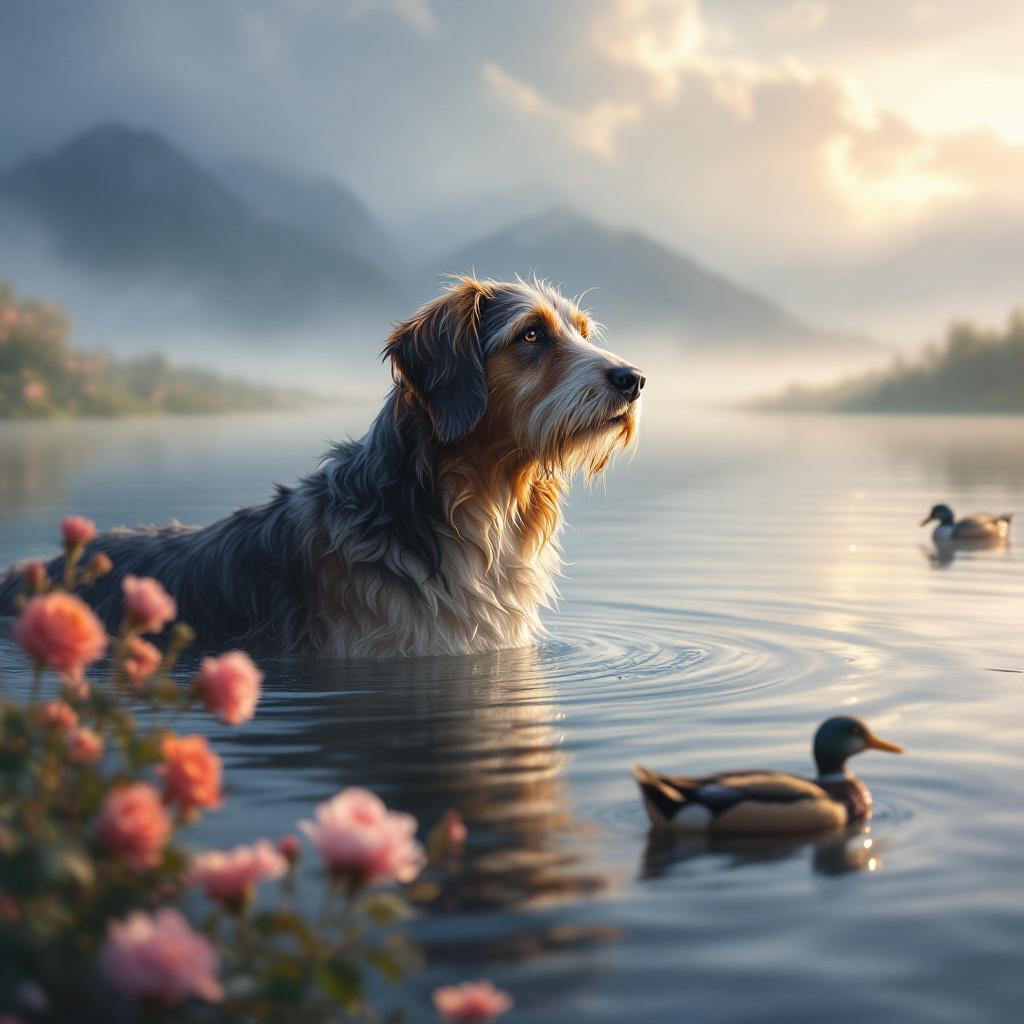
| 🌊 Aquatic Ability | Excellent swimmer, webbed feet, waterproof coat |
| 👃 Extraordinary Scent | Tracking up to several hundred meters |
| 🧠 Temperament | Affectionate and social, not suited to being alone |
| 🏠 Living Conditions | Large space and daily physical activity |
| ✂️ Grooming | Regular grooming of the beard and undercoat |
The Otterhound evokes both the strength of a molosser and the bearded silhouette of an aquatic explorer. Born to track otters along muddy banks, it still retains an intact taste for water and adventure today. In this article, we dive into its history, explore its extraordinary temperament, and share tips for training and pampering it. Ready to discover a dog both rustic and tender ?
History and Origins
The First Traces
Its name directly refers to the otter, and for good reason : the ancestor of the Otterhound is mentioned as early as the 16th century in the accounts of British nobles. At the time, they sought a dog capable of following tracks in the water, swimming against the current, and standing up to agile, slippery prey. The result is a molosser with a thick beard and sharp gaze, able to endure marshes and mud with undiminished enthusiasm.
A Specialized Hunting Dog
Unlike its cousins the Bloodhound or American coonhounds, the Otterhound is distinguished by its slightly webbed feet and waterproof coat. It was once the pride of otter hunting crews, tracking each watery trail as a team. When otter hunting was banned in the UK in 1978, the breed nearly disappeared, saved by a few enthusiasts who redirected it toward leisure and companionship.
Morphology and Physical Characteristics
A Massive and Elegant Appearance
With 70 to 77 cm at the withers for males and 55 to 62 cm for females, the Otterhound offers an impressive silhouette without heaviness. Its broad head ends with a characteristic, almost thick beard, which you have to stroke to believe in the softness hidden beneath this rustic appearance. The drooping, muscular ears, combined with gentle, slightly drooping eyes, give it an always benevolent look.
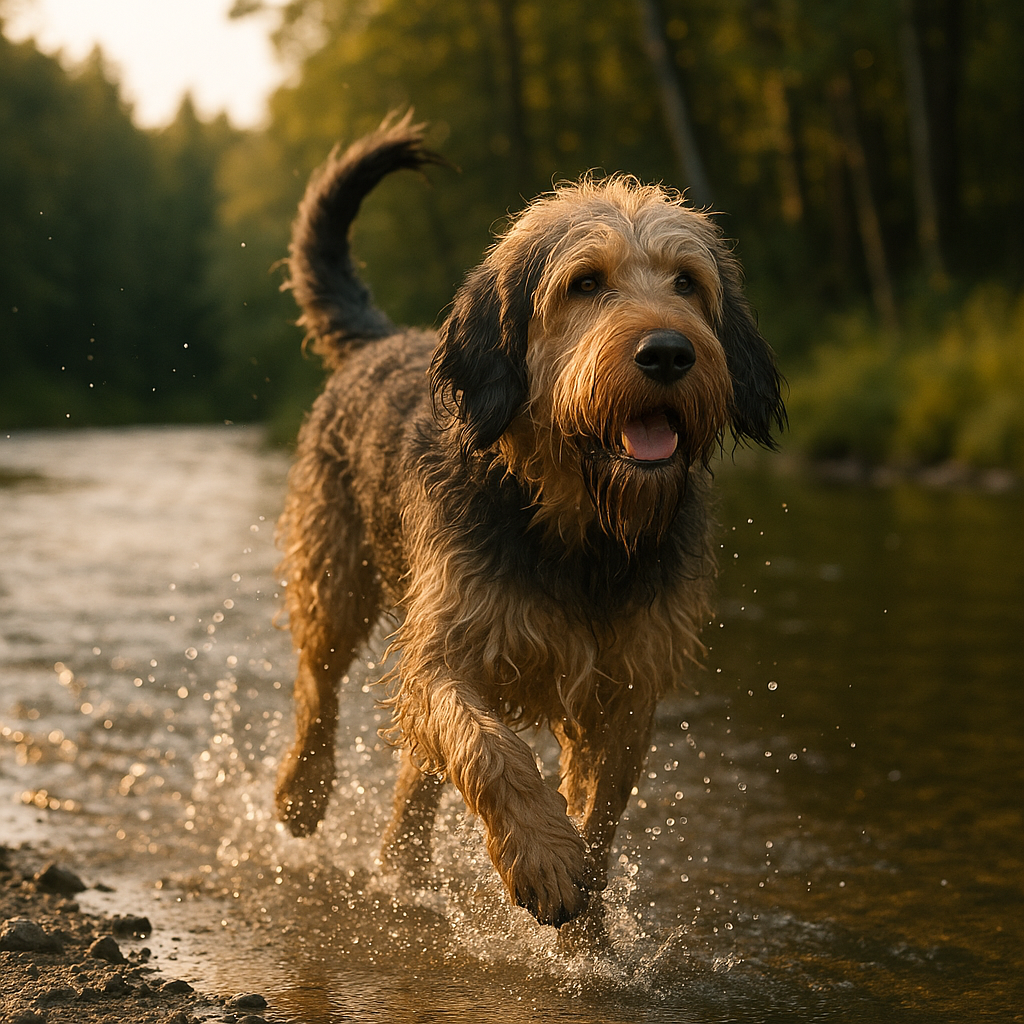
A coat designed for water
Its double coat consists of a dense undercoat and a rough topcoat, resistant to moisture. This combination acts as thermal insulation against cold water and protects against brambles when the dog moves through undergrowth. Weekly brushing is generally enough to limit tangles, but during shedding, more intensive grooming is necessary to remove the old undercoat.
Behavior and temperament
A sociable and playful companion
One might expect an introverted tracker, but the Otterhound often proves to be outgoing, eager for human presence and canine companionship. He doesn’t hold back when it comes to begging for petting or inviting a fellow dog to play. Therefore, leaving him alone for long hours is not his strong suit; separation anxiety can quickly show up.
Exercise requirements
This aquatic adventurer demands at least an hour of daily exercise: hiking, swimming, or long countryside walks will make him happy. To stimulate his scenting ability, treats can be hidden or tracking games offered outdoors. Boredom in him manifests as barking or digging trenches in the garden.
Training and socialization
- Start young: Otterhound puppies quickly learn routines and become attached to their family. Early socialization makes them confident around strangers and other animals.
- Positive reinforcement: treats and petting work better than coercive methods. This dog dislikes constraint and responds better to encouragement.
- Scent games: hiding a toy in the grass, varied scents, or tracking courses keep his sharp mind engaged.
- Recall and commands: his hunting instincts can lead him far from you. A solid recall is essential from the first months.
Care and maintenance
Grooming and brushing
A thorough brushing two to three times a week is sufficient outside of shedding periods. Special attention must be paid to the whiskers and beard, as these areas retain debris and moisture. Some breeders recommend running a fine comb through the undercoat during shedding to limit tangles and facilitate hair renewal.
Health monitoring
| Potential issue | Frequency of check |
|---|---|
| Hip dysplasia | Annual X-ray from 2 years old |
| Ear infections | Weekly ear checks |
| Shortness of breath in heat | Increased monitoring above 25 °C |
Living with an Otterhound: practical advice
Ideal habitat
A medium to large fenced garden is essential; the fence height should discourage any desire to escape. To protect him from excessive heat, ensure there is a shady spot and a water point so he can cool off at will.
Adaptation to family life
With calm and respectful children, the Otterhound is almost maternal, enjoying trotting alongside them. However, beware of more boisterous ones: the longevity of his enthusiasm could be severely tested. It is better to introduce calm moments and tracking games to channel his energy.
FAQ
What is the life expectancy of an Otterhound?
Generally between 10 and 12 years, depending on genetic background and quality of life.
Is he suited to apartment living?
Not really: his need for space, active scenting, and barking can quickly become problematic in urban environments.
Can he live with a cat?
Yes, if the cat is introduced very early and if retreat areas are provided for each.