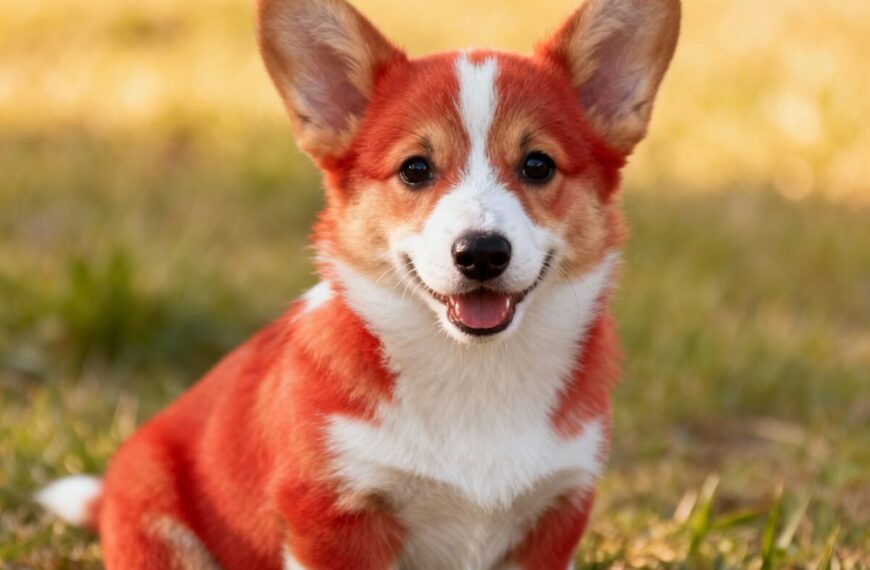
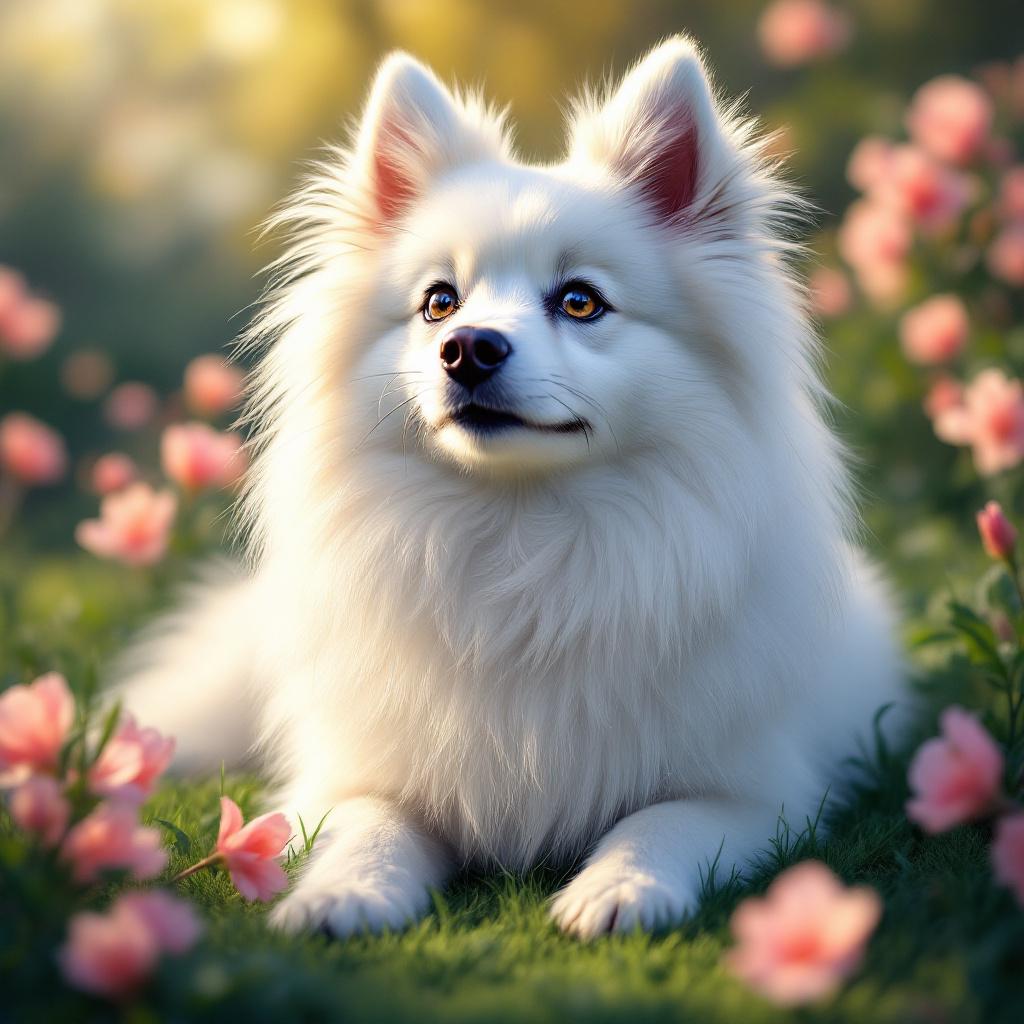
| Key points | Details to remember |
|---|---|
| 🐾 Origins | Born in Europe, standardized in Japan in the 1920s |
| 🎨 Appearance | Coat immaculate, dense and silky double layer |
| 🧠 Temperament | Lively, curious and very attached to its family |
| ✂️ Care | Brushing daily and bath every 6 to 8 weeks |
| 🏃 Activity | Moderate walks and interactive games |
| ❤️ Health | Life expectancy around 12 to 15 years |
One might think that the Japanese Spitz appeared at the heart of Japan, but its history actually begins in Europe, at the end of the 19th century. This small white dog looks like a living plush toy, always attentive and joyful, ready to chain exploits… or to demand cuddles and caresses. Through this article, you will discover why it charms many families, how to ensure its well-being, and what tips to adopt for harmonious coexistence.
Origin and history
From European ancestors to the Japanese islands
Initially, several white-coated breeds — including the Samoyed and the German Spitz — were crossed throughout Europe to obtain a more compact type of companion dog. It was ultimately in Japan that the standard was refined in the 1920s, driven by local dog enthusiasts wishing for a salon companion as elegant as it was affectionate. Japanese breeders worked on size, tail carriage, and general appearance before achieving the slender silhouette and fluffy coat that seduces us today.
The affirmation of a unique model
The Japanese Spitz quickly stood out with its immaculate look and mischievous expression. Officially recognized by the Japanese Kennel Club in 1948, it gained popularity in Western countries over the decades. Its compact silhouette and tapered muzzle give it an appearance close to a miniature white fox, while its playful attitude recalls that of a curious elf. Since then, it has been among the favorite breeds in urban and suburban households.
Physical characteristics and standard
Build and coat
The body of the Japanese Spitz presents a delicate balance: a deep chest, well-sprung ribs, and a straight back. The legs, straight and muscular, ensure a light and bouncy gait. What strikes first is its double coat. The outer layer, long and straight, protects against the weather; the undercoat, dense and thick, retains heat. When you stroke this coat, you understand why it is likened to a living plush toy.
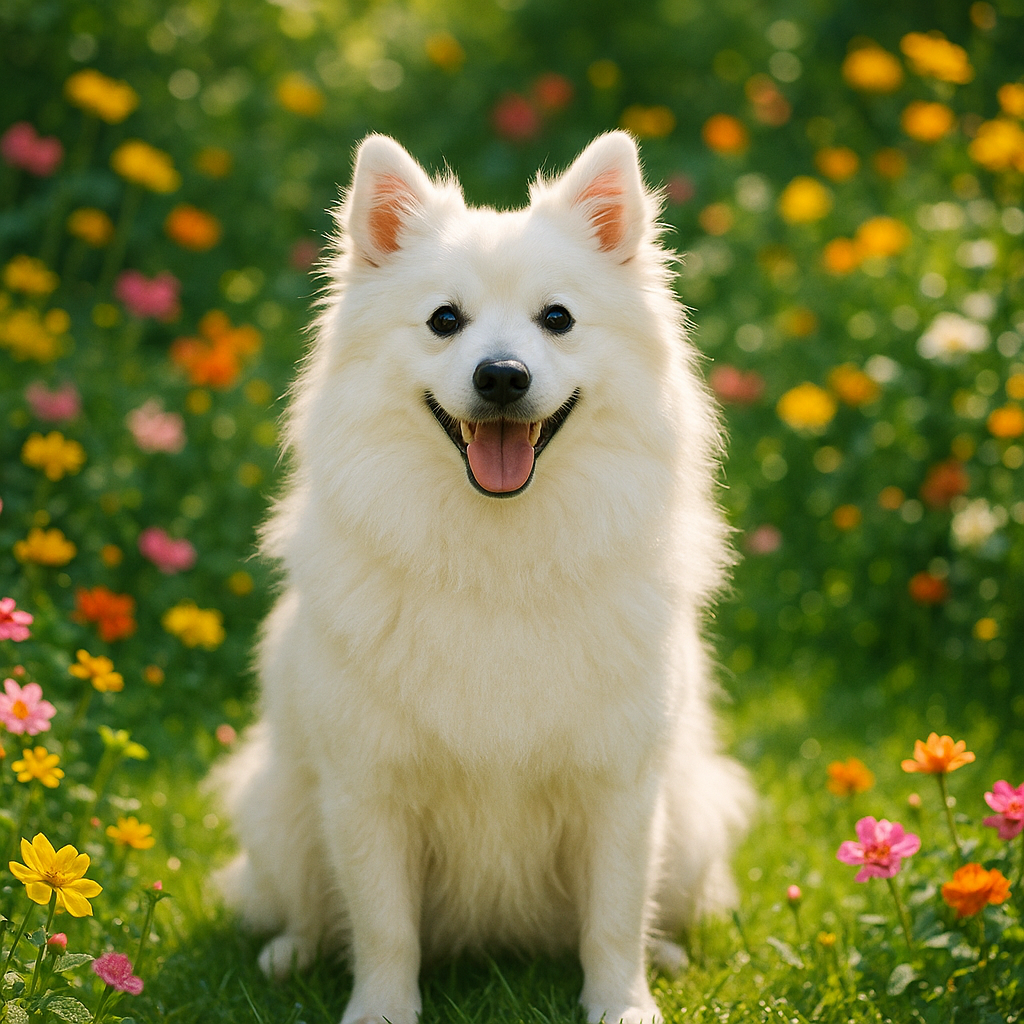
Colors, sizes, and characteristics
The coat is always 100% white, sometimes cream-tinted at birth, but it becomes pure white as it grows. The V-shaped ears, almond-shaped eyes, and plume-like tail raised over the back complete its distinctive look. In adult size, the male generally measures between 30 and 38 cm at the withers for a weight ranging from 7 to 11 kg, the female being slightly smaller.
| Characteristic | Male | Female |
|---|---|---|
| Height at withers | 30–38 cm | 28–35 cm |
| Weight | 7–11 kg | 5–9 kg |
| Life expectancy | 12–15 years | |
Character and training
Lively and sociable temperament
The Japanese Spitz stands out with its lively entrance: friendly, they greet you by hopping, eyes sparkling. They are exceptional companion dogs, quick to form strong bonds. They poorly tolerate prolonged solitude and much prefer human company to that of an inanimate toy. Beneath their little ball of softness lies an instinctive vigilance: many make excellent guard dogs, alerting to suspicious comings and goings with a clear bark.
Tips for balanced training
The key? Combine clear rules with stimulating games. From a very young age, the Spitz loves learning new tricks, catching a ball, or participating in light canine gymnastics sessions. Use appropriate rewards — homemade treats, petting, encouragement — to reinforce good behavior. The positive approach pays off: avoid severity, focus on consistency and patience. Early socialization (dogs, children, urban noises) will help them remain calm in all situations.
Care and health
Grooming and coat care
One might fear that this abundant coat requires tedious daily maintenance, but in reality brushing two to three times a week is enough to prevent mats and limit shedding. During shedding periods, increase the frequency to a light brushing every day. A bath every six to eight weeks — no more often, to preserve natural oils — will restore the coat’s shine. Regularly check the ears and gently trim hairs that block the ear canal.
Medical follow-up and predispositions
The Japanese Spitz is a robust breed, without major hereditary problems identified on a large scale. Nevertheless, regular dental checks, early detection of eye disorders (keratitis, cataract), and vigilance regarding overweight are recommended, as a healthy body facilitates longevity. A balanced diet, calibrated for a small active dog, helps maintain energy without exposing to unnecessary weight gain.
Daily life and adaptations
Exercise needs and playful activities
Although it adapts to apartment living, the Spitz requires at least half an hour to an hour of daily walks, enhanced with fetch games or light obstacles to keep it mentally occupied. Canine sports such as agility or canicross prove to be ideal playgrounds to channel its enthusiasm. Indoors, hide some treats in a snuffle mat to stimulate its scent and intelligence.
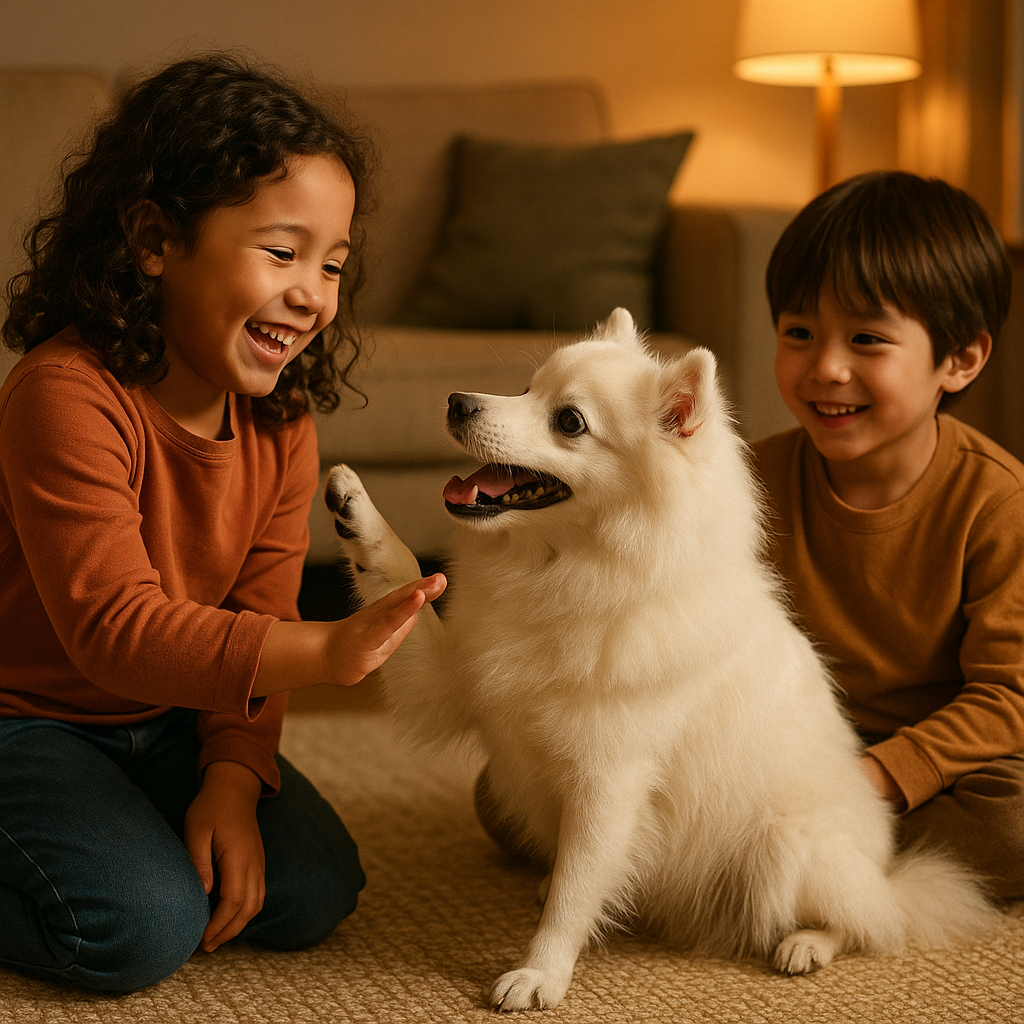
Living with children and other animals
Children will quickly fall under the charm of this little white clown. Thanks to its gentleness and desire to please, the Japanese Spitz easily integrates into a sibling group, provided that the younger ones are taught to respect its resting times. With other dogs, its sociability facilitates harmony, especially if each encounter is supervised and positive. A cat tolerated at a young age can quickly become a playmate, as long as the cohabitation starts in a calm and gradual manner.
FAQ
- What budget should be planned for a Japanese Spitz?
- Expect between €1,200 and €2,000 for the purchase, depending on the pedigree, plus about €50 to €70 per month for food and care.
- Does the Japanese Spitz tolerate heat?
- Its double coat insulates it against the cold but can be a disadvantage in high heat. Make sure to provide shade, fresh water, and avoid walks during the hottest hours.
- Is it easy to train for a beginner?
- Very: its eagerness to learn and sensitivity to encouragement make it a model student, as long as one remains consistent and patient.
- Can it stay alone during the day?
- A few hours, yes, if you provide interactive toys and gradually get it used to being alone. Beyond 4 to 6 hours, it may develop separation anxiety.
- How to prevent mats in its coat?
- Regular brushing with a slicker brush and a fine comb after the daily shedding prevents matting, especially behind the ears and under the thighs.