| Key Points | Details to Remember |
|---|---|
| 🐾 Definition | The Pug is a small-sized dog with a unique face. |
| 🌍 Origin | Breeding dates back to ancient China, then spread to Europe. |
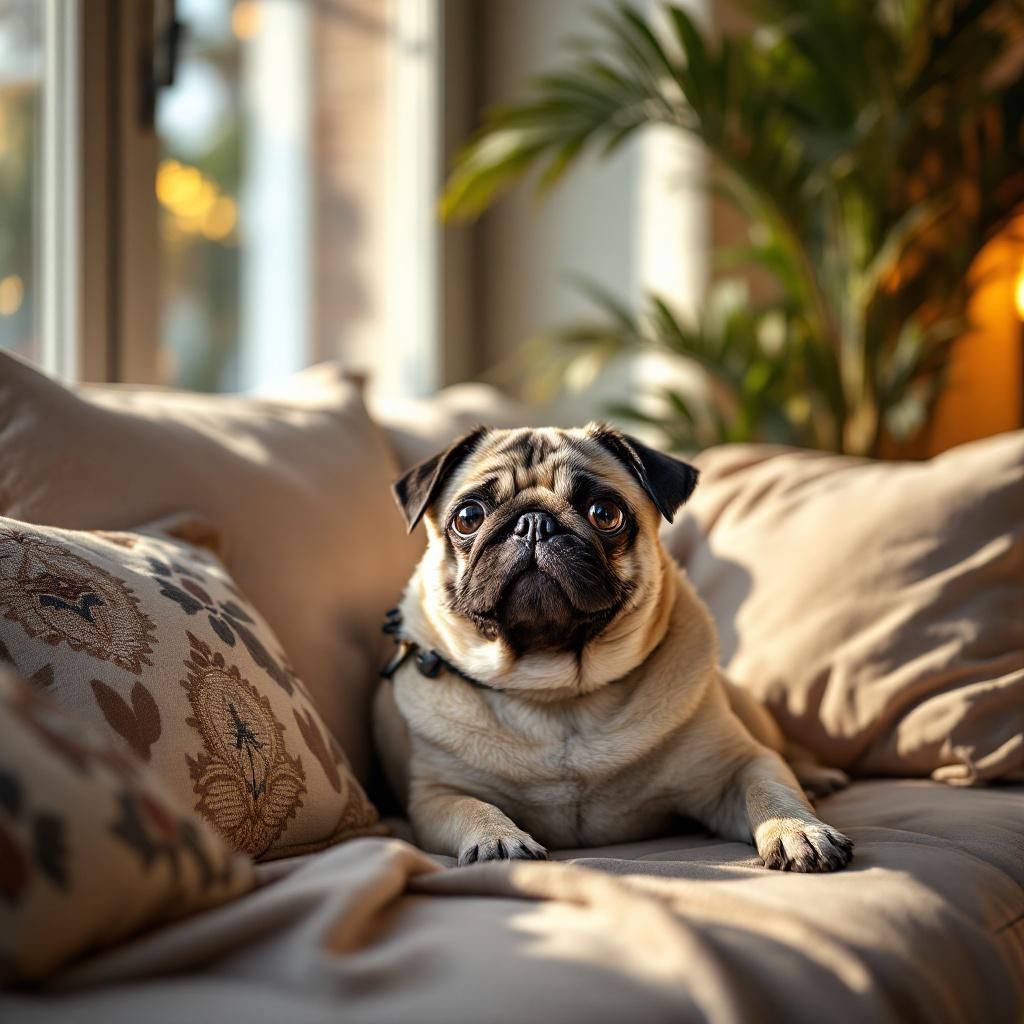
| 👀 Physical | It features a flat nose and pronounced wrinkles. |
| 🤡 Temperament | A joyful and very sociable companion. |
| 🍽️ Care | Needs a adapted diet and wrinkle care. |
| ❤️ Health | Regular monitoring to avoid respiratory conditions. |
If you have encountered a Pug during a walk, there is a good chance that its sparkling gaze immediately charmed you. This small dog with a flat muzzle and pronounced wrinkles fascinates with its almost caricatural appearance, but it is above all its temperament as a true affectionate clown that wins over families. Behind this adorable face hides a companion demanding in terms of care and health, but offering in return unwavering loyalty and attachment.
Origin and History of the Pug
Millennial Roots in Asia
The earliest representations of the Pug date back more than two thousand years to imperial China. At the time, these flat-faced dogs were cherished by the aristocracy of the Tang and Ming dynasties. In royal courts, they roamed freely, sometimes adorned with delicate jewelry. Contrary to common belief, their role went beyond mere companionship: some ancient texts describe the Pug as a symbol of status and protection, a discreet guardian of precious treasures.
Popularization in the West
Around the 16th century, Dutch merchants brought these small dogs back from their travels in Asia. Quickly, European nobility adopted the Pug, admiring its proud bearing and mischievous expressions. Under Queen Victoria, the Pug became a fashion phenomenon: in London salons, it strutted alongside velvet cushions and gold-adorned tea sets. Gradually, it won the hearts of families, freeing itself from the elite circles alone.
Physical Characteristics
Wrinkled Face and Expressive Eyes
It is impossible to talk about the Pug without mentioning the deep wrinkles that form a true relief on its skull. Each wrinkle gives it an incredibly varied palette of expressions: surprise, challenge, curiosity… Its wide, dark eyes immediately capture attention. Beneath this sometimes wrinkled appearance, one detects a lively intelligence, ready to decode the slightest human gesture.
Compact body and musculature
Beyond the face, its body is distinguished by a solid torso, short and muscular legs, and a curled tail that crowns its rump. This stocky build often surprises when one expects a frail dog. In reality, the Pug is robust, even if it struggles to tolerate extreme temperatures. Its short coat requires little maintenance, provided it is brushed regularly to limit dead hair and promote air circulation between the folds.

Temperament and behavior
Affectionate clown in daily life
The Pug is often compared to a little clown in a fur coat. At home, it finds all sorts of ways to make us laugh: unusual sleeping positions, wild chases after its own tail, or improbable facial expressions when asking for a treat. Its robust sense of humor and lack of cynicism make it an endearing companion, ready to improvise a performance at any moment.
Social interactions
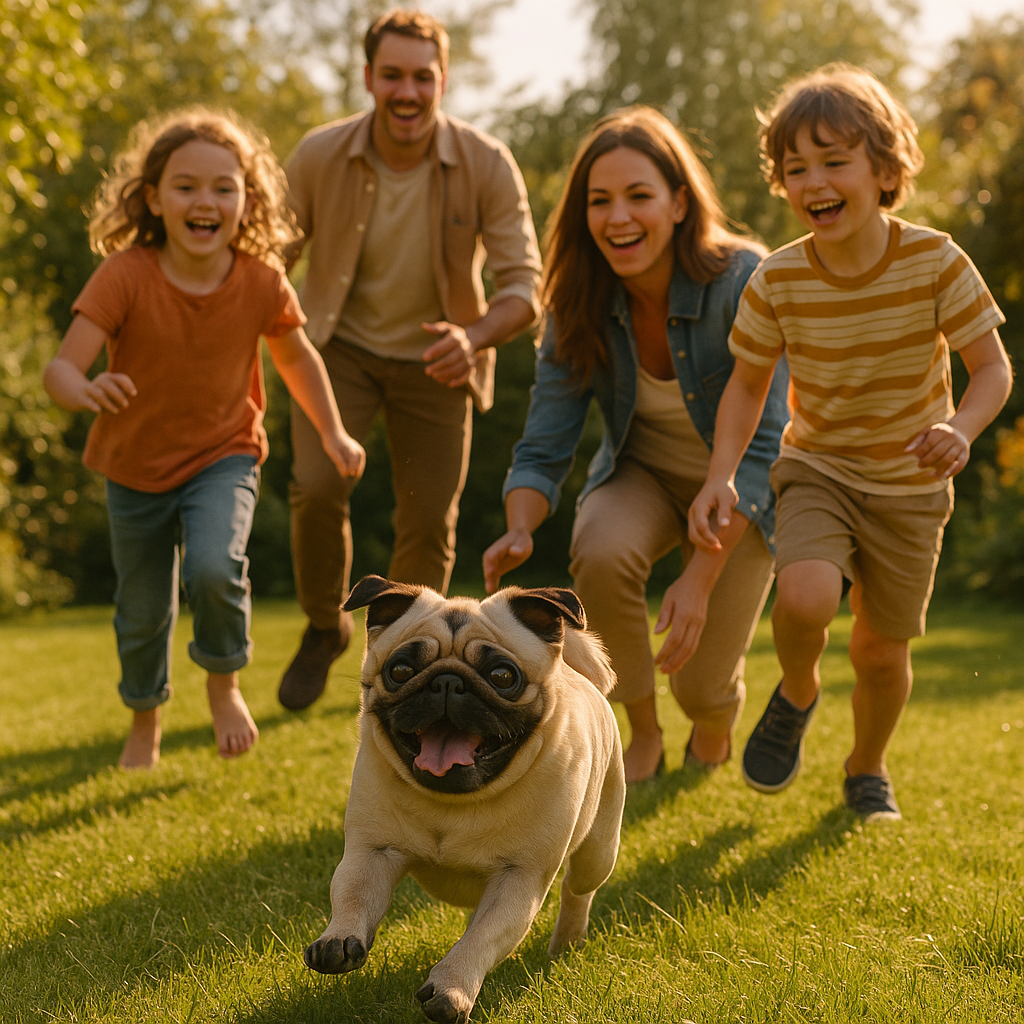
Very attached to its clan – human or canine – the Pug rarely shows distance. With children, it plays with surprising delicacy, aware of its small size. With other animals, it can be affectionate or curiously dominant, depending on its character. It gladly calls its peers for a game, but also knows how to enjoy long naps in pairs.
Care and specific needs
Balanced diet
The Pug is greedy, almost gluttonous. Without safeguards, it quickly gains weight, which endangers its health. Favor a diet rich in proteins and moderate in carbohydrates. High-quality kibble, formulated for small breeds, often represents the best option. A portion adapted to the activity level, complemented by a few quick treats, is enough to ensure a stable weight without frustration.
Exercise and physical activity
The Pug’s stocky silhouette hides surprising energy, especially during morning walks. Rather than long runs, it prefers agility games: simplified agility courses, hide and seek, or small treasure hunts. Indoors, a few sessions of fetching objects or hiding treats help channel its enthusiasm without overexerting it.
Coat and fold maintenance
Maintaining the facial folds remains one of the essential tasks. Slightly moisten a cotton pad, then pass it through each fold to remove dirt and bacteria. Dry carefully to avoid stagnant moisture. Weekly brushing is enough to limit dead hair, while a monthly bath – no more, no less – helps maintain healthy skin without damaging the coat.
Health and longevity
Common pathologies
The Pug, like all brachycephalic breeds, has an increased risk of respiratory disorders (obstructive airway syndrome). The folds can harbor skin infections if not kept clean. Other conditions, such as hip dysplasia or eye problems (corneal ulcers), require regular monitoring.
Prevention and veterinary follow-up
Annual visits to the veterinarian are non-negotiable: they allow early detection of respiratory and joint complications. Consider regular blood tests to check metabolic balance. When a problem arises, reacting quickly often reduces discomfort and the risk of chronicity.
The Pug in the family
Adaptation to Homes
Whether you live in an apartment or a house with a garden, the Pug adjusts easily. Its need for space is limited to a few square meters to stretch out and it can be content with a small cozy corner. However, community life is essential for it: it quickly suffers from anxiety if left alone too much.
Bond and Training
Despite its clownish side, the Pug appreciates consistency. Gentle but firm training prevents bad habits, especially constant begging for treats. Play sessions will be more effective than strict commands: it is by having fun that it best learns the basics of obedience and develops a real enthusiasm to cooperate.
FAQ
- Does the Pug tolerate heat?
- Its flat muzzle limits its respiratory capacity; avoid high heat and provide shade and fresh water.
- At what age does it become an adult?
- Maturity generally occurs between 10 and 12 months, with muscle development completed around 18 months.
- Is it suitable for young children?
- Its natural gentleness suits the youngest, provided interactions are supervised and sudden movements are avoided.
- How often should its coat be brushed?
- Weekly brushing is sufficient to limit hair loss and stimulate skin blood circulation.
- What health budget should be planned?
- On average, expect between €300 and €600 per year for veterinary visits, especially if frequent care of the folds or respiratory exams prove necessary.