| Key points | Details to remember |
|---|---|
| 🐶 Origin | Scotland, 18th century |
| 🎩 Morphology | Elongated silhouette, distinctive mustaches |
| 🌳 Temperament | Independent but affectionate |
| 🏠 Environment | Apartment possible, garden preferred |
| 🎓 Training | Patient and consistent |
| ❤️ Health | Life expectancy 12–15 years, spinal vigilance |
Admired for its unique appearance and thick mustache, the Dandie Dinmont Terrier surprises as much as it charms. Originating from the Scottish Highlands, it combines an almost dachshund-like silhouette, a lively gaze, and a strong temperament. This article takes you to meet this small dog with a rich history, details its physical traits, sometimes stubborn character, and provides the keys to care for it sustainably.
Origin and history
Scottish roots
At the turn of the 18th century, Scottish hunters were looking for a companion capable of flushing out badgers and martens. At the crossroads of local lineages and perhaps Yorkshire terrier ancestry, the Dandie Dinmont Terrier was born. Its name comes from a fictional character imagined by Walter Scott in his novel “Guy Mannering.” This literary reference gave the dog an almost aristocratic aura and united breeders around a precise standard.
From badger hunter to companion dog
Gradually, its role in the field faded to gain British drawing rooms. Attracted by its character, both courageous and warm, many members of British high society began adopting it as a faithful companion. By the end of the 19th century, it gained official recognition from the British Kennel Club. Its neat appearance and balanced behavior established it among families seeking a small dog capable of adapting to urban life while retaining a terrier temperament.
Distinctive morphology
Size, silhouette and mustaches
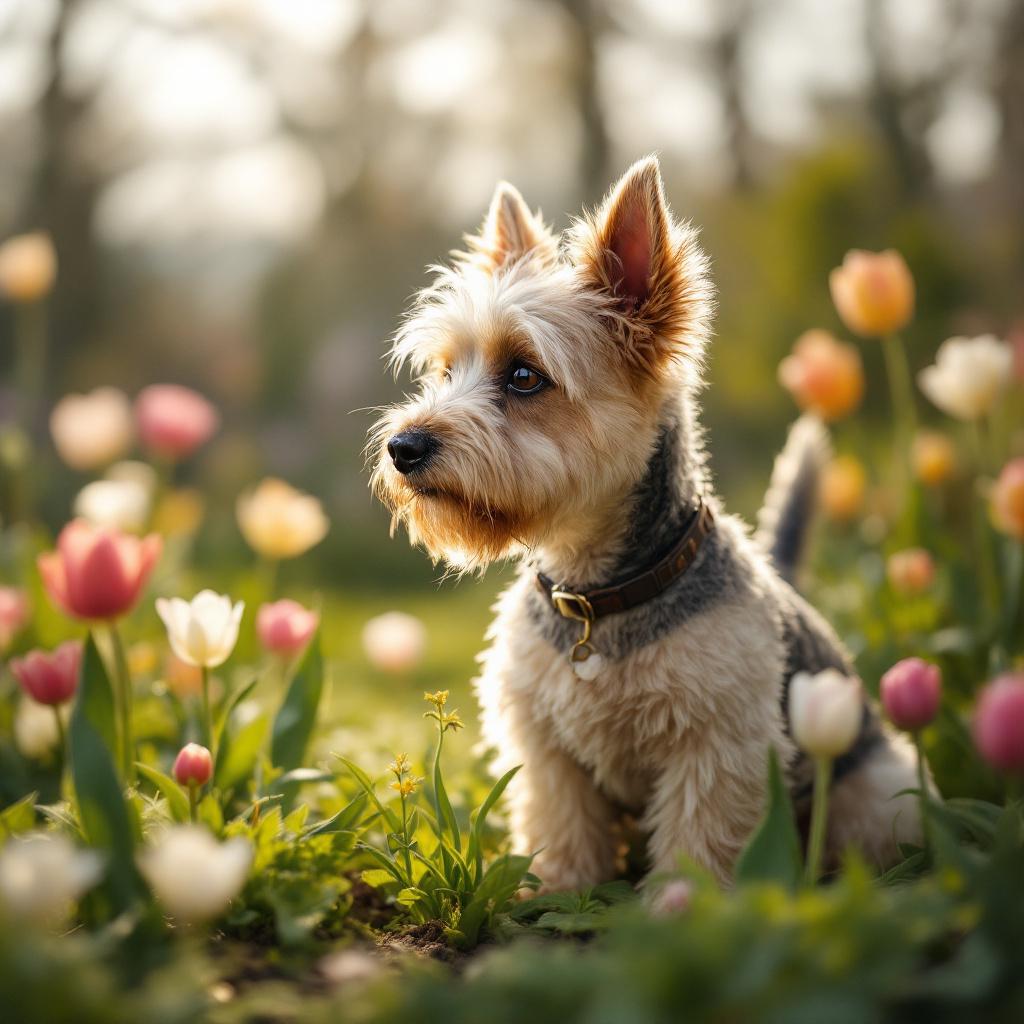
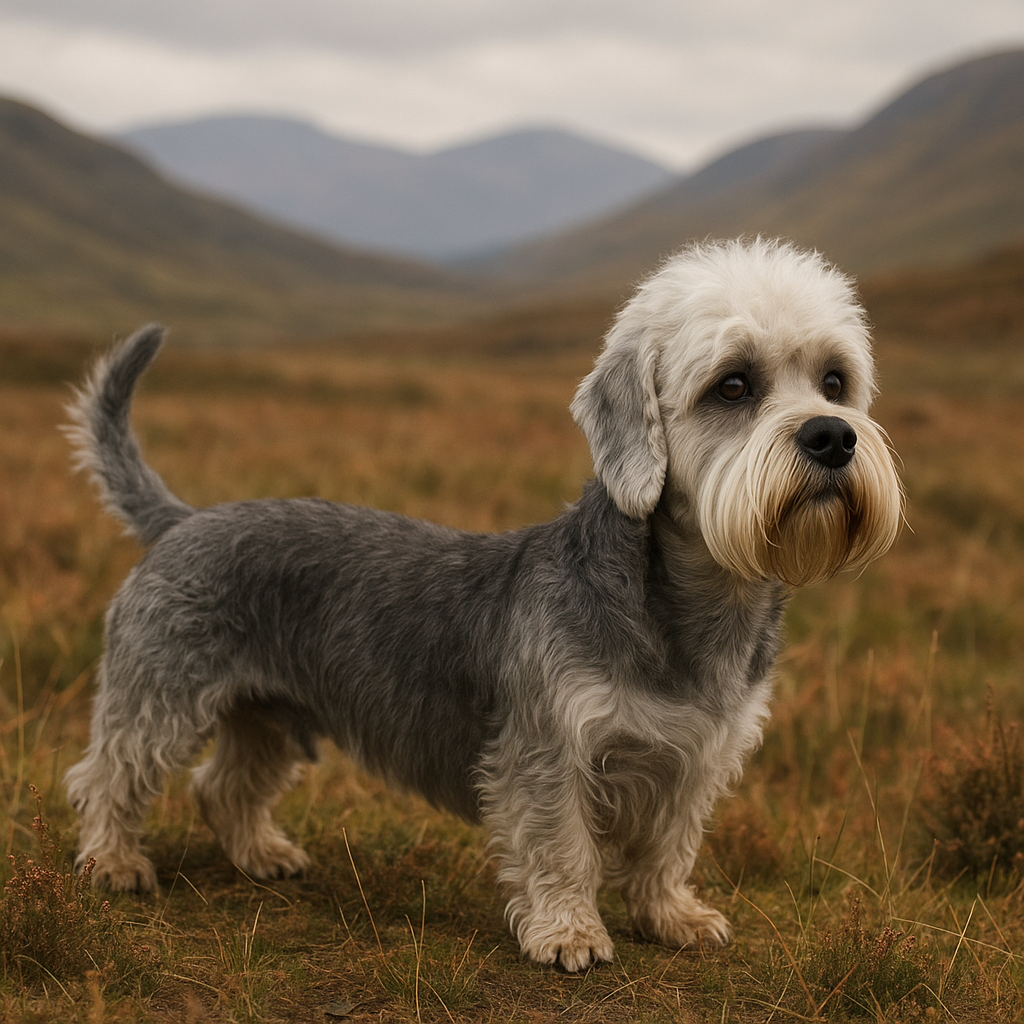
With its 20 to 28 cm at the withers and weighing between 8 and 11 kg, the Dandie Dinmont Terrier has a compact build. Its elongated silhouette evokes an elegant sausage, but its back remains strong enough to support terrier activity. The head, broad and rounded, is adorned with a thick fringe above the eyes and a thick mustache framing the nose. These facial hairs are not just decorative: they protect the sensitive area around the muzzle when the dog digs in the ground searching for game.
Color varieties and coat type
Two main shades are recognized: pepper (gray-silver hair mixed with black pepper) and mustard (warm ochre tone). The coat, medium-length, has soft hair and a texture that requires specific care. Under the topcoat, a silky undercoat provides insulation and protection against moisture. Breeders look for uniform shades, without flames, and a shiny coat free of knots.
Character and temperament
Personality traits
One might think that small size means dependence. However, the Dandie Dinmont Terrier is characterized by an almost proud independence. It knows how to be affectionate and attached to its home, while occasionally claiming a solitary escape to sniff out new territory. Its sociability, provided it is properly channeled from a young age, makes it a tolerant companion towards children and other animals.
Exercise and mental stimulation needs
Despite its size, it retains a hunting instinct and demands a brisk walk every day. Half an hour of fast walking, combined with agility exercises or tracking games, is enough to channel its energy. Indoors, some occupation toys or positive training sessions enrich its daily life and prevent boredom. Explorations in a large garden, under your supervision, remain the ideal environment to allow it to express its natural curiosity.
Grooming and care
Grooming and coat maintenance
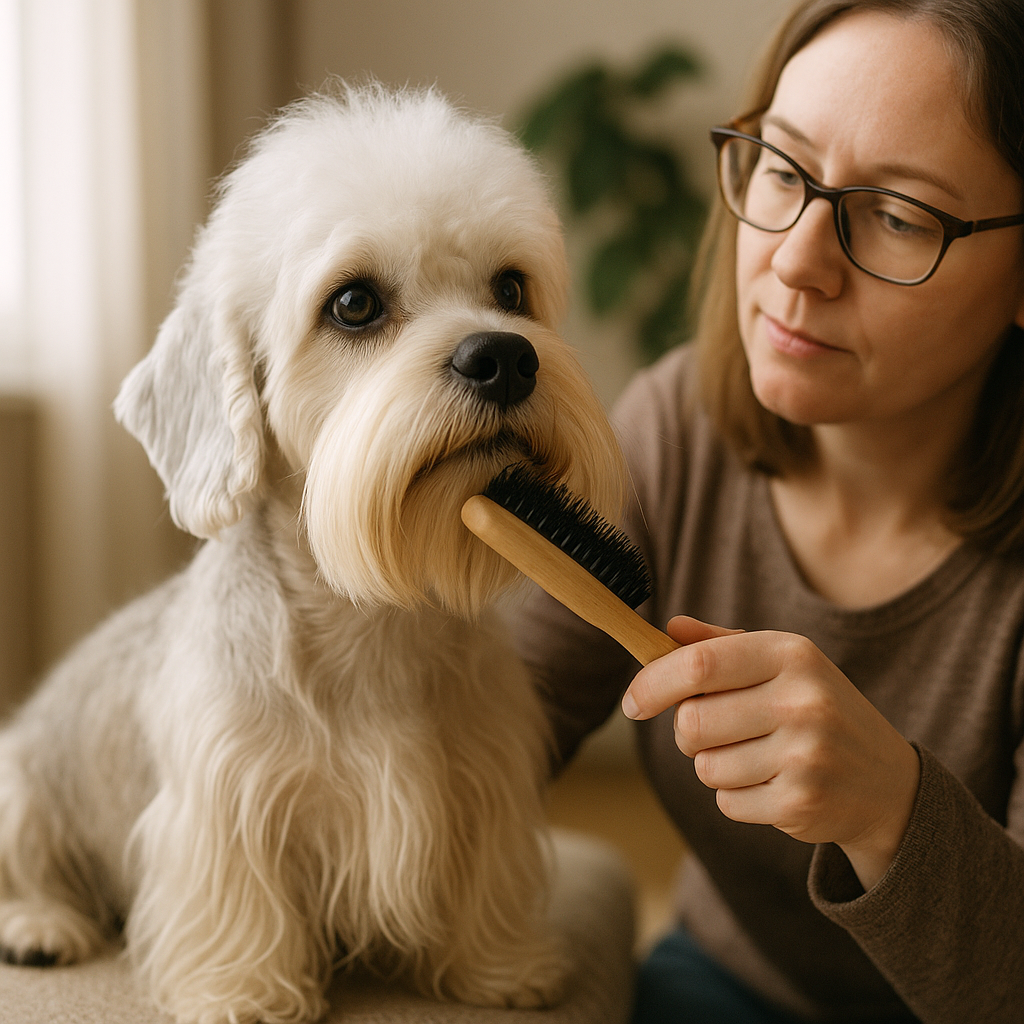
The Dandie Dinmont Terrier does not shed heavily like some short-haired terriers, but its coat requires weekly maintenance. A gentle brushing with a soft-bristle brush removes dead hair without irritating the skin. For the mustache and bib, a fine-toothed comb prevents knots. Every three months, using a professional for manual stripping restores **volume** and **texture** to the coat, promoting a proud and well-groomed head carriage.
Monitoring health and well-being
The breed has a comfortable life expectancy, often between 12 and 15 years. The main points of vigilance concern the spine, prone to herniated discs, and the eyes, potentially vulnerable to hereditary cataracts. Annual veterinary check-ups, including an orthopedic exam and an ophthalmologic control, allow early detection of any abnormal signs. A nutritional follow-up adapted to its activity level and an ideally maintained weight also help preserve its spine.
Strengths and precautions
- Suitable for apartment living if it benefits from daily exercise.
- Balanced temperament, combining independence and attachment.
- Orthopedic risk: vigilance on diet and activity.
- Regular coat maintenance to avoid skin problems.
- Early socialization recommended for a harmonious life.
FAQ
- What is the average price of a Dandie Dinmont Terrier?
- The price varies depending on the lineage and the breeder’s reputation. Generally, expect between €1,500 and €2,500 for a puppy registered in the Book of Origins.
- Does the Dandie Dinmont Terrier shed a lot?
- No, it does not shed heavily. Weekly brushing prevents hair accumulation and maintains the coat’s shine.
- Is it easy to train for a novice?
- Its sometimes stubborn character requires patience. Positive training, based on rewards, proves to be the most effective.
- What activity should be favored for it?
- Brisk walking and small tracking games stimulate both its body and its scent, essential for its well-being.
- Can it live with other animals?
- Often yes, provided early socialization. Its tolerance towards cats and fellow dogs will also depend on its individual history.