| Key points | Details to remember |
|---|---|
| 🐶 Definition | Massive dog originating from Italy, known for its characteristic wrinkles. |
| 📜 History | Descendant of ancient molossers, used as a property guardian. |
| 💪 Character | Protective and loyal, but surprisingly gentle with children. |
| 🛡️ Role | Deter any intruder by its imposing presence and deep bark. |
| 🏡 Daily life | Large spaces and early socialization essential for its balance. |
| 🐾 Maintenance | Check and clean the wrinkles to prevent skin infections. |
| 🍽️ Feeding | Adapted ration to its size to support its musculature. |
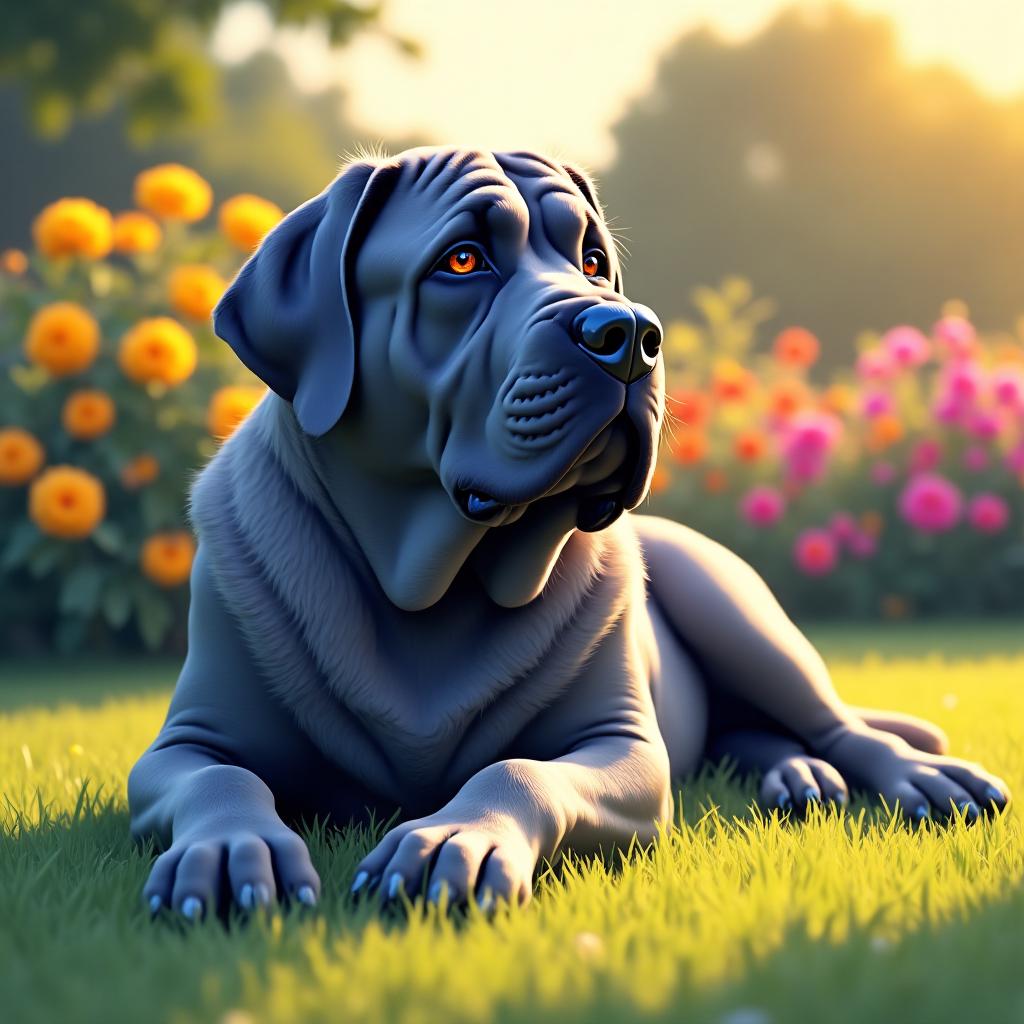
With its majestic bearing and abundant wrinkles, the Neapolitan Mastiff immediately intrigues. At first glance, one perceives a colossus capable of effectively protecting a property. Upon closer approach, one discovers a more nuanced temperament: a mix of unshakable calm, sometimes reserved, but always ready to show unwavering loyalty to those around it. Ideally, one should understand the origins of this breed before bringing it into one’s life, then adapt its environment so it can fully thrive.
Breed history
Origin in Antiquity
The Neapolitan Mastiff traces its roots back to the Roman Empire, where large molossers guarded carcasses and protected military camps. Wall frescoes and mosaics testify to the presence of dogs of impressive size, intended to repel any wild animal or enemy.
Recognition and current standard
Over the centuries, selection has refined the silhouette to favor a powerful volume and a massive head, adorned with hanging wrinkles. It was only in the 20th century that the Italian canine club set a precise standard, before the FCI (Fédération Cynologique Internationale) approved it in 1983. Since then, the giant wrinkled dog has charmed both for its guardian role and its unique appearance.
Impressive Morphology
Bony and Muscular Structure
Beneath the short coat lies a sturdy skeleton and thick muscles. The range of movement is surprising: despite its weight that can exceed 70 kg, the Neapolitan Mastiff remains remarkably agile. The back holds firm, supporting the weight of the large skull without affecting its gait.
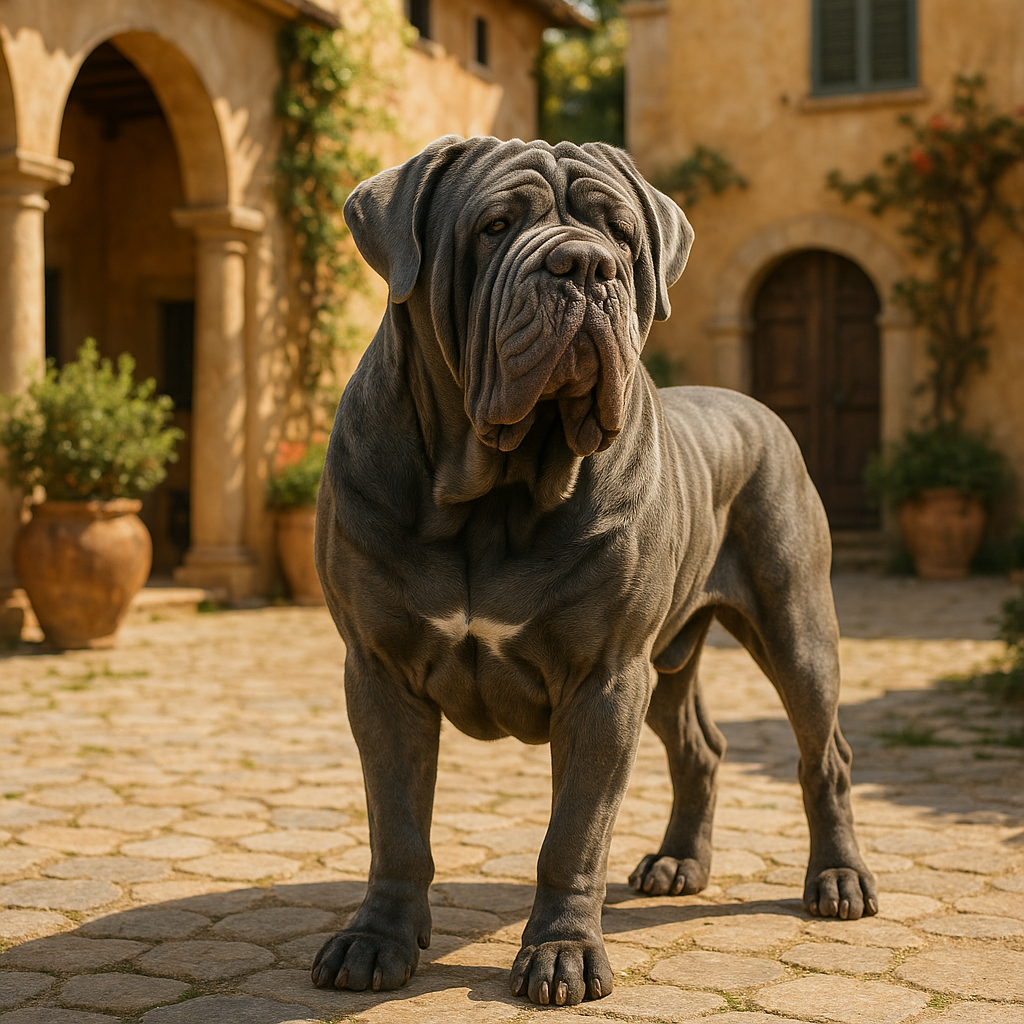
Wrinkles and Folds: What Are They For?
These folds are not just decoration. Historically, they protected the eyes and neck during fights with other beasts. Today, they provide a highly sought-after aesthetic dimension, while requiring particular vigilance to prevent moisture from stagnating and promoting skin infections.
Coat and Color Variations
Accepted colors range from black to brindle to slate gray. Each offers a play of tones and shadows between the folds. Breeders also monitor the symmetry of facial masks and the clarity of white markings, essential criteria to meet the standard.
Temperament and Behavior
The Protective Instinct
When a visitor approaches, the heart of this Molossus starts beating faster. Rather than immediately launching an attack, it positions itself, analyzes, growls if necessary. This restraint reflects a calmness not found in all breeds of similar size.
Relationship with the Family
At home, it develops a very strong bond with each member of the household, offering an almost “human” affection. Children often appreciate its gentleness, as long as mutual respect rules are established. Gradual socialization avoids awkwardness related to its weight during chases in the garden.
Training and Socialization
Starting young is essential. From the age of two months, simple codes are established: leaving a toy, sitting before receiving a treat, or tolerating visits from strangers. Coercive methods are counterproductive; this Mastiff prefers quiet authority and encouragement.
Needs and Care
Diet Adapted to a Giant
To support muscle mass and limit excessive weight gain, a quality protein intake is recommended, around 25% of the daily ration. Excessive carbohydrates can promote joint problems, especially in a dog whose morphology naturally stresses the hips and shoulders.
Skin Care and Fold Inspection
Once or twice a week, each fold is carefully examined to detect redness, odors, or traces of moisture. A gentle cleaning with lukewarm water, followed by thorough drying, maintains skin balance. A veterinarian can recommend specific powders to limit irritation.
- Check the folds behind the ears and under the tail
- Use cotton wool and micellar water
- Dry well with an absorbent towel
Recommended Physical Activity
Massive does not mean sedentary. Daily walks of at least one hour, interspersed with free playtime, are ideal. Hard surfaces should be avoided to preserve the joints; grass, forest trails, or a large park offer a soft and stimulating terrain.

Reproduction and Health
Ethical Breeding
Turning to a reputable breeder guarantees a lineage screened for hereditary conditions. Mandatory tests include screening for hip and elbow dysplasia, as well as cardiac monitoring. A well-managed litter involves a complete health check of the parents and a strict vaccination protocol for the puppies.
Common Conditions
Some Mastiffs exhibit skin disorders, thyroid problems, or eye infections. Regular monitoring, combined with biannual veterinary visits, allows early detection of any abnormalities.
Life Expectancy and Aging
Generally between 7 and 9 years, this age can be extended by anticipating joint care and adapting nutrition. Supplements based on glucosamine and chondroitin can slow the development of osteoarthritis.
FAQ
- How tall does a Neapolitan Mastiff get?
Males often reach 76 cm at the withers, females around 72 cm. - At what age does it become an adult?
Bone maturity occurs around 2 years, even though its size is already imposing by 12 months. - Is it suitable for apartments?
Its size and space needs make living in a small dwelling challenging, unless outings are very frequent. - Does it tolerate heat well?
High temperatures strain its heart and respiratory tract; constant access to fresh water and a shaded area are essential. - How to prevent hip problems?
Limit jumping, favor a balanced diet, and provide moderate exercise.