| Key Points | Details to Remember |
|---|---|
| 🐶 Definition | Socialization: learning positive interactions with children and animals. |
| 🎯 Objectives | Mutual trust and emotion management. |
| 🛠️ Methods | Simple and progressive steps, adapted rewards. |
| 👧 Interaction with children | Calm play, clear signals, presence of an adult. |
| 🐱 Interaction with animals | Controlled meetings, safe space, observation of signals. |
| ✅ Results | Calm dog, happy family. |
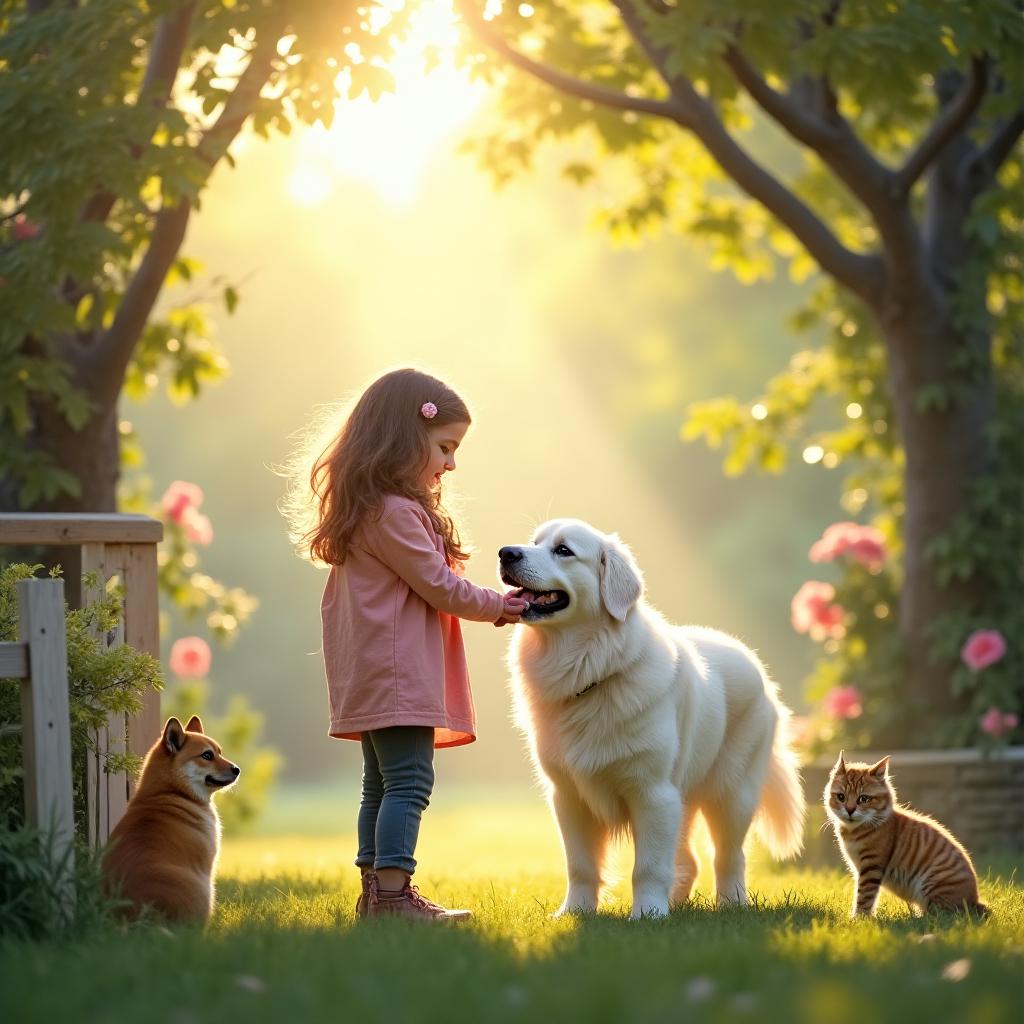
To effectively socialize your Swiss Shepherd with children and other animals, gradually initiate calm encounters while respecting the dog’s temperament and everyone’s needs. Each step is based on mutual trust and careful observation of behavioral signals.
Why Socialization Is Crucial for Your Swiss Shepherd
The Swiss Shepherd stands out for its intelligence and sensitivity, two major assets for its socialization. A dog well exposed early to varied experiences develops emotional balance and avoids fears and excessive reactions.
Understanding the Temperament of the Swiss Shepherd
A versatile herding dog, it combines gentleness and vigilance. Its natural sociability can be hindered by a lack of controlled exposure. Encouraging positive experiences early ensures a calm adult dog.
Critical Period: 8 to 16 Weeks
During this learning window, every interaction shapes its character. You will multiply short, varied, and pleasant encounters, reinforced by treats or targeted affection.
Preliminary Steps Before the First Meetings
Preparing your Swiss Shepherd involves setting up a safe and predictable environment. Anticipating each situation avoids unnecessary stress and misunderstanding.
Establishing a Climate of Trust
- Choose a calm and familiar place for the dog.
- Use a light leash to allow some freedom of movement.
- Associate each novelty with a gentle reward (treat or affection).
Observing Calming Signals
Scratching the nose, looking away, or yawning are ways for the dog to release emerging tension. Stop the session if these signs multiply.
Socializing Your Swiss Shepherd with Children
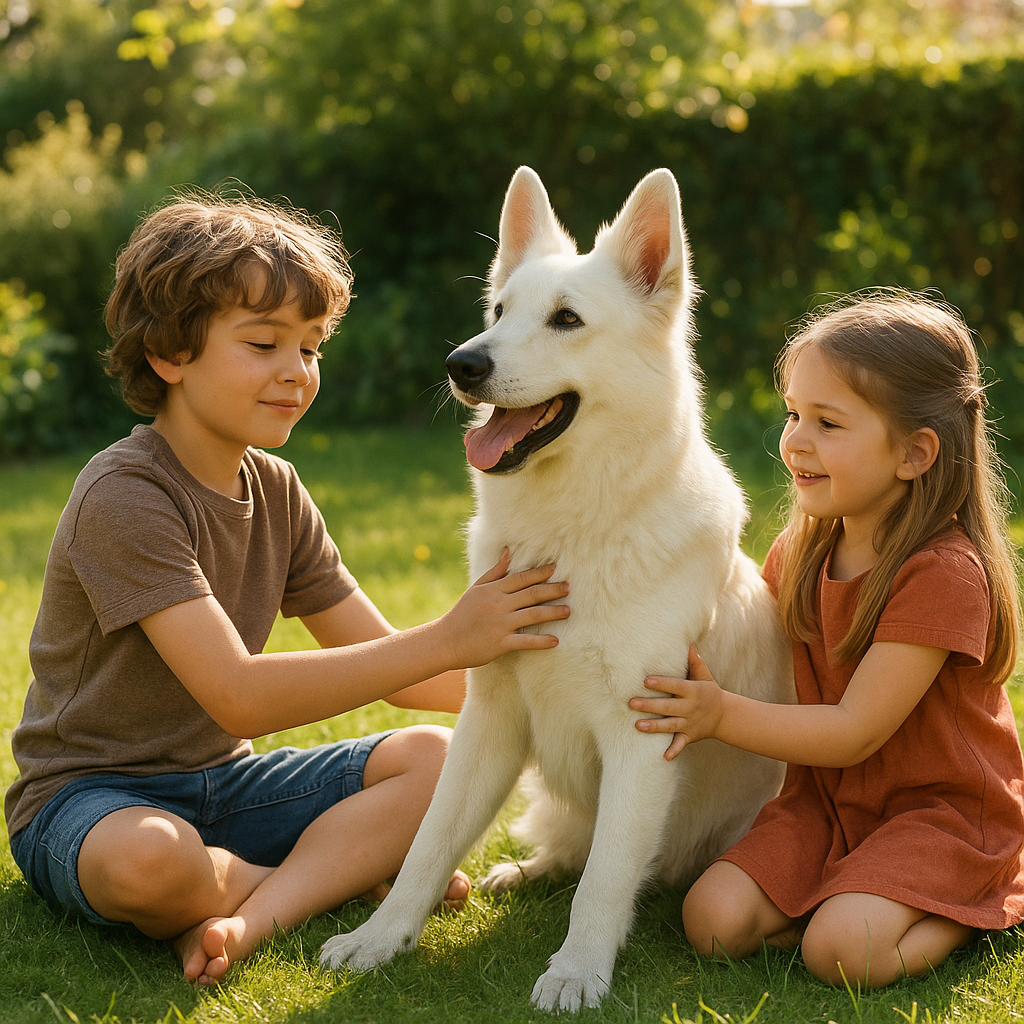
Living together with a dog and children requires rigor and pedagogy. Supervise each interaction to ensure respect and safety.
Progressive and Safe Approach
- Start with short introductions, without direct ground contact if the child is younger.
- Always keep a responsible adult ready to intervene.
- Favor a side-by-side seated interaction, treat in hand.
Adapted Games and Non-Verbal Communication
Gentle games (light tug, measured ball throwing) strengthen the bond without rushing. Teach children to respect the dog’s comfort zone and recognize its need for breaks.
Socializing Your Swiss Shepherd with Other Animals
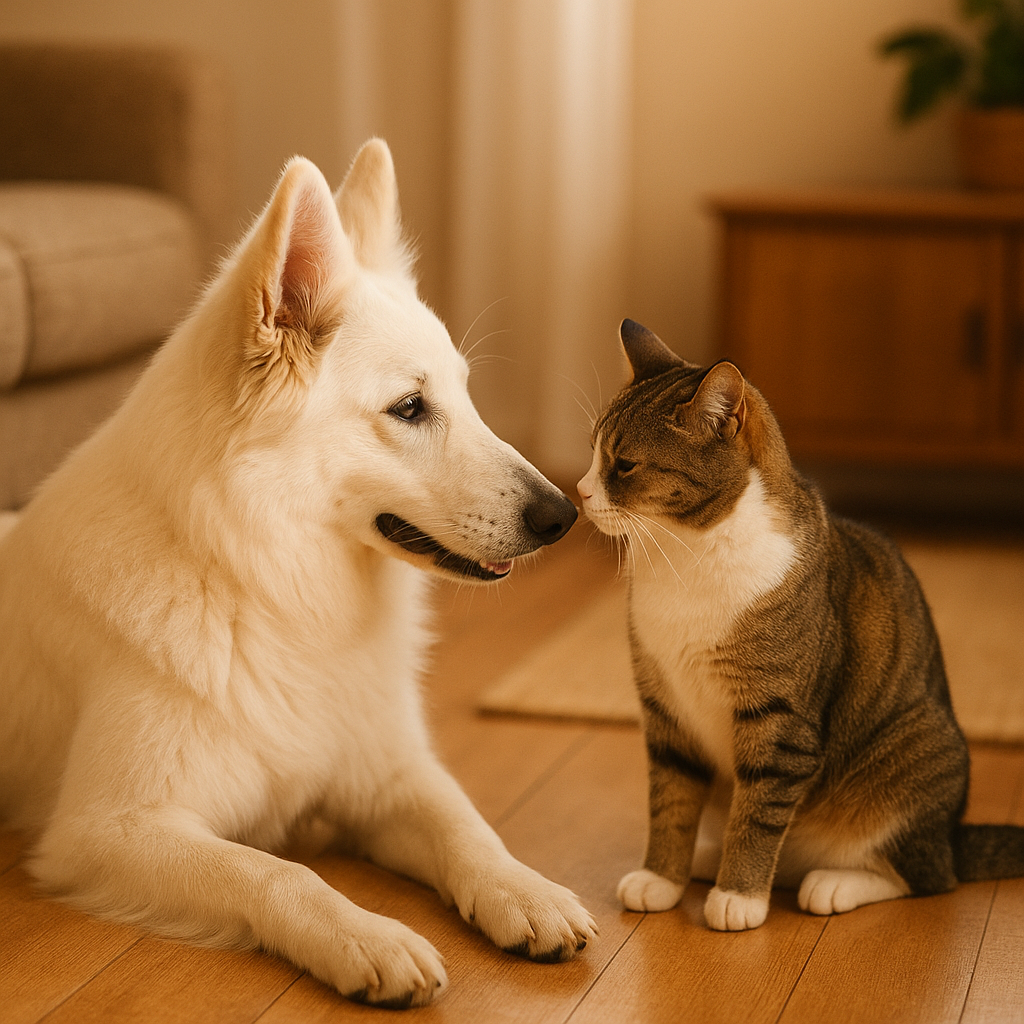
Each species has its own language: understanding canine and feline (or rabbit, bird) codes prevents misunderstandings and tensions.
First Controlled Meeting
| Step | Goal |
|---|---|
| Initial distance | Allow sniffing without direct contact |
| Observation | Note posture and vocalizations |
| Progressive reduction | Approach on a loose leash |
| Treat delivery | Associate meeting with pleasure |
Respect for Inter-Species Codes and Signals
A dog that freezes or licks its lips in the presence of another animal expresses stress. Step back, offer a break, and resume more gently.
Tips and Tricks to Strengthen Learning
- Vary meeting locations (parks, garden, indoors).
- Introduce different scents for each new animal.
- Keep sessions short (5 to 10 minutes) to maintain attention.
- Record progress in a notebook to adjust the pace.
Key Points to Remember
- Early socialization between 8 and 16 weeks.
- Progressive meetings always under supervision.
- Observation of calming signals to avoid stress.
- Children and animals must learn the dog’s communication codes.
- Short, varied sessions always associated with a reward.
FAQ
When to start socializing the Swiss Shepherd?
The ideal period is between 8 and 16 weeks, when it remains very receptive to new experiences.
How to manage a first contact with a cat?
Maintain a comfortable distance, let the scents mingle, and offer treats to create a positive association.
My Swiss Shepherd shows signs of stress: what to do?
Stop the session, let him calm down in a familiar place, then resume later more calmly.
Can an unsocialized adult be socialized?
Yes, but it will require more patience and even more gradual steps, with professional support if necessary.
Which game to favor with children?
Calm games, like ball or light tug-of-war, under adult supervision.
How to associate treats with socialization?
Give a small reward as soon as the dog remains calm in the presence of a child or another animal.
How long do sessions last?
Between 5 and 10 minutes: enough to stimulate learning without causing fatigue or boredom.