| Key Points | Details to Remember |
|---|---|
| 🐕 Definition | Versatile working dog resulting from the crossing of shepherds and farm dogs in the United States. |
| 📜 Origins | Development in the 19th century to guide livestock and protect rural property. |
| 🧠 Temperament | Intelligent, obedient, and endowed with a strong sense of initiative. |
| 🏃 Physical Needs | Daily exercise of a sporty nature, games, and essential mental stimulation. |
| 💧 Maintenance | Regular brushing depending on coat density and preventive veterinary care. |
| 🏡 Adoption | Preparation of the home and establishment of a consistent framework before arrival. |
| 🎓 Education | Early socialization and positive methods to channel its energy. |
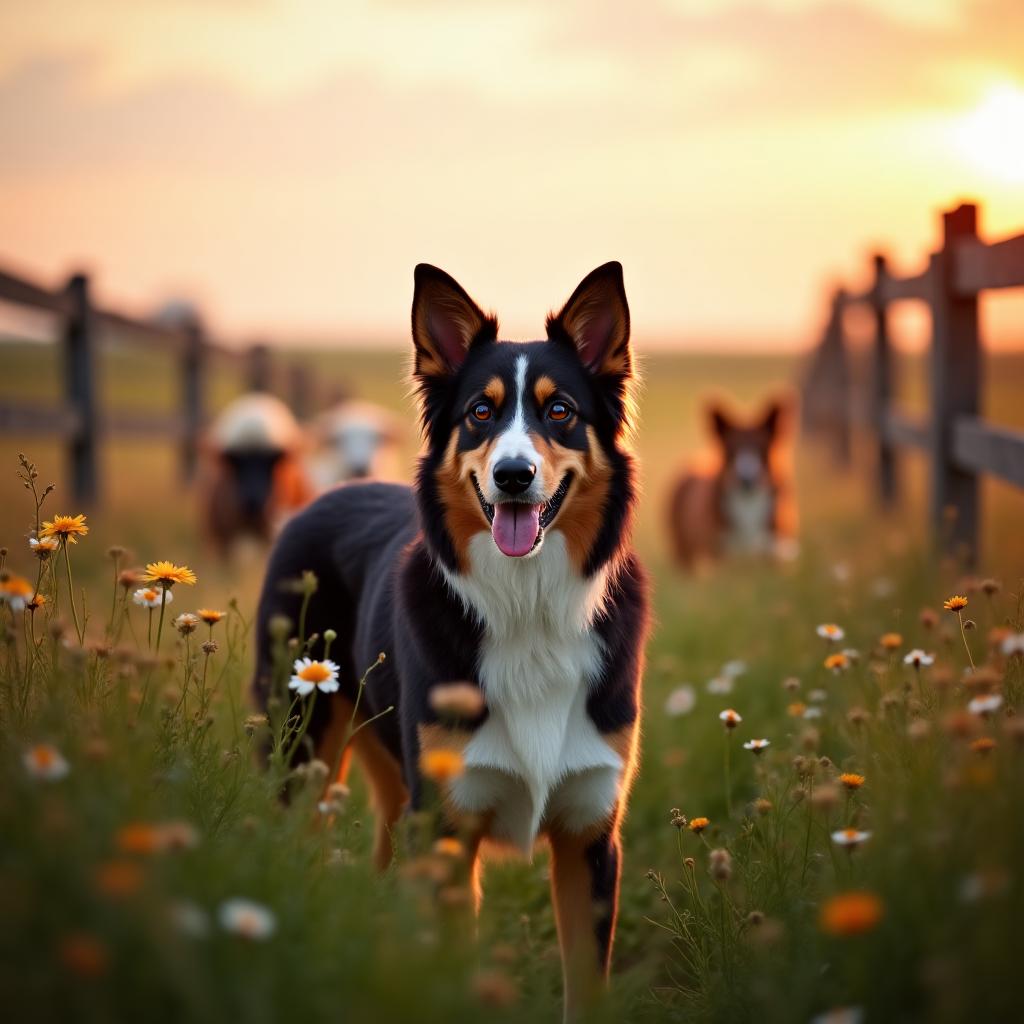
An emblematic figure of farms of the past, the American Shepherd today appeals for its ease in alternating between herding dog service and active companion role. A surprising mix of liveliness and loyalty, it balances family gentleness and professional rigor. Let’s explore together its roots, distinctive traits, and some concrete advice to establish harmonious coexistence.
Origin and History of the American Shepherd
From Pioneers to the Great Plains
At the end of the 19th century, American breeders sought dogs capable of managing vast herds of cattle over often rugged terrain. Herding-type shepherds – notably descended from the Border Collie, Collie, and various lines of European farm dogs – quickly established themselves. By crossing them among themselves and sometimes integrating traits from robust North American dogs, a versatile, resilient dog less sensitive to climate changes was obtained.

Recognition and Standardization
It was only from the 1950s that passionate breeders began to define a more precise standard: medium size, solid bone structure, impeccable gait. The American breed club then published its first official criteria. The goal was to harmonize variations in color and size while preserving working abilities. Since then, the American Shepherd has maintained this dual identity, halfway between herding dog and companion.
Character and Natural Aptitudes

Intelligence and Sense of Initiative
It is often said that in the presence of a herd, the American shepherd does not just obey: he anticipates the unexpected. At home, this same ability is expressed by marked curiosity and a tendency to propose solutions, even to “monitor” his environment. If you leave him too much time without stimulation, he may turn to troublesome behaviors, such as digging or running away.
Relationship with the Family
Very attached to “his” human, he is both protective and gentle, especially with children. He often develops true empathy, perceives strong emotions, and seeks to soothe the atmosphere. That said, he requires a firm framework: an overly permissive owner risks seeing his dog test the limits, sometimes insistently.
Adaptability and Versatility
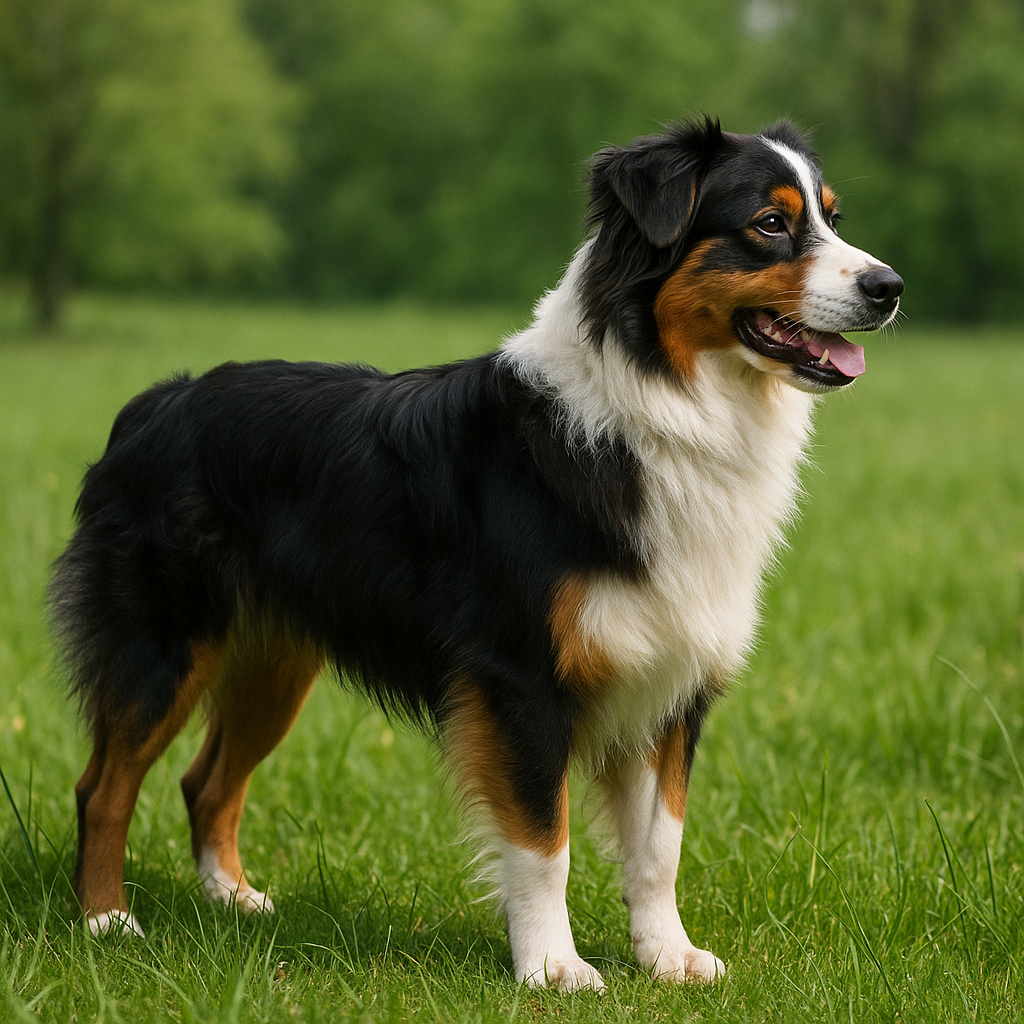
Sporty at heart, he excels in agility, obedience, or tracking, but he also knows how to be calmer in the evening. Thanks to his balanced physique – powerful shoulders, athletic body – he can handle both long hikes and a few hours of rest by the fire.
Practical Advice for Welcoming and Training an American Shepherd
Space Arrangement
- Provide a secure play area: a fenced garden at least 2 meters high so he can exercise safely.
- Plan several resting areas: his need for calm after exertion requires a soft bed and a quiet corner.
- Install stimulation equipment (tunnels, agility bars) to channel his energy.
Exercise Program and Mental Stimulation
Daily, count on 1 to 2 hours of physical activity, broken up into dynamic walks, ball games, or structured training sessions. To occupy his mind, include:
- sessions of tasks inspired by farms (bringing an object, opening a sliding door);
- olfaction games, which engage his nose and mentally exhaust him;
- training modules with positive reinforcement: clicker, healthy treats.
Socialization and Learning
From the age of 2 months, expose him to various environments: urban noises, other dogs, children. This gradual exposure prevents stress reactions and encourages balanced behavior. Later, maintain a regular frequency of interactions: group classes, meetings with other shepherd owners, pack walks.
Table of Physical Characteristics
| Characteristic | Description |
|---|---|
| Height | Between 47 and 58 cm at the withers |
| Weight | Between 18 and 27 kg depending on sex |
| Coat | Solid or tricolor, varied shades (black, blue, red, merle) |
| Hair | Medium to thick density, smooth or slightly wavy hair |
| Longevity | 12 to 15 years with adapted hygiene of life |
FAQ about the American Shepherd
1. Is the American Shepherd suitable for beginners?
It can adapt to novice owners, provided a progressive learning program is followed and positive methods are used. Early guidance by a dog trainer strengthens the relationship.
2. What diet should be preferred?
Choose food rich in proteins (fresh or dry meat) and omega-3 to support the active metabolism. Divide into two meals per day and adjust the portion according to activity.
3. How to manage the herding need?
If you do not have animals to herd, offer alternatives: simulated herding games, heel-work training, or cone gathering. The goal is to channel the same reflex.
4. Are there common health problems?
Robust subjects suffer little from hereditary diseases, but hip dysplasia and eye conditions deserve annual monitoring (X-rays, ophthalmologic check-ups).