| Key Points | Details to Remember |
|---|---|
| 🐶 Definition | Long-haired shepherd dog originating from the Highlands. |
| 🏴 Origins | Bred to guard and drive livestock on the Scottish mountains. |
| ❤️ Character | Loyal, intelligent, and very attached to its family. |
| ✂️ Maintenance | Frequent brushing to avoid knots and maintain shine. |
| ⚕️ Health | Regular monitoring of joints and eyes. |
| 🏅 Activities | Dog shows and canine sports (agility, obedience). |
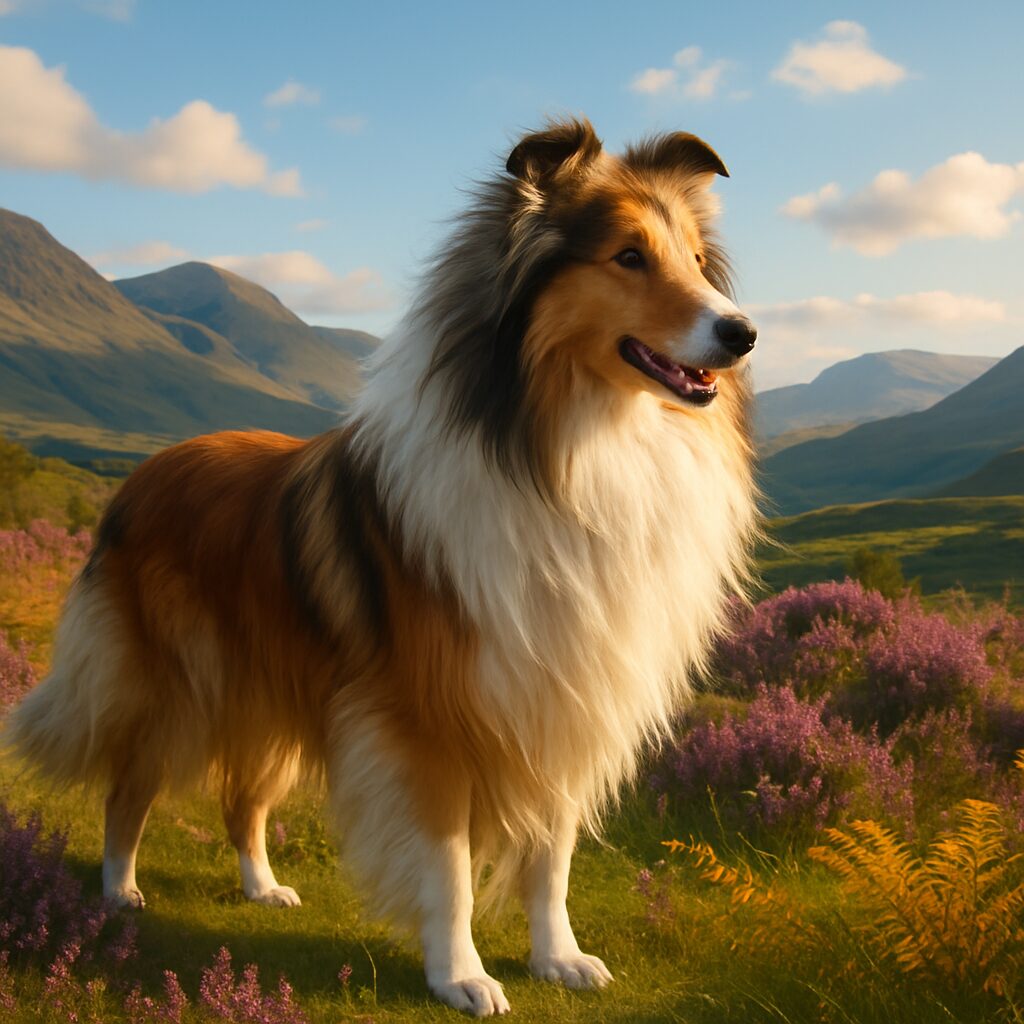
At first glance, the Collie (Rough) evokes a living picture of the Scottish moors: slender silhouette, fine muzzle, long silky coat flowing in the wind. For many, it embodies both aristocratic elegance and the most sincere loyalty. In this article, I invite you to dive into its history, explore its unique temperament, and detail the essential care for its well-being. You will discover why this companion still captivates so much, from the misty valleys of the Highlands to today’s urban salons.
Origins and History
The Scottish Highlands
The first traces of the Collie (Rough) date back to the 18th century, when it accompanied shepherds on steep slopes. Originating from a cross between local medium-haired dogs and northern animals, it quickly proved its usefulness in gathering sheep, even in difficult conditions. The mountaineers praised its ability to read the terrain and obey over long distances.
Breed Evolution
In the 19th century, the breed attracted the attention of British aristocrats, fascinated by its refined appearance. Royal breeding programs ensured the standard was homogenized, favoring the slender head, almond-shaped eyes, and dense double coat. This meticulous care shaped the modern Collie, combining work performance and refined aesthetics for dog shows.
Character and Temperament
Loyalty and Sociability
One might think that such an elegant dog would be aloof, but the Rough Collie immediately dispels this impression. Extremely attached to its human clan, it develops a strong emotional bond, sometimes almost inseparable. Its reassuring presence makes it an excellent confidant, often responding to emotions by offering cuddles and comfort. With children, it displays rare patience, acting as a vigilant guardian without ever being harsh.
Intelligence and Training
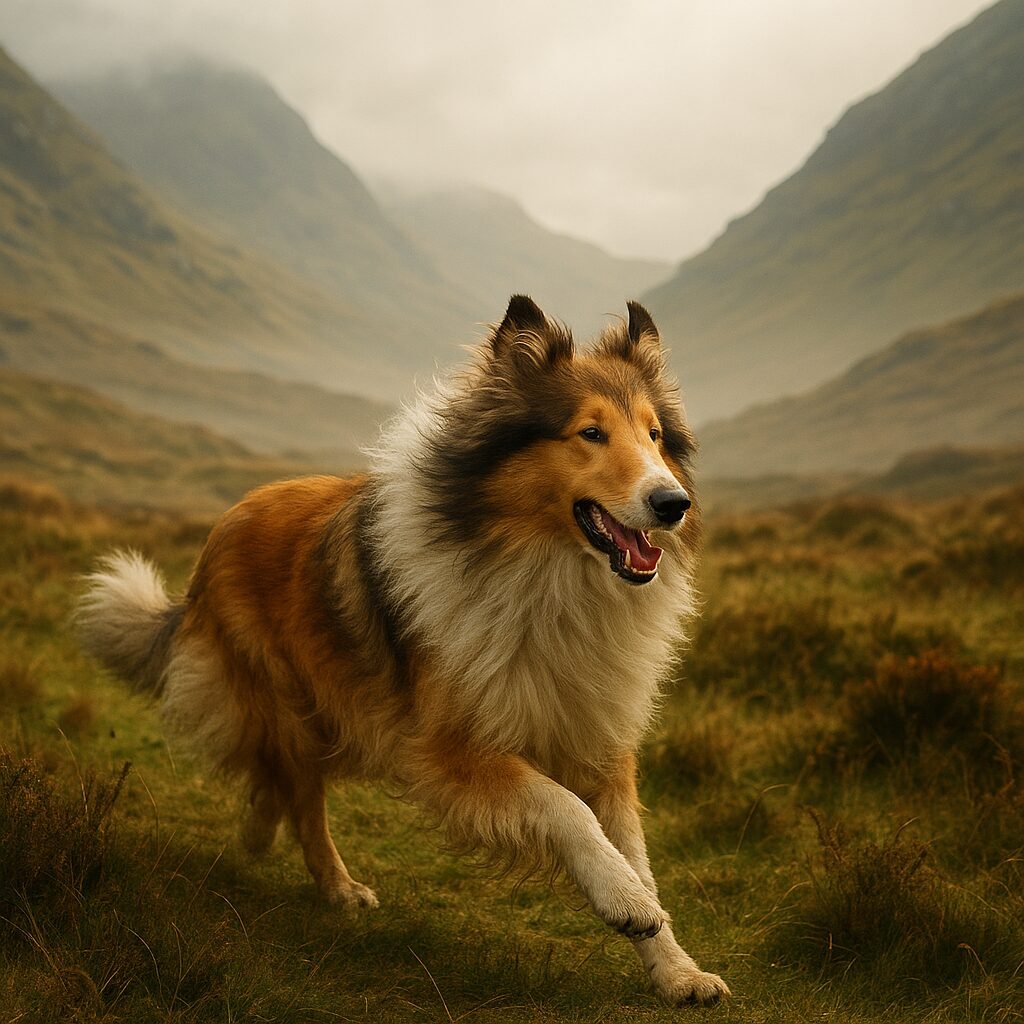
The Collie’s quick wit is legendary: it quickly understands commands and anticipates its owner’s expectations. However, its training requires consistency and kindness. In truth, it is not so much the difficulty of learning that surprises but its speed. Simply establishing routines, varying exercises, and rewarding each progress allows it to thrive fully.
Care and Maintenance
Coat Grooming
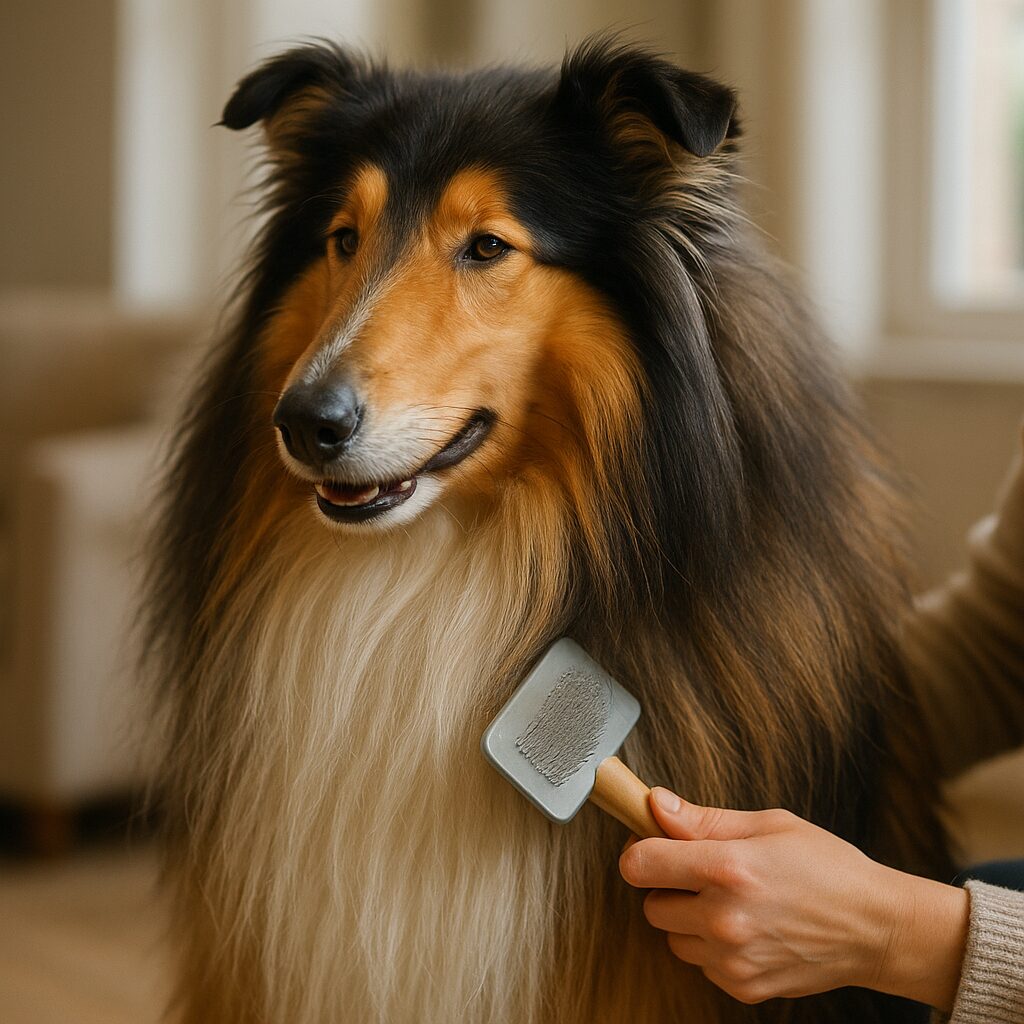
With its double coat, the Rough Collie requires regular brushing, ideally three times a week. Without this routine, the undercoat accumulates and creates painful mats. A metal brush is used to detangle, then a slicker brush to smooth the coat. During shedding, a wide-toothed comb becomes essential to remove dead fluff.
Activities and Exercise
At rest, the Rough Collie appears almost regal. In motion, one rediscovers its unsuspected energy. A daily 45-minute walk, combined with play sessions or agility, proves ideal. Some owners steer it towards competitive obedience, where it excels by combining liveliness and focus. It also enjoys nature hikes, faithful to its pastoral origins.
Collie in Daily Life
Family and Children
In a household, it acts almost like a mediator: watchful without being intrusive, creating a balance between play and calm. Facing a distressed child, it approaches, offers a gentle nudge with its nose, and waits patiently. It does not constantly demand attention but cannot tolerate prolonged solitude. Homes where someone is often present are preferred.
Work and Competition
Beyond simple companionship, some Collies participate in herding or obedience competitions. Their extraordinary memory and ability to manage multiple sheep still perform wonders in the rings today. In shows, their head carriage and fluid movement remain undeniable assets for winning top honors.
Health and Longevity
Main Conditions
- Hip dysplasia: requires screening X-rays before breeding.
- Progressive retinal atrophy (PRA): a genetic test helps identify carriers and prevent transmission.
- Atopic dermatitis: may appear as seasonal itching.
Prevention and Monitoring
Biannual veterinary check-ups include joint and eye assessments. Omega-3 intake through diet helps maintain skin and coat health. Finally, regular dental check-ups reduce the risk of tartar buildup. Provided it is well cared for, the (Rough) Collie often reaches 12 to 14 years of age.
FAQ
- Is the Rough Collie suitable for first-time dog owners? Yes, thanks to its patient nature and intelligence, it adapts well to progressive training under the guidance of a strict leader.
- How long does a full grooming session take? Plan about 1 hour for thorough brushing and checking sensitive areas (ears, paws).
- Is it a noisy dog? Rather reserved: it barks more to signal an unusual presence than to express its annoyance.
- What kind of diet is recommended? High-quality protein kibble, supplemented with fish oil for joint and skin health.
- Can it live in an apartment? It tolerates limited space if daily exercise and mental stimulation are sufficient.