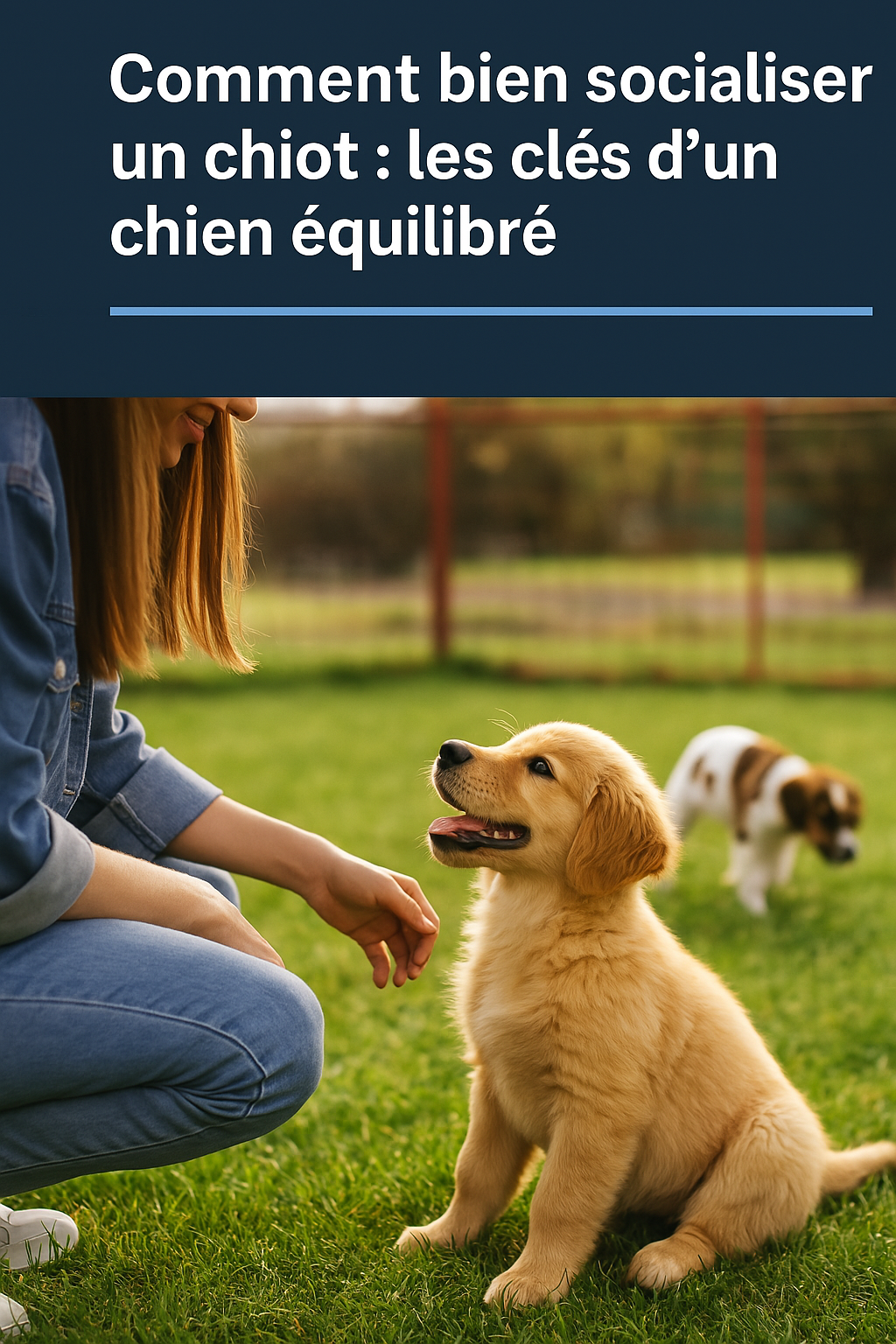

Adopting a puppy means welcoming a bundle of energy and tenderness… but also a blank slate. Its first weeks in your home will shape much of its future behavior. Fear of strangers? Aggressive reactions? Over-attachment? Often, it all starts (or can be prevented) with successful socialization. Let’s learn together how to expose your puppy to the world, at its own pace, to make it a well-adjusted adult.
🔍 What is socialization?
Socialization is much more than just meeting other dogs. It is the set of experiences that will shape your puppy’s ability to adapt to its environment. This includes:
- Humans (adults, children, elderly people, etc.)
- Other animals (dogs, cats, horses…)
- Sounds (vacuum cleaner, horn, thunder, etc.)
- Environments (city, countryside, market, train station, etc.)
- Handling (brushing, cleaning, veterinary care)
A well-socialized puppy will be calmer, more curious, less aggressive or fearful as an adult. Conversely, a puppy poorly exposed to new things may develop phobias or reactive behaviors. It is an essential foundation for a balanced dog.
📅 Sensitive periods of the puppy

The puppy goes through crucial developmental phases:
- 3 to 5 weeks (at the breeder): first contacts with siblings, humans, sounds, smells
- 6 to 12 weeks (often at your home): golden period! He is curious, open, ready to discover everything
- 13 to 16 weeks: beginning of fears, learning must be reinforced
- 4 to 6 months: adolescent phase, testing limits, strengthening skills
The earlier you positively expose your puppy (respecting its pace), the more you provide solid foundations for adult life.
📋 Concrete steps and methods
Socialization must be gradual, positive, and varied. Here is a simple plan:
- Human encounters: have him meet people of all ages, with hats, glasses, crutches… Always gently, never forced.
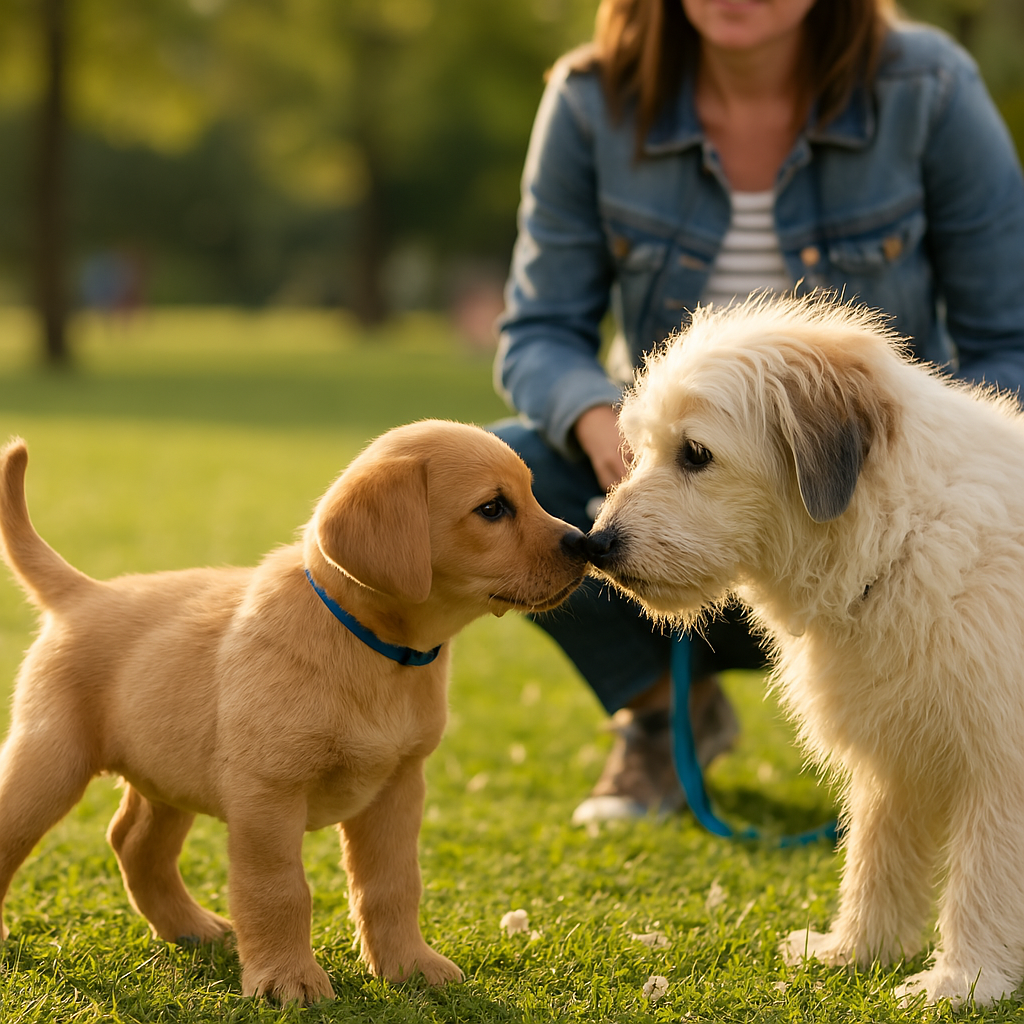
- Balanced dogs: choose well-mannered adult dogs for learning. Avoid dog parks at first.
- Objects and sounds: expose him to vacuum cleaners, bikes, rolling suitcases, with treats at each new experience.
- Varied outings: city, countryside, forest, sidewalk, market… even in a bag if his vaccinations are not up to date.
- Regular handling: touch his paws, ears, muzzle. Simulate a veterinary exam with rewards.
A small socialization notebook can help you note each successful “new experience.” Making it a game makes the experience enjoyable for both of you!
🚫 Common mistakes to avoid
- Forcing an interaction: this can reinforce a fear
- Reacting to fears with anger or overprotection: stay neutral, relaxed, encouraging
- Waiting for “it to pass on its own”: lack of exposure is exposure… to emptiness
- Exposing too much at once: 5 well-experienced encounters are better than 15 poorly managed ones
❓ FAQ
My puppy is fearful: can I still socialize him?
Absolutely. Go slowly. Observe his signals, reward every step. He will progress at his own pace.
Should I socialize him with all dogs?
No. It’s better to have 3 quality interactions than a festival of bad encounters. Quality over quantity.
🗣️ Testimonial
“Our puppy was afraid of children at first. We took our time: observing from a distance, treats, calm games with our niece. In a few weeks, he transformed. Today, he loves them!” — Nathalie, 42 years old
🔚 Conclusion
Socialization is not a luxury: it is a responsibility. Everything is decided in the first weeks. By exposing your puppy in a positive, respectful, and varied way, you give him the keys to a serene future. And you build a bond of trust that will last his entire life. 🌟
💉 Socialization and vaccination: how to manage the critical period?
Many owners hesitate to take their puppy out until his vaccinations are complete. Yet, waiting 4 months to start socializing him is often too late. Behavioral veterinarians recommend exposing the puppy from 8 weeks old, under controlled conditions: clean places, vaccinated dogs, arms or transport bag for risky areas. The idea is not to put him on the ground everywhere, but to let him discover visually, auditorily, and olfactorily the world around him. Early socialization is essential to allow him to adapt to different environments, sounds, people, and other animals. This crucial period is a learning window, and the earlier it opens, the more the puppy will develop good social skills and self-confidence as an adult.
🔁 And after? Maintaining socialization throughout life
Socialization does not stop at 16 weeks. It continues, is maintained, and adapts. An adult dog who does not see other dogs, bikes, or children for 6 months can become reactive or wary again. Think about varying his outings, offering supervised meetings, continuing mental games and handling. Even a 10-year-old dog can (re)discover the world. By maintaining his curiosity, you cultivate his balance… and his joy of living. 🐾
🏫 Should you call on a puppy school?
Puppy schools are places supervised by specialized dog trainers, which allow young dogs to learn the basics of canine communication in a safe environment. It is an excellent opportunity to learn to interact with peers, discover varied environments, and strengthen the owner-dog bond. However, be careful: not all structures are equal. Favor positive, kind methods, and avoid clubs that use harsh corrections or coercion. Schools that work on positive reinforcement, listening, and patience are best suited for your dog’s well-being. This type of education helps establish a relationship of trust and prevent problematic behaviors in adulthood.
Attending 3 or 4 sessions may be enough to provide a very good relational foundation for your puppy. And as a bonus: you will also learn a lot about yourself!