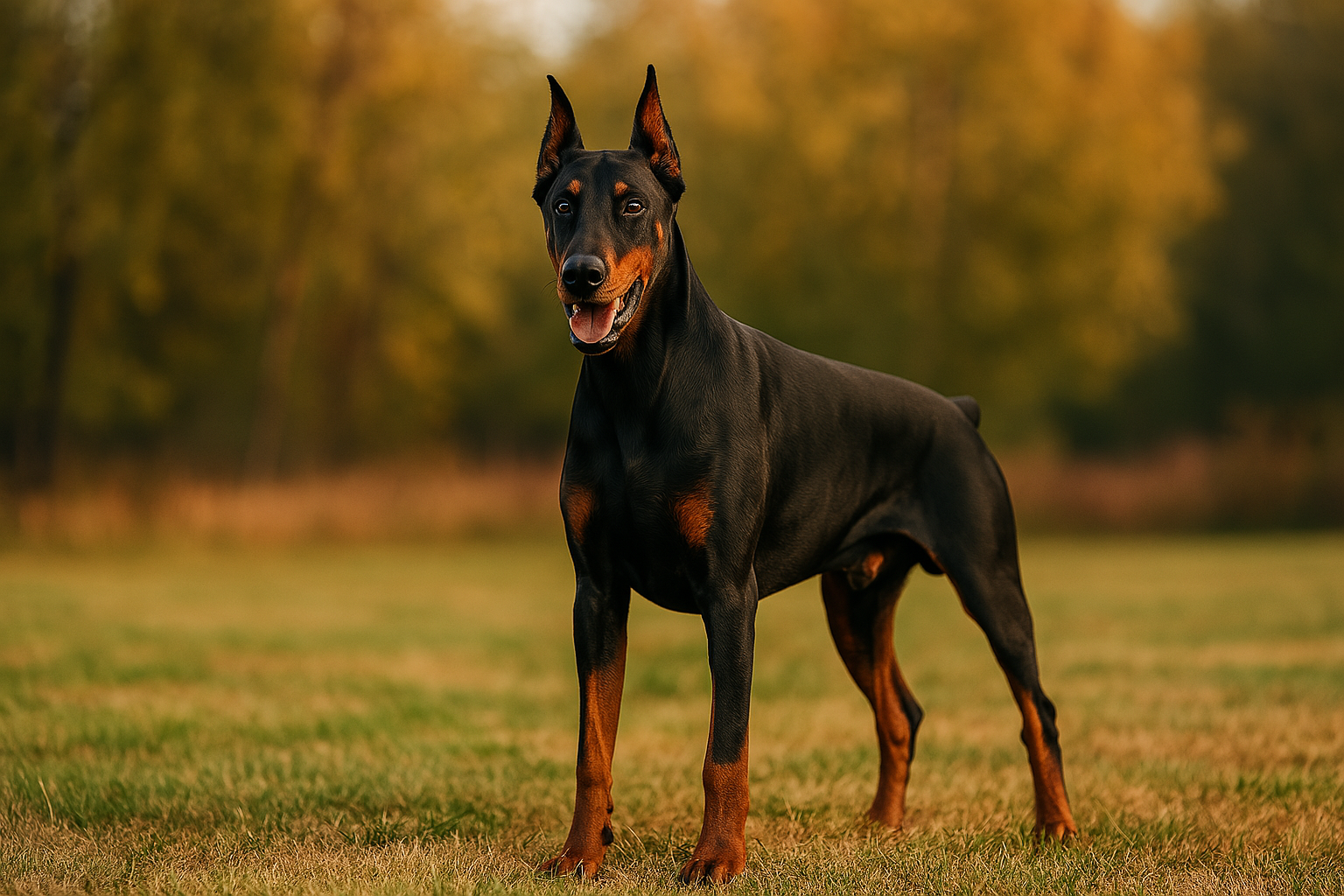

The Dobermann is a dog that impresses as much by its slender appearance as by its reputation as a loyal guardian. Originating from Germany, it appeals to enthusiasts of guard dogs, but also to those seeking a protective companion close to its family. Behind its “big tough guy” appearance hides an intelligent, sensitive animal very attached to its home. In this article, we reveal everything you need to know about this giant with a tender heart!
General Presentation
The Dobermann is a large dog (about 63 to 72 cm at the withers), weighing from 30 to 45 kg depending on sex and build. It sports a short coat, usually black and tan (or brown and tan, even blue or fawn), with an athletic silhouette and a proud head carriage. Created in the 19th century by Karl Friedrich Louis Dobermann in Germany, it is the result of crossings between several breeds (Rottweiler, Pinscher, etc.) to obtain a guard dog both courageous and intelligent.
Its life expectancy varies between 10 and 13 years, provided its exercise and mental stimulation needs are met. It is often seen as a working dog but can also make an excellent family companion, loyal and protective.
Character and Behavior

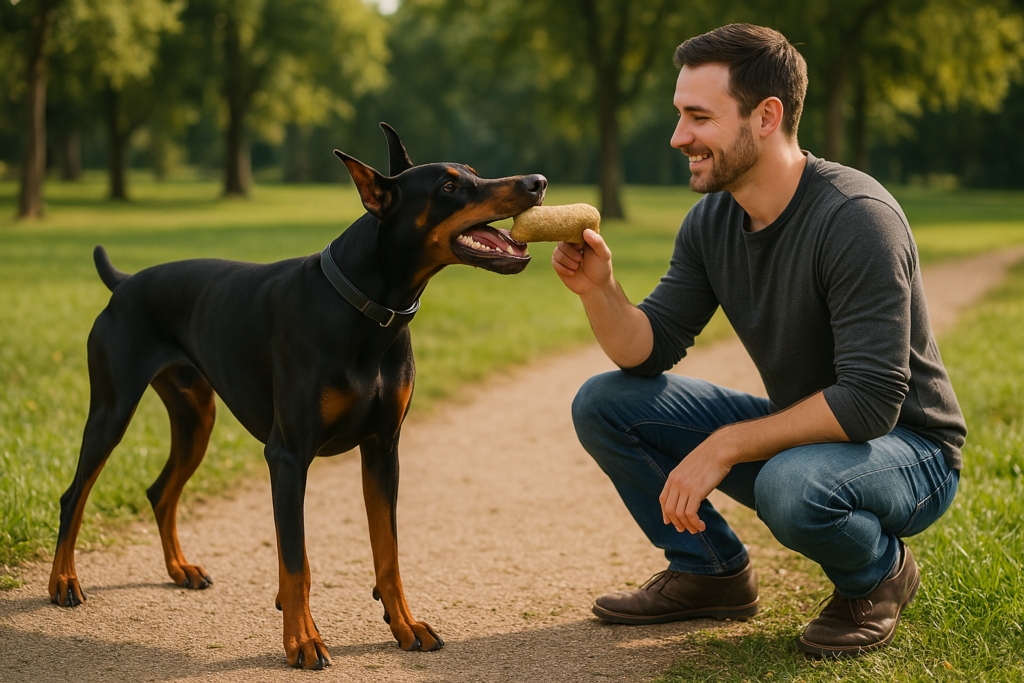
The Dobermann is renowned for its loyalty, vigilance, and strong sense of protection. It is intelligent, learns quickly, and enjoys working closely with its owner. If well socialized, it is friendly with strangers while remaining deterrent in case of threat.
Some individuals may be more reserved or more lively than others, depending on lineage and training. This dog is very attached to its family and hates prolonged solitude. Without activity or structure, it can develop nervousness or undesirable behaviors (barking, destruction).
Did you know? In some countries, the Dobermann is used as a police or military dog, thanks to its scent, speed, and learning ability.
Physical and Mental Needs
The Dobermann is a true athlete, requiring regular exercise:
- Brisk walks (at least 1 hour per day), jogging, canicross
- Obedience and work exercises (defense, tracking, etc.)
- Mental stimulation: object search, learning new commands
- Continuous socialization: meeting other dogs, new situations
Without sufficient exercise, the Dobermann can develop anxiety or hyperactivity. It needs an available owner, ready to invest in its education and activities.
Health & Genetic Predispositions
The Dobermann enjoys good overall health but has certain predispositions:
| Problem | Symptoms | Prevention |
|---|---|---|
| Dilated cardiomyopathy | Fatigue, shortness of breath, fainting | Regular cardiac ultrasounds, responsible breeding |
| Wobbler syndrome | Neurological disorders, abnormal gait | Weight control, limit exertion during growth |
| Hip dysplasia | Limping, difficulty getting up | Moderate exercise when young, genetic selection |
Regular veterinary check-ups, a good lifestyle, and attentive breeding (tested parents) reduce the risks of these diseases. It is also sensitive to the cold due to its short coat.
Recommended Diet
The Dobermann, an active dog, requires high-quality food rich in protein:
- Premium kibble for “large breed” or “active dog”
- Adjust rations according to its weight, age, and activity
- Divide into 2 meals to limit the risk of stomach torsion
- Limit fatty treats and monitor weight gain
It can be greedy, but an overweight Dobermann is more exposed to joint and heart problems, so be vigilant!
Coat Care / Grooming
The Dobermann’s short coat is easy to maintain:
- Weekly brushing with a rubber glove or soft brush
- Occasional bath (every 2-3 months) or if the dog is really dirty
- Check the ears, especially if they are natural (not cropped)
- Protection against cold and humidity (coat) if necessary in winter
A quick brush after each walk can help remove dust and dead hair, thus preserving the shine of its coat.
Favorite Activities
- Obedience and training: the Dobermann loves to learn and please its owner
- Canicross or jogging: running together, perfect to burn off excess energy
- Agility: despite its size, it can excel if well motivated
- Bite sports (ring): if trained properly, it can be fearsomely effective
Ideal for What Type of Owner?
The Dobermann requires a determined owner, knowledgeable or willing to learn the basics of dog training. It likes to move, work, and share family life. A sporty, attentive, and consistent owner in commands will be perfect.
However, if it is destined for a couch life without outings or stimulation, it risks becoming withdrawn or developing behavioral problems. It is better to be available and motivated to get the best out of this exceptional breed.
Recommended Products
For a happy and well-equipped Dobermann:
- “Large breed” kibble: to support its musculature and energy expenditure
- Sturdy harness or wide collar: for walks, to avoid excessive pressure on the neck
- Work toys: balls, ropes, bite accessories (according to legislation and owner’s training)
- Protection against cold: a coat may be necessary in winter, given its short coat
Tip: a training leash (long) can be useful to teach recall safely.
FAQ & Anecdotes
Is the Dobermann dangerous?
No more than any other dog if training and socialization are properly conducted. It can be intimidating by its appearance, but above all, it is a loyal and balanced dog if it grows up in a suitable environment.
Can it live in an apartment?
Possible, provided it is taken out several times a day and given regular physical activities. It is not meant to remain inactive or confined permanently.
Historical anecdote
The Dobermann owes its name to its creator, Karl Friedrich Louis Dobermann, who was a tax collector and was looking for a reliable guard dog to accompany him during his sometimes risky rounds.
In short, the Dobermann is a great guard and working dog, elegant, powerful, and protective, who shines through his intelligence and loyalty to his loved ones. To thrive, he requires an available owner, ready to offer him the amount of exercise and training he needs. In return, you will have a devoted companion, always willing to share your adventures and watch over your home. Ready to open your door to this noble guardian? 🏅