
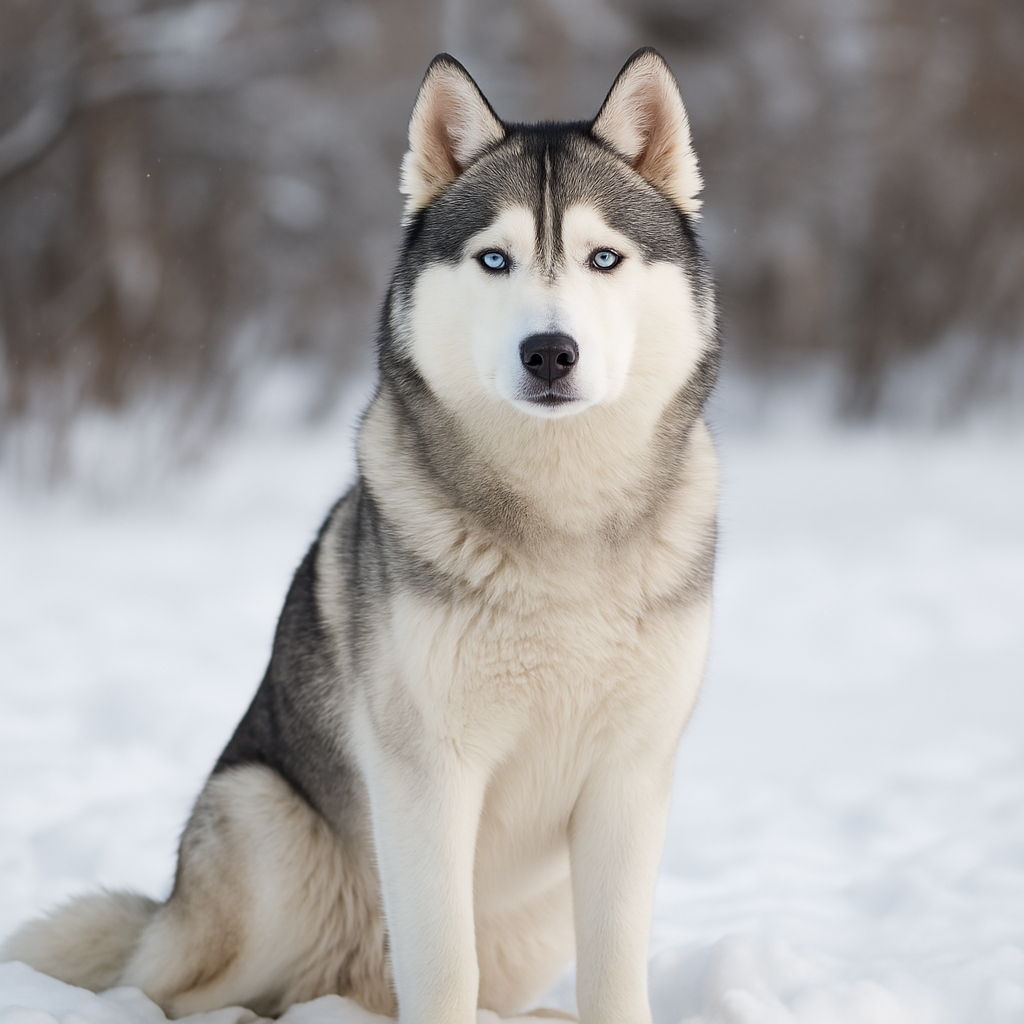

The Siberian Husky is undoubtedly one of the most iconic sled dogs, recognizable by its wolf-like appearance, clear eyes (often blue, sometimes heterochromatic), and boundless energy. Originating from Siberia, it was developed by nomadic tribes to pull sleds over long distances. Today, it captivates many households who fall for its Nordic look and playful character. Ready to discover the hidden side of this great athlete?
General Presentation
The Siberian Husky is a medium-sized dog (about 50 to 60 cm at the withers) weighing between 16 and 27 kg. Its double coat (a dense undercoat and a medium-length topcoat) effectively protects it from the cold. Coat colors vary (black and white, gray, red, sable, etc.), and its eyes can be blue, brown, or show heterochromia (each eye a different color).
Historically, it was used by the Chukchi people for transportation and herd guarding, thanks to its endurance and great resistance to cold. Its life expectancy generally ranges between 12 and 14 years, or even longer with good care.
Character and Behavior

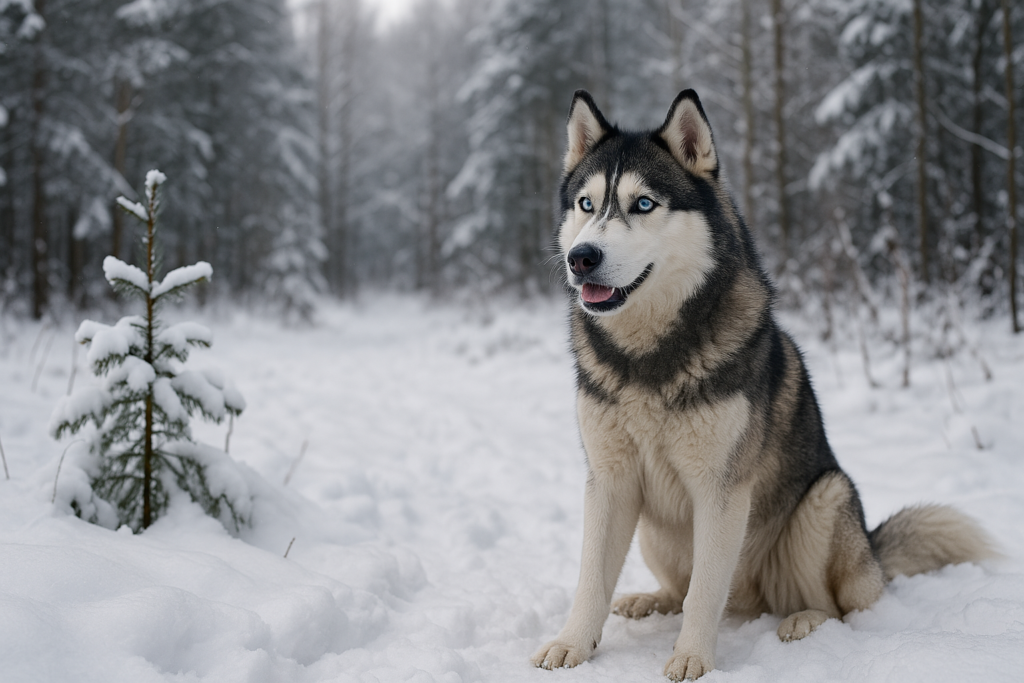
Athletic, playful, and sociable, the Husky enjoys human company but maintains a certain independence. It is not known as a guard dog, as it often shows friendliness toward strangers (but not always, some Huskies can be more reserved).
Regarding hierarchy, it is less “obedient” than a herding dog: its primitive instinct sometimes leads it to be stubborn or to run away if given the chance. Early socialization, clear rules, and plenty of exercise are essential to channel its energy.
Did you know? Huskies have often been featured in films or series (such as “8 Below” or “Game of Thrones” for certain Nordic-type lineages), which has contributed to their popularity.
Physical and Mental Needs
If you are looking for a calm and homebody dog, move along. The Husky needs:
- Long daily walks (1 to 2 hours) or more, sporting activities (canicross, mountain biking, etc.)
- Mental stimulation: tracking games, obedience, learning tricks
- Social contacts: it is a pack dog, it enjoys company (human or canine)
- A fenced and secure area if let off-leash outdoors (it is skilled at escaping if attracted by a trail or an animal)
Without sufficient exercise, it risks becoming destructive or trying to escape to satisfy its need for adventure.
Health & Genetic Predispositions
The Siberian Husky is rather robust but can present certain vulnerabilities:
| Problem | Symptoms | Prevention |
|---|---|---|
| Hip dysplasia | Limping, difficulty getting up | Moderate exercise during growth, responsible breeding |
| Eye diseases (cataract, PRA) | Decreased vision, cloudy eyes | Genetic testing, ophthalmologic follow-up |
| Dermatitis | Itching, redness | Appropriate diet, veterinary care if irritated |
Warm and humid climates are not ideal for the Husky, which prefers cool temperatures. Therefore, it is best to avoid running it during heatwaves.
Recommended Diet
The Husky, a sporty dog, needs good quality food, rich in protein:
- Premium “active dog” or “sport” kibble, adapted to its activity level
- Adjust the ration according to the season (more activity in winter, for example, if you practice sledding)
- Divide into 2 daily meals to limit the risk of stomach torsion
- Ensure permanent access to water, especially in hot weather
Some Huskies can be picky or capricious, alternating phases of big appetite and others where they eat less. Monitor their weight and adjust accordingly.
Coat Care / Grooming
The Husky has a double coat, particularly dense in winter:
- Brush 2 to 3 times a week (almost daily during shedding period) to remove dead undercoat
- Occasional bath, only when very dirty
- Avoid shaving the Husky: its coat protects it from both cold and heat (if well maintained)
During shedding, hairs can literally cover the house. A powerful vacuum cleaner and a good comb/brush will be your best allies.
Favorite Activities
- Canicross or bikejoring: running as a duo, perfect to release excess energy
- Sledding or skijoring: if you live in a snowy region, it thrives like a fish in water
- Hiking: it loves going for walks, especially in cool environments
- Obedience and tricks: even if stubborn, it can learn various commands if motivated
Ideal for What Type of Owner?
The Siberian Husky is primarily for active people who love wide open spaces and are ready to dedicate time to it. It poorly tolerates boredom, heat, and solitude. A sporty owner with a well-fenced garden (or regular nature outings) will better meet its needs.
If you are looking for a couch potato or totally obedient dog, the Husky might give you a hard time: it is an adventurer at heart, who does not easily submit to authoritarian commands. But with respect, patience, and a good dose of activity, you will have an incredibly endearing companion.
Recommended Products
For a happy and healthy Husky:
- “Active/sport dog” kibble: support its energy expenditure
- Pulling harness: canicross, sledding, or simple leash walks with more comfort
- Brush/brush mitt: essential during shedding period to remove undercoat
- Fresh water bowl: always available, in sufficient quantity
Tip: a collar or harness with a tag is recommended in case it slips out of the property.
FAQ & Anecdotes
Is the Husky a good guard dog?
Not really. He is more friendly than aggressive towards strangers. He may bark or howl (like a wolf) if something bothers him, but he is not a fierce guard dog.
Is a garden absolutely necessary?
It is not mandatory, but highly recommended, provided it is well fenced. Otherwise, long daily outings are necessary to meet his exercise needs.
Polar anecdote
The legendary 1925 serum run (to save the town of Nome in Alaska from a diphtheria epidemic) greatly put Huskies in the spotlight, thanks to their courage and exceptional endurance in extreme conditions.
In summary, the Siberian Husky is a fascinating, beautiful, enduring, and sociable dog, which nonetheless requires an active lifestyle and consistent training. If you dream of outdoor adventures, canicross, or special moments in the snow, this domestic wolf could become your ideal companion. Ready to dive into the polar world of the Husky? ❄️