
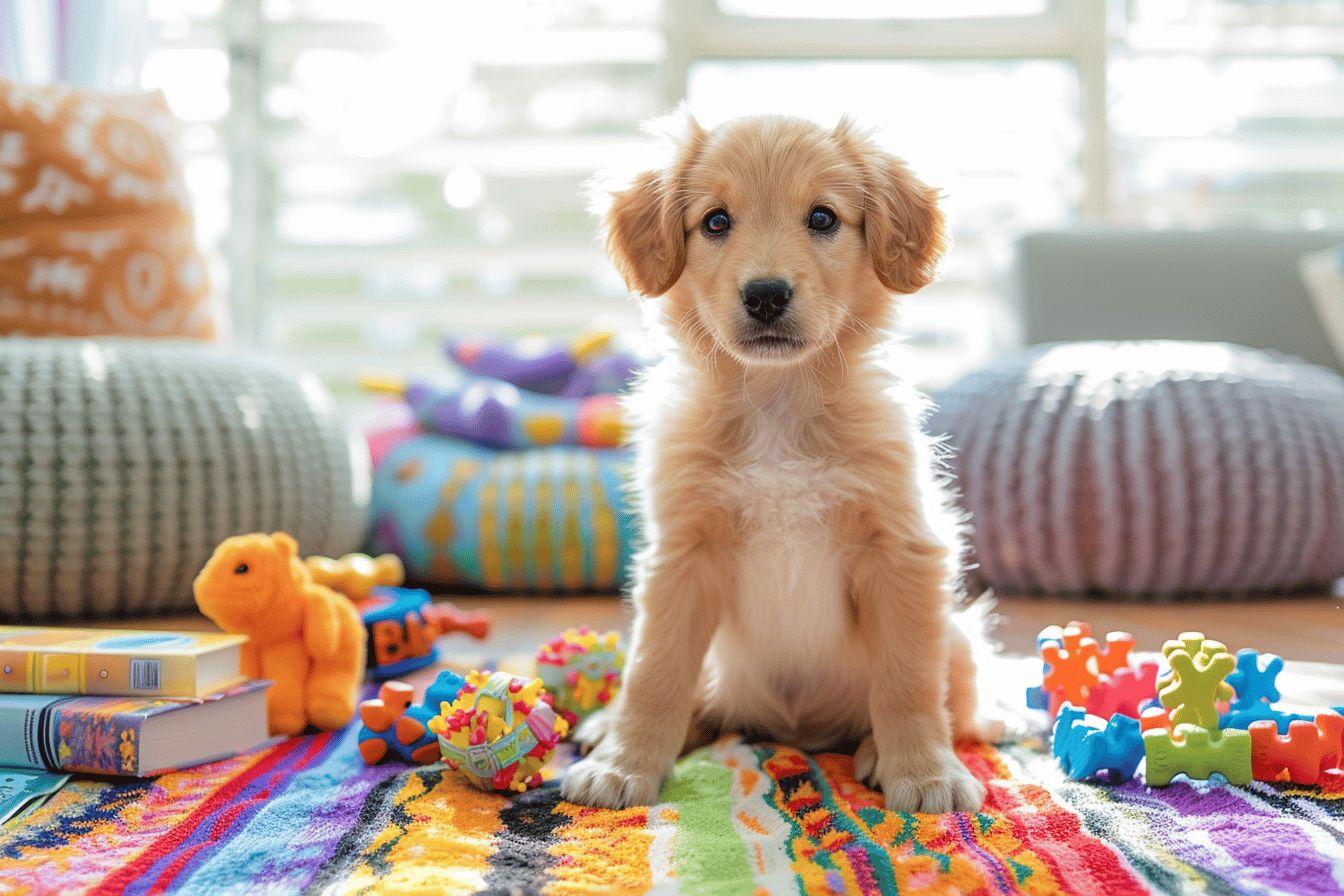

The first weeks of a puppy’s education are crucial for its future behavior and your relationship.
- Critical development phase: between 8 and 16 weeks, an essential period for socialization with 60% risk of future behavioral issues if neglected.
- Adaptation to the home: create a stable and predictable routine from arrival, with a secure bed and familiar scents.
- Positive education: favor rewards in short sessions, with consistent commands among all family members.
- House training: frequent outings, especially after meals and naps, patience until stabilization around 4-5 months.
The arrival of a puppy in your home is an exciting moment but comes with many responsibilities. The first weeks are crucial to laying the foundations for successful training and building a harmonious relationship with your new companion. According to experts, habits acquired during this period will influence your dog’s behavior throughout its life. In this text, we will guide you step by step to make these first moments a success, from socialization to house training.
1. Essential developmental stages of the puppy
To understand how to train your puppy well, it is fundamental to know the different phases of its development. Each period requires an adapted approach to maximize its learning potential.
From birth to the first weeks
During its first two weeks of life, your little companion sleeps a lot and feeds mainly on mother’s milk. It is around the 10th-14th day that its eyes open to the world. Then, its third week marks the appearance of baby teeth and the first hesitant steps. Between 3 and 5 weeks, it begins to react to surrounding sounds, initiates play, and gradually discovers solid food. It is also at this time that it begins to relieve itself outside its bedding, marking the beginning of house training.
The crucial socialization period
Research in canine behavior shows that the period between 8 and 16 weeks represents a critical phase for puppy socialization. According to statistics, dogs that were not properly socialized during this period have a 60% higher risk of developing behavioral problems in adulthood. It is therefore vital to gradually expose your puppy to various environments, noises, and situations it will encounter in its future life. Organize safe meetings with well-trained dogs and introduce it to different types of people to develop its social confidence.
| Puppy age | Abilities and development | Training focus |
|---|---|---|
| 0-2 weeks | Eye opening, total dependence | Gentle handling, warmth, feeding |
| 3-5 weeks | Walking, reaction to sounds, solid food | First interactions, world discovery |
| 5-8 weeks | Playing with siblings, gradual weaning | Socialization, hierarchy basics |
| 8-12 weeks | Desire to please, adaptation to home | House training, basic commands, intensive socialization |
2. How to facilitate your puppy’s adaptation to its new home

Arrival in a new environment represents a major change for your puppy. Here is how to help it adapt smoothly during these crucial first weeks.
The first days at home
For the first trip, avoid leaving your puppy alone in its transport crate. Consider bringing a cloth soaked with the breeder’s scent to reassure it – a little trick that makes all the difference! Upon arrival, show it where its bed is, which will become its safe space. Good to know: if your puppy cries at night, rather than letting it get anxious, temporarily place its bed near your bed. You can gradually move it away over the nights.
Create a stable routine quickly with fixed times for meals, outings, and play sessions. This predictability is essential to secure your puppy and facilitate house training in the coming weeks.
3. Positive training techniques for a successful start
Your puppy’s training begins as soon as they arrive, and the choice of methods used will have a lasting impact on your relationship.
Positive reinforcement as the foundation
Always prioritize positive reinforcement: rewards, petting, and play when your puppy exhibits the desired behavior. Keep training sessions short (5-10 minutes maximum) to respect their limited attention span. For basic commands like “Sit,” “Lie down,” or “Come”, choose a calm environment free of distractions.
It is absolutely crucial that all family members apply the same rules and use the same command words. Consequently, inconsistency is the number one enemy of successful training. Your puppy will learn much faster if the instructions remain the same regardless of who is speaking to them.
4. Learning cleanliness and acceptable behaviors
Cleanliness is among the major concerns of new puppy owners. Be patient: it is usually acquired and stable only around 4-5 months of age.
Establishing solid foundations for cleanliness
To encourage this learning, take your puppy outside very frequently, especially after meals, naps, and play sessions. Eating activates the digestive transit, which is why it is wise to take your companion out immediately after they have eaten. Always reward your puppy when they do their business outside rather than punishing them when an accident occurs indoors.
Pads or absorbent papers can be useful during this learning phase. And never forget: patience is your best ally in this cleanliness learning process.
Managing undesirable behaviors
When faced with biting, firmly say “No” and momentarily stop contact until calm returns. Always offer an appropriate toy as an alternative to your hands or feet. For excessive barking, redirect attention to an acceptable activity rather than getting angry, which could increase their excitement.
5. Socialization and discovery of the outside world
Even if your puppy has not yet received all their vaccinations, it is essential to cautiously begin socialization. Consult your veterinarian to determine experiences that are safe for their health.
Arrange controlled meetings with balanced adult dogs who will teach them canine codes. Gradually expose them to different types of people (children, elderly people, people in uniform), sounds (vacuum cleaner, lawn mower), and environments (city, countryside). This diversity of positive experiences during the first weeks is crucial for shaping a balanced dog.
Learning recall and walking on a leash can begin from the first weeks, progressively and playfully.
6. Essential needs for your puppy’s well-being
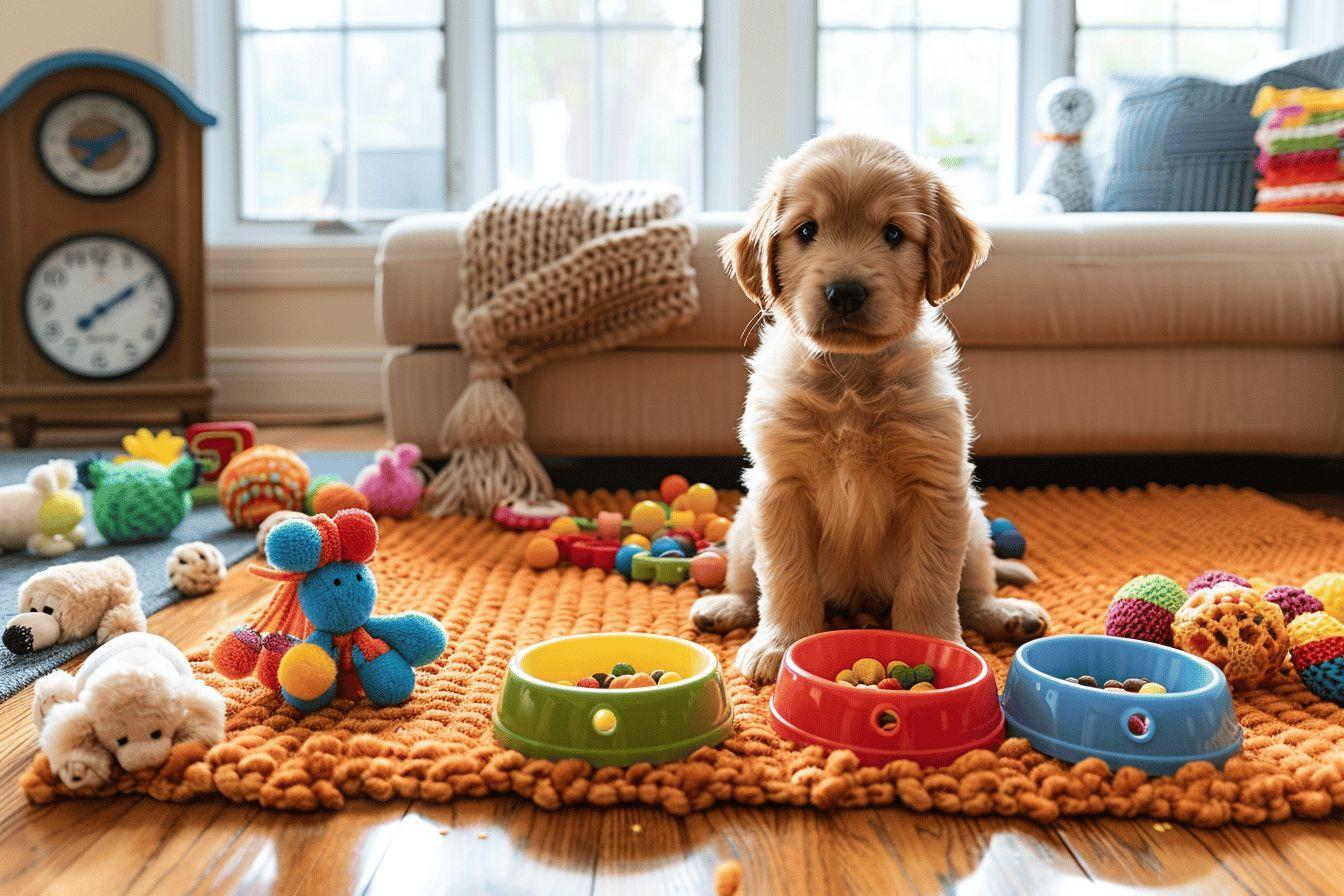
An appropriate diet is fundamental. For young puppies, divide the ration into 3-4 daily meals at fixed times. Always keep a small portion of kibble for rewards during training sessions. Let your puppy eat calmly, without disturbing them or putting your hands in their bowl.
Here is the essential equipment to welcome your puppy:
- A comfortable bed in a quiet place
- Toys of different textures for chewing
- A well-fitted harness for the first walks
- Pads or absorbent papers for the cleanliness learning phase
- Quality food adapted to their age and size
The first weeks with your puppy shape your future relationship. With patience, consistency, and kindness, you will lay the foundations for a harmonious life together. Do not hesitate to regularly consult your veterinarian to monitor their health and receive personalized advice for their training.