
| Key Points | Details to Remember |
|---|---|
| 📋 Definition of the Method | Progressive learning through positive reinforcement |
| ⏰ Planning | Regular and adapted schedule |
| 🚽 Cleanliness | Clear signals and motivating rewards |
| 🐕 Basic Commands | Sit, lie down, recall, stay still |
| 🍖 Positive Reinforcement | Varied treats and petting |
| ❤️ Patience and Regularity | Short sessions to avoid fatigue |

Training a chihuahua may seem challenging since this small size overflows with character. Yet, with a gentle, consistent method and a bit of patience, it becomes possible to have a clean dog that is receptive to the most useful commands. In this tutorial, we explore each step in detail, illustrated with practical advice and examples to turn the learning moment into a true sharing experience.
Understanding the Specificities of the Chihuahua
Behavioral Characteristics
The chihuahua is a lively dog, sometimes a bit stubborn, but also deeply attached to its owner. One might think it will learn in the blink of an eye, but in reality, the secret lies in repetition and consistency. Its small size does not mean it has less energy: it can be playful and alert, which affects its attention span.
Why Adapt the Training
Each breed has its own codes. In the chihuahua, sensitivity is more pronounced: a too harsh tone or a sudden gesture can frighten it and slow its progress. Conversely, an encouraging tone and a well-chosen reward stimulate its motivation. The idea is to adjust to its character while maintaining a clear guideline.
Preparing the Environment for Learning

Choosing the Cleanliness Area
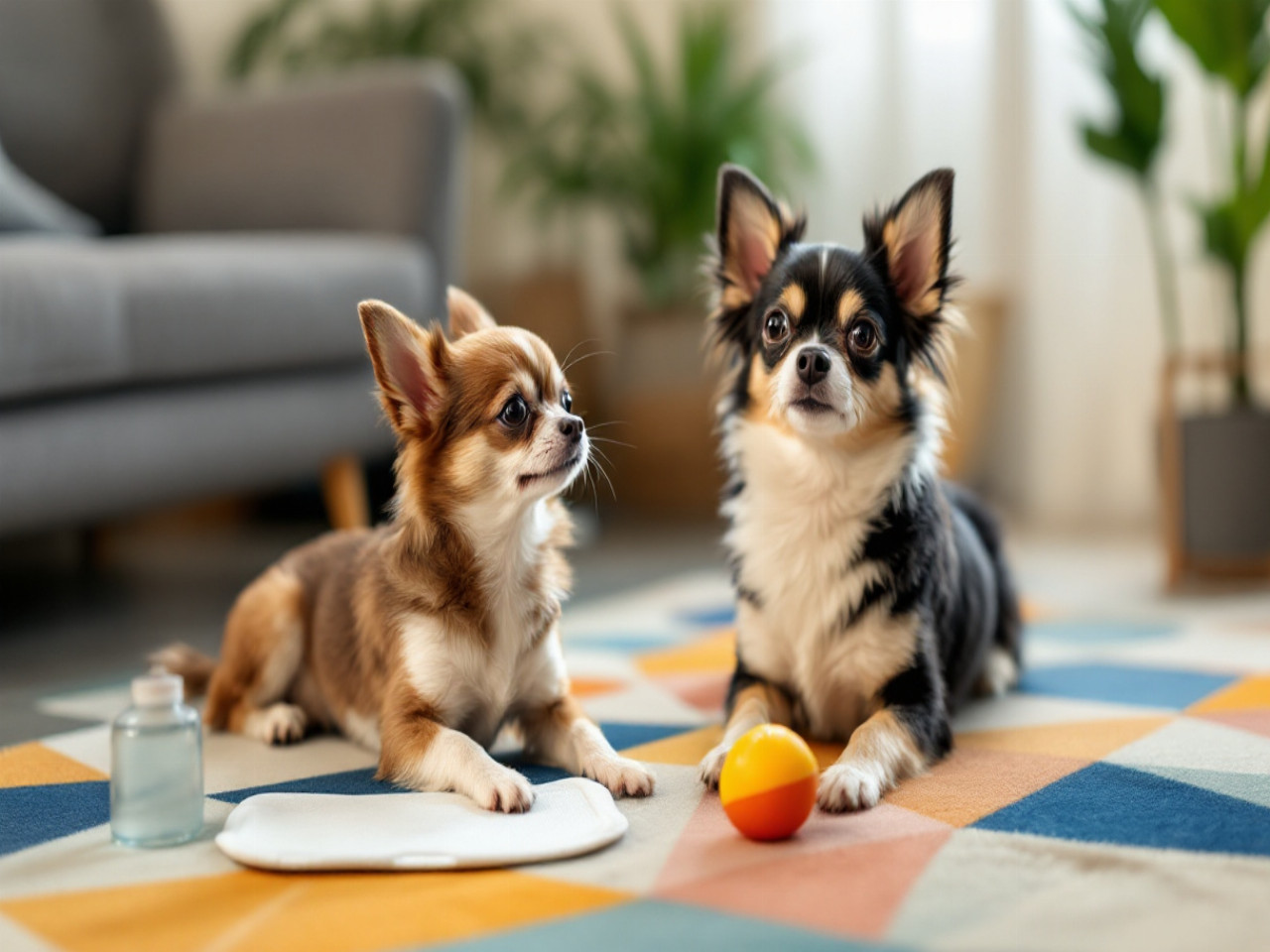
Start by delimiting a precise space, both indoors and outdoors. Indoors, an absorbent mat or pad can serve as a transition, but as soon as possible, aim for outdoors. The chihuahua moves faster than you think: a dedicated place avoids confusion and helps associate “place” and “action.”
Using a Secure Crate
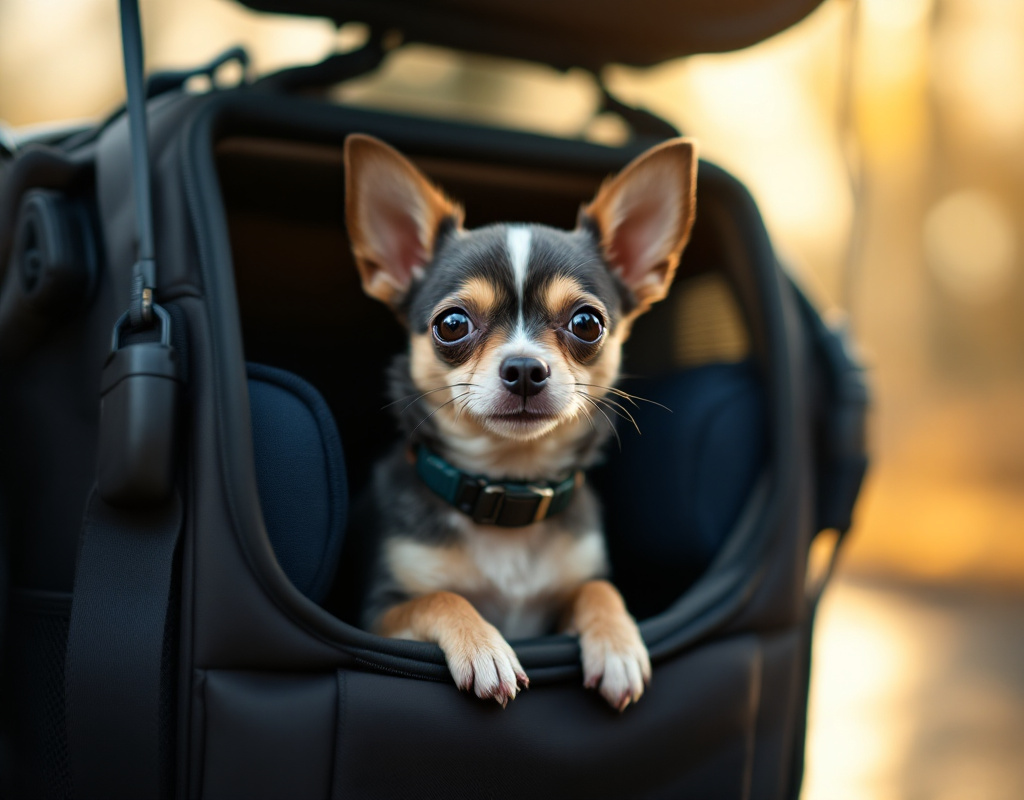
The chihuahua often finds refuge in a closed space. A crate (or box) can become its den: it helps manage its needs by limiting the territory where it can relieve itself. Provided the dog is not left there for more than two consecutive hours, the crate promotes cleanliness and a sense of security. Leave the door open at first, place a toy inside, and praise when it settles there on its own.
Necessary Equipment
- Absorbent pads or mats for indoors
- A comfortable crate with a blanket
- Treats cut into small pieces
- A favorite toy to capture attention
- A light collar and an adapted leash
Step 1: Teaching Cleanliness
Establishing a Regular Schedule
Chihuahua puppies have very small bladders; therefore, frequent outings must be planned: upon waking, after each meal, after playtime, before a nap, and before bedtime. Over time, the intervals can be lengthened. Keeping a dedicated notebook or app helps identify your companion’s personal rhythms and adjust the schedule accordingly.
Signals and Rewards
At each outing, use a keyword (for example, “outside” or “pee”). Through repetition, the chihuahua eventually associates the word with the action. As soon as it relieves itself, an immediate treat and a pet reinforce the learning. In the absence of accidents, praise it within the second following: the interval between the action and the reward should not exceed three seconds.
Step 2: Initiate Basic Commands
Sit and Lie Down
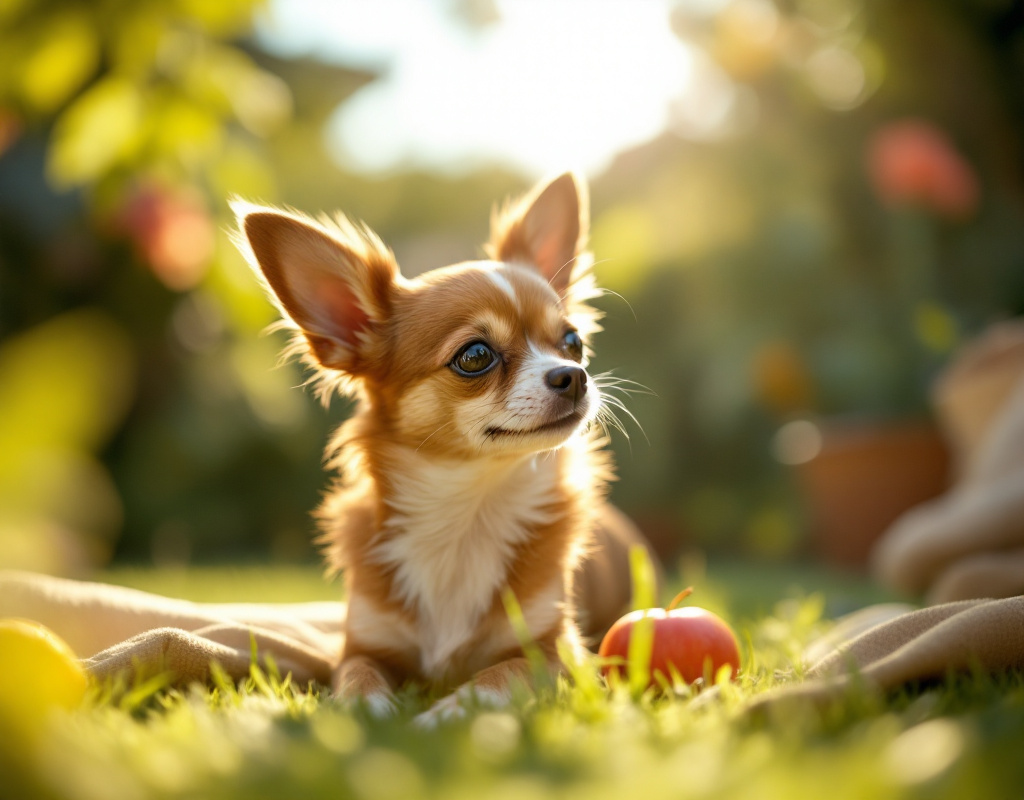
The “sit” command is often taught by placing a treat above the dog’s nose, then slowly moving it towards the back of its head. When it sits to follow the treat, say “sit” and reward immediately. For “lie down,” start from a sit: slide the treat forward, on the ground. At each step, the voice remains soft, encouraging, almost conspiratorial.
Recall
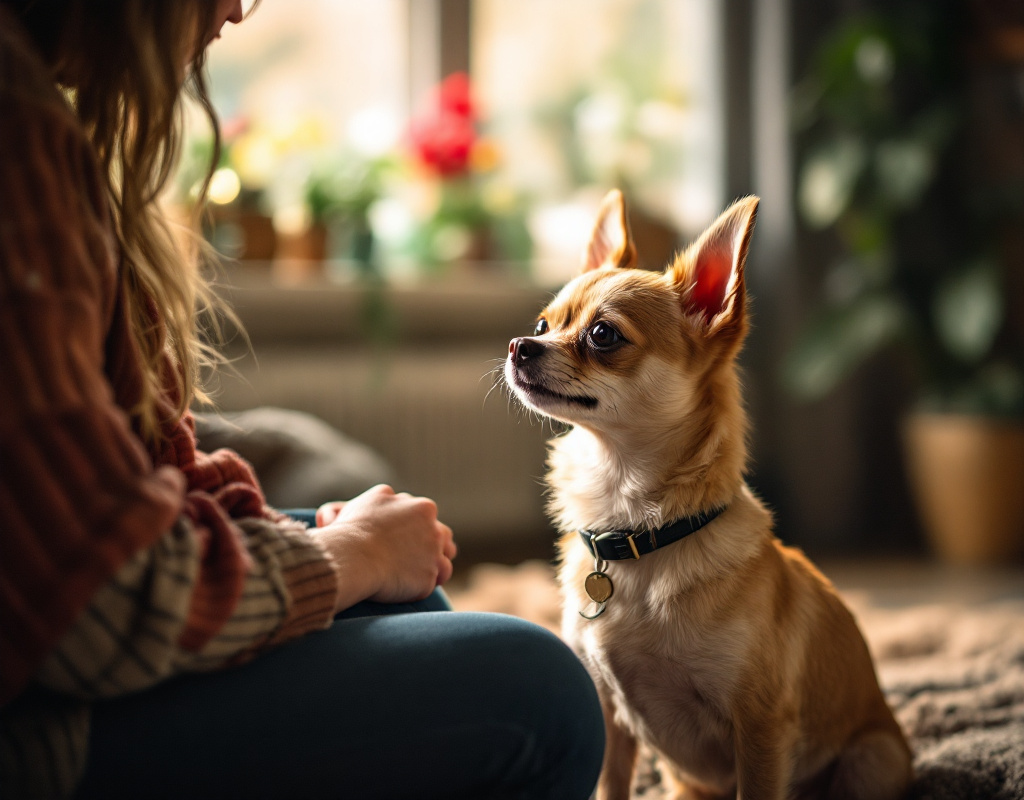
Recall is crucial, especially for a small dog that could put itself in danger. Start close to it, call it with a single word (“here!”) while kneeling, arms open. When it comes, the celebration begins: pets, cheerful voice, treat. Repeat in different places, gradually increasing distance and distractions.
“Stay Still”
Challenging, but not impossible! Starting from a sit, step back slowly one step, say “stay still” and lightly touch its shoulder. Return to praise it if it does not move, then increase the duration and distance. The idea is to create a positive expectation: the chihuahua learns that staying still pays off.
Step 3: Reinforce Learning
Short and Regular Sessions
Forget long sessions that exhaust the dog and the owner. Ten minutes morning and evening are more than enough to fix a command. If the chihuahua shows signs of fatigue (yawning, looking away), stop before a crisis. This way, each session remains positive and anticipated.
Dealing with Regressions
A puppy can sometimes forget a learned behavior. Rather than getting angry, it’s better to go back to the previous step. For example, if it no longer responds to recall in a new park, resume the exercise in a familiar place. Patience is key: a well-managed step back avoids frustration.
FAQ
- When can I lengthen the intervals between outings for cleanliness?
- As soon as your chihuahua no longer has accidents for several days, you can try adding an extra 30 minutes, while monitoring its posture and restlessness.
- Which treat should I choose?
- Small pieces of liver or chicken, soft enough to be swallowed in one bite. Vary the flavor to maintain interest.
- My chihuahua doesn’t like the crate, what should I do?
- Reduce the size of the crate or always leave it open with a toy inside. Never force it: every progress, even minimal, deserves a reward.
- How long does it take to master “sit” and “lie down”?
- Generally, two to three weeks are enough if you work daily in short sessions. Some dogs, more sensitive, may learn faster.
- Can an adult chihuahua be trained in the same way?
- Yes, the principle of positive reinforcement remains the same. You will just need to be more patient to undo previous bad habits.