


You have just welcomed a bundle of energy, but something worries you about the way it moves. That slight limp after playing, that hesitation to jump on the couch… What if these were the first signs of dysplasia? Contrary to popular belief, this joint abnormality does not only affect old dogs. Early detection of these symptoms in your puppy radically changes its prognosis. We explain how to become a detective of canine discomfort.
In brief
🔍 Dysplasia appears as early as 3-4 months: contrary to the myth of “old dogs,” the first signs appear during rapid growth. Large and giant breeds are particularly vulnerable, but no dog is completely spared.
🚩 3 key symptoms to watch for: a limp that comes and goes, a “rabbit gait” (both hind legs moving together), and a sudden reluctance to do activities it loved. These signs are often more visible upon waking or in damp weather.
🩺 Acting before 6 months makes a difference: early management before skeletal maturity allows spectacular corrections. Conservative treatments (physiotherapy, diet) avoid surgery in 70% of cases diagnosed early.
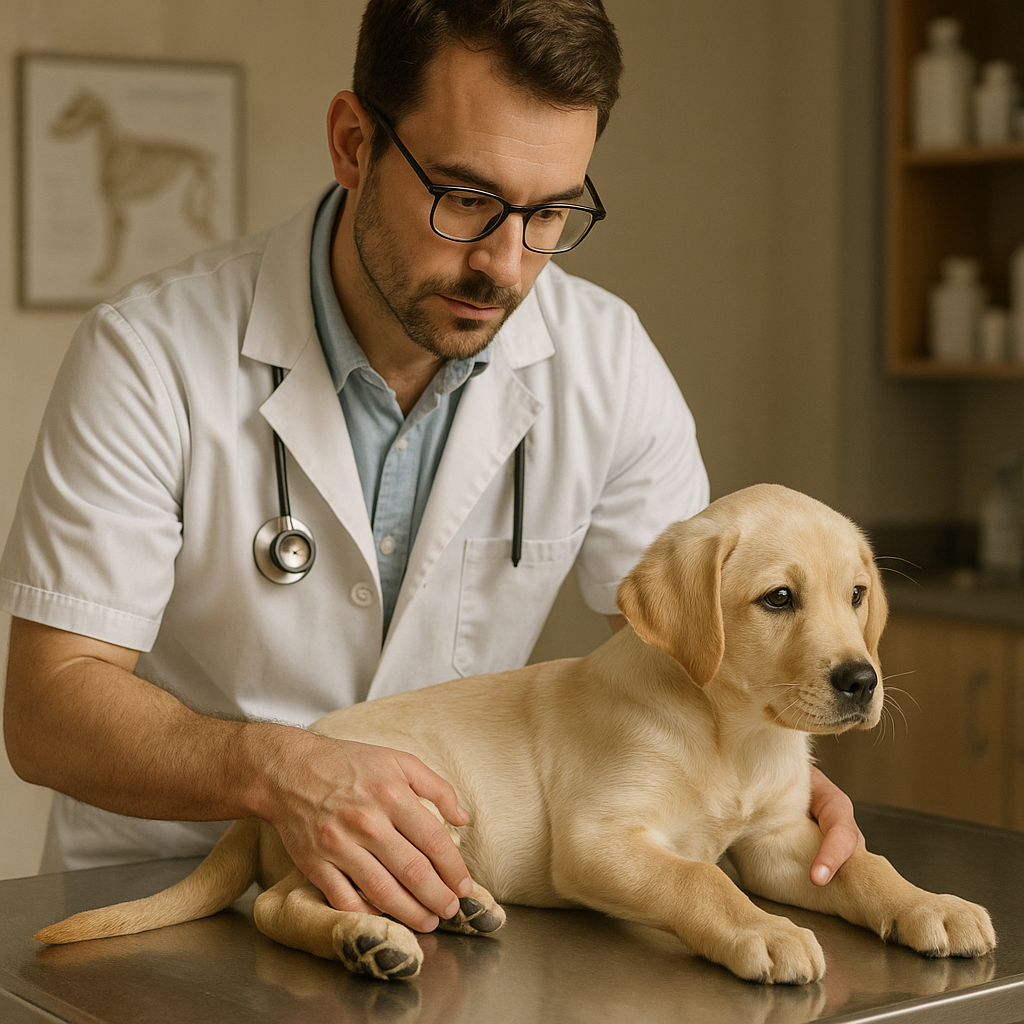
Canine dysplasia: a silent joint saboteur
Imagine two mechanical parts that should fit perfectly together, but whose contours no longer match. That is exactly what happens in a dysplastic joint: the femoral head and the pelvic socket form a mismatched pair. This lack of congruence triggers joint instability that prematurely wears down the cartilage. The worst? This wear often begins even before symptoms are visible to the naked eye. Large breeds like the German Shepherd or Golden Retriever pay a heavy toll, but a study from the University of Zurich revealed that 12% of Pugs suffer from it too — proof that size is not the only factor.
The art of detecting invisible discomfort

Puppies are champions at hiding pain. Their instinct drives them not to show weakness. Yet, some behaviors should trigger red flags:
Intermittent limping: a misleading signal
Unlike a constant limp linked to trauma, dysplasia limping plays hide and seek. It appears after intense exercise, disappears at rest, then returns as if by magic. This intermittence often leads owners to minimize the problem (“he must have twisted his paw”). Foolproof test: film your puppy in slow motion. A slight asymmetry of the pelvis or external rotation of the hind legs often betrays joint discomfort.
The “rabbit gait”: more than a curiosity
When a puppy propels its two hind limbs simultaneously like a rabbit, it is rarely just for fun. This strange synchronization compensates for the difficulty of moving each hip independently. Another kinesic clue: “bunny hopping” is often accompanied by a reduction in stride length. Measure the distance between its footprints on soft ground: a decrease of more than 15% relative to its size is a red flag.
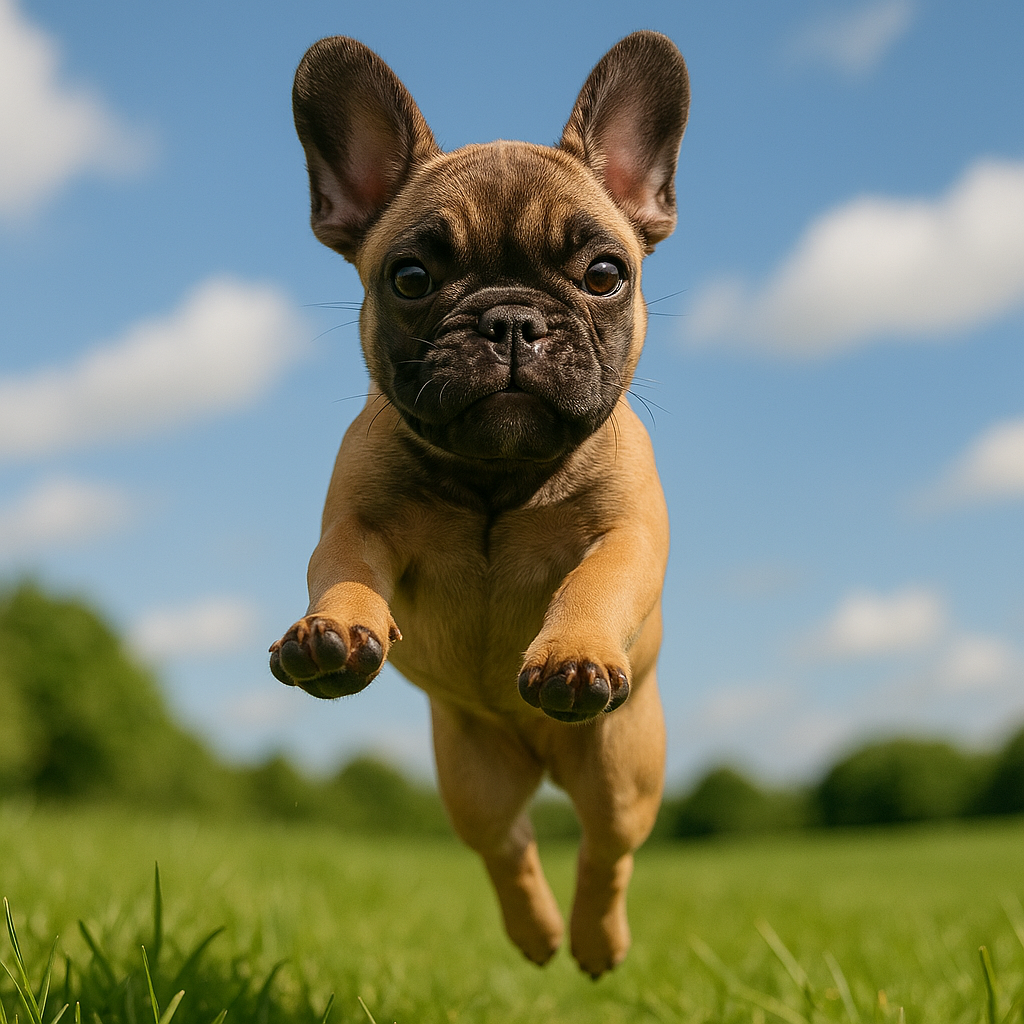
Refusal to be active: when play loses its appeal
Your tornado who used to race down the stairs two at a time suddenly starts cautiously going around them? A puppy that declines a game of fetch or hesitates before jumping into the car is probably expressing joint discomfort. This subtle personality change is often the first sign noticed by attentive owners. Note these “micro-refusals” in a notebook: their frequency reveals the progression of the discomfort.
Risk factors: beyond genetics
While heredity accounts for 60% of the equation, according to the Orthopedic Foundation for Animals, the remaining 40% depends on our management:
- Rapid growth: too rapid weight gain overloads immature joints. A veterinary study recommends limiting monthly weight gain to 10% for giant breeds
- Slippery floors: hardwood and tile floors turn every movement into an unstable course. Place rugs in traffic areas
- Inappropriate exercises: repeated jumps (frisbee, agility) before 12 months are time bombs for developing cartilage
| Breed | Prevalence | Average age of first signs |
|---|---|---|
| German Shepherd | 19% | 4-5 months |
| Labrador | 15% | 5-6 months |
| Rottweiler | 22% | 3-4 months |
| French Bulldog | 8% | 6-8 months |
Screening: the ultimate weapon against progression
Do not rely solely on observation. At the first doubts, the Ortolani test (a specific hip manipulation) performed by your veterinarian can reveal abnormal joint laxity. Around 4-5 months, an X-ray under sedation allows quantifying the degree of dysplasia thanks to the Norberg angle:
An angle below 105° indicates severe dysplasia, between 105° and 100° a moderate form. Above 105°, the joint is considered healthy.
The major innovation? The dynamic scanner in a standing position. It evaluates how the joints actually bear weight, detecting instabilities invisible on a standard X-ray.
Winning strategies: act before the crisis
An early diagnosis opens the way to minimally invasive solutions:
- Nutrition symphony: an adapted calcium/phosphorus ratio (1.2:1 to 1.4:1) and anti-inflammatory doses of omega-3 EPA/DHA (50mg/kg/day) preserve cartilage
- Tailored physiotherapy: hydrotherapy at 28°C, proprioception exercises on soft cushions, controlled stretching improve stability
- Support orthoses: specialized pelvic harnesses reduce hip load by 40% during growth spurts
In borderline cases detected before 6 months, double pelvic osteotomy remodels the joint with 90% success when performed by a specialist. After this critical age, options become more complex and less effective.
FAQ: your questions about early dysplasia
My puppy limps after a long walk, is it necessarily dysplasia?
Not necessarily. Simple soreness or a mild sprain can be the cause. Watch if the limp persists for more than 48 hours or reappears systematically after exercise. In that case, consult.
Can dysplasia be prevented through diet?
Yes, partially. Specific “large breed growth” kibble with strict calorie control and supplementation with chondroprotectors (glucosamine, chondroitin) reduces the risk by 30%. Avoid non-prescribed calcium supplements.
At what age should the first radiological screening be done?
For at-risk breeds, an initial screening X-ray around 4 months is advisable. However, the definitive diagnosis is made around 12-18 months, when growth is complete. Two spaced examinations provide valuable dynamic insight.