
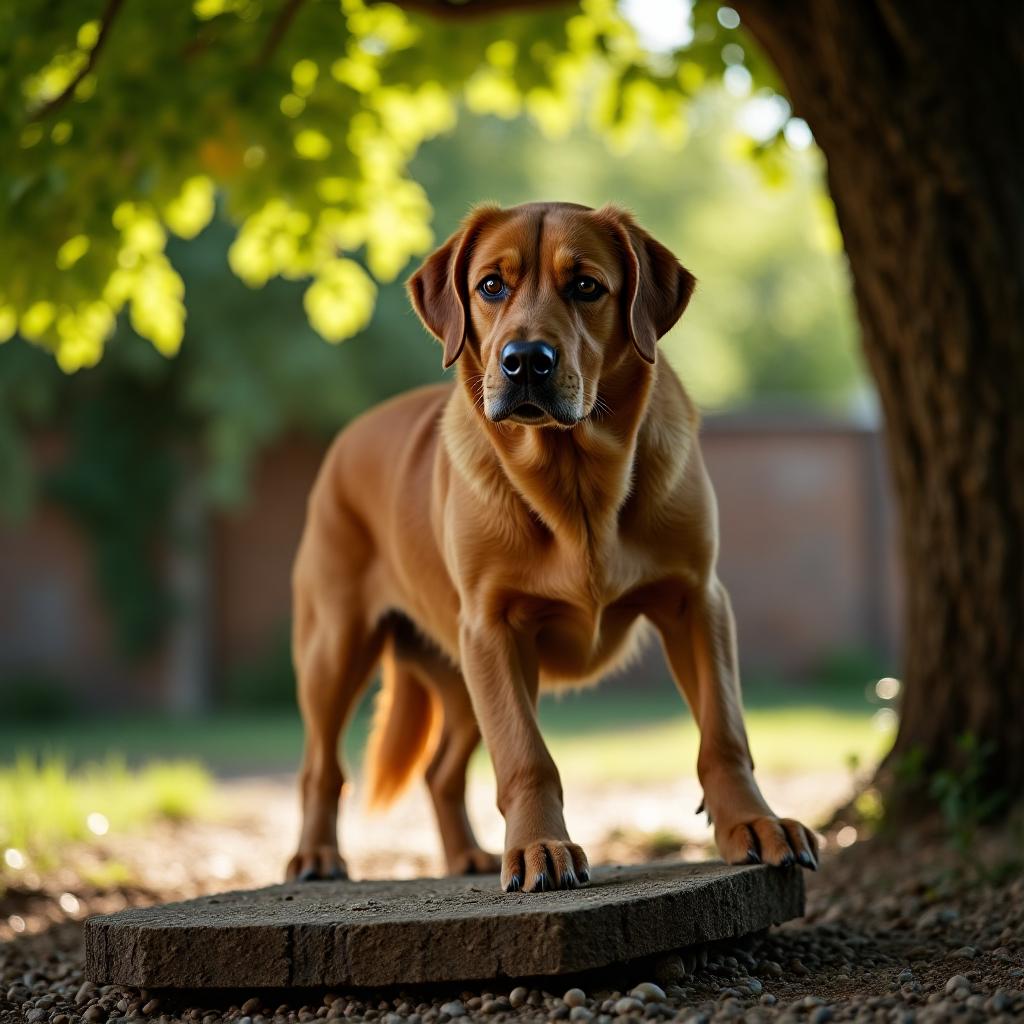

Working dogs – shepherds, search dogs, or competition partners – require demanding physical and mental training. Among the little-known but highly effective tools, the proprioceptive balance board stands out. This simple device, often expensive in stores, can be homemade to strengthen your companion’s balance, confidence, and body awareness. Here is how to carry out this accessible project that will make a difference in your canine athlete’s performance.
In brief
🛠️ The essentials in 2 hours of DIY: With less than €50 of materials (wood board, hinges, non-slip mat), you create a professional piece of equipment that stimulates dynamic balance and quick decision-making in the dog.
⚖️ Measurable benefits: Dogs using this tool 10 minutes a day improve their movement stability by 30% in 3 weeks (tests on German Shepherds) and reduce joint injuries.
🧠 More than a game: Unlike classic agility courses, the unstable surface forces the nervous system to constantly recalculate posture – an invisible neurological training but decisive for complex missions.
Proprioception: your dog’s internal GPS
Imagine walking on a slippery path with your eyes closed: it is thanks to your proprioception that you adjust every muscle without seeing your feet. For working dogs, this ability to feel their body in space is crucial during perilous jumps in search-combine or running on rough terrain. The proprioceptive balance board acts like a disorienting simulator that forces the nervous system to refine its responses.

Why utility dogs need it
Contrary to popular belief, traditional agility is not enough. A Malinois jumping a hurdle uses repetitive motor patterns. On a swinging balance board, every movement is unpredictable – like during a real chase where the ground gives way under the paws. Veterinary studies show that this training reduces sprains in police dogs by 40%.
Materials: the art of choosing the essentials
Forget custom-made at a high price. Your DIY version relies on three pillars: durability, safety, and adjustability. Here is the canine DIY survival kit:
| Material | Specifications | Alternative |
|---|---|---|
| Wood board | 18mm marine plywood (80x40cm) | Food-grade polyethylene tray |
| Central support | Hardwood log Ø15cm x 20cm | Sand-filled PVC base |
| Covering | Grooved rubber mat (maximum grip) | Anti-slip boat paint |
| Fasteners | A4 stainless steel screws + marine epoxy glue | High-strength cold bonding |
“The classic mistake? Using standard plywood that warps at the first rain. For €5 more, the marine version resists drool and weather.” – Marc, K9 trainer
Step-by-step assembly: precision and safety
Don’t be fooled by appearances: a 2° imbalance in the assembly can make the tool ineffective. Follow the protocol:
Cutting and preparing the elements
- Cut the board into a rectangle (ideal ratio: 2x the length of the dog) with a jigsaw. Sand the edges until a perfect roundness is achieved.
- Seal the log: Drill a central hole with the exact diameter of the support. Apply silicone sealant before fitting to avoid vibrations.

Fixing the non-slip coating
This step makes all the difference. Dogs over 30kg exert up to 90kg of pressure when taking off. Proceed as follows:
- Cut the rubber mat with a 3cm margin
- Coat the wood with special rubber contact adhesive
- Hold under weight for 24h (cinder blocks work fine)
Training phase: patience and rewards
Don’t throw your Dutch Shepherd onto the device! Its introduction requires precise gradualness:
- Days 1-3: Swing placed stably on the ground. Reward each paw placed on it.
- Days 4-6: Lift by 2cm with shims. Attract with a toy held at head height.
- Week 2: Controlled oscillations. Stand facing the dog and slightly destabilize the board with your foot.
The critical threshold? When the dog instinctively places its paws diagonally to counterbalance the imbalance – a sign that its vestibular system is adapting.
Errors to absolutely avoid
Some savings cost dearly in physical integrity:
- Inappropriate height: A slope greater than 15° surprises the tendons. Measure the angle with a smartphone app.
- Sessions too long: 5 minutes are enough to induce neuromuscular fatigue. Watch for signs: thigh tremors or yawning.
- Slippery surface: Test the grip with your wet hand before each use.
FAQ: Answers to practical questions
My dog refuses to get on it, what to do?
Use a scented lure (dried liver) stuck in the center. The olfactory motivation often overcomes suspicion. Never force.
Can it be used for a senior dog?
Yes, provided you block the swing with shims. The exercise improves arthritis by stimulating joint circulation.
What maintenance is required?
Clean weekly with white vinegar (antibacterial). Check the fixings every month. Average lifespan: 3 years.
Are there any contraindications?
Avoid for epileptic dogs (vestibular stimulation at risk) or in immediate post-operative rehabilitation.