


Living in an apartment with a dog requires careful organization: lack of space, neighborhood noises, stimulation needs… Without an adapted rhythm, your companion can quickly feel overwhelmed. This guide details step by step the morning and evening actions to create a reassuring environment where they can fully thrive.
In brief
🌅 Rhythmed morning: a quick outing right after waking up, a balanced meal, and 15 to 20 minutes of playtime help channel energy before the apartment gets busy.
🌇 Calm evening: a longer walk, an adapted dinner, and a gradual relaxation phase promote falling asleep and limit nighttime barking.
🎯 Adaptability: each dog has its own rhythm — adjust schedules, durations, and intensity to avoid stress or boredom.
🔧 Practical tools: occupation toys, treats for learning, and repetitive routines have a calming and reassuring effect.
Why a structured routine is essential
The dog’s fundamental needs
A dog, even in an apartment, remains a social and active animal. Beyond physical exercise, it seeks stable landmarks: walking times, play moments, and a space it can identify as its own. When these elements are missing, anxiety, excessive vocalizations, and destructive behaviors appear.
Impact on behavior in an apartment
In the city, the environment changes very quickly: elevator doors, pedestrians, traffic noises. Without preparation, your dog can become hyper-reactive. A well-established routine offers a reassuring framework, reducing excitement and strengthening its confidence in the face of external stimuli.
Morning routine

Waking up and first outings
As soon as you get up, open the door without rushing. Let him sniff the fresh air and get used to the sounds. A first outing of 10 to 15 minutes is enough for him to relieve himself and get his bearings. The idea is to establish a ritual: same route, same duration. This consistency reduces anxiety towards the unknown.
Breakfast and hydration
After the walk, offer him a meal adapted to his age and activity level. Hydration is just as crucial: water must always be fresh. If you work during the day, an automatic dispenser will allow splitting meals and prevent him from rushing to his bowl when he sees you preparing yours.
Awakening activities
Before leaving, give him an interactive toy or a filled kong. These occupation games engage his sense of smell, jaws, and intelligence. About twenty minutes of mental engagement is comparable to a walk in terms of energy expenditure. You leave with peace of mind and he stays occupied during your absence.
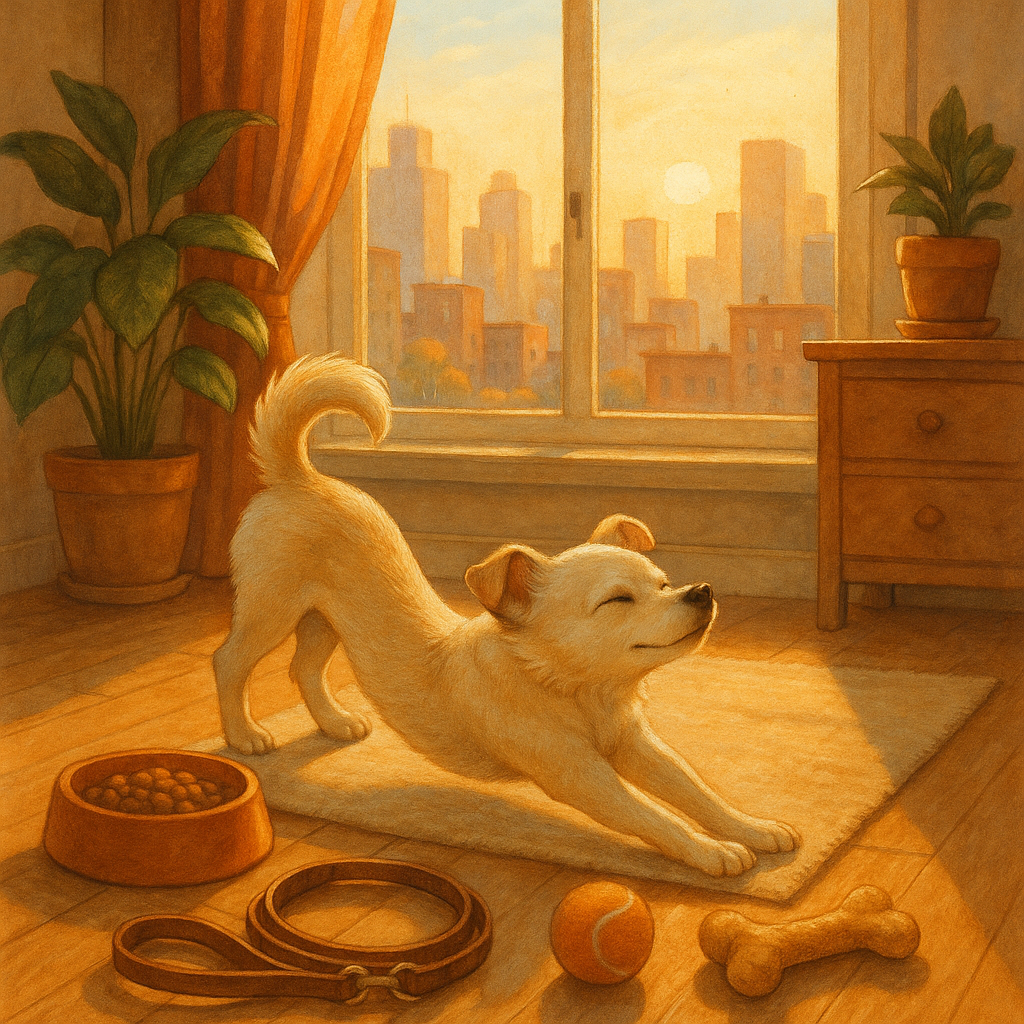
Evening routine
Evening outing and relaxation
At the end of the day, favor a longer walk, at least 30 minutes. Vary the routes: a park, a quiet sidewalk, or even some stairs create a stimulating mix. If outdoor space is limited, consider an indoor play simulator (hidden treats, ball throwing). The essential thing is to reduce excess energy before coming back in.
Dinner and calm phase
Offer a final meal lighter than in the morning to facilitate digestion. Set up a distinct food area and sleeping area: this psycho-spatial separation prepares him for the transition to rest. Calm the atmosphere with dimmed lighting, soft music, or an essential oil diffuser (lavender, chamomile) to soothe the senses.
Preparation for bedtime
Before bedtime, spend five minutes petting your dog while speaking softly to him. This interaction creates an emotional bond and signals that the day is coming to an end. Encourage him to go to his bed using a treat and repeat the same ritual every evening: a repeated gesture establishes tranquility and allows him to associate you with a feeling of security.
Additional advice
Adapt the routine to your dog
Each profile is unique: a young Labrador will not require the same walks as a small senior dog. Observe his fatigue, barking, or pauses. Adjust durations and intensities to avoid overheating or boredom. Gradually, you will find the ideal mix between play, walks, and rest.
Managing boredom and anxiety
When the apartment becomes his main environment, introduce varied supports: food puzzles, snuffle mats, or even dog television. If anxiety persists, consult a dog trainer or a veterinary behaviorist. Solutions such as a positive muzzle, wearing a pressure vest, or behavioral supplements may prove useful.
Summary table: schedules and activities
| Time | Action | Duration |
|---|---|---|
| 06:30 | First outing + needs | 10–15 min |
| 07:00 | Breakfast + water | 5 min |
| 18:30 | Stimulating walk | 30–40 min |
| 19:30 | Light dinner | 5 min |
| 21:00 | Calm phase & cuddles | 10 min |
FAQ
How do I get my dog used to the routine?
Introduce each step gradually, reinforce positively with treats, and keep strict time markers.
What to do if my dog refuses to go out in the morning?
Check for possible pain, use a comfortable harness, and offer a treat to motivate the departure.
My dog cries at night, how can I soothe him?
Make sure he has relieved himself, set up a diffuser with calming scents, and leave a dim nightlight on.



