

| Key Points | Details to Remember |
|---|---|
| 🐾 Origins | Badger hunting and adaptation to rural German life |
| 📏 Maximum size | Height at the withers from 20 to 23 cm according to standards |
| 💪 Courage | Boldness disproportionate to its size |
| 🛁 Maintenance | Regular brushing and frequent dental care |
| ❤️ Health | Monitoring of the spine and obesity |
| 🏡 Daily life | Adaptable to apartment living, moderate activity needs |

With its short legs and elongated body, the Dachshund may not look impressive. Yet, beneath this mischievous appearance lies an unyielding temperament and courage that have shaped its reputation as a fearless hunter. Let’s delve into its physical constitution, its bravery performance, and recommendations to keep this companion in top shape.
Origins and development of a unique breed
The Teckel, as we know it today, descends from a line of German hunting dogs selected for their ability to enter burrows. At the end of the 18th century, breeders sought to reduce the size of canines without sacrificing their tenacity. Various types of Griffons and Pinschers were mixed to achieve a compact build, perfectly suited for underground hunting. The breed’s evolution also took into account natural mutations favoring back robustness and jaw strength.
Morphology and maximum size

Size standards according to varieties
The Dachshund exists in three coat varieties (smooth, wire-haired, long-haired) and two size categories. The standard size should measure between 20 cm and 23 cm at the withers, while the Miniature generally does not exceed 13 cm. Professional breeders aim for the extremes of these ranges to meet competition requirements and owner preferences. Every fraction of a centimeter is carefully negotiated when trying to balance beauty and conformity.

Impact of body length on health
Excessive elongation, if pushed to the extreme, can become a risk factor for the spine. The intervertebral discs are under constant tension, especially if the dog gains weight. Specialists recommend maintaining strong dorsal muscles through measured exercises and avoiding repeated jumps, which create undesirable shocks. It is a true balance to find between aesthetics and well-being.
Extraordinary courage, proportionate to its size
Hunter instinct and temperament
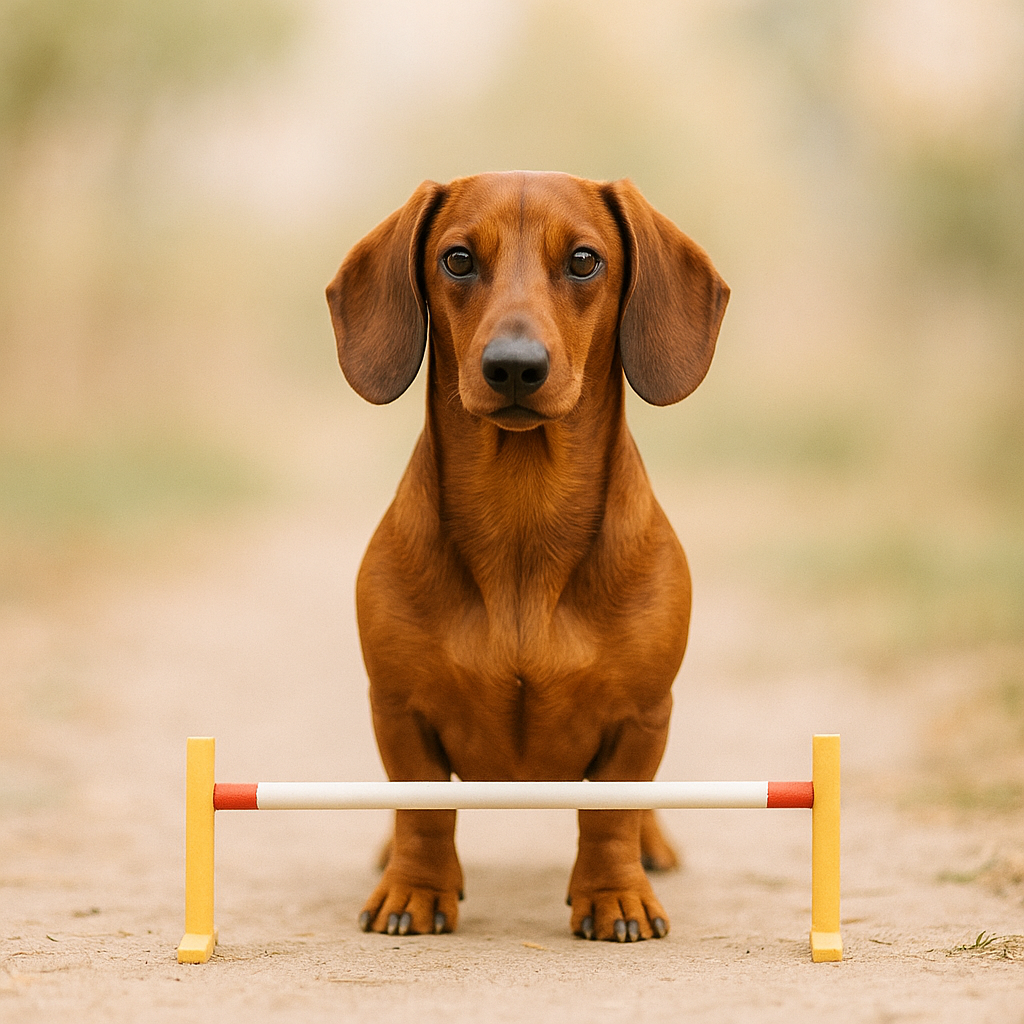
One might think that a dog barely weighing 8 kilos hardly poses a threat. In reality, the Dachshund displays surprising confidence when facing game or an intruder. Its digging instinct drives it to leap into narrow burrows to flush out badgers and foxes, never backing down from danger. It is this mix of boldness and tenacity that captivates breeders and canine sports enthusiasts.
Bravery and socialization
Raw courage must be channeled. Early socialization, from a very young age, helps temper potential aggressiveness and teaches the basics of obedience. If properly trained, the Dachshund can become a warm family member, capable of protecting its home without going to extremes. Positive training methods, complemented by tracking or agility games, provide suitable outlets for its need for action.
Care and lifestyle
Feeding and exercise
- Controlled ration to avoid overweight
- Daily walks of 30 to 45 minutes with muscle strengthening phases
- Scent games to stimulate the search instinct without straining the spine
The quality of the ration must be calibrated in proteins and omega-3 fatty acids to support nervous metabolism and muscle fiber. Excess calories quickly result in weight gain, the consequences of which go beyond mere aesthetics. On the activity side, varied courses are recommended, engaging both endurance and concentration, to avoid boredom and preserve the spine.
Grooming and specific care
Depending on the coat variety, brushing can be daily (long coat) or weekly (short and hard coat). Regular inspection of the ears, prone to infections, is essential. Finally, brushing the teeth twice a week limits tartar formation and prevents periodontal diseases that could influence head posture and, in the long term, the cervical spine.
Health and longevity
Surviving two decades is not so rare for a well-maintained Dachshund. However, certain pathologies are more likely to appear in this breed:
| Condition | Symptoms | Prevention |
|---|---|---|
| Intervertebral disc hernia | Back pain, limping | Weight maintenance, therapeutic swimming |
| Kidney obstruction | Intense thirst, urinary difficulties | Constant hydration, adapted diet |
| Eye diseases | Lens opacity | Annual veterinary check-ups |
Regular monitoring, combined with semi-annual blood tests, allows early detection of metabolic or inflammatory disorders. Prevention takes on its full meaning here: rapid care often offers a favorable prognosis, prolonging the vitality of this intrepid companion.
FAQ
What is the maximum size of a standard Dachshund?
A standard Dachshund reaches 20 to 23 cm at the withers. Beyond that, it falls outside the standards recognized by most breed clubs.
How to channel its courage?
By combining socialization, tracking games, and positive training from a very young age to transform its boldness into cooperation.
Is the Dachshund suitable for apartments?
Absolutely. Its compact size and moderate exercise needs make it an ideal guest, provided you have stimulated it mentally and physically.
What is the average age of a Dachshund?
Between 12 and 16 years, sometimes more if the living environment and care are strictly respected.