| Key Points | Details to Remember |
|---|---|
| 🐶 Definition | Nordic breed of small Icelandic herding dog |
| 🇮🇸 History | Direct descent from Viking companions |
| 🎯 Role | Herding dog and alert against intruders |
| 🏞️ Morphology | Thick coat adapted to extreme climates |
| 🤝 Temperament | Friendly, lively and playful |
| 🛡️ Care | Regular maintenance and daily exercise |

One might think the Icelandic Sheepdog is just a small dog like any other, but its history goes back to the Nordic sagas. This faithful companion, both alert and warm, held a special place in the lives of the Vikings. Here, you will find insights into its origins, robust silhouette, character traits, and the best practices to keep it in great shape.
Origins and history of the Icelandic Sheepdog
A Viking companion witness of the past
In the 9th century, Scandinavian explorers landed in Iceland with their herds, and among them were small agile herding dogs. Medieval manuscripts record these canines who patrolled farms and alerted their owners at the slightest danger. The Icelandic Sheepdog is not a mere modern reconstruction: it truly perpetuates a direct link between today’s Iceland and the Viking expeditions.
Preservation and recognition of the breed
At the beginning of the 20th century, agricultural mechanization and the arrival of new breeds nearly caused the Icelandic Sheepdog to disappear. Passionate breeders then launched a conservation effort, selecting the dogs most representative of the tradition. In 1952, the Fédération Cynologique Internationale (FCI) officially recognized it, celebrating an authentic and rare breed, whose population remains limited outside the Nordic islands.
Morphology and physical characteristics
Size, bone structure, and proportions
This breed is distinguished by a compact build: males generally measure between 45 and 47 cm at the withers with a weight around 13 kg, while females are slightly smaller. Their medium bone structure and muscular chest reflect a natural aptitude for covering long distances over rough terrain.
Dense coat and varied colors
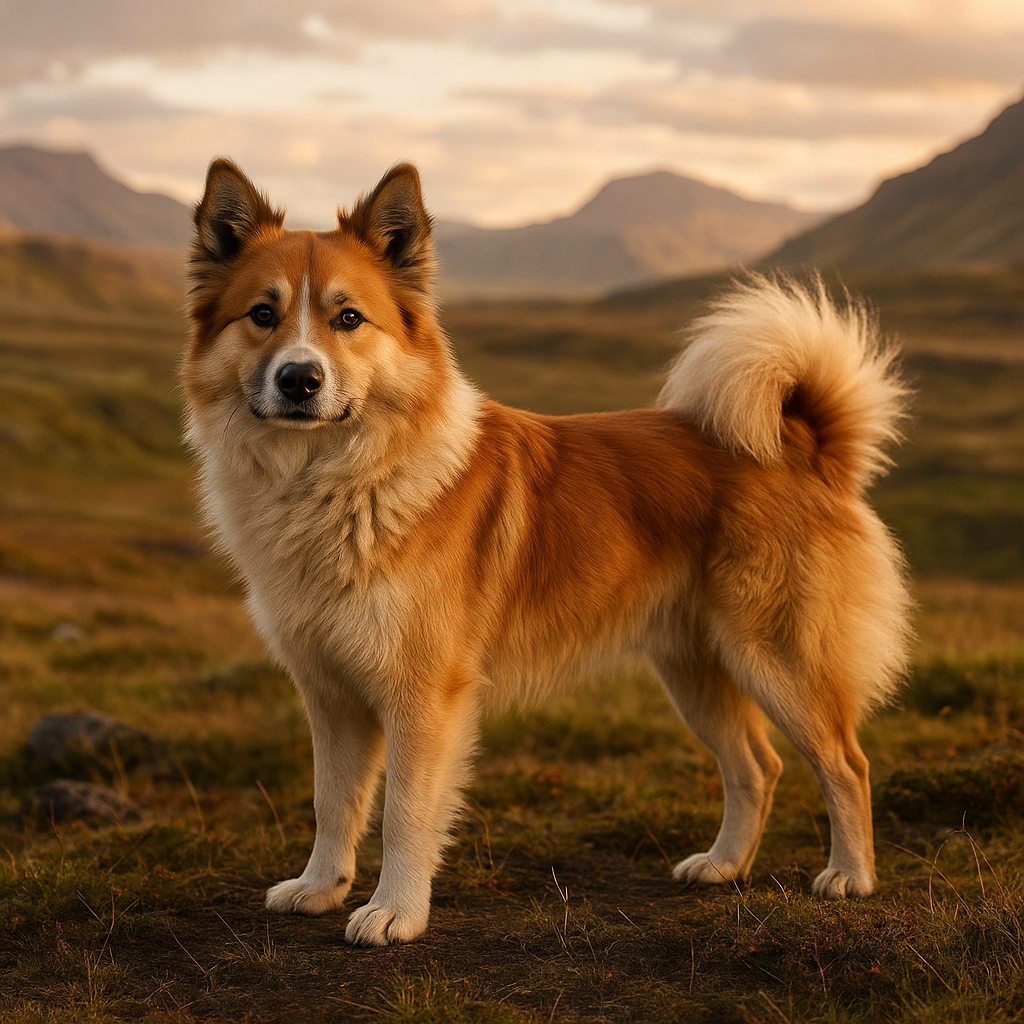
Under Iceland’s harsh climate, the shepherd developed a thick double coat, waterproof and insulating. The inner layer, short and woolly, retains heat while the outer coat, longer, protects against wind and moisture. The shades range from golden fawn to brindle black, including tricolor coats, each offering a different aesthetic but always adapted to Nordic survival.
Temperament and human relationships
An alert and playful companion
The image of the wise herding dog is not exaggerated: as soon as a suspicious noise pierces the air, it straightens up and barks in a clear tone, warning the household. This vigilant temperament does not prevent it from loving cuddles and play. Its high-energy periods alternate with moments of calm, where it enjoys snuggling close to you, head on your lap.

Socialization and suitability for family life
Excellent memory, natural curiosity, and tolerance combined with a hint of mischief: the Icelandic Sheepdog gets along particularly well with children, provided a dialogue of mutual respect is established. Its sociability extends to tolerating other animals, as long as it is accustomed to them from a young age. Trust is shown by giving it responsibilities, such as fetching a toy or participating in group walks.
Training and recommended activities
Positive learning methods
The key to success lies in consistency and patience. Training sessions should be short (10 to 15 minutes) and punctuated with food rewards or petting. Basic commands – sit, lie down, heel – are learned quickly, especially when each gesture is associated with a clear word. An enthusiastic voice helps maintain the attention of this lively dog, fond of mental challenges.
Canine sports and mental activities
Few enclosed spaces restrict you: agility, obedience club training, and even cani-cross are excellent options to channel its energy. In your garden, hiding treats under objects or teaching it to sort toys develops its thinking. Without stimulation, it can get bored and chew on your shoes: daily exercise prevents frustration.
- Agility and slalom
- Hiking on varied terrain
- Tracking games and hide-and-seek
- Clicker training workshops
Health and care
Predispositions and regular check-ups
Generally robust, the Icelandic Sheepdog can nevertheless present some hereditary sensitivities: patellar luxation, hip dysplasia, and certain eye conditions. Systematic screening by a veterinarian from adulthood prevents complications and guides breeding choices to avoid spreading these disorders.
Coat maintenance and hygiene
Brushing should be done at least twice a week to remove dead hair and distribute the natural oils of the coat. During seasonal shedding, frequency should be increased. Immersion in water does not harm its insulating qualities, but choose a mild shampoo formulated for double-coated dogs. Regularly check the ears and trim the nails, maintaining regular contact with a groomer if needed.
The Icelandic Sheepdog today
It is now found in several European countries and North America, where dedicated clubs organize annual meetings. Its popularity is growing among households fond of hiking or outdoor sports. A discreet guardian, always ready to play and endowed with great longevity (12 to 15 years on average), it appeals to those seeking an all-terrain companion capable of adapting to city life provided it has regular outings.
FAQ
What is the lifespan of the Icelandic Sheepdog?
Generally, it lives between 12 and 15 years, with some lines reaching even 16 years thanks to good care and thorough veterinary follow-up.
Can this dog stay alone at home?
Emotionally attached to its pack, it tolerates absence for a few hours but not long days. Chew toys and a comfortable bed help it wait patiently.
Is it noisy in an apartment?
Its alert instinct drives it to bark, especially at unusual noises. Gradual training teaches it to moderate its tone, especially in an urban setting.
How to manage heavy shedding?
Twice a year, the coat renews intensively. An undercoat rake and daily brushing are essential to limit hair loss in the house.
Is this dog suitable for beginners?
Friendly and eager to learn, it is relatively accessible. However, its energy and need for mental stimulation require a certain commitment from the owner.