| Key Points | Details to Remember |
|---|---|
| 📖 Definition | Dutch Spitz with a naturally expressive smile |
| 🌍 Origins | Companion of sailors and national symbol |
| 😄 Character | Playful, alert and very attached to the family |
| 🛁 Care | Frequent brushing to preserve the coat |
| ❤️ Health | Regular check-ups of hips and heart |
| 🏅 Social Role | Mediator during animal-assisted therapy activities |

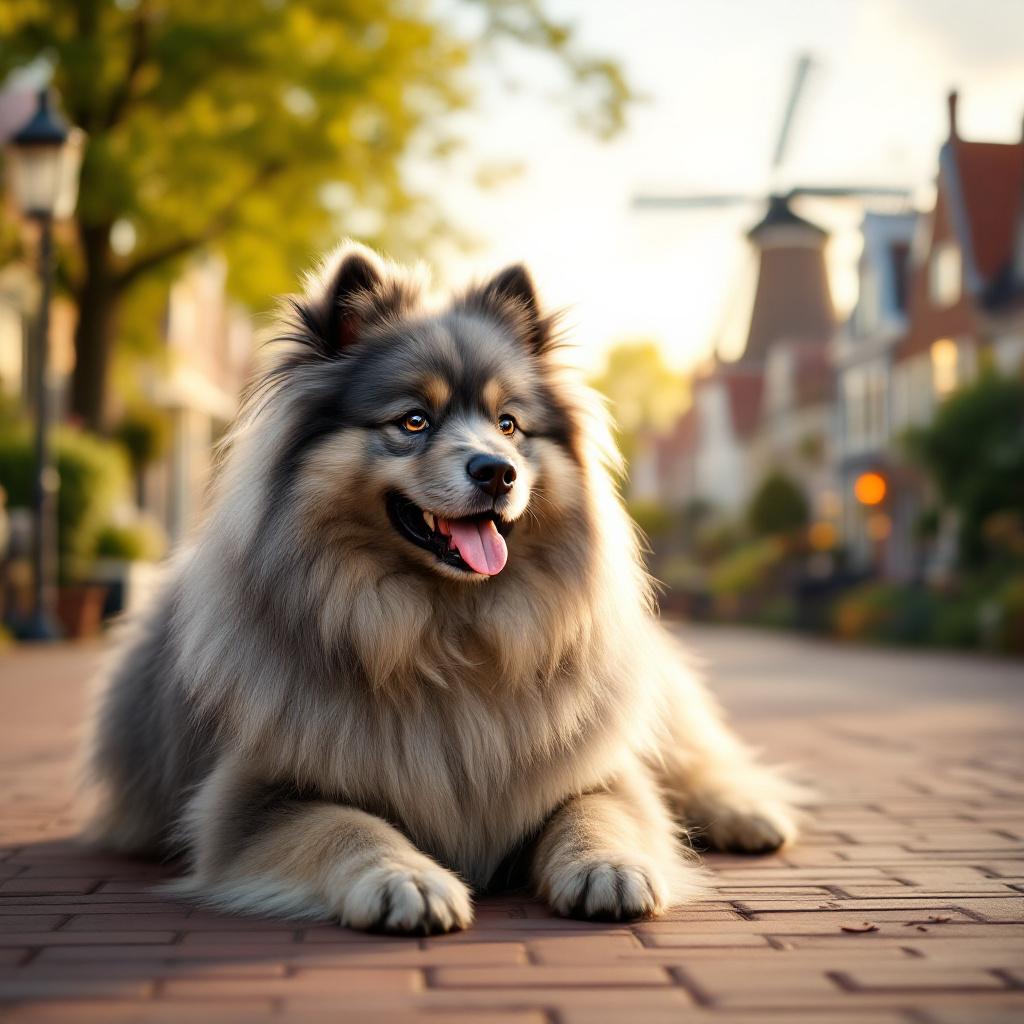
Mentioning the Keeshond is like inviting Dutch folklore into your home. With its so expressive facial mask and abundant coat, this Dutch spitz embodies a true concentrate of joy. One imagines it on the decks of boats or trotting in a warm household, always ready to share a canine wink. More than a companion, it often becomes the emotional link that reassures children, relaxes the elders, and unites the whole household around its contagious good mood.
Origins and History of the Keeshond
From the Dutch Navy to the Living Room
In the ports of the 18th century, these small spitz dogs with abundant fur curling around the neck were spotted, nicknamed “Barckje” by sailors. They sailed aboard schuyts, watching the cargo and warming the crew during the cold crossings of the Scheldt. Traveling up the canals, their silhouette charmed bourgeois families, who invited them into their elegant Amsterdam apartments. Gradually, the Dutch farm dog moved from the rough huddle of the docks to refined salons, winning the heart of high society.
Symbolism and Social Role
Beyond the purely domestic aspect, the Keeshond was given an almost patriotic dimension. It appeared on prints and medallions, marking resistance to foreign rule – somewhat like a four-legged flag. Even today, many consider this breed as a bridge between the popular history of the Netherlands and the modern image of a familiar dog. It is not just a matter of pride: it is the heritage of a relationship several centuries old between man and his faithful companion.
Morphology and Physical Particularities

The Famous Mask and Fur
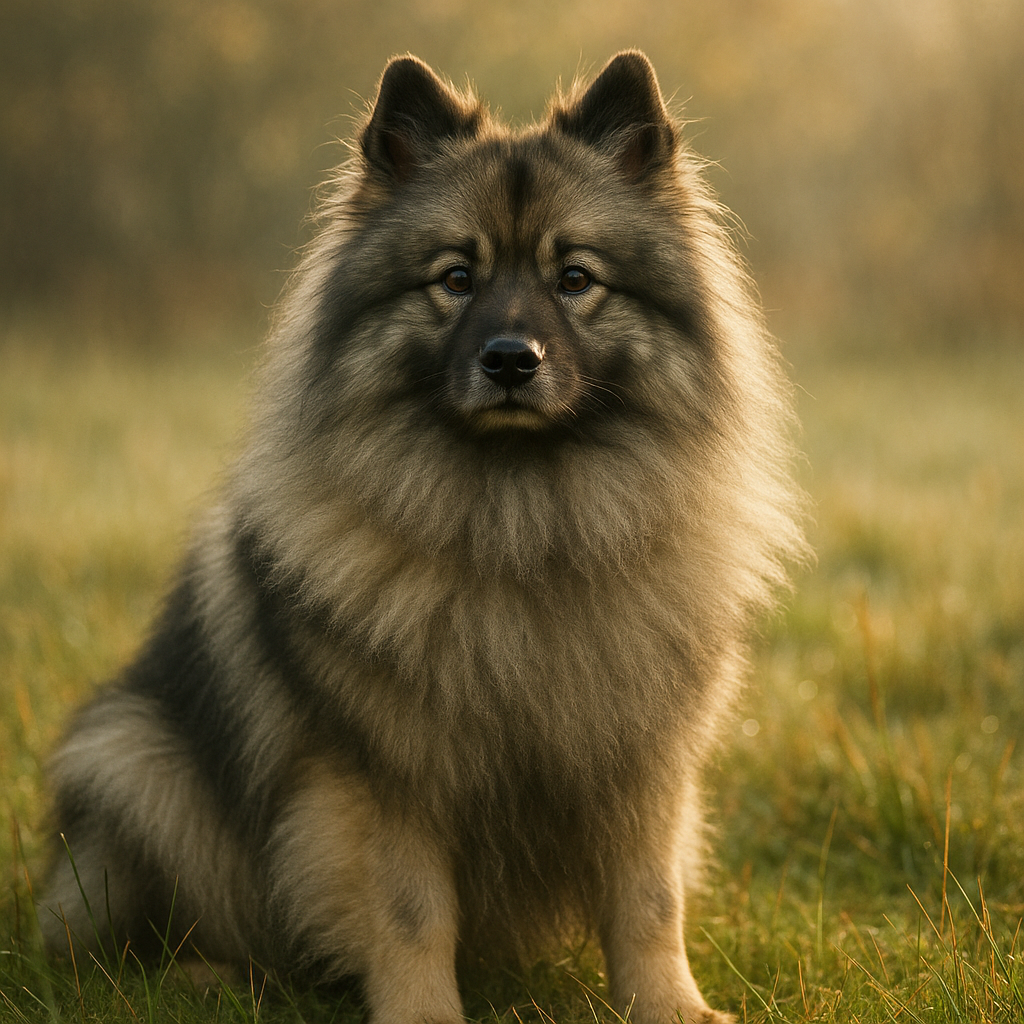
The feature that immediately catches the eye is this black mask framing bright, almost mischievous eyes. This is no accident: this contrast accentuates the dog’s “smiling” expression. The coat itself has two layers: a dense undercoat for insulation and a long, straight, thick outer coat that protects against the weather. This coat requires regular maintenance to avoid knots and preserve the natural shine of the beige and sandy gray coat.
Size, Colors, and Dimorphism
Standards mention a size of 43 to 56 cm for a weight ranging between 25 and 30 kg, but above all a harmonious balance. Males sometimes display a somewhat sturdier build, while females tend to be slightly more slender. Without ambiguity, elegance takes precedence over power. The color ranges from dark gray to light cream, with shades that evolve with the seasons, while maintaining the appearance of the famous mask.
| Characteristic | Details |
|---|---|
| Size | 43–56 cm |
| Weight | 25–30 kg |
| Coat | Dark gray to cream |
| Life expectancy | 12–15 years |
Temperament and compatibility: ambassador of the Dutch smile
Socialization and relationship with humans
Welcoming a Keeshond means accepting a tireless play partner and a sensitive accomplice. It cannot tolerate prolonged solitude: presence and interaction are essential. With children, it is patient, almost protective, and loves sharing their laughter. Visitors are quickly charmed by its enthusiastic welcome, often accompanied by a circular “dance.” Despite its soft appearance, it remains a working dog, attentive to every command and eager to impress those around it.
Training and mental stimulation
While basic obedience poses no difficulty, the Keeshond demands cerebral challenges to channel its intelligence. Tracking games, agility, or canine puzzles are wise choices to avoid boredom. Short, varied, and playful sessions can be established to maintain its concentration. A reward, whether a homemade treat or a caress, is often enough to reinforce the desire to please its owner. The key: never resort to excessive punishment, as this sensitive dog responds better to positive encouragement.
Grooming, health, and well-being
Brushing and skin care
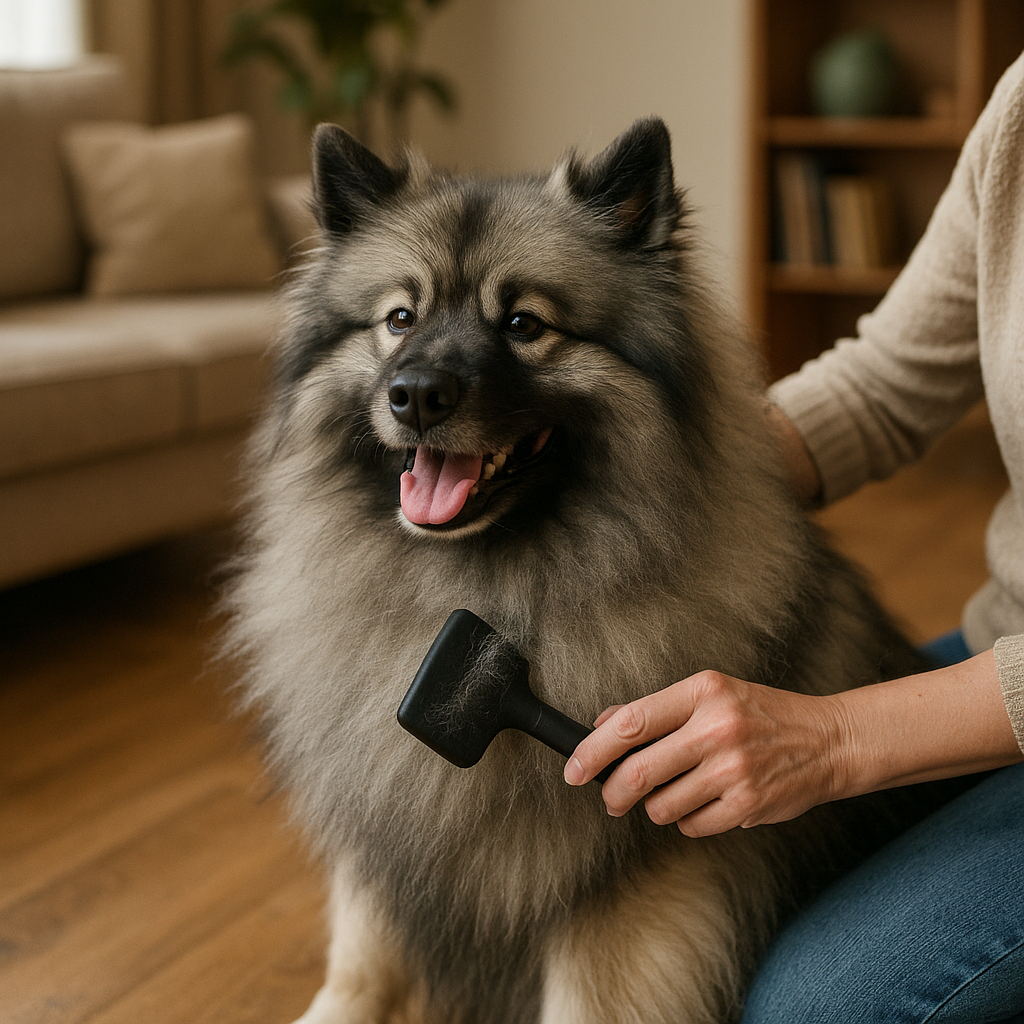
The density of the coat requires brushing at least twice a week, more during shedding periods. A wide-toothed comb is used to dislodge knots from the undercoat and a soft brush to smooth the coat. It is not necessary to bathe the Keeshond too frequently: a bath every two to three months suffices, unless excessively dirty. To preserve the skin, it is better to choose a pH-neutral shampoo without harsh fragrance. The ears require monthly checks to prevent otitis, common in thick-coated breeds.
Prevention of joint and heart problems
Like many medium-sized Spitz breeds, the Keeshond may present hip dysplasia or hereditary heart conditions. Annual veterinary visits, supplemented by control X-rays before breeding, help anticipate these issues. Regular physical exercise – walking, moderate jogging, or ball-throwing games – helps maintain balanced musculature and a healthy heart. Simply avoid excessive jumping during growth periods to protect its joints.
The Keeshond today: a role more than an appearance
Canine ambassador in culture
Like some breeds made famous in cinema or on social networks, the Keeshond holds its own reputation. It sometimes appears in awareness campaigns for animal mediation and on posters protecting Dutch heritage. Its reassuring face conveys a form of gentle diplomacy: how a simple animal can remind us of values of hospitality and kindness. Far from being anecdotal, this role contributes to its popularity in international homes.
Participation in Animal-Assisted Activities
Due to its natural empathy, several animal-assisted therapy organizations rely on the Keeshond. With appropriate training, it works with elderly people in nursing homes or in psychological support programs for children. The sound of its moderate barking, combined with its tactile gentleness, creates an immediate atmosphere of trust. Here, the Dutch smile becomes a catalyst for positive emotions, much more effective than mere human presence.
FAQ – Frequently Asked Questions about the Keeshond
- What is the Keeshond’s temperament with children?
Patient and playful, it loves sharing moments of complicity while ensuring their safety. - How often should I brush my Keeshond?
Twice a week for regular maintenance, intensive during the spring and autumn shedding seasons. - Is it suitable for apartment living?
With daily walks and mental exercise, it readily adapts to small spaces. - Which canine sports suit it?
Agility, tracking, and obedience games stimulate its intelligence and agility. - How to prevent hip dysplasia?
Strict selection of breeders, veterinary checks, and limiting early jumping.