
| Key Points | Details to Remember |
|---|---|
| 🐶 Definition | Small British terrier with a fiery character |
| 🏴 Origins | Scotland and England, common ancestor with the Norfolk Terrier |
| ❤️ Character | Friendly, curious and full of spirit |
| 🛁 Maintenance | Regular brushing, occasional clipping |
| ⚽ Activity | Daily exercise to channel liveliness |
| 🩺 Health | Monitoring of eyes and joints |

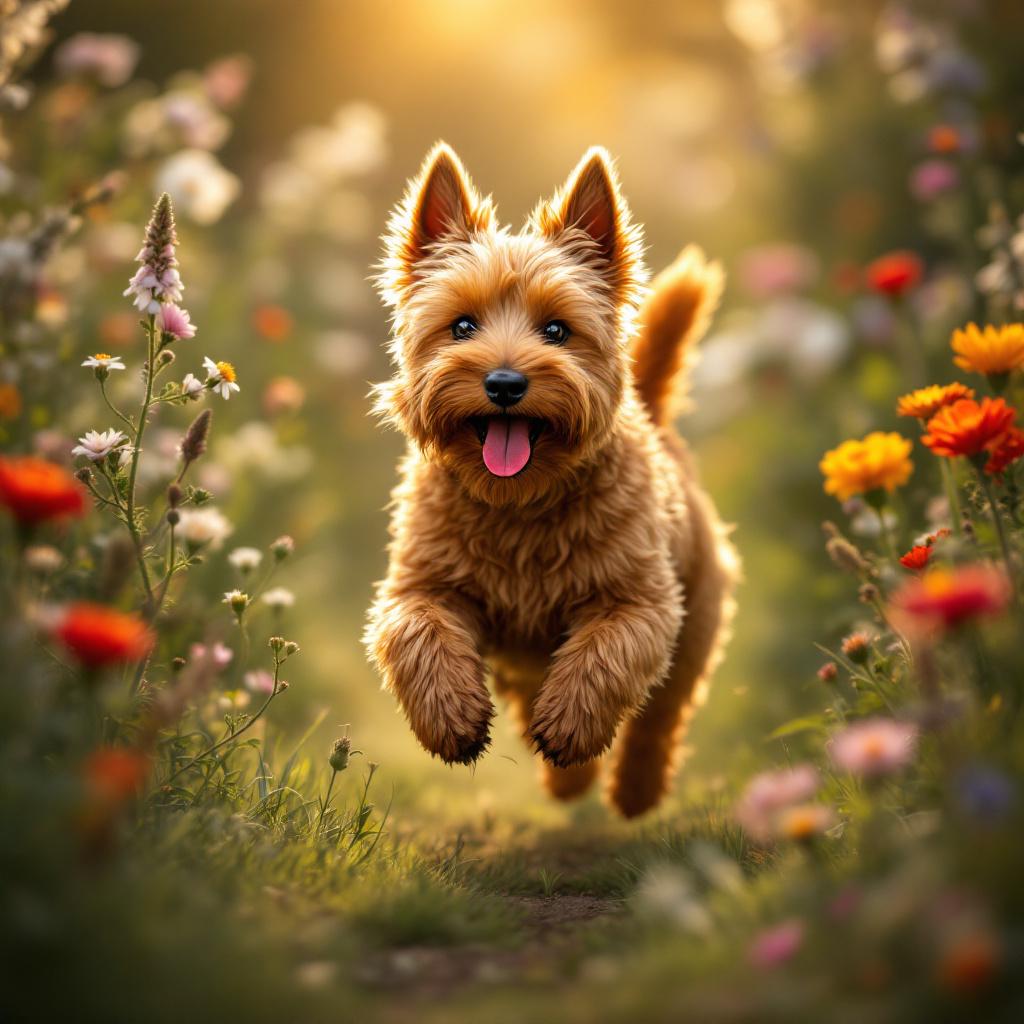
The Norwich Terrier, often recognized for its reddish coat and compact size, surprises with its boundless energy and adaptability. More than just a companion dog, it embodies a dynamic lifestyle: from urban walks to adventures in the great outdoors, it knows how to share every moment with liveliness and tenderness. This presentation delves into its history, physique, needs, and the keys to welcoming it sustainably.
Origins and History of the Breed
From the First Terriers to the Official Standard
At the end of the 19th century, British hunters were looking for a small terrier capable of slipping into fox or badger dens. Without a strict genetic plan, these dogs were born from a mix of various local terriers, favoring agility and robustness. The Norwich Terrier, like its close cousin the Norfolk, quickly conquered elite circles where its energy and appearance lived in good company with refined composure. It was only in 1932 that the official breed club set precise criteria: 25 to 30 cm at the withers, hard and dense coat, and expressive muzzle.
Morphology and Physical Characteristics

Size, Silhouette, and Bone Structure
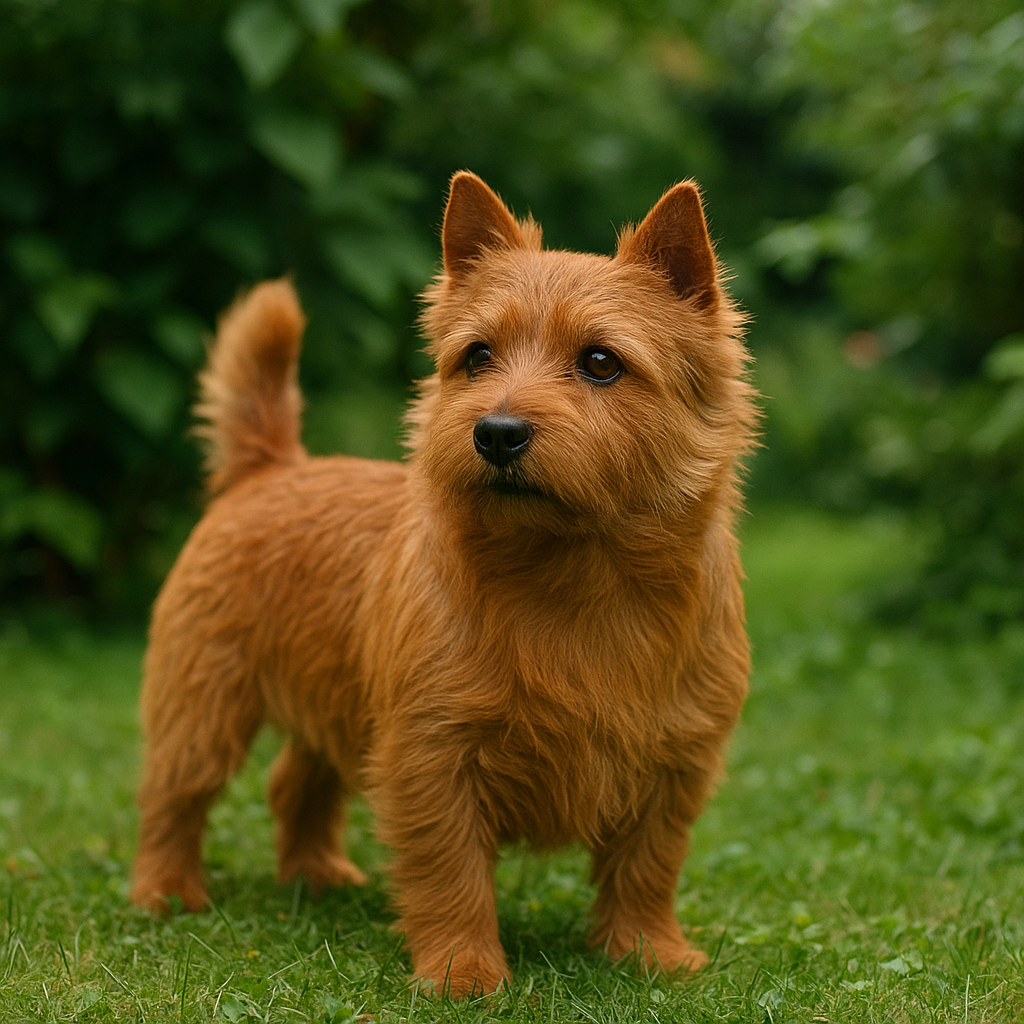
Its compact build – rarely more than 5 kg – is accompanied by a solid bone structure. One can detect a well-developed chest, firm shoulders, and straight limbs, guaranteeing a determined stride. Each muscle, finely defined, evokes the liveliness of a dog ready to leap at any moment. Its head, broad and well-proportioned, reveals round eyes, always alert.
The Flamboyant Red and Its Variations
While the term “redhead” is the one most often used, the shade of its coat ranges from fawn to bright red, sometimes with darker reflections at the tips of the hairs. The undercoat, soft and dense, reinforces the rough texture of the outer coat. This contrast effectively protects against bad weather and gives the animal an appearance both wild and elegant. Besides this main tone, some individuals display light white-gray markings on the chest or legs, without detracting from their natural radiance.
Character and Temperament
Boundless Energy and Sociability
Indoors, this little ball of fur can be mischievous, seeking to start play as soon as a pair of hands appears. Yet, it also knows how to settle in the crook of a sofa, indulge in petting, and enjoy well-deserved calm. Its balance lies in the sociability it offers: it welcomes children as well as visitors, always ready to offer a toy or come closer to ask for a compliment. Its good mood, often contagious, makes you want to accompany it on any outing.
Intelligence, curiosity, and willingness to learn
By constantly observing its environment, the Norwich Terrier makes connections between stimuli and rewards. Although stubborn in some aspects (hunting small rodents remains an obsession), it willingly responds to consistent training based on encouragement and a bit of treat. Intelligence games, where it has to find a treat under a cup, turn into a shared pleasure. Deep down, this little redhead cultivates a true taste for mutual understanding.
Education and exercise needs
Adapted training methods
Rather than mere obedience, learning through play is favored. Rope toy biting, miniature agility courses, and simplified tracking sessions stimulate both body and mind. Introducing new commands as challenges turns each lesson into an exploration. A few daily minutes, conducted consistently, are enough to lay solid foundations.
Activities to channel energy
- Hikes in the forest or along the riverbank to satisfy the instinct for the outdoors.
- Fun agility in the garden, with small obstacles and low hurdles.
- Scent games, hiding treats in boxes or under fabrics.
- Regular dog meetups to strengthen socialization.

Care and health of the Norwich Terrier
Coat grooming
Weekly brushing is enough to remove dead undercoat while stimulating the skin. During shedding periods, a short detangling session can be added. A trim using a soft slicker brush preserves the wild look of the coat without making it too thick. A few light touches with clippers under the belly or around the paws give a neat appearance without erasing the authentic character.
Health monitoring and screening
| Issue | Precaution |
|---|---|
| Patellar luxation | Annual orthopedic examination |
| Hereditary cataract | Ophthalmologic check every 2 years |
| Idiopathic epilepsy | Neurological follow-up if symptoms appear |
Choosing your puppy and living together
Selection criteria at birth
Observing the litter’s behavior already reveals varied temperaments: the most intrepid tries to climb everywhere, while the most reserved just watches. A good breeder will have noted these differences and can guide you according to your lifestyle. Clear eyes, muscle tone, and normal joint tension are among the first signs of good health.
Integration into family life
In a home where people like to move, share walks, and engage in small adventures, the Norwich Terrier thrives fully. It even adapts to an urban environment, as long as its daily walks are not rushed. At home, dedicated resting spots, a few sturdy toys, and acceptance of its need to mark territory with small barks are important. Quickly, it becomes recognized as a full member of the family.
FAQ
Q: Is the Norwich Terrier suitable for children?
A: Its playful and patient temperament allows it to coexist well with children who have already been taught to respect animals.Q: How long should a daily walk last?
A: At least one hour, ideally split into two outings to stay alert and avoid boredom.Q: Is it noisy?
A: More lively and spirited than noisy: it barks to signal, not to express boredom.Q: Can the Norwich Terrier live in an apartment?
A: Yes, as long as it is compensated with stimulating activities and regular outings.Q: What accessories should be purchased as a priority?
A: A well-fitted harness, durable toys, and a cozy bed to recover after exertion.



