

| Key points | Details to remember |
|---|---|
| 🐕🦺 Definition | Small-sized dog with long silky coat and penetrating gaze |
| 🏔 Tibetan origin | Tibetan monasteries as an ancient cradle |
| 🧠 Character | Protective, independent and sometimes stubborn |
| 💇♂️ Coat maintenance | Daily brushing to avoid tangles |
| 🏡 Habitat adaptation | Apartment living possible with adapted activity |
| 🩺 Health and longevity | Life expectancy 12–15 years, prone to some pathologies |

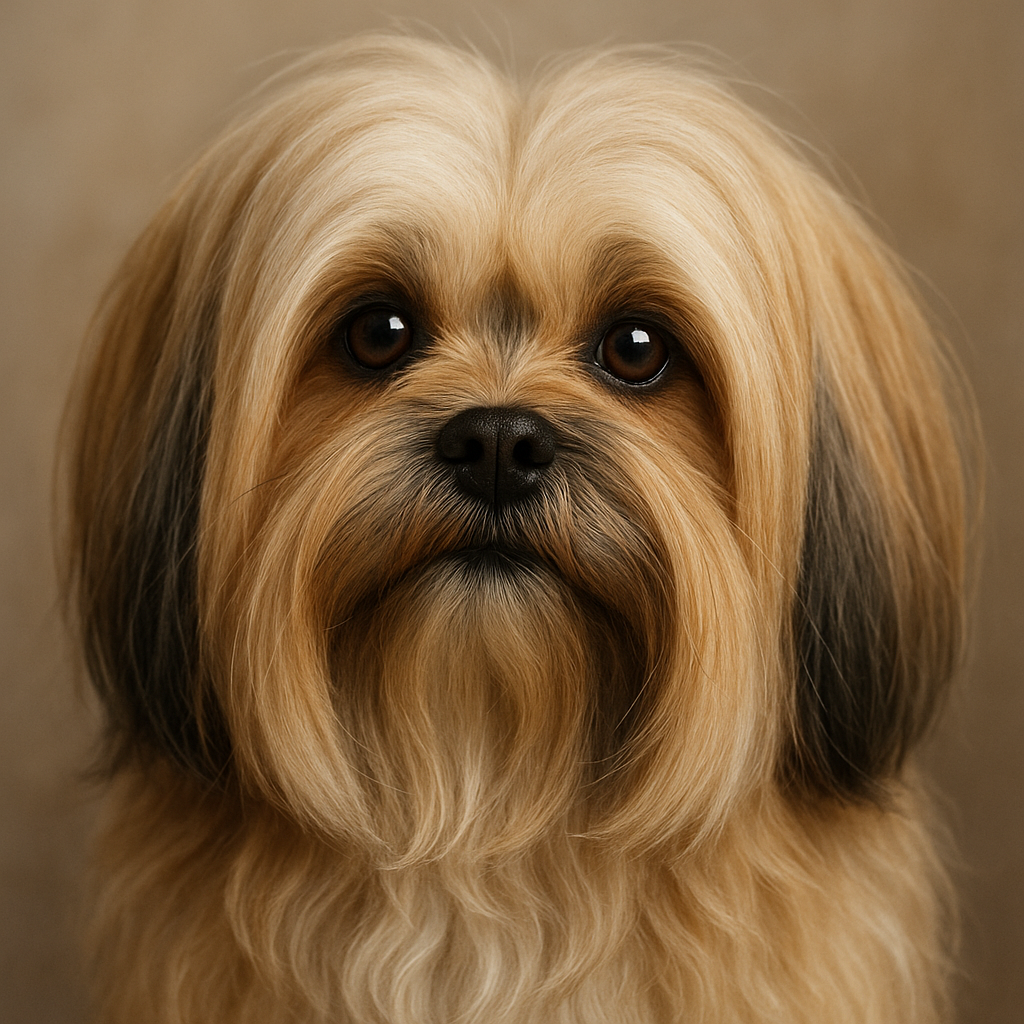
Adorned with a long coat reminiscent of the sacred landscapes of Tibet, the Lhasa Apso captivates with its unexpected charisma. One easily imagines this small dog perched on a mountain promontory, a discreet sentinel of the monasteries. Yet, in an apartment, this guardian adapts elegantly, provided its physical and mental needs are well understood. Before opening your door to this loyal and sometimes unpredictable companion, let’s dive into the fascinating world of a breed that is both ancient and full of spirit.
Origins and history
The trail of the Lhasa Apso invites exploration of the Tibetan plateau, where Buddhist monks cherished the presence of protective dogs. Often given as diplomatic gifts, these canines lived for centuries guarding temples, detecting the approach of intruders or wild animals. Through trade exchanges with India and China, some specimens reached the West at the beginning of the 20th century. Despite their small size, they quickly imposed a strong character that stood out in European salons.
The character of the Lhasa Apso

Guardian instinct
One might think that the Lhasa Apso relies on its size to go unnoticed. In truth, its history has shaped a very marked protective spirit. Every sound it makes becomes an alert signal, and its keen hearing picks up the slightest movement. Although it no longer has a Tibetan wall to defend, this dog remains on high alert. The first weeks at home therefore require gentle management of its separation anxiety and need for landmarks.
Socialization and family
Beyond its guarding mission, the Lhasa Apso reveals itself to be affectionate with its own. It often chooses one family member as a reference, a phenomenon called “intensive attachment bond.” Conversely, it remains wary of strangers – without ever descending into gratuitous aggression. In the presence of well-behaved children, it can even show surprising patience, provided mutual respect is maintained. Why not get it used early to visits and everyday noises?

Care and maintenance
Regular grooming
The dense coat of the Lhasa Apso requires daily brushing and grooming by a professional every two to three months. Without this rigor, the hair tangles and forms painful knots. Moreover, applying a keratin-based detangling spray facilitates combing and preserves shine. In summer, many choose to shorten the coat to reduce heat and simplify maintenance.
Exercise and Mental Stimulation
At first glance, this dog may seem homebody, yet a Lhasa Apso needs regular outings and small mental challenges. Walks in urban environments, combined with tracking games or kibble-dispensing toys, will channel its energy and limit boredom. Without this balance, frustration can manifest as repeated barking, a sign of deep dissatisfaction.
Training and Socialization
Training Without Harshness
Increasing a Lhasa Apso’s attentiveness relies on kindness and consistency. Physical or verbal punishments prove counterproductive, reinforcing withdrawal or increased distrust. On the contrary, positive reinforcement – reward, petting, kind words – stimulates its willingness to cooperate. Each lesson should remain short, varied, and end on a positive note.
Managing Independence
Lazy by nature, the Lhasa Apso likes to decide when it will start working. To avoid a power struggle, structure learning into small steps with achievable goals. For example, start with simple commands (“sit,” “lie down”) before moving on to more complex sequences. Gradually, its sense of success will strengthen its motivation to please you.
Health and Longevity
As a hardy centenarian of the Tibetan cold, this miniature dog generally enjoys good robustness. However, attention must be paid to two particular points:
- The eyes, exposed due to their strong protrusion, can develop keratitis or corneal ulcers if sharp objects brush the surface.
- The spine, subjected to the weight of the coat and poorly controlled jumps, deserves a moderate dosage of intense exercise.
The table below summarizes the average measurements:
| Age | Height at withers | Average weight |
|---|---|---|
| Adult | 25–28 cm | 5–8 kg |
| Senior (>10 years) | same | 5–8 kg |
With careful oral hygiene and an annual veterinary check-up, longevity often reaches 12 to 15 years, or even more if the diet remains perfectly balanced.
Daily Life with a Lhasa Apso
Suitable Housing
Contrary to what one might think, a small space is not an obstacle. It is enough to have a dedicated corner, with a cozy bed and some toys. If the neighborhood is noisy, favor a quiet space: the Lhasa Apso hates hectic environments. However, always plan a stimulating outing to prevent it from retreating behind a wall of barking.
Activities and Interactions
Beyond walks, this dog loves small agility courses adapted to its size or puzzle games. Scent workshops, where it must find its treat under cups, prove particularly effective for tiring the mind. Finally, a calm cuddle session, sheltered from distractions, strengthens the unique bond it weaves with its human.
Frequently Asked Questions
Can a Lhasa Apso live in an apartment?
Yes, provided it is taken out regularly and offered mental activities. Its guardian instinct is satisfied with a closed space, as long as it is enriched.
At what age should professional grooming begin?
Ideally around 6 to 8 months, to gradually accustom the puppy to salon visits and avoid any later stress.
Can this dog tolerate being alone ?
For a few hours at most. Beyond that, it may develop separation anxiety, visible through barking or destructive behavior.
How to manage its excessive barking ?
Identify the cause (boredom, anxiety, alert) and address it: interactive toys, positive reinforcement sessions, or simply focused attention.
Are there any hereditary health problems ?
Occasionally, eye conditions (dry keratoconjunctivitis) and mild joint problems are noted. Screening tests by the breeder are essential.