| Key Points | Details to Remember |
|---|---|
| 🐕 Physical Characteristic | Powerful musculature and short waterproof coat |
| 🏃 Endurance | Ability to sustain prolonged effort |
| 🏹 Hunting Instinct | Fine nose and keen tracking sense |
| 🎾 Agility | Flexibility and speed to negotiate obstacles |
| 🧠 Intelligence | Ease of learning and sense of obedience |
| 🤝 Sociability | Balanced temperament with children and peers |

The German Shorthaired Pointer, often abbreviated GSP, stands out as a model among versatile hunting dogs. Combining a wild endurance and a loving companion, it enchants those who want a pair capable of sustaining hunting marathons and family outings. Behind its athletic silhouette lies a temperament both lively, thoughtful, and incredibly adaptable.
Origins and Evolution of the German Shorthaired Pointer
At the end of the 18th century, German breeders sought to create a dog capable of covering vast territories, locating watercourses and dense woods, while being robust enough to face the weather of central Europe. By crossing griffon-type dogs and English pointers, they obtained an agile and versatile animal. The result was initially called “Deutscher Kurzhaar,” literally “German Shorthaired Pointer.” This breed gradually conquered other countries, seduced by its innate ability to point, its scenting ability, and its docility on various types of game.
Physical Characteristics of the German Shorthaired Pointer

An Athlete’s Silhouette
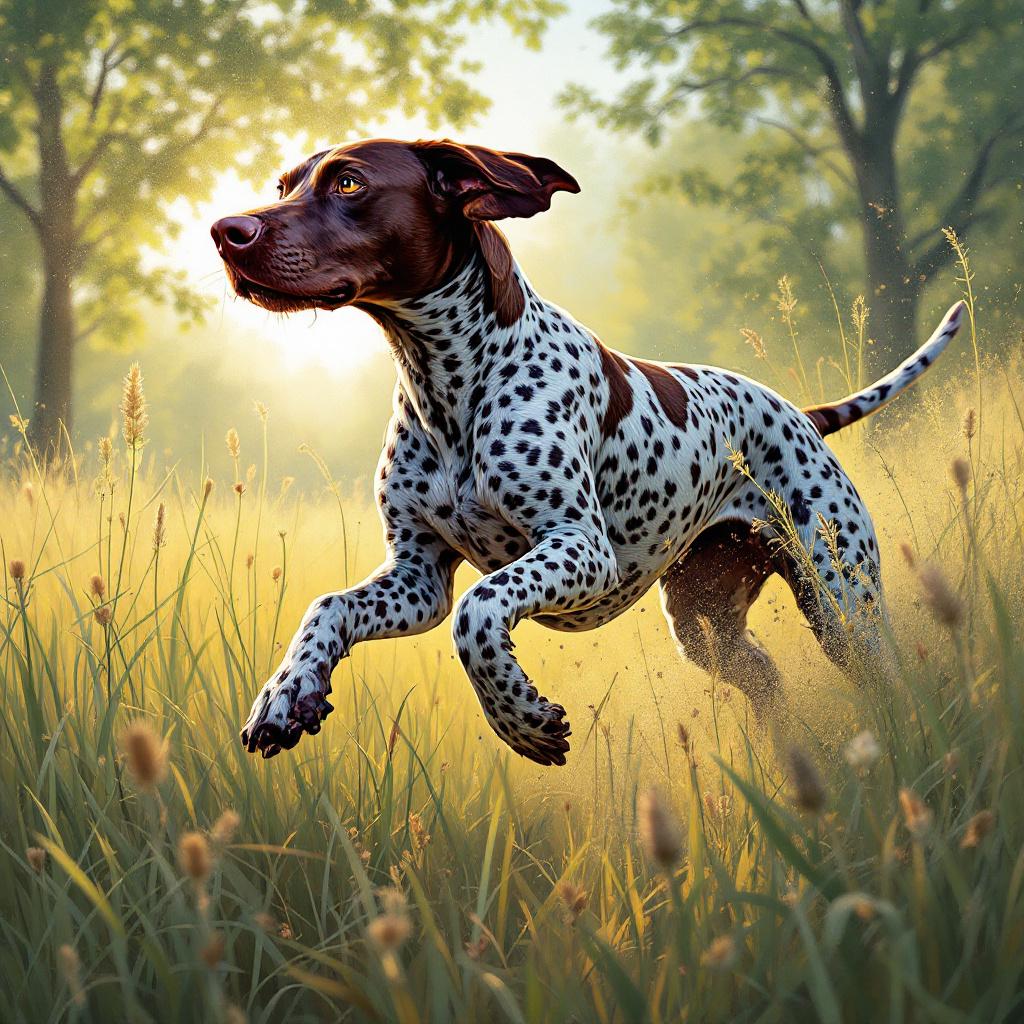
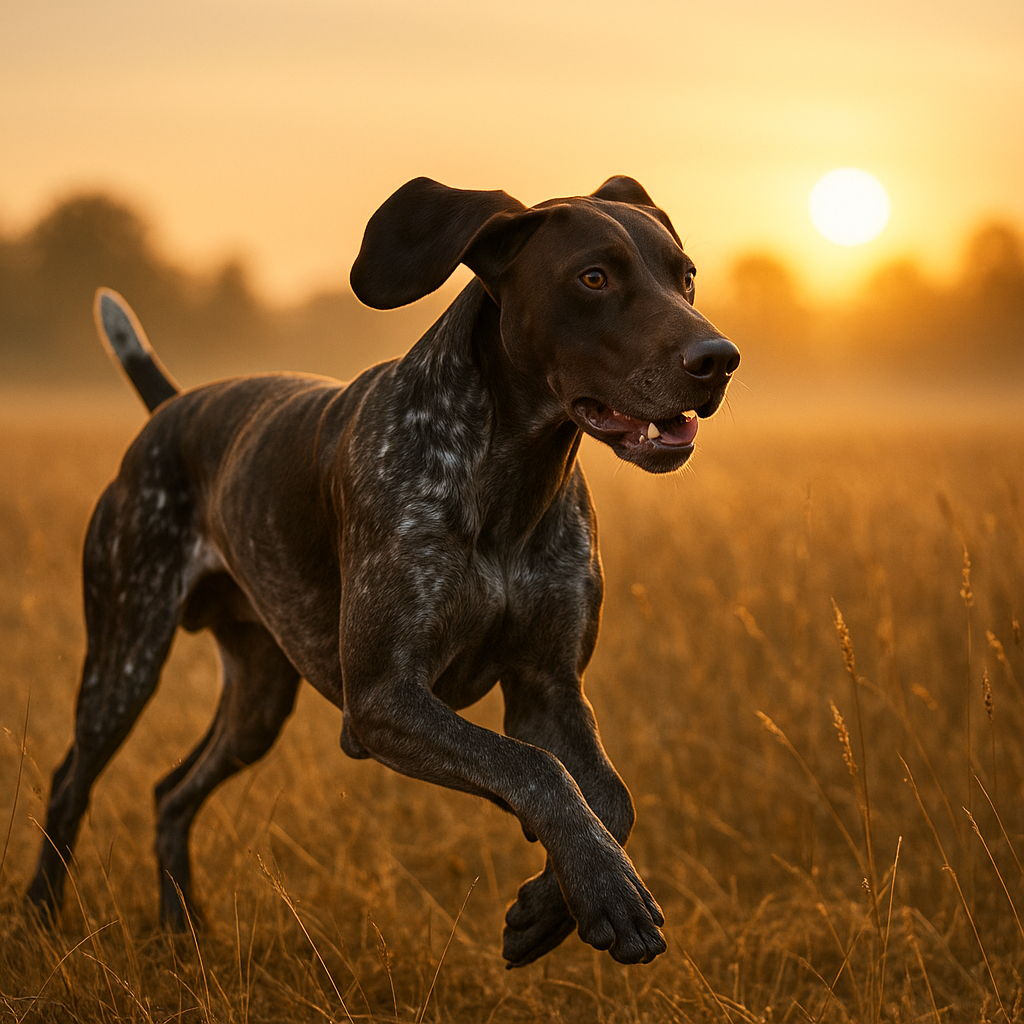
The first impression given by a GSP is that of a born runner. Its long, lean limbs, muscular without bulk, evoke an anatomy designed for endurance. The broad chest and slightly raised waist give it a long stride, capable of chaining hours of tracking. The coat, short and dense, is covered with a waterproof layer facilitating work in water and brush.
Colors and Coat
The shades range from solid liver to white mixed with brown spots. Sometimes marks or “tickings” are observed on the chest and limbs. This varied coat is not just aesthetic: it also reflects the initial genetic diversity of the pedigree, between water dogs and pointers, giving the GSP increased adaptability to different hunting environments.
Hunting Skills: Versatility and Instinct
Tracking and Retrieving Instinct
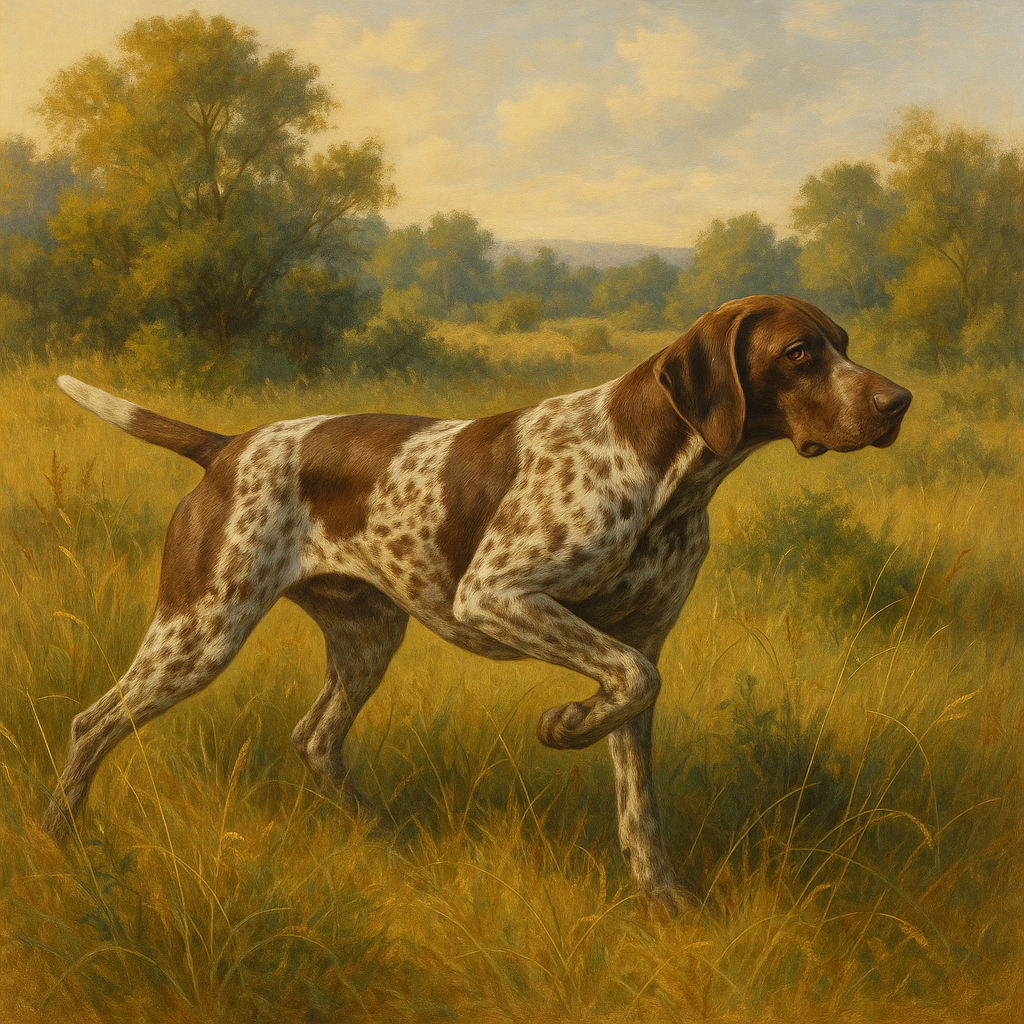
What sets the German Shorthaired Pointer apart is its dual talent for pre-shot searching and retrieving afterwards. Its fine, moist nose detects scent particles from meters away. Once the game is found, it knows how to adjust its pace to spare the animal and ensure a sharp stop until the owner’s permission. In retrieving mode, it brings back everything that falls, from birds to small mammals, with an astonishing gentleness for a dog of this strength.
Agility on Varied Terrain
Forests, wet meadows, rocks: the GSP is unfazed by the traps these environments can create. Its footing is sure, its jumps precise, and it knows how to switch from gallop to trot in a few strides to conserve its energy. This ability to negotiate natural obstacles makes it a valuable ally for bird hunting, especially partridge or woodcock.
Comparison with Other Pointers
Like the English Pointer, the GSP excels in detection and stopping, but it stands out with a more compact build and a more protective coat. Where the English Pointer may seem fragile in extreme cold, the German Shorthaired Pointer continues to perform, protected by its robust coat.
Education and Training: Channeling Energy
Early Socialization
From the moment it arrives at home, every new encounter should be an opportunity for learning. Dog shows, dog parks, urban hikes: the naturally sociable GSP gains confidence when interacting with humans and peers in varied contexts. This prevents potential excessive behaviors, such as uncontrollable excitement during strong stimuli.
Learning to Stop and Recall
To develop a sharp stop, a gradual method is preferred: starting on a leash, rewarding each frozen position, then gradually reducing assistance. Recall, on the other hand, can rely on food, voice, and play. Alternating treats and ball games helps to reinforce the command without boredom.
Additional Exercises
- Object search in varied terrain to stimulate the sense of smell.
- Agility course to strengthen balance and coordination.
- Swimming sessions to diversify efforts and maintain muscle tone.
Daily Life and Well-being
Exercise Needs
Beyond hunting, every GSP requires a minimum of two hours of physical activity per day. Running in the forest, retrieving games, cycling: various activities are multiplied to avoid frustration, a potential source of destruction or excessive barking. When the schedule does not allow it, a dog-walker or a secure dog park can compensate.
Adapted Diet
Its active metabolism requires food rich in proteins and omega-3 fatty acids. Depending on age and workload, the daily ration is adjusted between 300 and 500 g of specialized kibble or the equivalent in BARF. Hydration is just as crucial: during intense efforts, plan breaks so that it can rehydrate without risk of hyperthermia.
Health and Veterinary Follow-up
The GSP generally enjoys good health, but some lines may have predispositions to hip dysplasia or recurrent external otitis. Annual orthopedic checks and rigorous ear hygiene help prevent these issues. An annual blood test also helps detect any deficiency or metabolic disorder.
Table of Recommended Activities
| Activity | Recommended Frequency |
|---|---|
| Running in the wild | 3 to 4 times per week |
| Retrieving game | Daily (15–20 min) |
| Obstacle course | 1 to 2 times per week |
| Swimming | Once a week |
| Urban socialization | Two outings in the city per month |
FAQ: Your Questions About the German Shorthaired Pointer
- What is the ideal age to start hunting with a GSP?
- It is generally preferred to start light tracking sessions around 9–12 months, after bone maturation, to prevent any joint stress.
- How to manage its energetic temperament in an apartment?
- An apartment can be suitable if you ensure intense daily outings and cognitive games to stimulate its intellect.
- Is the GSP good with children?
- Social and patient, it shows protective behavior once it has been properly socialized.
- Can leisure agility be practiced?
- Absolutely: its physique and taste for obedience make it an excellent candidate for agility in clubs.
- What coat maintenance is necessary?
- Weekly brushing is enough to limit hair loss, combined with occasional cleaning in case of dirt.