
| Key Points | Details to Remember |
|---|---|
| 🐾 Origin | Bred for herding work in Australia and the United States |
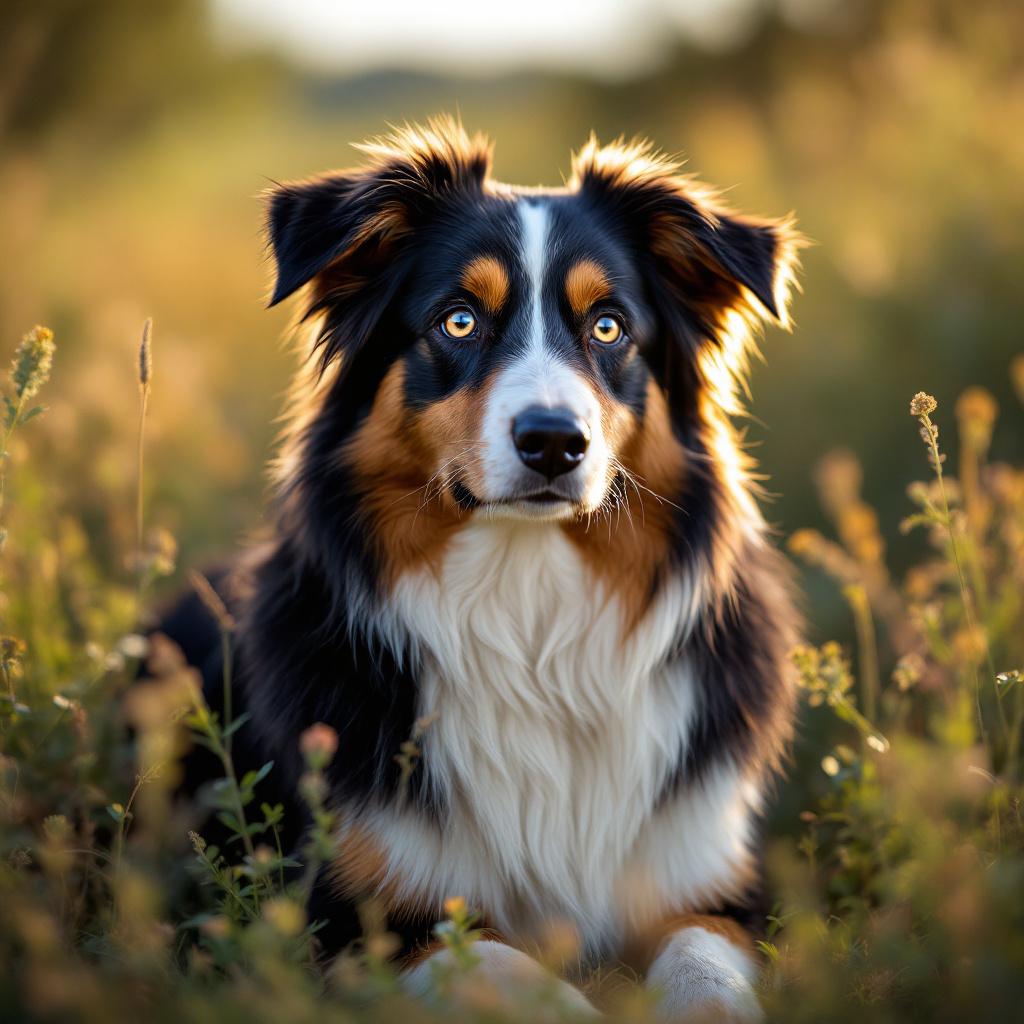
| 🎨 Appearance | Coat often marbled, light eyes and intense gaze |
| 🧠 Intelligence | Sharp mind, great capacity for learning and adaptation |
| 🏃 Activities | High needs for physical and mental stimulation |
| ❤️ Temperament | Affectionate towards family, protective tendency |
| 🩺 Health | Regular monitoring, attention to hips and eyes |
| 🧴 Maintenance | Weekly brushing and coat monitoring |

The Australian Shepherd, often nicknamed the “Aussie,” intrigues as much as it charms. Its marbled gaze evokes an almost human depth, while its sharp intelligence ranks it among the most alert breeds. Adopting such a companion means agreeing to share your daily life with a dog with stimulating needs, capable of investing itself both in herding work and family life.
Origin and Evolution of the Breed
Despite its name, the Australian Shepherd finds its roots in the Spanish and French Pyrenees, where intelligent herding dogs have been bred for centuries. It was only in the 19th century that American breeders crossed these lines with imported shepherds, giving birth to the contemporary “Aussie.” They improved the breed to meet the demands of vast ranches, requiring endurance, agility, and memory.
Over the decades, the Australian Shepherd has evolved along two lines: one oriented towards intensive ranching, the other towards dog shows. Today, these two lines coexist, each valuing distinct qualities. Where the working line favors robustness and tenacity, the show line emphasizes aesthetics, notably the famous marbled coat pattern.
Morphology and Marbled Gaze

The undeniable charm of the Australian Shepherd largely lies in its “merle” coat, characterized by contrasting spots on a light background. This coat does not appear only on the body: the marbling can extend to the eye contours, creating a mosaic of colors where blue, gray, or red blend harmoniously. Some individuals even have one blue eye and the other brown, enhancing this enigmatic side.
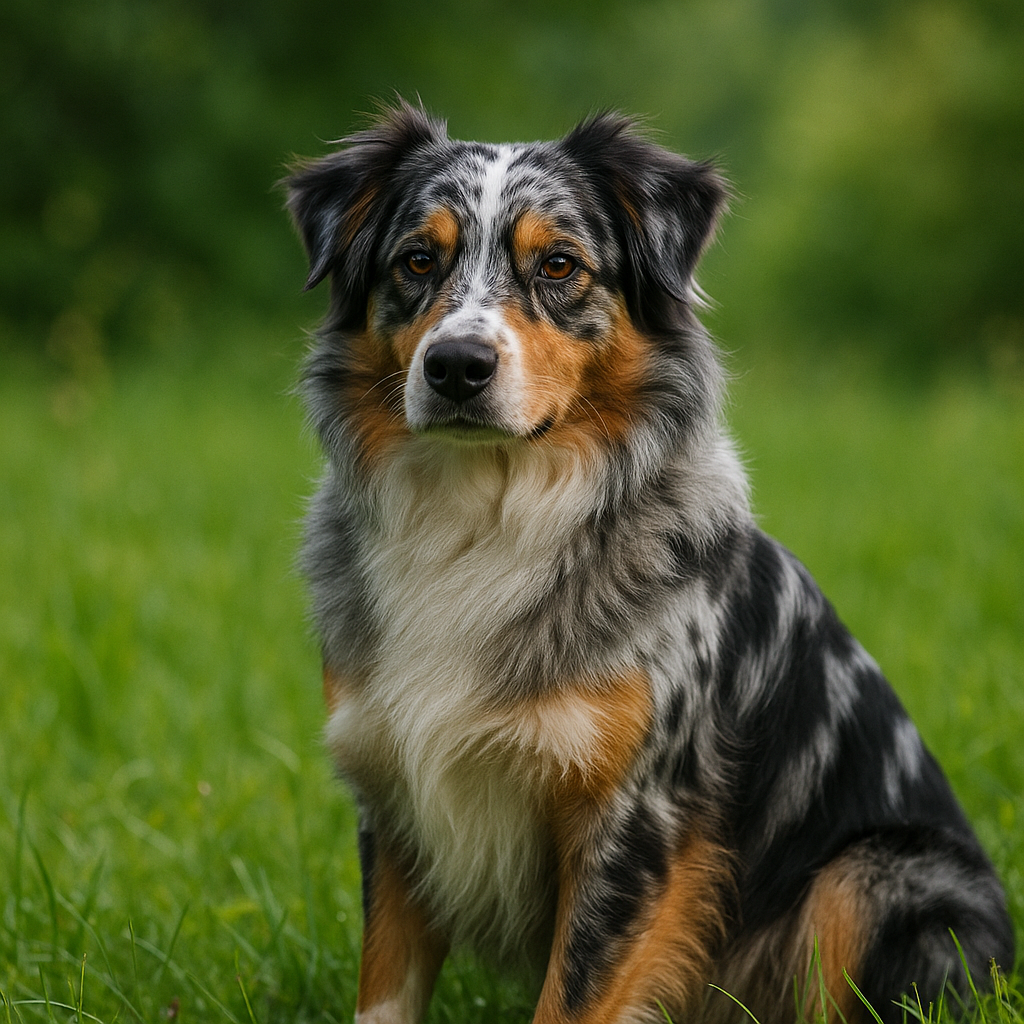
Beyond aesthetics, this coat reflects a complex genetic heritage: the merle gene influences pigment distribution and can, in some cases, be linked to auditory or visual sensitivities. Responsible breeders control these crossings to limit risks and maintain the overall health of the population.
Temperament and intelligence of the Australian Shepherd
The point that probably most distinguishes the Aussie from other breeds is its sharp mind. Easily inclined to understand complex commands, it excels in canine disciplines such as agility, competitive obedience, or sheepdog work. Its sense of observation and memory allow it to quickly memorize a course or a sequence of gestures, but beware: boredom looms if its energy is not channeled.
“An under-stimulated Australian Shepherd can quickly turn to undesirable behaviors, such as nibbling on feet or intensive exploration of the garden.”
Social, it develops a deep attachment to its family. Its loyalty drives it to adopt a “protector” role, without giving in to aggressiveness. Optimistic and curious, it enjoys both physical challenges and mental puzzles. Sessions of searching for hidden objects or solving canine brainteasers then take on their full meaning.
Faced with such potential, the key lies in balance: combining dynamic walks, structured canine activities, and calmer moments of bonding. A well-occupied Aussie is a fulfilled dog, ready to deploy its lively spirit wherever you need it.
Training, activities, and stimulation
From a very young age, the socialization of the Australian Shepherd must be diversified: meetings with other dogs, auditory and visual stimuli, first agility courses. The owner plays the role of guide but also coach, offering varied exercises every day. In positive training, rewards and play are favored over correction.
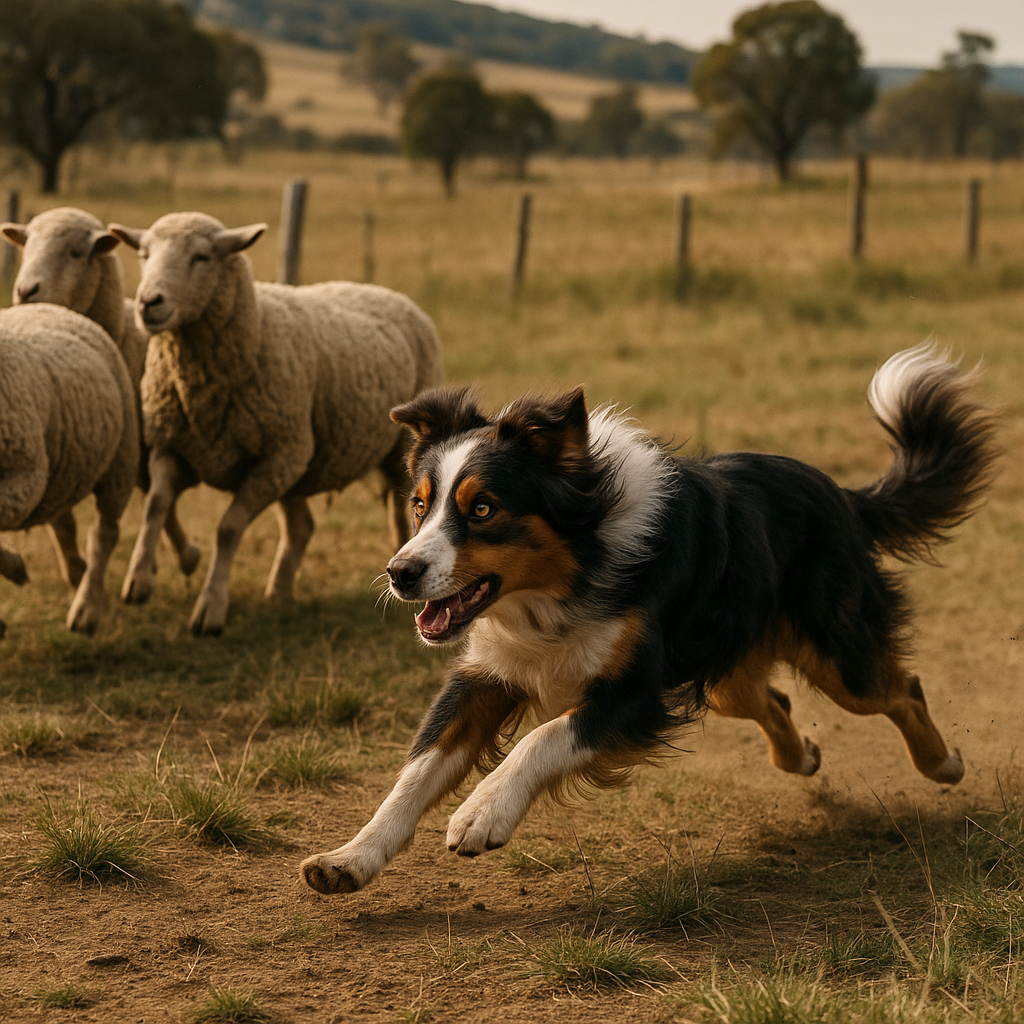
Canine sports provide an ideal outlet: flyball, canicross, dock diving, all disciplines where liveliness and intelligence combine. For households without a flock, tracking or scent workshops allow the use of the search instinct inherited from its shepherd ancestors.
Health, care, and longevity
The Australian Shepherd generally enjoys good longevity, often between 12 and 15 years. However, certain conditions must be monitored: hip dysplasia, hereditary eye diseases (such as progressive retinal atrophy), or auditory sensitivities linked to the merle gene. Regular veterinary follow-up, including hip X-rays and ophthalmological tests, is essential.
Regarding maintenance, weekly brushing is usually sufficient to remove dead hair and prevent tangles. As shedding approaches, frequency can be increased. Skipping a trim is not recommended: the coat serves as protection against the sun and weather. Finally, a quality diet rich in essential fatty acids helps maintain healthy skin and coat.
FAQ
- What is the ideal age to start education?
From 8 weeks, favoring short playful sessions to build confidence. - Can this dog tolerate apartment living?
Theoretically yes, provided several sporty outings and daily mental activities are offered. - How to avoid behavioral problems?
Regularly stimulate intelligence through thinking games and maintain a consistent routine. - Does the merle coat require special care?
No, but monitor for skin reactions and gently clean the fragile areas around the eyes and ears. - What is the daily energy expenditure?
On average 1.5 to 2 hours of intense physical exercise, complemented by mental stimulation sessions.