
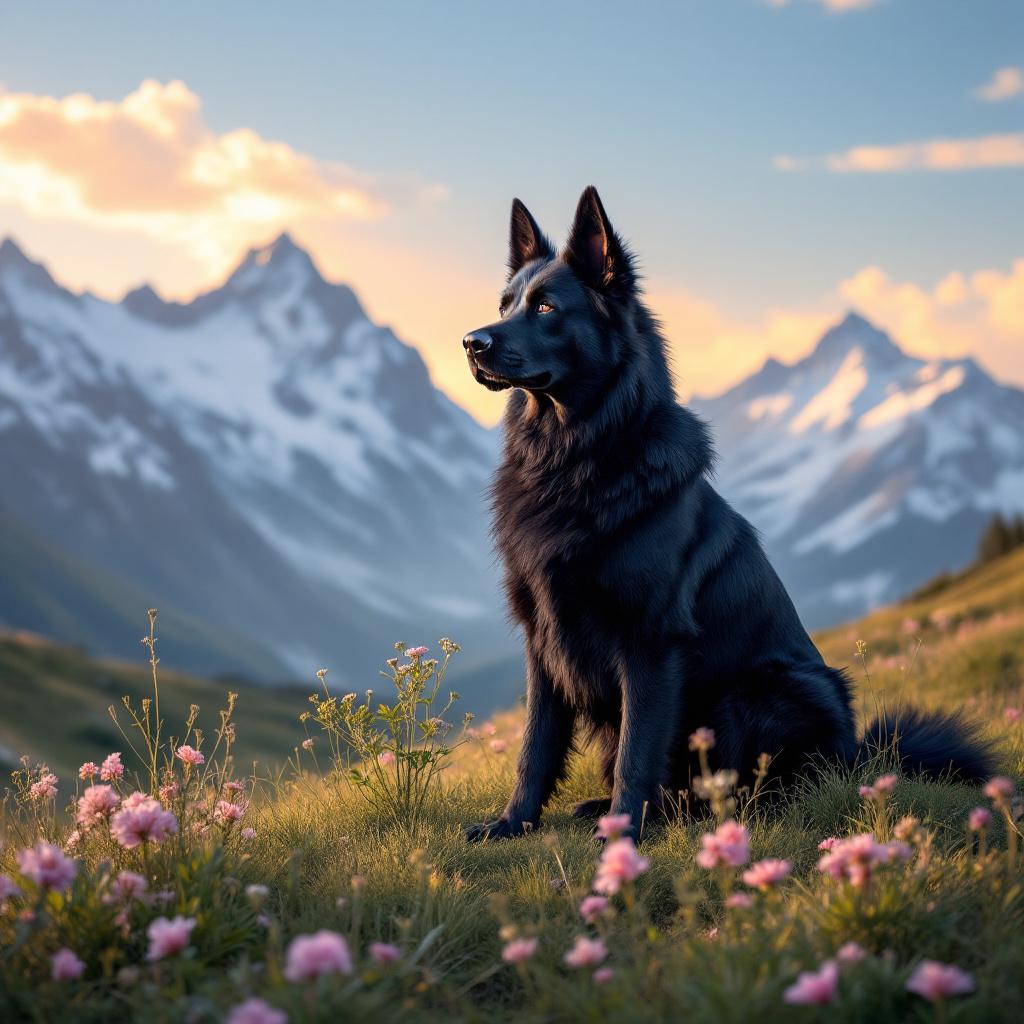

The Swiss Black Shepherd is not just an elegant dog with a dark coat: above all, it is a loyal companion, lively and endowed with great sensitivity. Whether you are a fan of long forest walks, a beginner breeder, or simply curious to learn more about this breed, this article offers you a comprehensive, nuanced, and well-documented overview. You will find the fascinating history of the Swiss Black Shepherd, its temperament, its daily needs, not forgetting the keys to offering it a balanced and affectionate life.
1. Origin and history of the Swiss Black Shepherd
Descended from the ancient Swiss herding dogs, the Swiss Black Shepherd, often called “BNS,” was officially recognized at the beginning of the 20th century. Originally, these black or very dark dogs accompanied Swiss shepherds to guard herds and dairy farms. Very robust and endowed with an innate sense of protection, they crossed the alpine pastures before being standardized as a full breed.
In 1908, the Swiss Society of Purebred Dog Enthusiasts decided to formally recognize the “Black Shepherd” type. Their popularity then spread to France and Germany, but it is indeed in the heart of the alpine pastures that their versatility was highlighted: herding dog, guard dog, and even mountain search dog.
2. Physical characteristics

2.1 Size and weight
The official standard places the ideal height around 60 to 66 cm at the withers for males, and 56 to 62 cm for females. The weight generally ranges from 25 to 35 kg, depending on the build and musculature. Despite this imposing appearance, the BNS remains graceful and well-proportioned.
2.2 Coat and general appearance
As its name indicates, the Swiss Black Shepherd is always black, sometimes with some charcoal or reddish highlights. Its coat is dense and double: a layer of coarse hairs, covered by a soft and insulating undercoat. In winter, this coat subtly diffuses light, while in summer it becomes lighter, facilitating thermal regulation.
3. Temperament and behavior
3.1 Relationship with the family
The BNS is above all a companion of the heart. Very attentive, it establishes a strong bond with each member of the household. Children generally appreciate its gentleness, but it will be necessary to teach it good manners very early to avoid it taking on the role of “authoritative guardian.” Stories of an alert dog jumping to “protect” its household are common among breeders.
3.2 Education and socialization
To avoid any form of excessive mistrust, socialization must begin from a very young age: exposure to different people, noises, environments. Learning through positive reinforcement (treats, petting, verbal praise) is particularly suited to its sensitivity. A well-educated BNS proves obedient without losing its vigilant character.
4. Exercise and environment needs
- Physical activity: The BNS requires at least 1 hour and 30 minutes of active walking per day, with play sessions, hikes, or cani-cross sessions.
- Mental stimulation: Obedience games, agility courses, or object searches are essential to avoid boredom and destructive behaviors.
- Living space: While a large fenced garden is ideal, the essential thing remains to be able to offer regular and varied outings.
5. Health and Longevity
Generally robust, the Swiss Black Shepherd can live between 11 and 13 years. However, like many medium to large breeds, it may be prone to certain specific conditions.
- Patellar dislocation: to be monitored from weaning onwards.
- Joint problems (hip and elbow dysplasia): to be checked via official X-rays in breeding dogs.
- Dermatitis and contact allergies: its dense coat can promote the proliferation of microbes if hygiene is not regular.
6. Diet
The diet must be of good quality, adapted to age, weight, and activity level. A Swiss Black Shepherd puppy will need kibble specially formulated for growth, rich in animal proteins and balanced in calcium/phosphorus. In adulthood, a premium diet containing 25–28% protein and 12–15% fat is recommended. Weight monitoring remains essential to limit joint risks.
7. Daily Education and Training
- Basic obedience: sit, lie down, recall, heel.
- Group games: frisbee, agility, tracking.
- Self-control exercises: learning patience and frustration, especially to manage guarding impulses.
8. Social Life: Compatibility and Advice
The Swiss Black Shepherd generally gets along well with other dogs, provided it is properly socialized. It can live with cats, provided there is a gradual introduction and supervision. Outdoors, its natural vigilance sometimes leads it to bark to signal a stranger: early training in silence is advised to limit noise disturbances.
9. Choosing a Swiss Black Shepherd: Breeders and Costs
To acquire a Swiss Black Shepherd, it is crucial to turn to a serious breeder registered with the Swiss Studbook (LOSH) or the French Studbook (LOF). Here are some points of vigilance:
| Step | Essential Points |
|---|---|
| Visit to the breeding facility | Cleanliness and living conditions of the parents and puppies |
| Health examinations | Certificates of hip and elbow X-rays |
| Sales contract | Health guarantee and return clauses |
| Price | Between €1,200 and €1,800 depending on lineage and tests |
| Post-sale follow-up | Advice and support from the breeder |
10. Conclusion
The Swiss Black Shepherd is a complete dog, combining intelligence, energy, and loyalty. Its mountain origins are reflected in a strong taste for activity and discovery, while its gentle temperament makes it an ideal companion for dynamic families. Adopting a Swiss Black Shepherd means choosing a life partner demanding attention and stimulation, but who will return love and respect a hundredfold.