
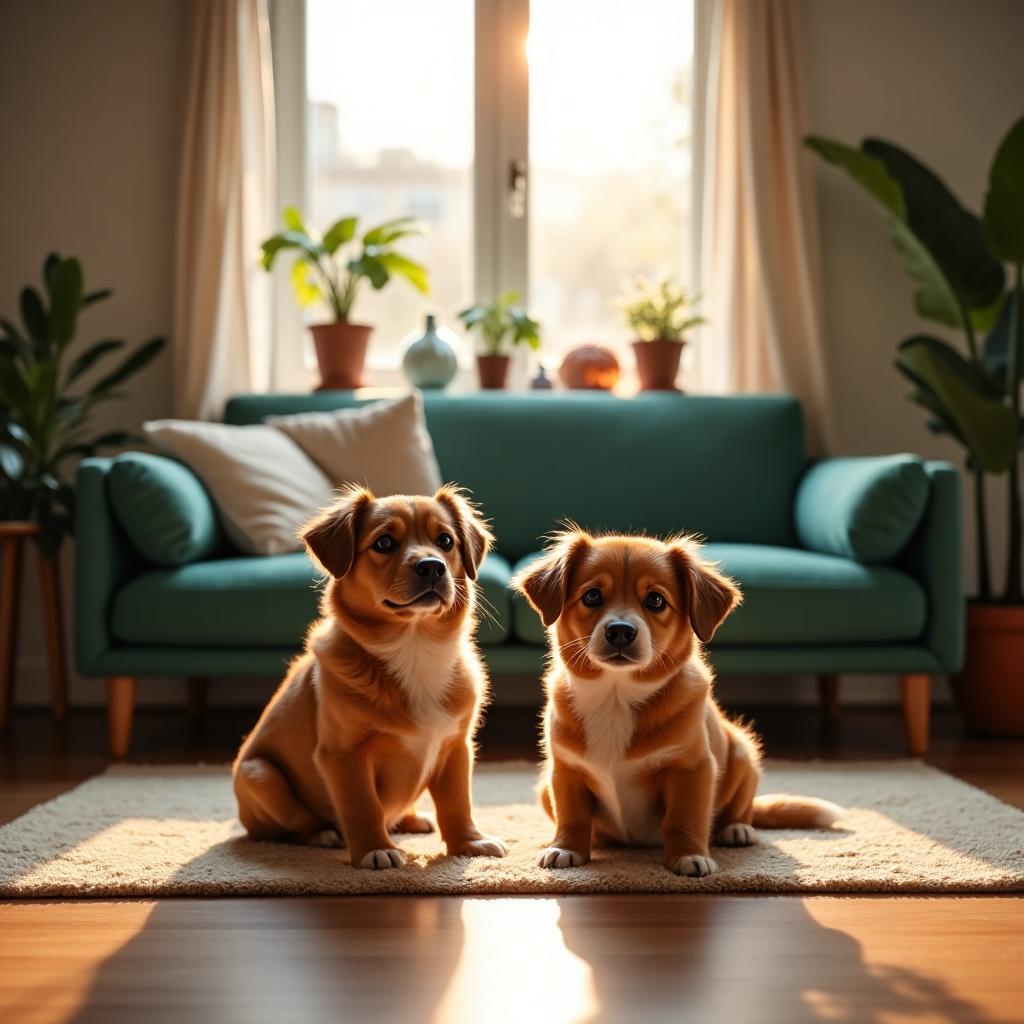
| Key Points | Details to Remember |
|---|---|
| 🐾 Size | Miniature Dachshund: 5–7 kg; Standard Dachshund: 7–10 kg |
| 🏠 Adaptation | Miniature: good for small housing; Standard: appreciates space |
| 🎾 Activity | Miniature: short walks; Standard: needs more sustained exercise |
| 🧘♂️ Temperament | Miniature: independent character; Standard: more affectionate and sociable |
| 💰 Budget | Miniature: higher purchase price; Standard: slightly higher veterinary costs |
| 🩺 Health | Miniature: risk of spinal problems; Standard: tendency to overweight |
| 📅 Life Expectancy | Miniature: 12–16 years; Standard: 10–14 years |

Are you considering welcoming a dachshund but hesitating between the miniature or standard size? On one hand, the miniature dachshund appeals with its compactness and liveliness; on the other, the standard dachshund charms with its gentle temperament and moderate energy. To make a decision aligned with your space, availability, and personality, let’s dive into this detailed comparison between these two sizes of the same lineage.
Origins and Physical Characteristics
A Common Track History
Originally, all dachshunds descend from German breeders of the 18th century, eager to hunt badgers and martens. The dachshund was then developed into several size variants, the smallest being intended for narrow burrows. Since then, the miniature dachshund has established itself for its ability to slip where the standard dachshund could not pass.
Morphological Comparison
The silhouette is the dachshund’s signature: elongated back, short legs. In practice, note the following:
- A height at the withers of 30–35 cm for the standard, versus 20–25 cm for the miniature.
- A weight ranging between 7 and 10 kg for the large model, 5 to 7 kg for the small one.
- Coat variations (short, wire, long) identical in both sizes.
One might think that a smaller size implies less robustness, but no: the miniature dachshund often has a fine bone structure, which makes it more fragile on certain rough terrains.
Temperament and Behavioral Needs
The Character of the Miniature Dachshund
The miniature dachshund combines curiosity and independence. With its meter-twelve from nose to tail, it likes to explore every corner… within a limited radius. You will notice that it asserts itself quickly, sometimes taking on a “little boss” air, but also knows how to be discreet when called. It is the ideal breed if you are looking for a dynamic companion, capable of following you in a small park without monopolizing your entire garden.
The Temperament of the Standard Dachshund
More composed, the standard dachshund cultivates a balance between liveliness and gentleness. While it moves willingly, it knows how to stay calm in the living room, especially when it has sufficiently expended its energy. Many breed lovers appreciate its respect for routines and its tendency to snuggle against you after a nice walk.
Compatibility with Your Lifestyle
Living in an Apartment or Small Spaces
If your daily life takes place in a Parisian studio or a one-bedroom without a balcony, the miniature dachshund adapts better. Its exercise needs are often satisfied by two to three daily walks of 20 minutes, complemented by tracking games in the apartment or a small homemade agility course.
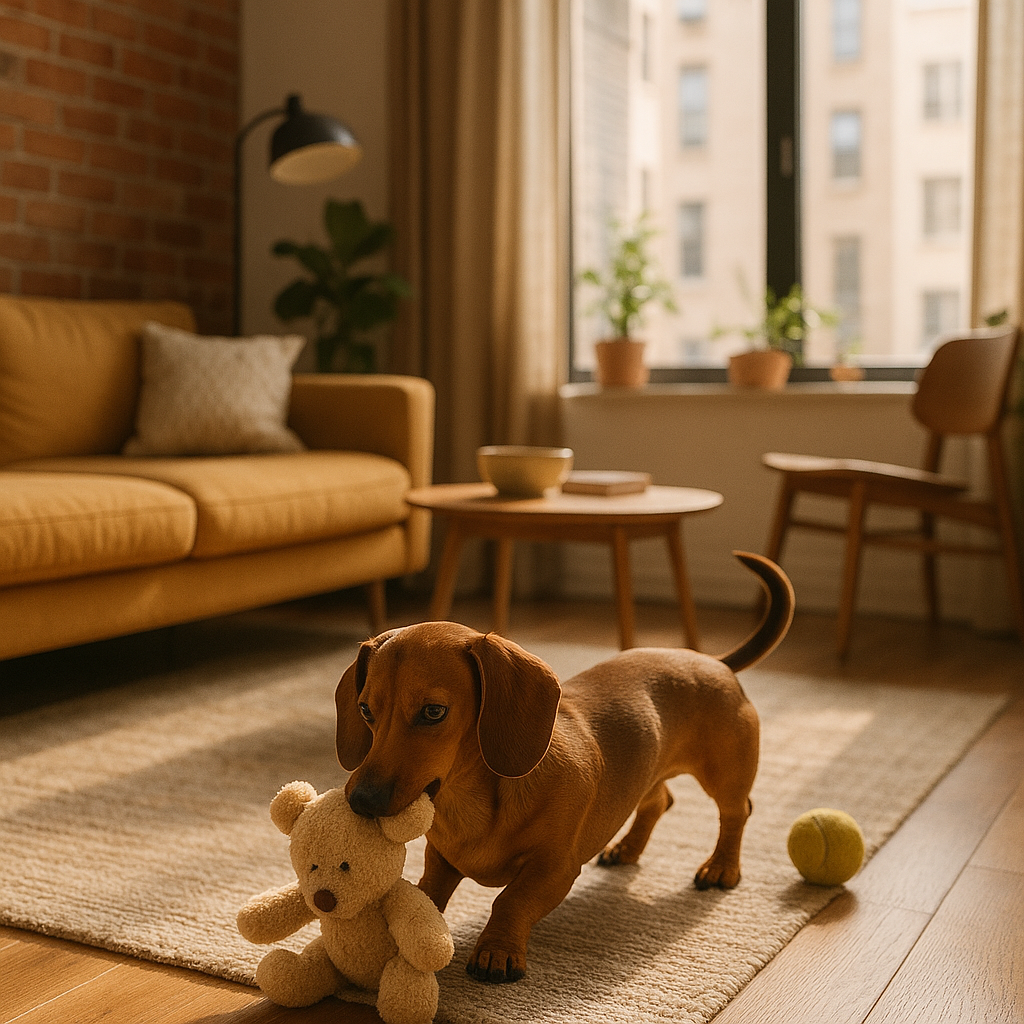
On the other hand, the standard dachshund requires a bit more space to run around. Without regular access to a park or garden, it risks getting bored and expressing its boredom through barking or a little carpet digging…
Rural environment and wide open spaces
Do you live in a rural area, in the countryside? The standard dachshund will love treading the damp grass, sniffing every bush. Its size allows it to handle some obstacles more easily. That said, if you are not there all day, the smaller size can remain calmer and be less prone to roaming over several hectares.
Health, care, and budget
Daily care
In both cases, brushing, cleaning the interdigital areas, and dental checks remain the same. However, the elongated morphology of the dachshund exposes it to the risk of disc herniation: be careful not to let it jump off the couch, regardless of its size.
Veterinary aspects and associated costs
| Expense item | Miniature dachshund | Standard dachshund |
|---|---|---|
| Annual visits | €60–80 | €60–80 |
| Vaccinations | €130 | €130 |
| Health insurance | €25–40/month | €30–45/month |
| Surgical fees (hernia) | €900–1500 | €800–1400 |
You will notice that the additional cost for the standard mainly comes from its higher weight, affecting the dosage of certain medications and the difficulty in case of surgery. On the other hand, the miniature dachshund, with its fine bone structure, may require more delicate interventions.
Implicit conclusion: tracking the best option
Ultimately, it all depends on your space constraints, your availability, and your appetite for physical activity with your companion. The miniature dachshund suits an urban lifestyle, at a moderate pace, whereas the standard will be fulfilled in a more open context, with longer walks. Both share the same passion for family life, play, and companionship. Your choice will therefore balance mobility and indoor comfort.
FAQ
Does the miniature dachshund bark more than the standard dachshund?
As a general rule, the miniature dachshund can be more vocal to signal its territory, but it is primarily a matter of education and stimulation. A well-occupied dog will bark less.
What diet should be favored according to size?
Both sizes require a protein-rich diet adapted to their morphology. For the miniature, focus on “small breed” formulated kibble to protect the joints. The standard can benefit from traditional food for medium-sized dogs.
Can a dachshund be raised in a household with young children?
Yes, with care to supervise interactions. The dachshund’s short legs and long back are vulnerable to shocks and rough handling. Explain to children how to pet and carry it.
What is the average cost of a puppy?
Expect €1000–1500 for a miniature dachshund, €800–1200 for a standard dachshund, depending on the lineage and health tests performed by the breeder.
How to limit back problems?
Avoid letting it climb on and off furniture without help, invest in a ramp or a carrying harness to preserve its spine.



