
| Key points | Details to remember |
|---|---|
| 🐾 Definition | Origin Russian, small companion dog with a lively temperament. |
| ⚖️ Size | Measurements: very small size, weight generally under 3 kg. |
| ❤️ Character | Friendly but sometimes wary of strangers, very attached to its human. |
| 🧴 Care | Grooming simple for the short-haired variety; regular monitoring for the long-haired variety. |
| 🏡 Adaptability | Ideal for apartment living if its need for activity and mental stimulation is met. |

The Russian Toy first surprises with its size: it looks like a heart on legs encapsulated in a delicate silhouette. Yet behind this apparent fragility lies a rich temperament, often underestimated by those who have never been around it. Here you will discover why this dog, born under specific historical conditions, has established itself as a charming and dynamic companion, how to care for it daily, what its health vulnerabilities are, and what kind of home it is truly suited for.
Origins and history: a small breed born from great circumstances
The history of the Russian Toy dates back to the 19th century, when small dogs were imported from Great Britain to imperial Russia. One might think that the crossbreeding and selection were merely aesthetic matters, but breeding also aimed at companionship qualities: alertness, liveliness, and great adaptability to indoor living. Over the decades, the breed has refined into two distinct varieties — short-haired and long-haired — which share the same temperament but differ in grooming and care requirements.
Two varieties, one temperament
The short-haired variety has a fine coat close to the body, easy to maintain and better suited for busy owners. The long-haired variety develops a slight curl around the ears and neck, requiring regular brushing to avoid tangles. Both adapt very well to urban life, but the long-haired variety may appear more “cuddly” visually — which does not affect its spirited character.
Morphology and standard: what you will notice

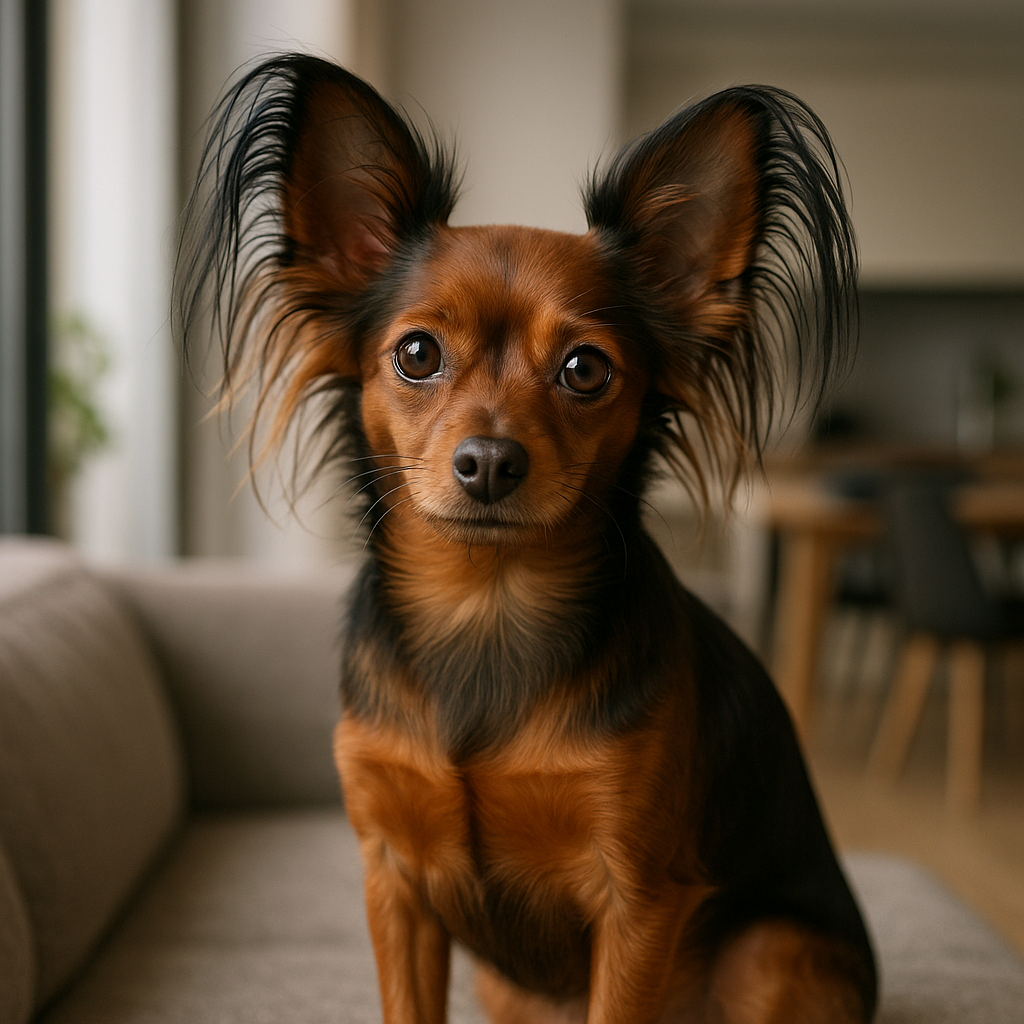
The Russian Toy is tiny, elegant, sometimes almost fragile to look at. Its head is fine, with ears often very erect (or lively moving) and bright, very expressive eyes. The back is short and the chest narrow; movement is light, bouncy, almost dancing. Breed standards emphasize proportion and grace rather than robustness.
| Characteristic | Average data |
|---|---|
| Size | 15–28 cm at the withers depending on lines |
| Weight | 1.5–3.5 kg |
| Life expectancy | 12–16 years, sometimes more with good care |
Temperament: concentrated fire
You were sold it as a plush toy, but the Russian Toy is a concentrate of energy and intelligence. It is lively, often curious, and creates a strong bond with its human reference. It can be wary of strangers or loudly protective of its territory — not out of aggression, but rather to alert. Its small size does not prevent it from being bold; sometimes, it behaves as if it were much larger.
Compatibility with children and other animals
Well socialized, it adapts well to calm children who understand how to respect dogs. Very rowdy children can scare it or cause accidental injuries: supervision is therefore essential. With other dogs, especially well-managed peers, it integrates well, but it is better to avoid rough play with much more physically robust breeds.
Daily care: feeding, exercise, grooming
Size does not always simplify management. Energy needs are modest in quantity, but the quality of the diet is crucial: quality proteins, controlled fat intake, and portion control to avoid overweight. Splitting meals can help avoid small hunger pangs and maintain a regular metabolism.
- Feeding: premium kibble adapted to small breeds, suited to age (puppy, adult, senior).
- Exercise: short but regular walks, indoor games, and essential mental stimulation.
- Grooming: weekly brushing for the short variety, two to three times a week for the long variety; baths are rare unless necessary.
Activity and mental stimulation
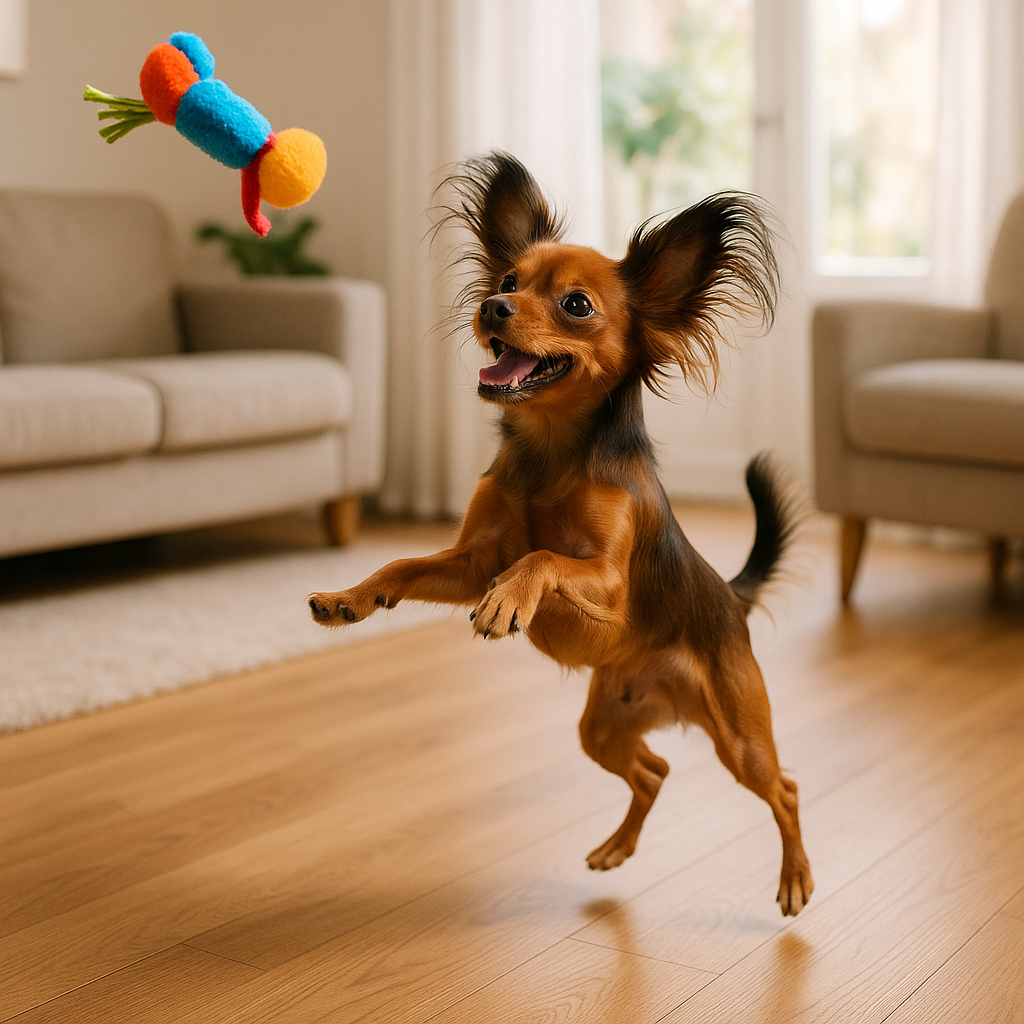
Play sessions are more important than a long jog: the Russian Toy loves interactive games, treat-dispensing toys, and short, varied obedience training sessions. You can train this dog easily: it learns quickly, responds well to rewards, and develops genuine pride in correctly executing a command. Boredom, on the other hand, can lead to repeated vocalizations or attention-seeking behaviors.
Health: known vulnerabilities and prevention
Small size exposes it to particular risks: bone fragility, dental sensitivity, and a tendency to patellar luxation in some individuals. Responsible breeding aims to limit these problems, but nothing replaces regular monitoring. Veterinary follow-up includes dental check-ups, weight control, and screening for joint conditions if necessary.
Vaccinations and veterinary follow-up
Respecting the vaccination schedule and planning annual check-ups to assess dental and joint health helps prevent often costly and painful complications. Prevention also involves appropriate nutrition and a safe environment to reduce the risk of falls or trauma.
Education and socialization: laying solid foundations
Education of the Russian Toy must start early and be consistent: consistency reassures the animal and limits problematic behaviors. Work on basic commands, leash walking, and managing vocalizations. Socialization remains crucial: gradually exposing the puppy to varied environments, different people, and other animals helps produce a balanced and confident adult.
- Rewards: small treats, petting, play.
- Sessions: short (5–10 minutes) and frequent, alternating physical and mental exercises.
- Patience: repetition and positive reinforcement yield better results than severity.
What kind of household is it suited for?
The Russian Toy will suit active individuals or couples who are often at home, families with calm children, or seniors who want a lively but easy-to-handle companion. It thrives especially in an environment where it receives attention and stimulation. Households that are away for long periods or prefer a very independent dog will find a better choice elsewhere.
Living in an apartment
Its small size makes the Russian Toy an excellent candidate for urban living. Nevertheless, the absence of a garden does not exempt from daily walks or interactive playtime. Access to secure areas to run and socialize, such as dog parks, will nicely complement the routine.
Choosing a breeder, adopting: practical recommendations
Selecting a responsible breeder remains crucial to limit health problems and ensure a balanced temperament. Ask for the parents’ health tests, observe the puppies’ behavior in the living space, and prioritize breeders who ask questions about your life plan with the dog. If you opt for adoption, inquire about the dog’s character and history to better anticipate its needs for retraining or socialization.
| Criterion | To check |
|---|---|
| Health tests | Absence of patellar luxation, dental check-up |
| Behavior | Tendency towards socialization or anxiety when approached by strangers |
| Breeding conditions | Cleanliness, frequent human interactions, stimulation from a young age |
Costs and commitment
Acquiring a Russian Toy involves an initial cost (purchase or adoption) but also regular expenses: appropriate food, vaccines, preventive care, health insurance if desired, and possibly a budget for activities and boarding. It is not the most expensive breed, but its relatively long lifespan implies a financial commitment of at least a decade.
FAQ
Does the Russian Toy bark a lot?
Some lines tend to be vocal, especially if they are under-stimulated. Targeted training and early socialization reduce excessive barking. Managing frustration and providing mental activities are often the most effective solutions.
Can a Russian Toy be left alone all day?
Prolonged absence is not ideal. If long absences are unavoidable, solutions must be planned: midday care, caring neighbors, or dog-sitting services. Repeated isolation can promote anxiety and destructive behaviors.
At what age is weaning recommended for a puppy?
Weaning is recommended around a minimum of 8 weeks. This period allows time for socialization with siblings and learning essential canine codes. A responsible breeder respects these timelines and supports the transition to the home.
How long does a Russian Toy live?
Longevity is often between 12 and 16 years; careful nutrition, regular veterinary follow-up, and an active life generally extend the duration and quality of life.
Practical Tips for Getting Off to a Good Start
- Prepare a secure and comfortable space as soon as the puppy arrives.
- Invest in toys suitable for small jaws and reward treats.
- Plan socialization by increasing positive experiences (noises, people, surfaces).
- Consider dog health insurance to offset costs related to minor incidents or regular check-ups.
A well-bred Russian Toy is an attentive companion, full of spirit and affection; its small size invites tenderness, but its personality requires as much commitment as a standard-sized dog.



