

| Key points | Details to remember |
|---|---|
| 🐾 Definition | Medium-sized dog with a white coat spotted with black or liver spots. |
| 🎭 Temperament | Combines liveliness, independence, and family attachment. |
| 🏃 Needs | Require a lot of daily exercise and mental stimulation. |
| 🛁 Care | Limited but precise: regular brushing, attention to skin and ears. |
| ⚕️ Health | Detect deafness early and monitor joints. |
| 🏠 Life | Prefer an active environment — apartment possible with frequent outings. |

The Dalmatian first strikes by its appearance: a white coat covered with regular spots, an athletic silhouette, and a confident head carriage. It is often believed that its elegance alone defines it, but this dog hides a personality far more complex than its looks. Between the need for intense activity, a sociable but sometimes stubborn temperament, and particular genetic predispositions, the Dalmatian requires careful understanding to become a balanced companion. Here is a detailed guide to understand its history, daily needs, and precautions to take if you plan to welcome one into your home.
Origins and history: from Dalmatia to modern roles
The name evokes Dalmatia, a coastal region of present-day Croatia, and it is true that the first mentions in the 19th century place the breed in Central and Mediterranean Europe. However, the Dalmatian is likely the result of a broader mixing: court dogs, greyhounds, and mastiffs contributed to its phenotype. Its muscular silhouette and runner’s appearance made it a good partner for accompanying carriages and later firefighters — an image that has greatly contributed to its popular iconography. Today, it retains this historical aura while occupying varied roles: family dog, agility athlete, jogging companion, or even show dog. This evolution illustrates the Dalmatian’s ability to adapt, provided its energetic needs are met.
Appearance and genetics of the spots

The coat and the formation of spots
At birth, Dalmatian puppies are almost always entirely white; the spots appear over the weeks. This phenomenon is explained by pigment genetics: melanocytes migrate unevenly, producing more or fewer and more or less contrasted spots. The coat is described as “black and white” or “liver and white” depending on the color of the spots. Canine show standards value a harmonious distribution of spots, but individual diversity remains great — no coat is strictly identical to another.
Coat care and practical recommendations
Contrary to what one might imagine, the Dalmatian’s coat does not require intensive grooming, but it sheds visibly throughout the year. Weekly brushing is often enough to reduce shedding, supplemented by more frequent brushing during shedding periods. Bathing is only useful in case of dirt: too much washing dries the skin and can trigger itching. Use gentle products suitable for sensitive dogs. Finally, regularly check the underside of the belly and the folds around the ears: the spots can hide redness or irritations.
Character and behavior: between energy and loyalty
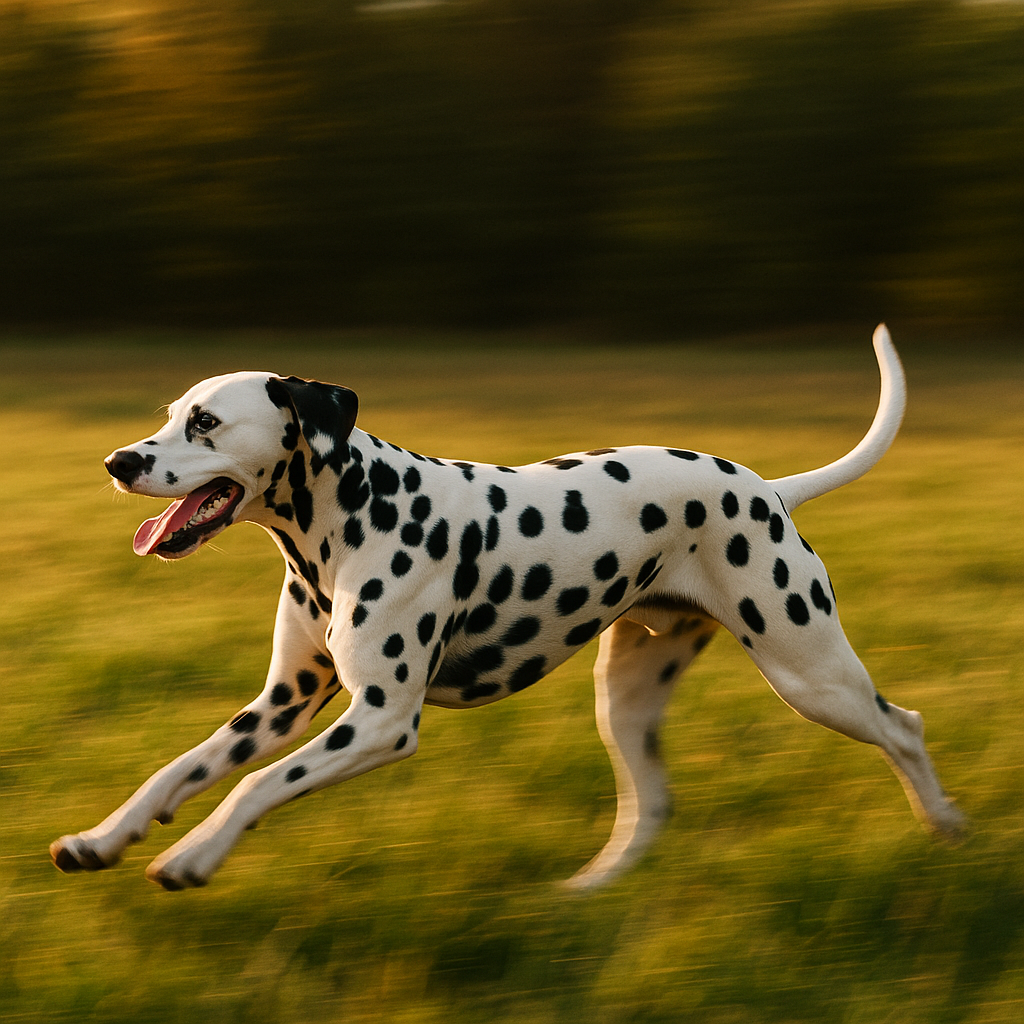
The Dalmatian presents a mix of traits that make it both wonderfully endearing and sometimes demanding. It is naturally sociable, enjoys human presence, and thrives in family life. However, it retains an independent side and can show stubbornness if training lacks consistency. It is neither an exclusively clingy dog nor a loner: it navigates between seeking attention and needing activities. Understanding this nuance helps avoid mutual frustrations.
Relations with children and other animals
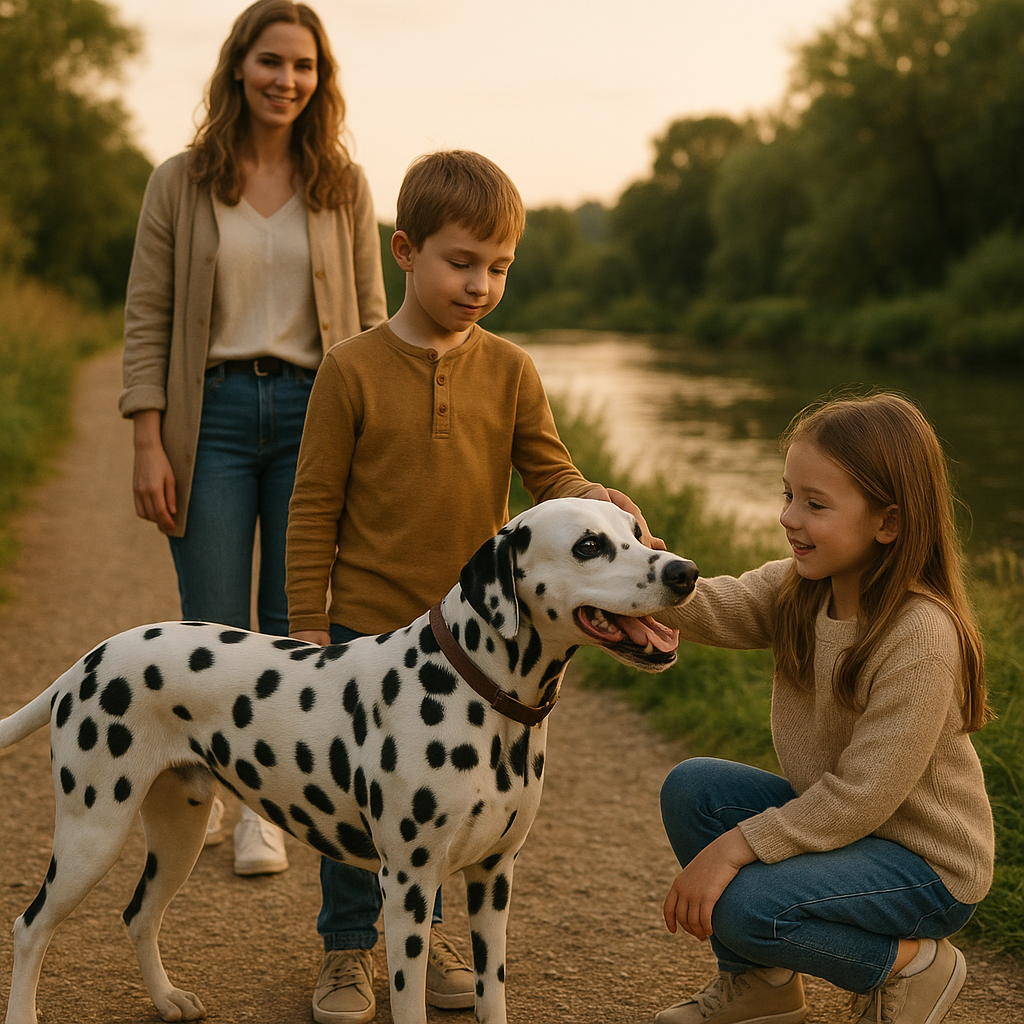
Well socialized, the Dalmatian is cheerful and playful with children, enjoying running and lively games. That said, its size and exuberance require supervision during interactions with very young children: rough contacts can cause injury. With other dogs, sociability often depends on early socialization. Gradual and supervised meetings prevent tensions and competitions, especially when the other dog is not accustomed to this demonstrative temperament.
Training and suitable activities
Principles of effective training
The key to a balanced Dalmatian lies in three elements: consistency, stimulation, and reward. The positive method works particularly well: reward good behaviors, ignore minor faults, and redirect energy rather than punish. Short and varied repetition helps maintain attention without boredom. Dalmatians learn quickly, but their curiosity sometimes leads them to test limits; therefore, consistency must be maintained over time.
Recommended activities
This dog needs at least one to two hours of daily physical activity. Running, hiking, agility, canicross, or fetch games are perfect to channel its energy. Mental stimulation is just as important: scent games, food puzzles, and learning new tricks keep the brain active and prevent destructive boredom. In the city, long walks and several play sessions are enough to preserve balance.
Health: points of attention and prevention
The Dalmatian generally enjoys good robustness, but some issues frequently recur and require vigilance. Hereditary deafness is the most documented: it can affect one or both ears and is linked to the genetics of the white coat. Hearing tests (BAER) are recommended from a very young age to identify affected dogs and adapt training. Urinary problems, notably the predisposition to urate stones, also require monitored diet and sufficient water intake. Finally, skin sensitivity and joint disorders in older subjects may require regular veterinary follow-up.
| Problem | Preventive action |
|---|---|
| Deafness | Perform a BAER test on the puppy |
| Urinary stones | Adapt diet and monitor hydration |
| Skin sensitivity | Choose gentle shampoos and control diet |
Daily Feeding and Care
The Dalmatian requires a balanced diet, sometimes formulated to limit the risk of urate stones. Proteins must be of good quality, and water intake must be constant: these dogs are sensitive to the formation of stones if the urine is too concentrated. Splitting meals, offering wet food occasionally, and monitoring weight help prevent overweight and deficiencies. For care, brush at least once a week, clean the ears gently, and trim the nails according to natural wear. Finally, gradually expose your dog to climatic differences: the Dalmatian’s coat does not make it waterproof against extreme heat or cold.
Choosing a Dalmatian: Puppy or Adult?
Adopting a puppy allows you to shape socialization and education from the start, but it requires time and constant energy. The puppy needs supervision, house training, and multiple stimulations. An adult Dalmatian can be a wise choice for a well-structured home: adults often know the basic rules and require less supervision. In all cases, prioritize responsible breeders or shelters that provide health information and behavioral history. Ask if auditory and orthopedic tests have been performed and take the time to observe the dog’s behavior in its original environment before deciding.
Common Mistakes and Practical Advice
- Underestimating its exercise needs: an unoccupied Dalmatian becomes destructive or anxious.
- Neglecting socialization: this can lead to mistrust or nervousness towards new things.
- Overprotecting the puppy: teaching it to be autonomous prevents excessive dependence.
- Ignoring signs of pain or limping: these may mask joint or urinary problems.
FAQ — Frequently Asked Questions
Is the Dalmatian suitable for families with children?
Yes, if socialization is well done and if children learn to respect its limits. Its playful nature makes it an ideal partner for family-friendly activities, but its vigor requires supervision during physical play to avoid accidents.
Can a Dalmatian live in an apartment?
Possible if you commit to providing long and varied outings several times a day. Without this, the apartment quickly becomes a hardship for its active nature.
How can I tell if my Dalmatian is deaf?
A BAER test performed by the veterinarian remains the most reliable method. At home, lack of reaction to sudden noises or vocal commands may alert you, but only a specialized check confirms deafness.
Should treats be limited because of urinary stones?
Yes, prioritize rewards low in purines and provide plenty of water. Snacks specially formulated to reduce urinary risk exist; consult your veterinarian to choose the best option.
Implicit Conclusion — Living with a Dalmatian
Living with a Dalmatian means accepting an energetic and demanding relationship but one that is deeply rewarding: a dog that loves to run, learn, share family moments, and show sincere loyalty. It is not enough to appreciate its spotted coat to succeed in adoption; you must understand its physiology, anticipate its exercise needs, and implement patient but firm training. If these conditions are met, the Dalmatian becomes a unique companion, capable of bringing rhythm and joy to everyday life.