

| Key Points | Details to Remember |
|---|---|
| 🐩 Definition | Small to medium-sized dog with a dense white coat, of European origin and very well adapted to companion life. |
| 🧠 Intelligence | Highly receptive to learning, excels in obedience and mentally demanding canine activities. |
| ✂️ Maintenance | Regular brushing, seasonal shedding period to anticipate to limit hair nests. |
| 🏃 Activity | Moderate to high daily needs: varied walks and essential cognitive games. |
| ❤️ Compatibility | Ideal for active households, tolerant with children but requires early socialization. |
| ⚕️ Health | Comfortable longevity but watch out for joint and eye problems depending on the lines. |

The American Eskimo Dog is recognized at first glance: a coat of immaculate white fur, a lively expression and that head carriage that evokes curiosity. This dog has the reputation — justified — of being both a “plush toy” to the touch and remarkably intelligent in the head. Far from being a mere ornamental animal, it demands mental stimulation and adapted educational frameworks. In this article, I detail its history, temperament, grooming tips and especially training methods that will highlight its practical IQ, so that you know exactly what you are committing to before adopting.
Origin and History
The American Eskimo Dog comes neither from Alaska nor Eskimos; its lineage is European, descended from Nordic Spitz brought by settlers. During the 19th century, these dogs transformed into circus companions and parlor dogs in the United States, hence their growing popularity. Name and standard changes have sometimes clouded the trail, but the essence remains: a small robust spitz, selectively bred for sociability, liveliness, and a beautiful white coat. This history partly explains its attachment to human contact and its ability to learn varied tasks, inherited from a long proximity to humans in utilitarian and recreational roles.
Appearance and Coat Care

Morphology and Size Variations
The American Eskimo exists in three sizes: toy, miniature, and standard. The silhouette remains similar: compact body, pointed muzzle, erect triangular ears. The coat is double, dense and white — sometimes cream in certain areas — with a thick undercoat that protects it but requires regular care. This double structure makes the fur warm and voluminous, pleasant to stroke but more demanding than it appears when it comes to daily maintenance.
Grooming: Routines and Mistakes to Avoid
Weekly brushing is often sufficient outside shedding periods, but during the seasonal molt, daily brushing is necessary to prevent hair from accumulating in the house or matting. Prefer a pin brush for the undercoat and a soft brush for the outer layer. Regular baths are not necessary; occasional cleaning suffices unless the dog has rolled in mud. Avoid drastic cuts that damage the undercoat and promote skin problems. Finally, monitor ears and teeth: simple care prolongs overall well-being.
| Maintenance | Recommended Frequency |
|---|---|
| Brushing (outside shedding) | Once a week |
| Brushing (shedding) | Daily |
| Bath | 2 to 4 times per year, depending on activity |
| Teeth/ears check | Weekly |

Temperament: between affectionate plush toy and working dog
What often surprises people is the duality of the character. On one hand, you have an almost tactile affection — these dogs love to be close to their family and offer a warm presence — and on the other hand a great mental liveliness. They observe, evaluate, and react quickly. For this reason, physical exercise alone is not enough; intellectual challenges must also be offered. Without sufficient stimulation, boredom manifests through barking, separation tricks, or destructive behaviors. Well-trained and stimulated, the American Eskimo becomes an obedient companion, ready to learn complex routines and participate in advanced canine activities.
Relationship with children and other animals
Usually patient and playful, it tolerates energetic children well — provided that the latter quickly learn the limits of respect. Early socialization is fundamental to avoid nervousness toward strangers or excessive territoriality. When facing other animals, a gradual introduction helps avoid rivalries: its liveliness can be perceived as a provocation by dogs less inclined to play. Overall, it is a reliable family dog when it benefits from guidance and activity.
Intelligence and learning abilities
Saying a dog is “intelligent” covers several things: speed of learning, associative memory, adaptability, and problem-solving ability. The American Eskimo Dog excels in several of these areas. It learns commands quickly, understands household routines, and develops strategies to get what it wants — sometimes with a dose of mischief that makes it endearing. Its aptitude is particularly visible in canine sports: obedience, agility, tricks, and even scent work when properly motivated.
Effective educational approaches
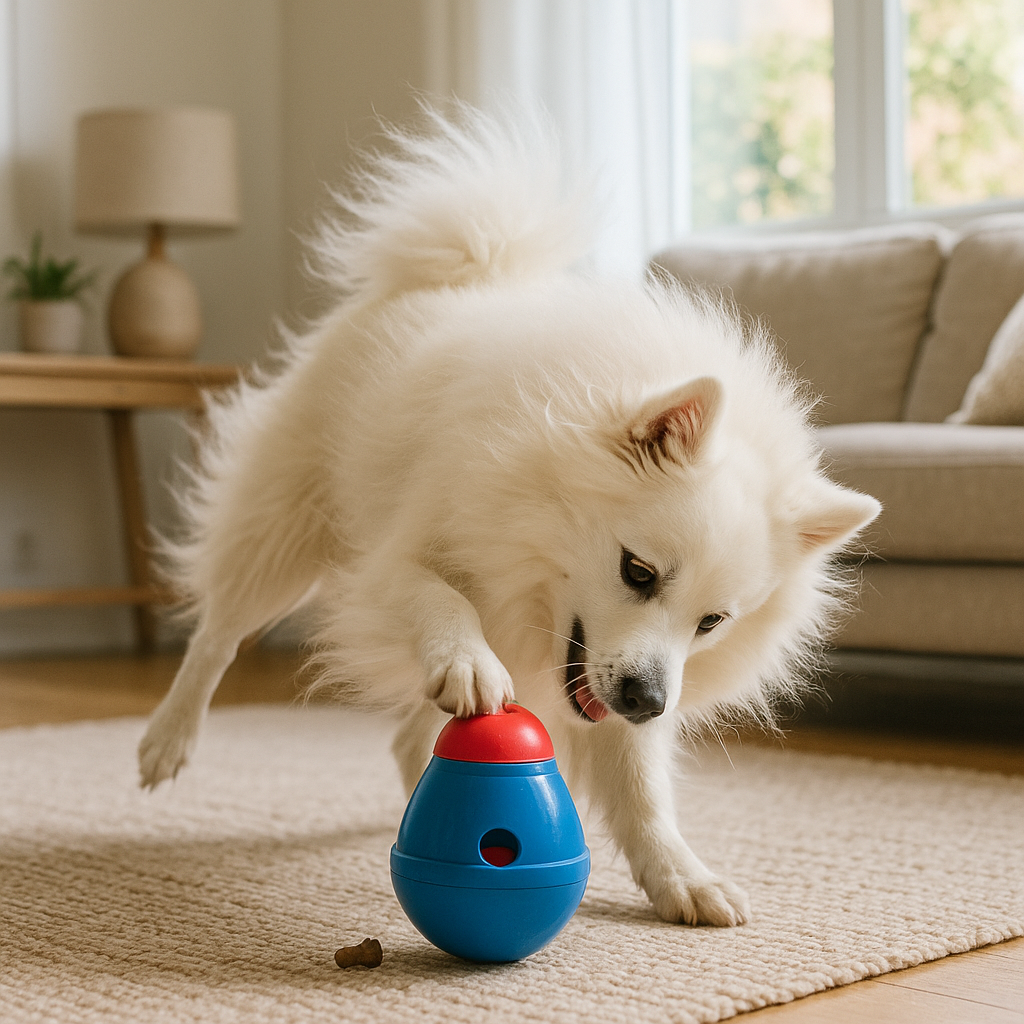
The most productive method combines positive reinforcement, variety, and clear limits. Rewards should be chosen according to the dog’s preferences — treats, games, or simply verbal praise. Short and frequent sessions: five minutes several times a day often outperform one long session. The use of food puzzles, agility courses, and tricks to learn promotes mental endurance that prevents boredom. Above all, avoid physical punishments or long verbal corrections: they reduce motivation and can fuel anxiety.
- Positive reinforcement: the basis of lasting learning.
- Intelligence games: puzzles, hide-and-seek, boxes to open.
- Varied routines: diversity of exercises to stimulate different skills.
- Socialization: regular contacts with people, noises, places.
Daily life: physical and mental needs
An American Eskimo is not a lazy dog; it demands exercise but especially novelty. Count on two daily walks of moderate intensity and at least 20 to 30 minutes of brain-oriented play per day. Walks should vary: change routes, include obedience exercises outdoors, offer scent or object search sessions. These elements positively tire the animal, reduce anxiety, and improve listening in distracting contexts.
Recommended Activities
Agility, rally obedience, light canicross (for healthy adults), or structured obedience workshops are perfectly suitable. Familiar tricks — rolling over, crawling, retrieving objects — become cognitive exercises when integrated into a sequence. Finally, treat-dispensing toys and interactive training sessions keep the mind alert without requiring long hours of physical activity.
Health, Life Expectancy, and Monitoring
This dog generally shows good longevity, often between 12 and 15 years, depending on care and the absence of genetic diseases in the lineage. Some health issues occur more frequently: hip dysplasia (but less common than in heavier breeds), patellar luxation in smaller individuals, and eye disorders such as cataracts or progressive retinal atrophy depending on the lines. Appropriate veterinary follow-up and genetic testing of breeders significantly reduce these risks.
| Common Problem | Symptoms to Watch For | Recommended Actions |
|---|---|---|
| Hip Dysplasia | Limping, difficulty getting up | Veterinary check, weight management, controlled activity |
| Patellar Luxation | Clicking, irregular jumping | Specialist consultation, sometimes surgery |
| Eye Disorders | Decreased vision, opacities | Regular ophthalmologic examination |
Adopting an American Eskimo: Practical Advice
Before adopting, ask yourself concrete questions: do you have time for mental stimulation sessions? Do you live in a place where barking will be tolerated? Are you ready to accept shedding periods? If the answer is yes, the reward is great: a lively, loyal companion often comical in its behavior. Favor serious breeders who provide health certificates or rescue associations familiar with the dog’s temperament. Avoid impulsive purchases based solely on the “fluffy” appearance; an informed choice limits the risk of false compatibility.
Budget and Commitments
The initial cost varies depending on the source (breeder, shelter). Add to that veterinary fees, quality food, grooming, and educational materials. In the long term, preventive care — vaccinations, deworming, dental checks — is less costly than late treatment of a pathology. Finally, consider the human time: the emotional investment is the most important part of the value this animal brings to your life.
FAQ
- At what age should training start?
- You can begin basic learning from the first weeks at home, with short, fun, and positive sessions. Socialization is crucial between 3 and 16 weeks.
- Does it bark a lot?
- It can be vocal, especially if bored or left alone. Work on environmental enrichment and exercise significantly reduces unwanted barking.
- Is it suitable for apartment living?
- Yes, if you compensate with varied outings and daily intellectual games. It tolerates limited space well if its behavioral needs are met.
- Should it be bathed often?
- No, not frequently: 2 to 4 times a year is sufficient if the dog remains relatively clean. Regular brushing is more important than repeated baths.